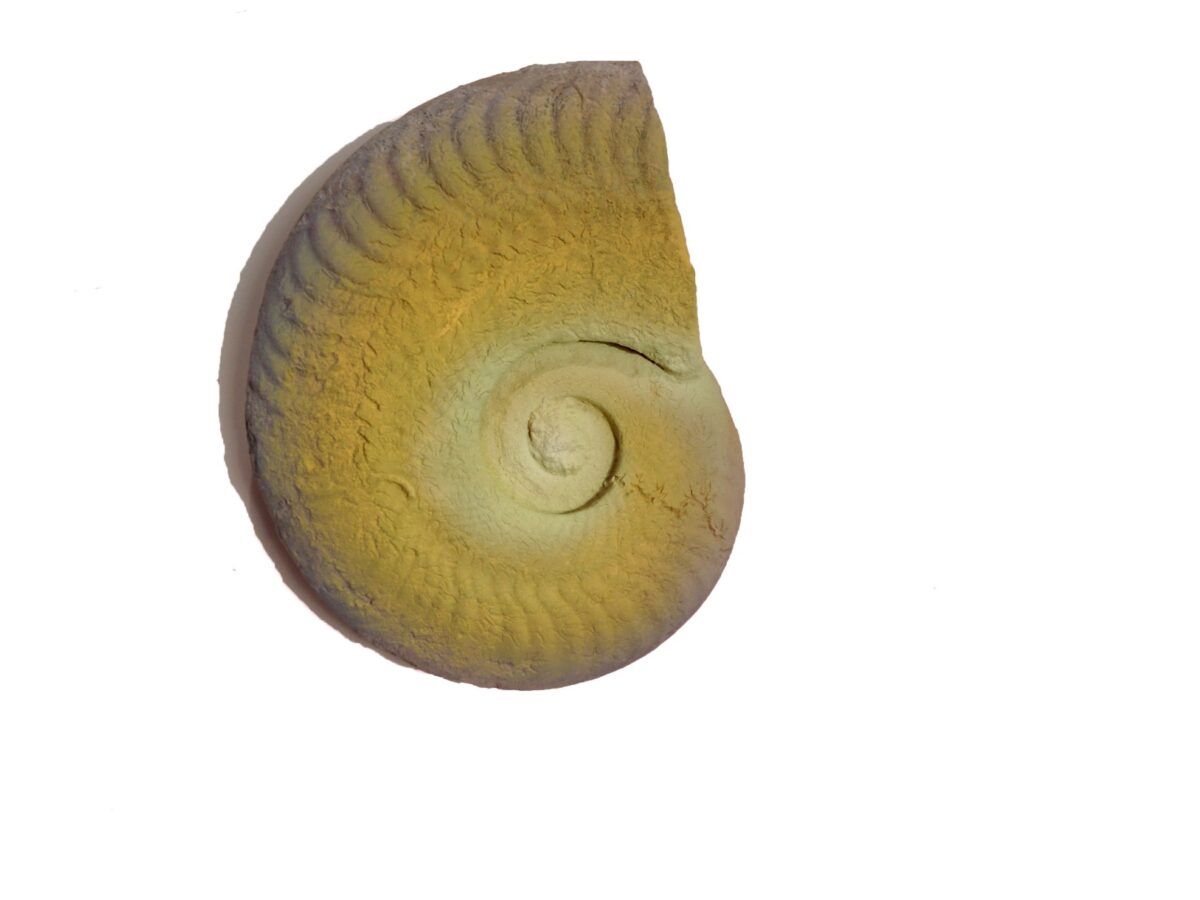
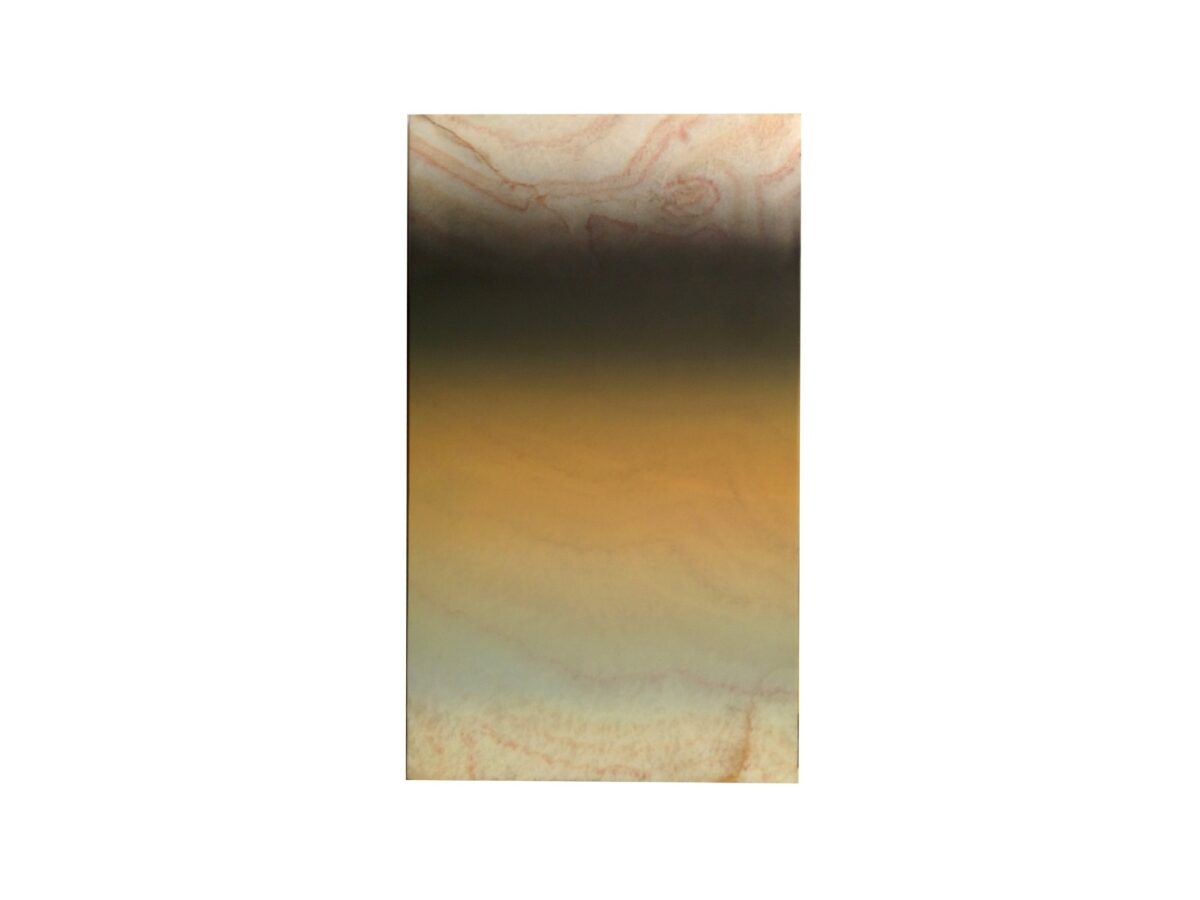
Light Phenomena is Kessler’s ongoing study of the gradient as a readymade argument — the exact, mechanically produced blend from one color to another that both landscape painting and consumer culture have used, for two centuries, to sell us an idea of nature we can consume without touching. In Objects of Unbelonging (Curiosity of Landscapes), begun in 2015, Kessler airbrushes a soft, sunset-style spray gradient directly onto geological and paleontological specimens — polished marble and serpentine slabs, fossil ammonites, fossilized coral, a mosasaur jaw, a raw crystal cluster — objects that are already millions of years old, whose own mineral banding and striation frequently mimic the gradient before Kessler ever touches them. Alongside these he places 3D-printed studio inventions — a comet, a cluster of sunset-toned flowers — extending the same gradient logic into synthetic, manufactured form.
The wit of the piece is in the collision: a 200-million-year-old fossil, displayed like a luxury retail object and finished in the exact peach-to- lavender gradient of a stock desktop wallpaper. Kessler is direct about the source material — the marble slabs are stock, purchasable slices of stone, “available and can be airbrushed with a site-specific gradient” for any given installation, collapsing the distinction between unique geological deep time and mass-produced interior-design finish. Where his 2014 lightbox series Sunset in Simulacrum rendered the gradient sunset as a flat, backlit fiction, Light Phenomena embeds the same fiction into objects with real geological and biological age — the gradient no longer describes a sky, it describes a stone that doesn’t need one.
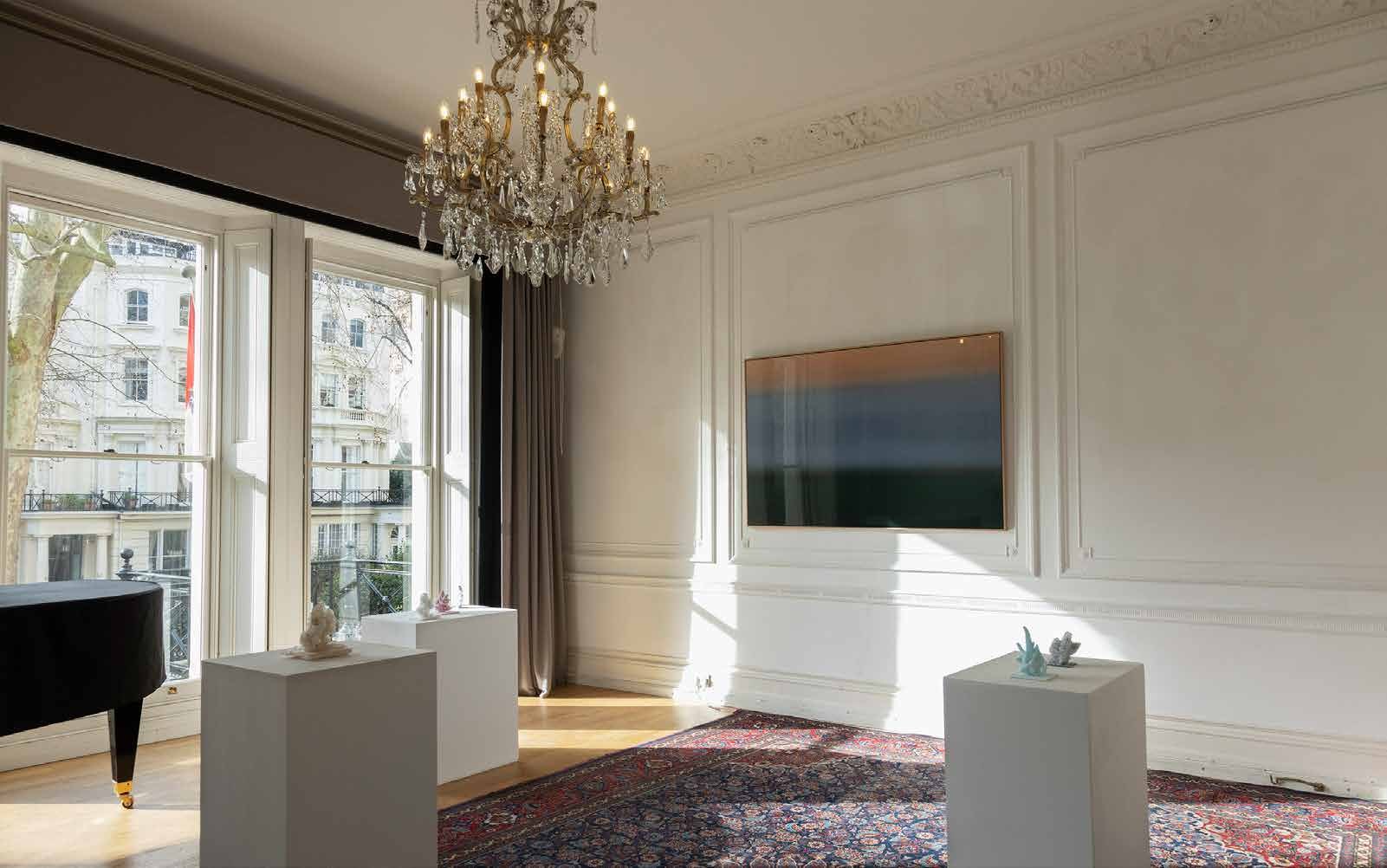
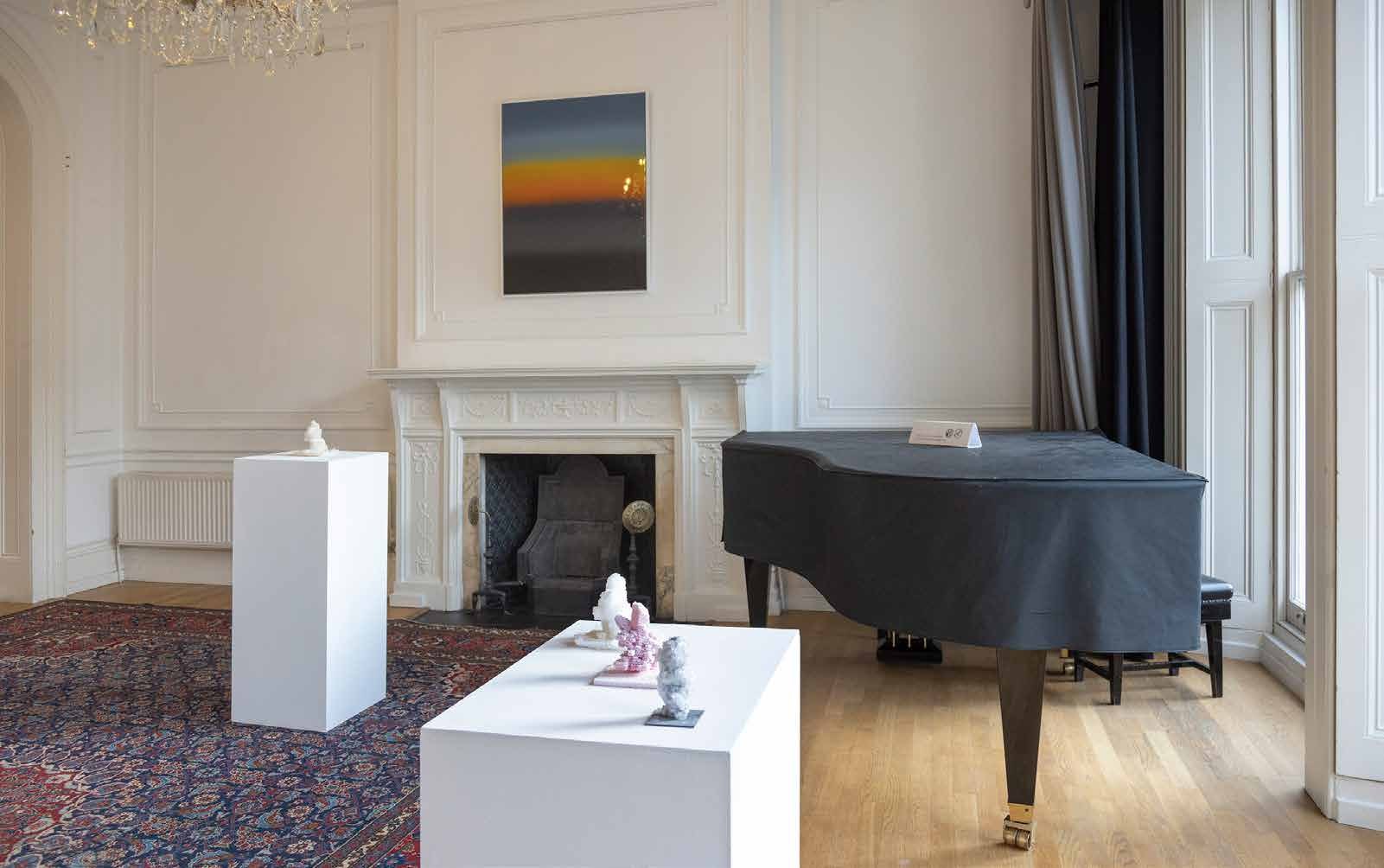
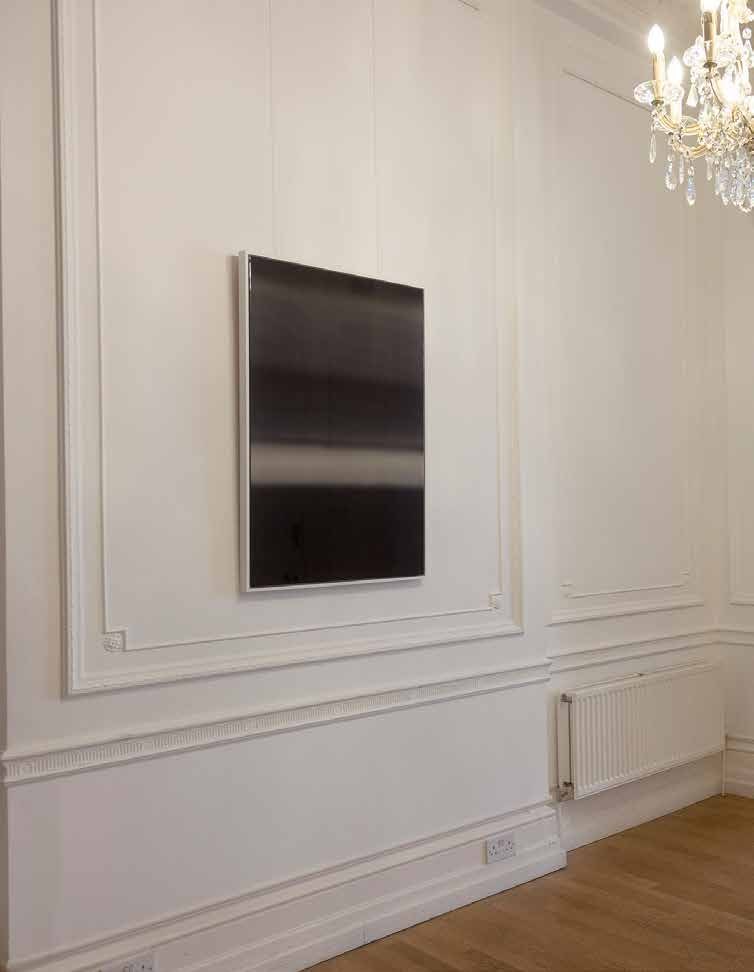
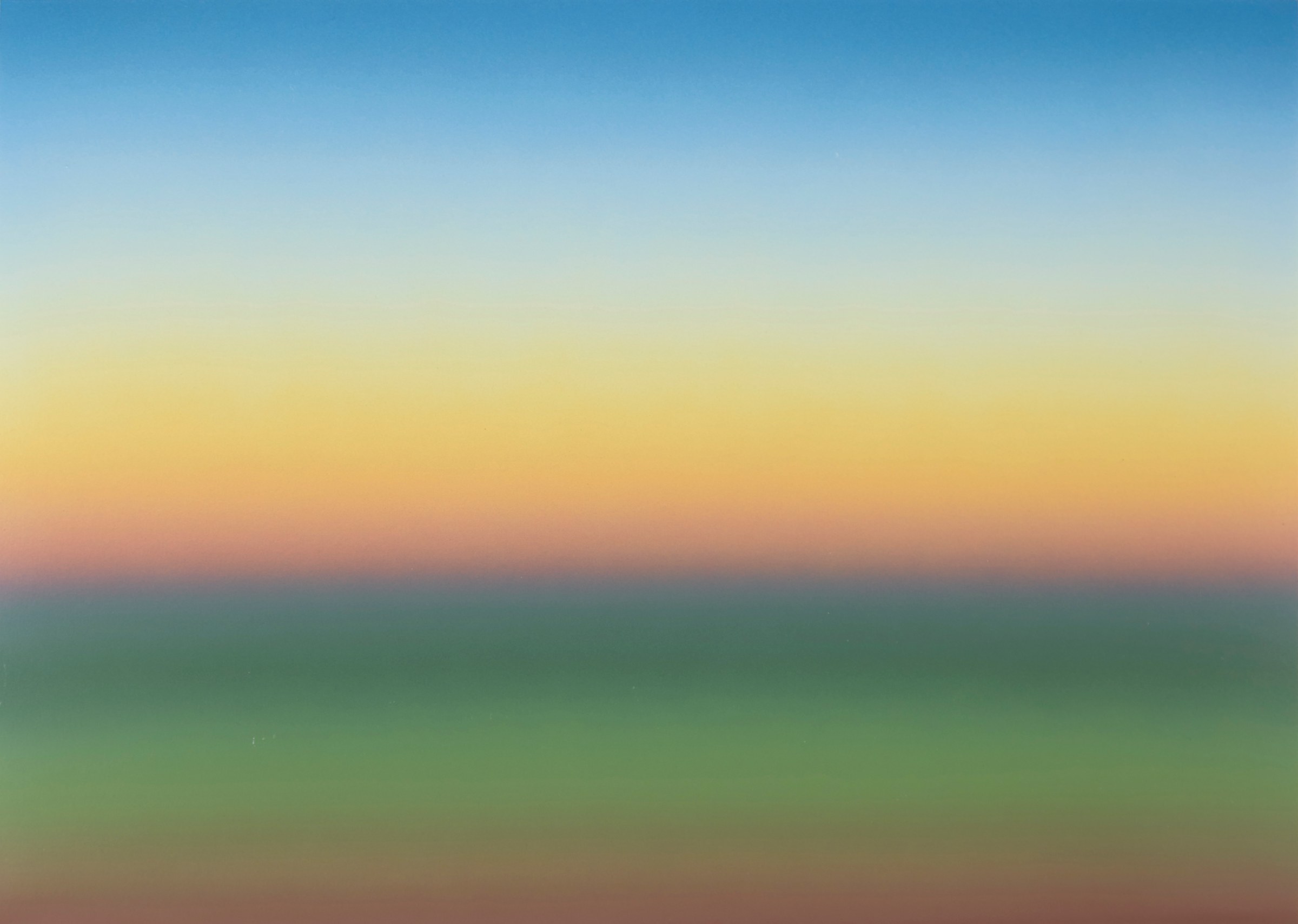
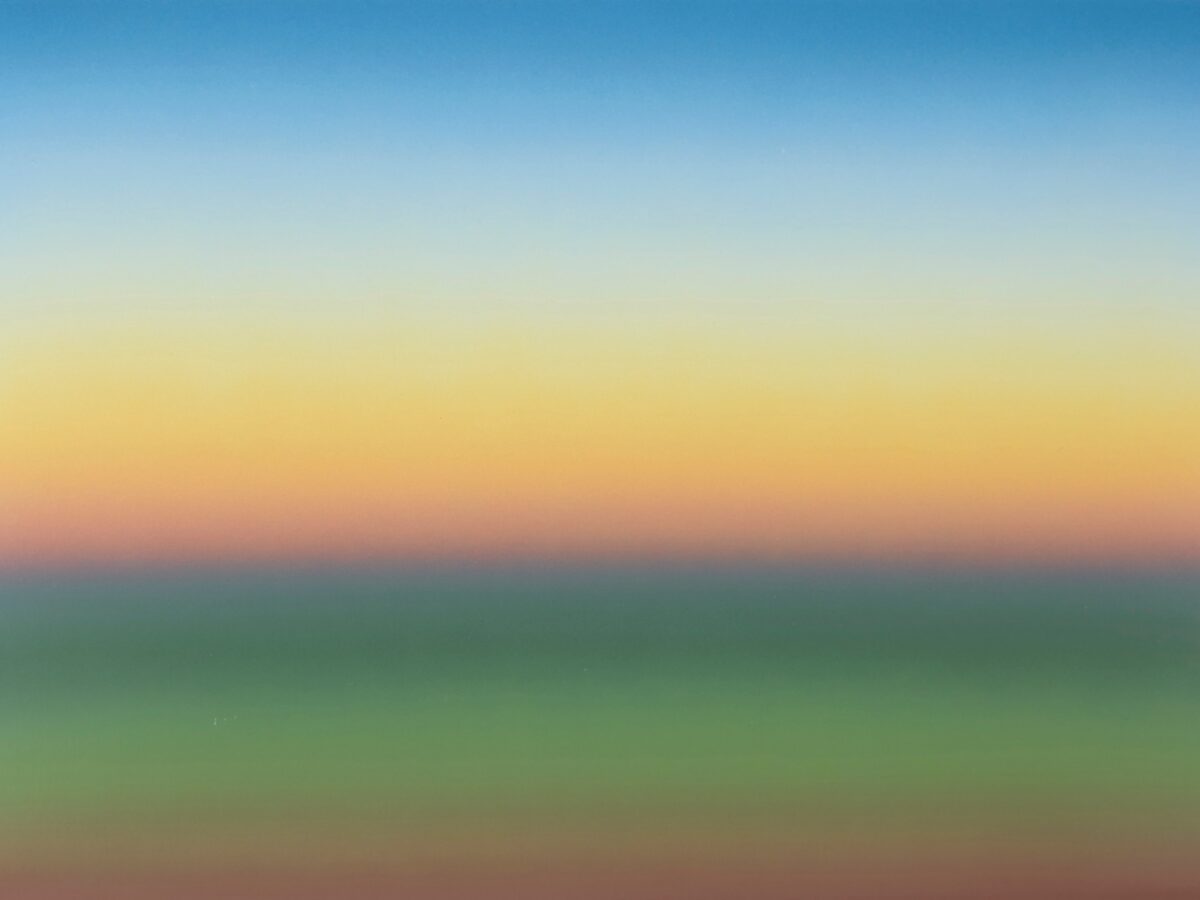
The gradient logic found its explicit, painting-based form in a companion series of airbrushed panels: alu-dibond sheets sprayed with the exact color gradients of specific storms, sunsets, and skies Kessler witnessed and photographed — Ifen and Devils Thumbs Ranch (both 2018, New York), Storm over Catskill Mountains, New York (2021), Gradient Venice, 9/20/17 7:36 PM (2021), and Helengert-Allgäu (2022, 111 × 171 cm). As Kessler frames it, these panels historicize fleeting atmospheric moments — tied to personal memory but standing in for “the universal time of light” — using the same mechanically-produced gradient language as the object works, now applied directly as paint rather than airbrushed onto found geology. The series was shown at the Austrian Cultural Forum (London) in 2022 alongside works from the Objects of Unbelonging / Nowhere to Be Found cluster — gradient panels on the walls, coral and mineral sculptures on plinths in the same rooms — making explicit that the two strands (object and painting) are read as one project.
The gradient-on-painting logic sharpened further in 2024–26: rather than airbrushing an original witnessed sky, Kessler began airbrushing gradients directly onto reproductions of specific historical paintings — Turner’s Seascape with a Yacht (2024), then a 2025–26 Artboard Edition built around Caspar David Friedrich (Sea Beach in the Fog, Winter Landscape, Greifswald in Moonlight, Winter Landscape with Church) and Edgar Degas (Racehorses in a Landscape), each in small editions on art board. This makes the project’s core argument explicit rather than implicit: the gradient is lifted straight off the same 19th-century landscape tradition (Friedrich, Turner) that the whole Light Phenomena project has been arguing against all along, folding Dr. Christos Zerefos’s research on historical sky-color and air pollution directly into the work.
In this project
Installation views