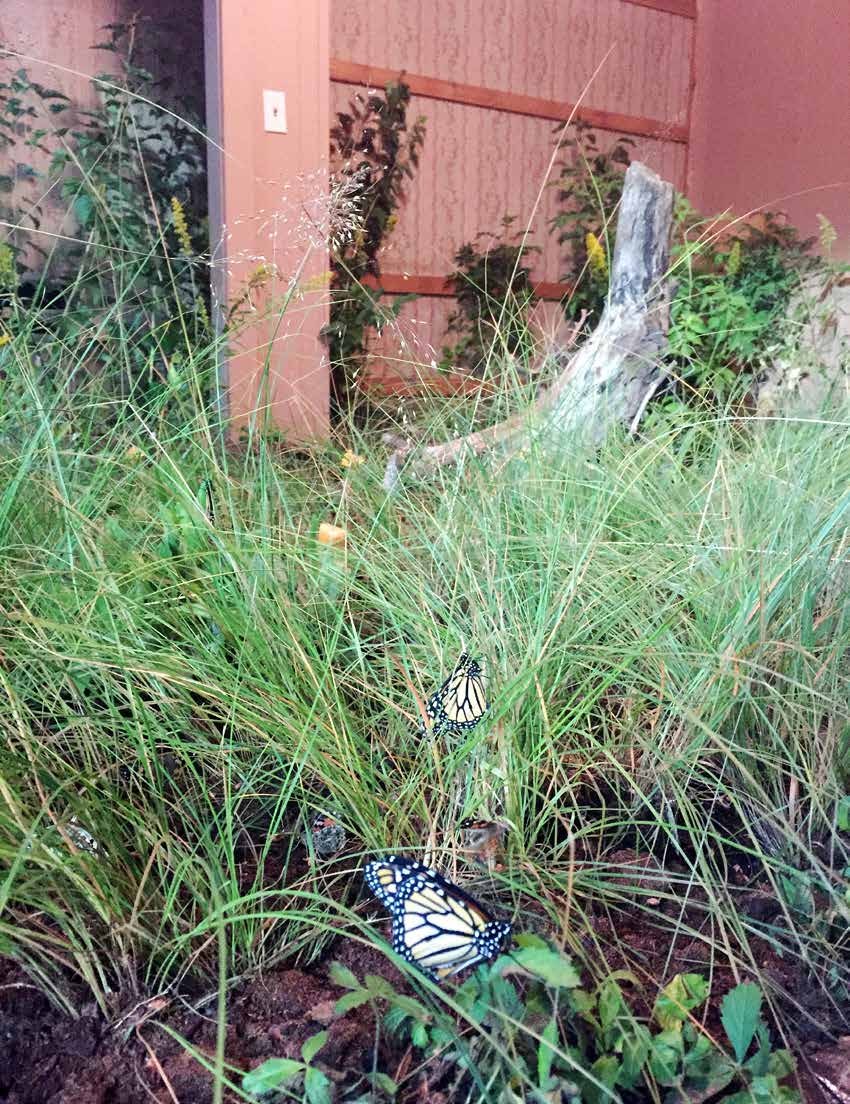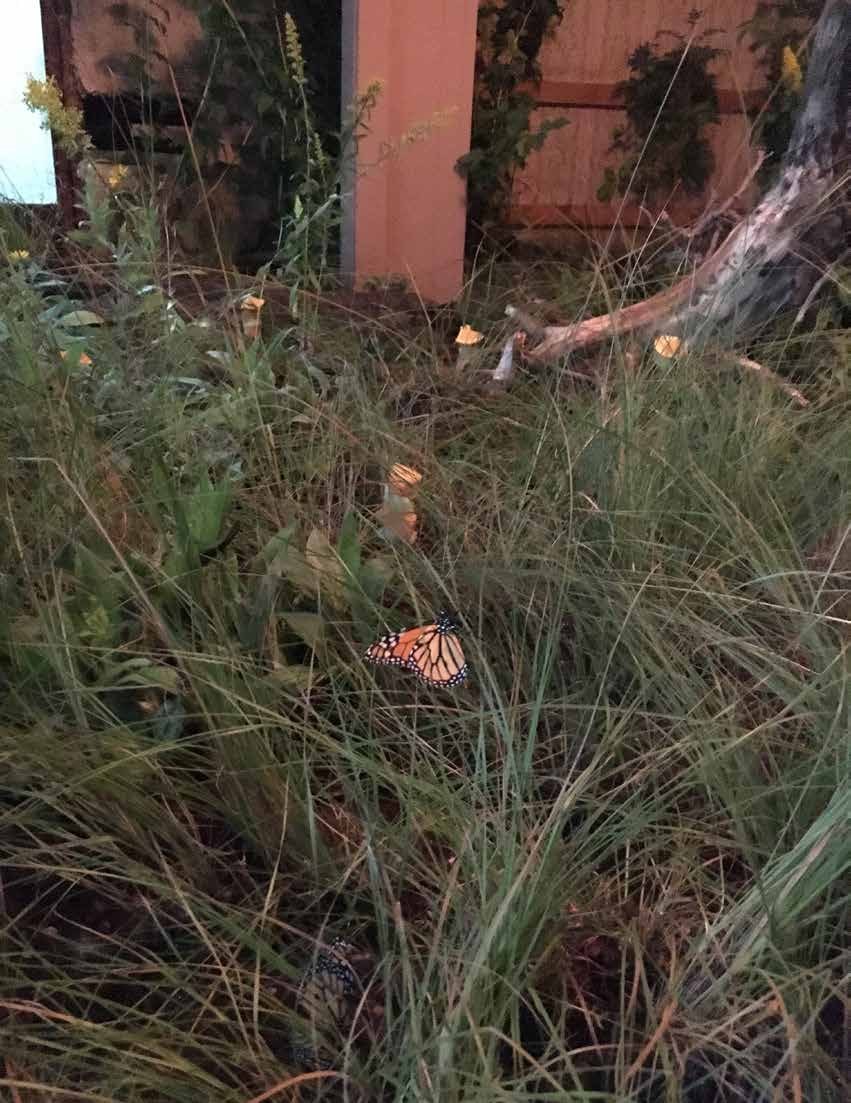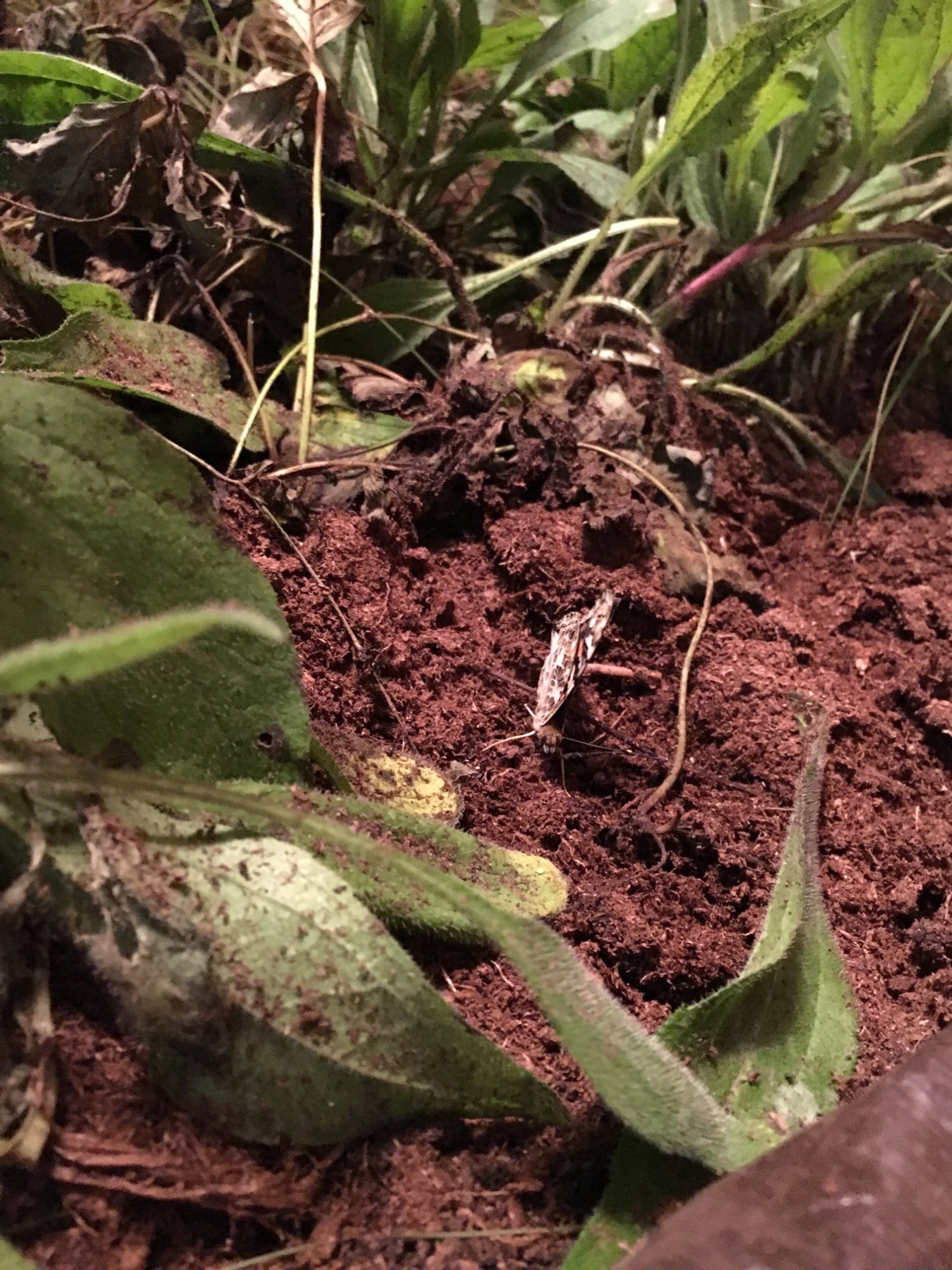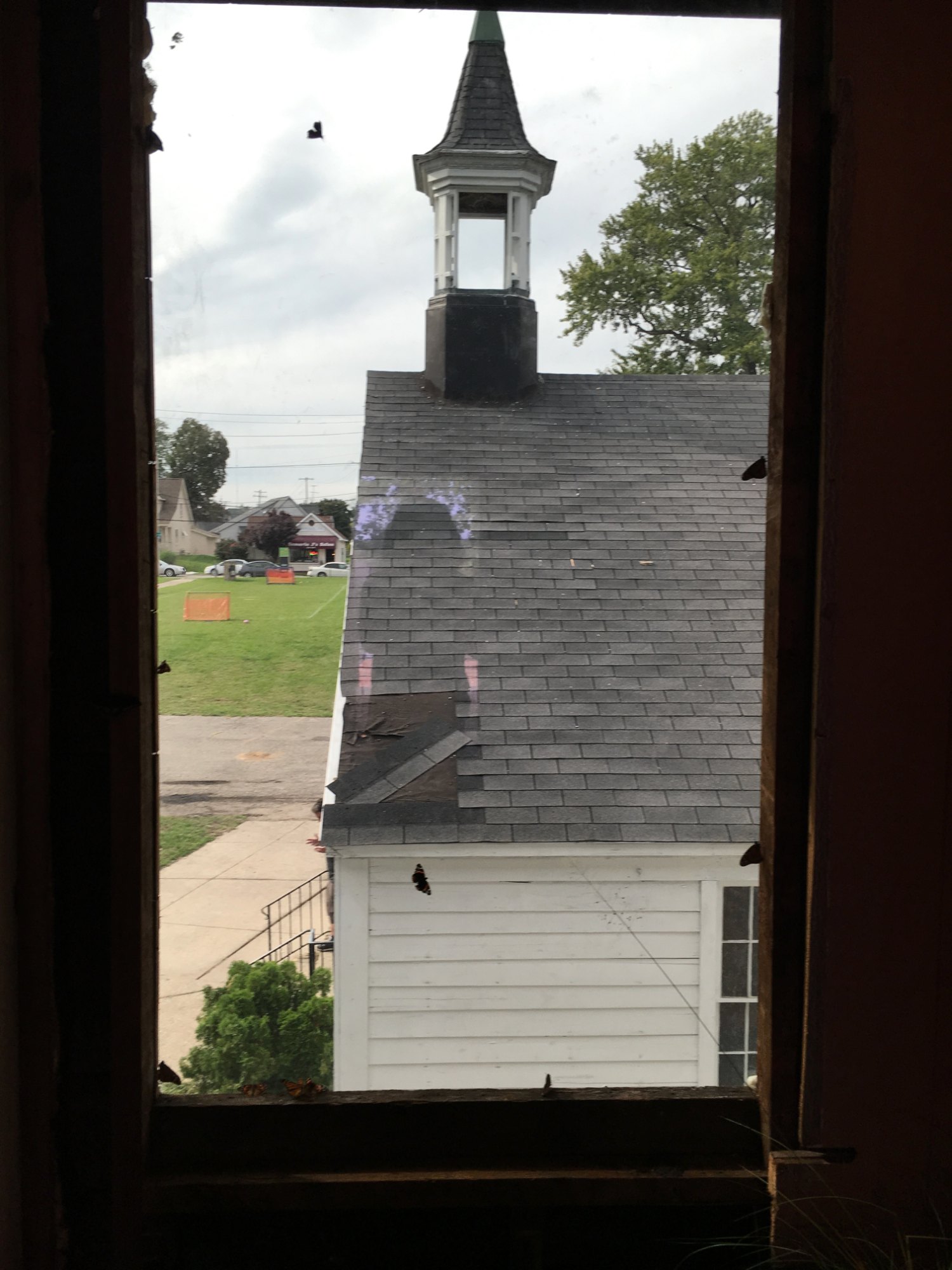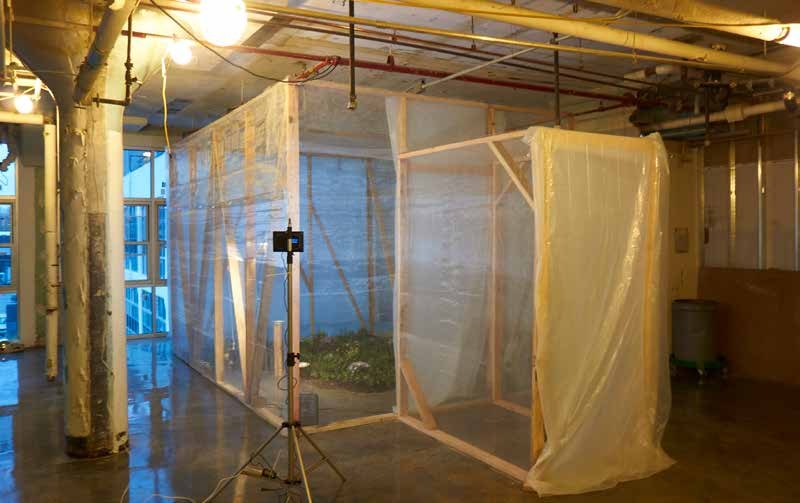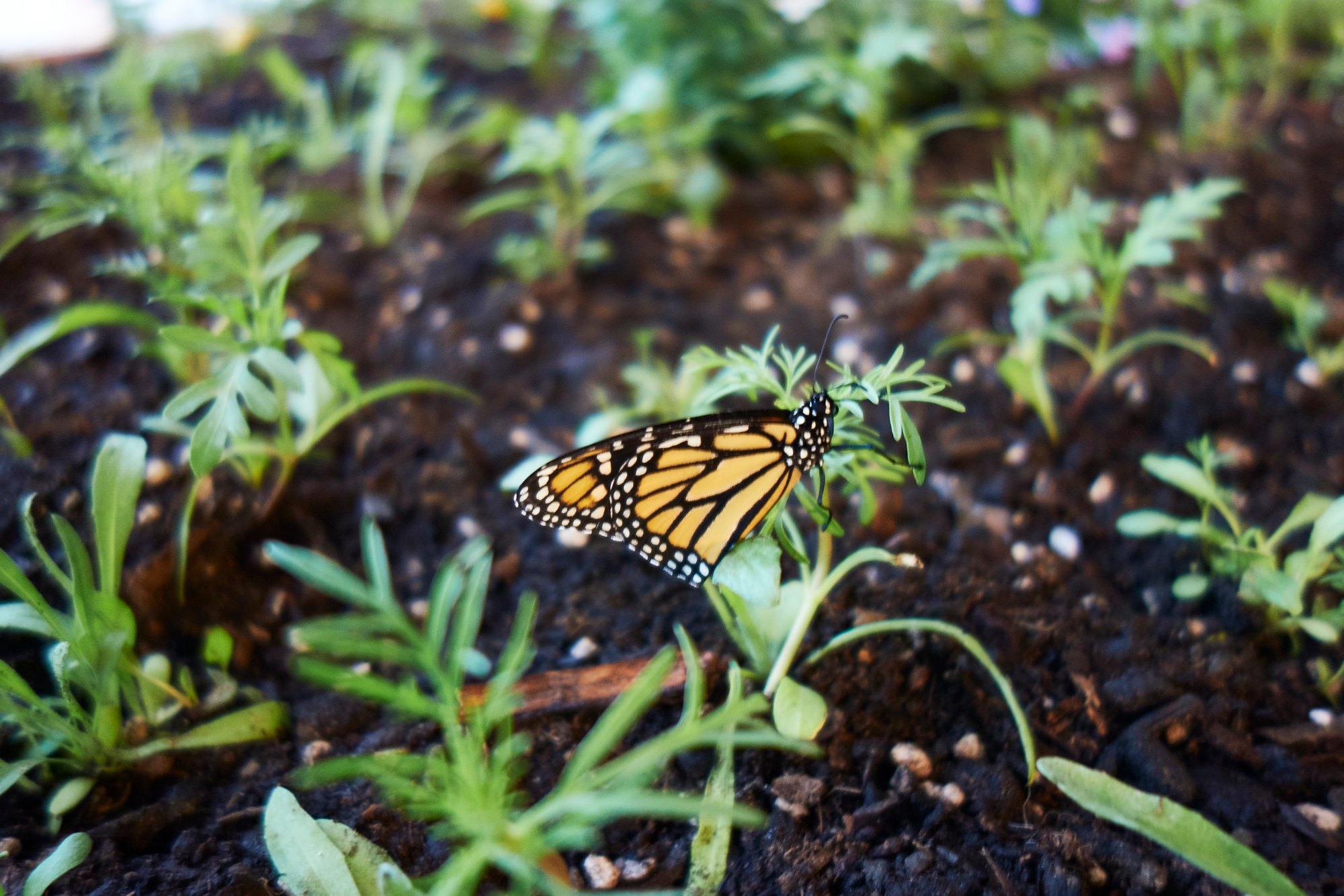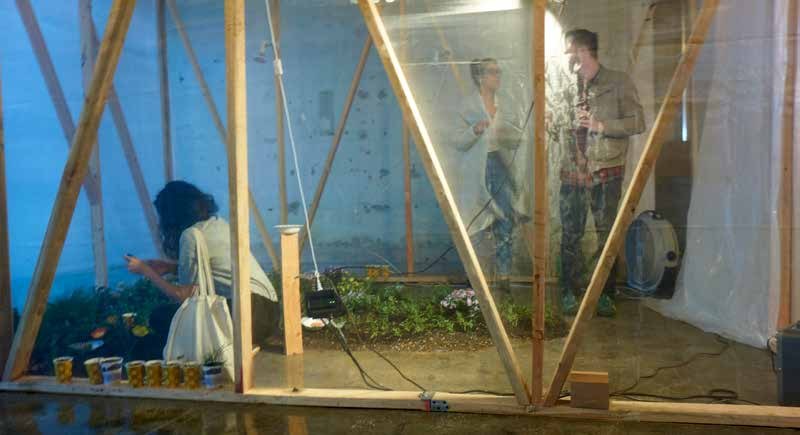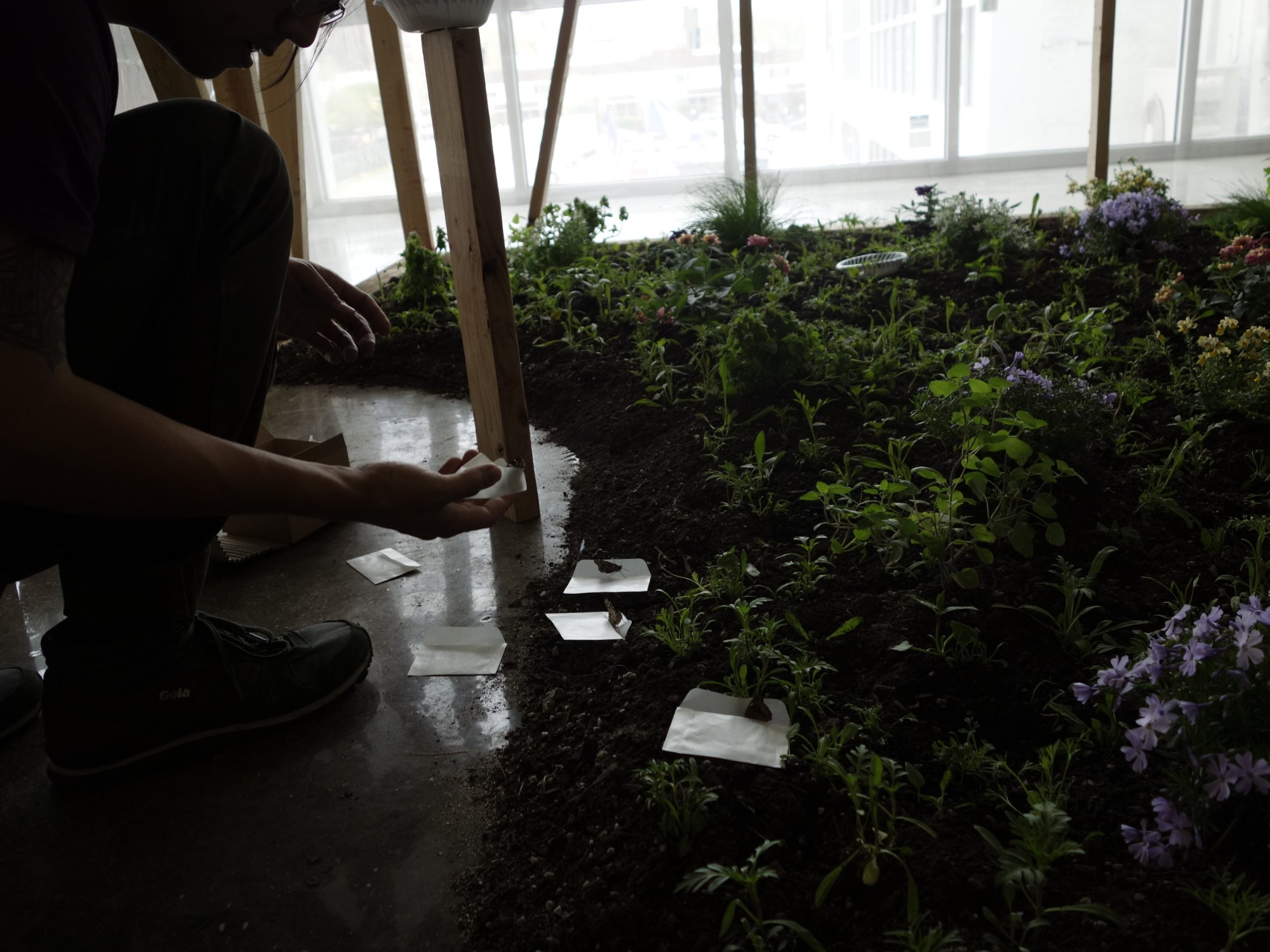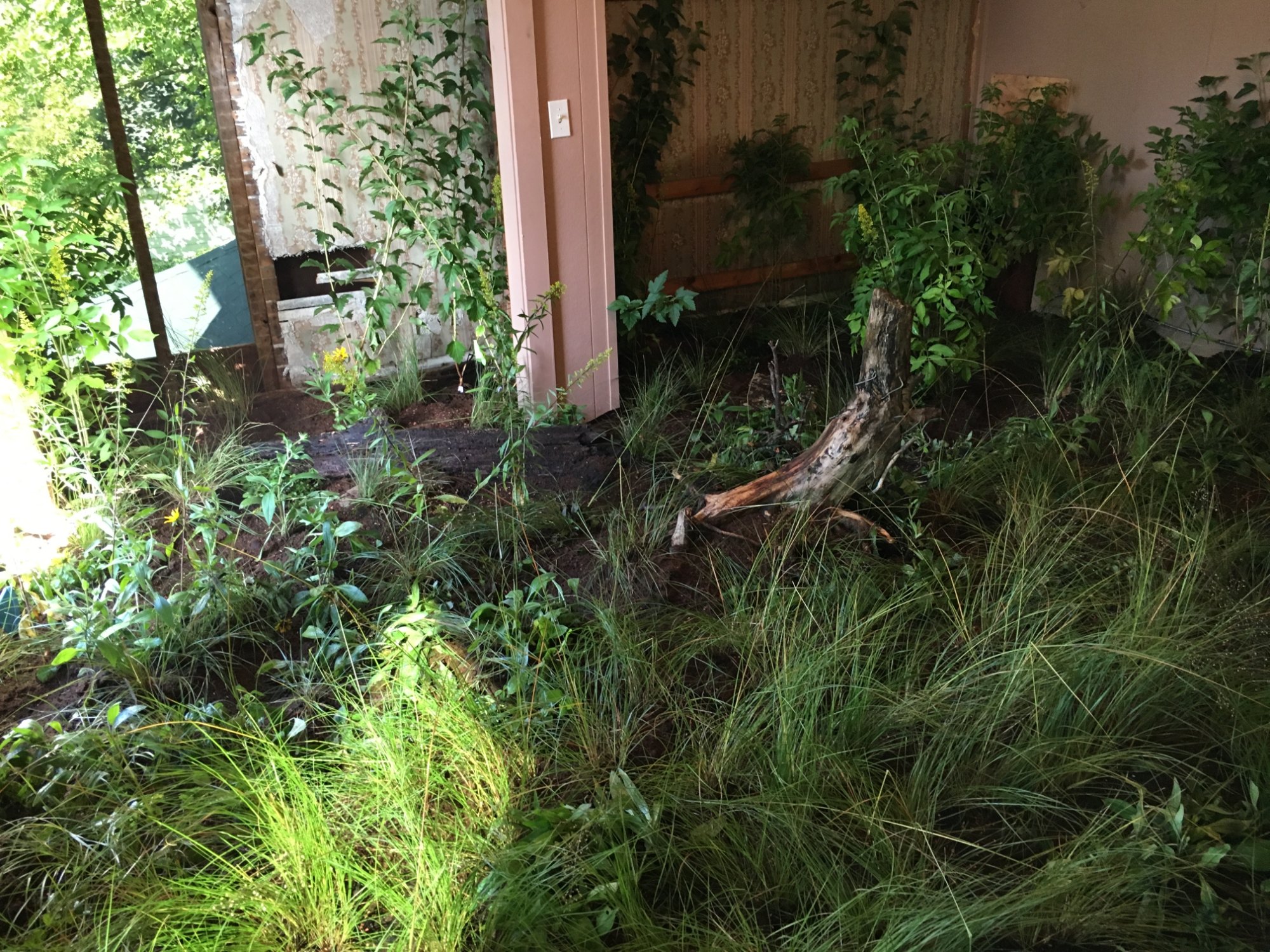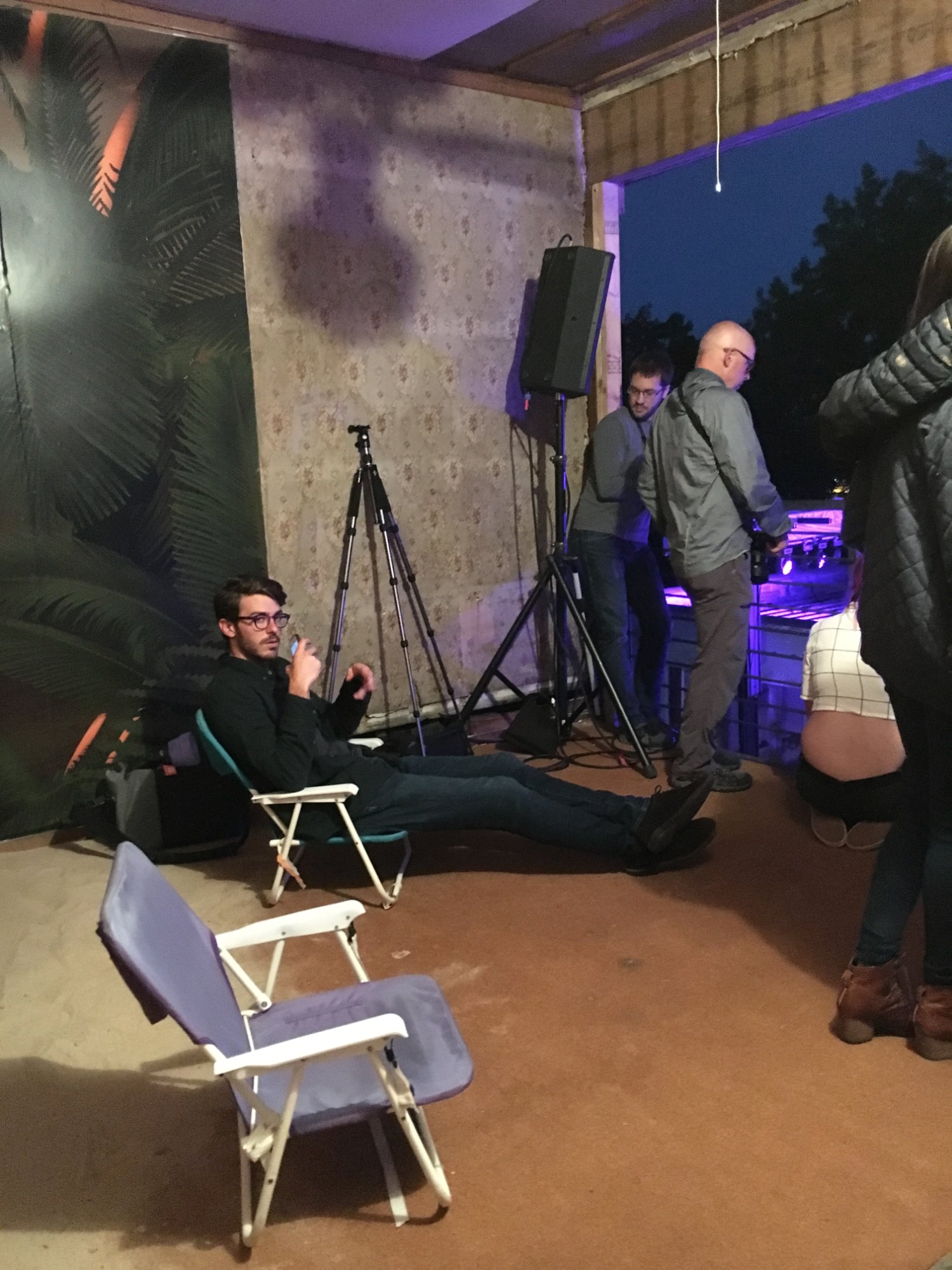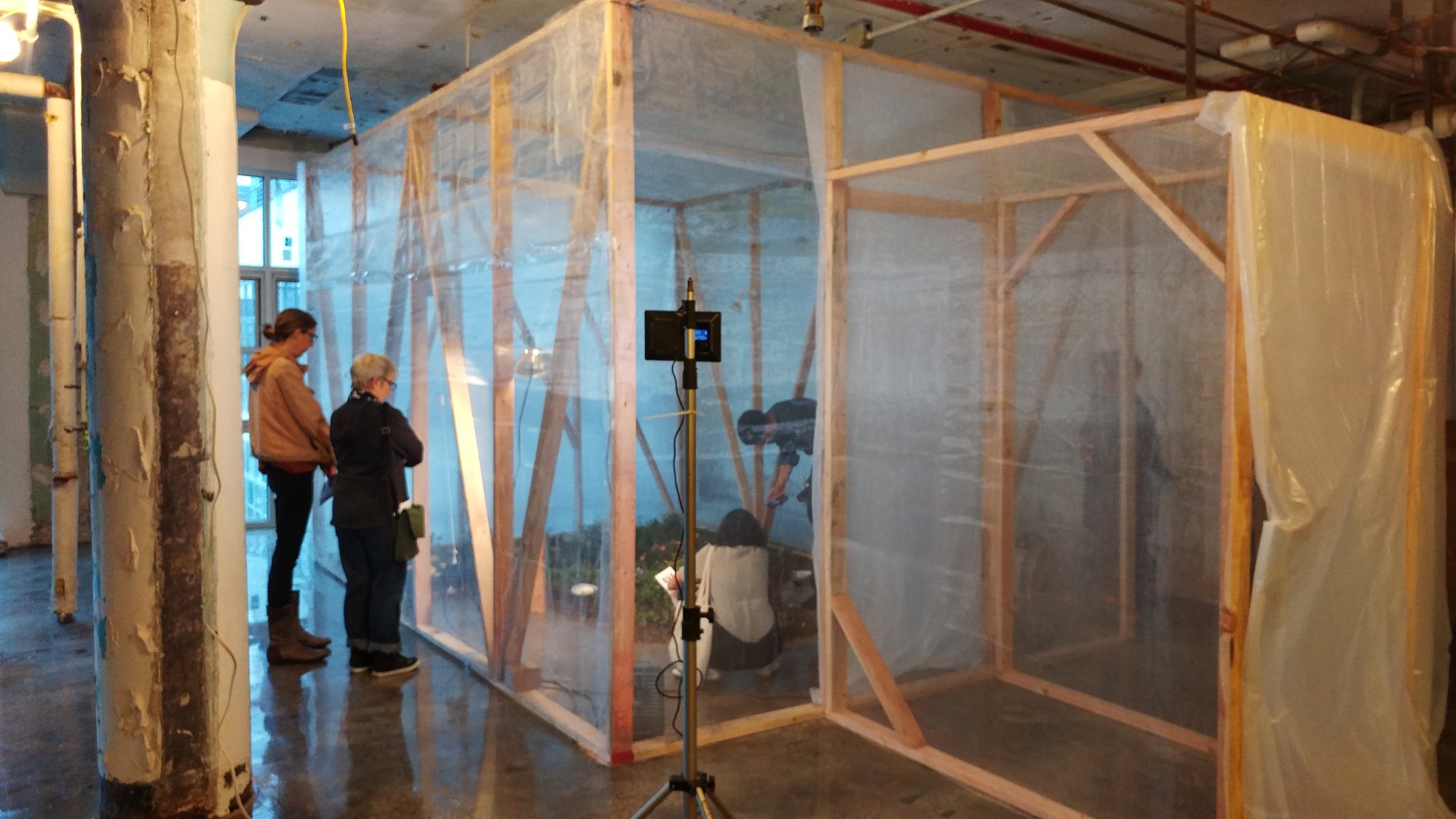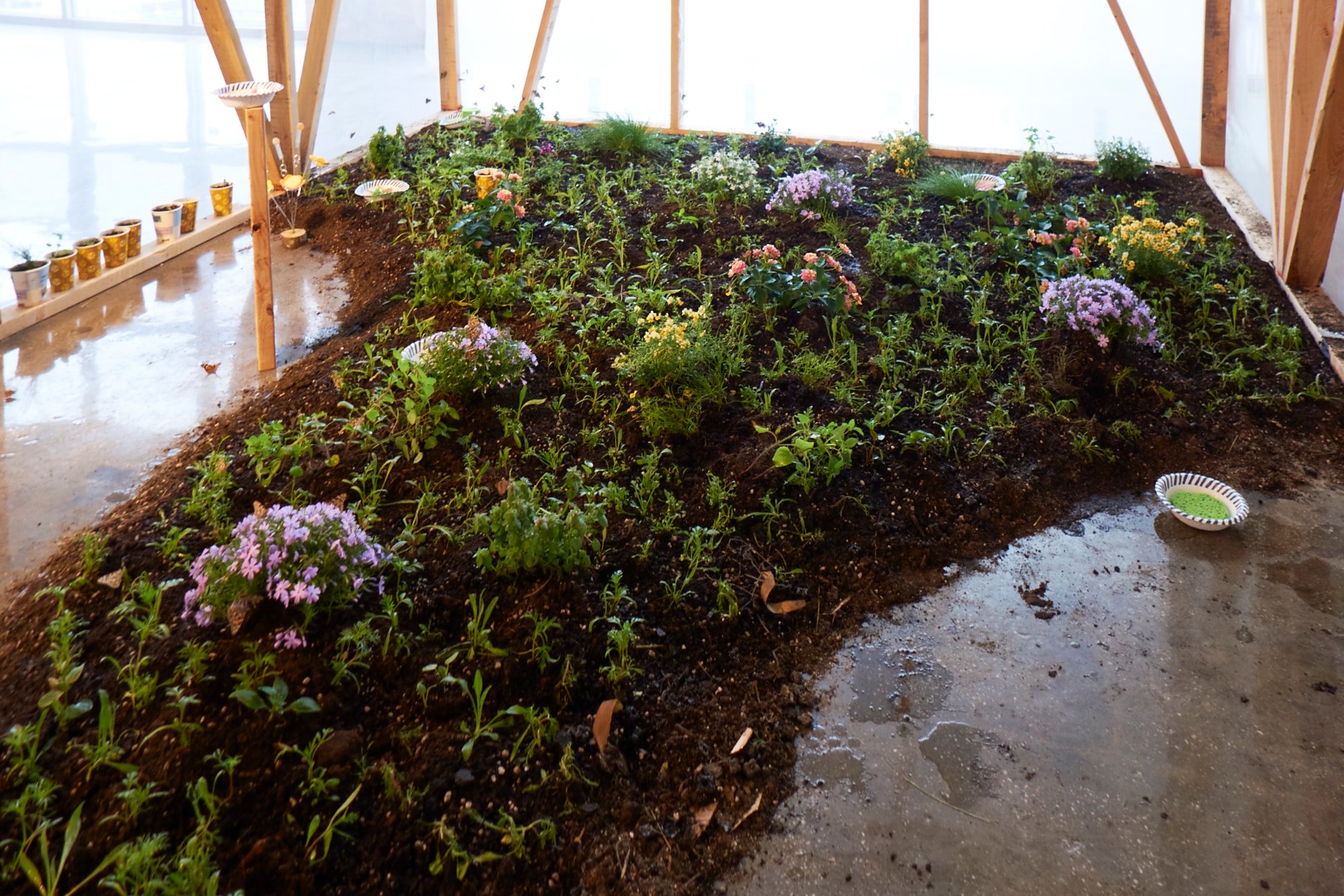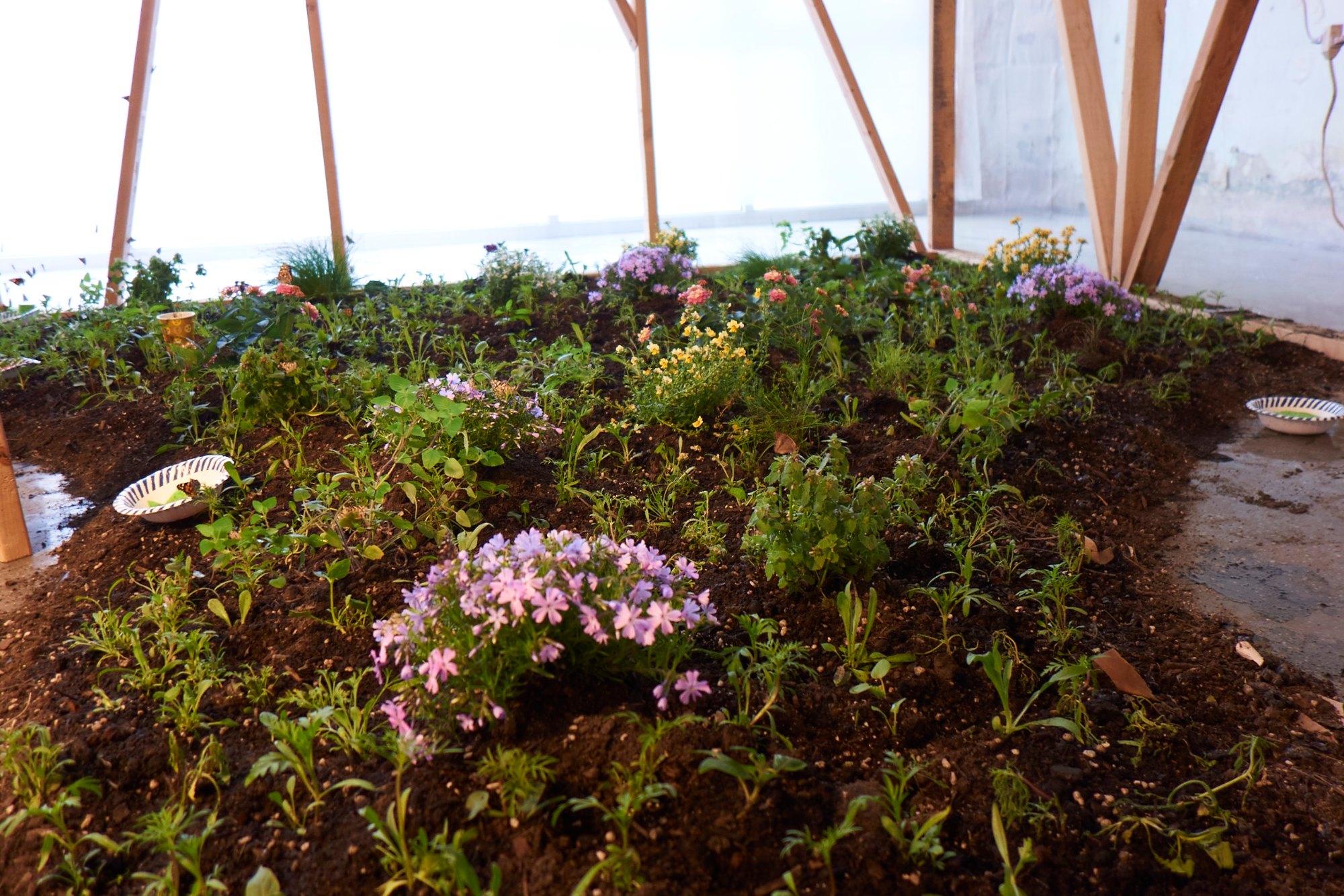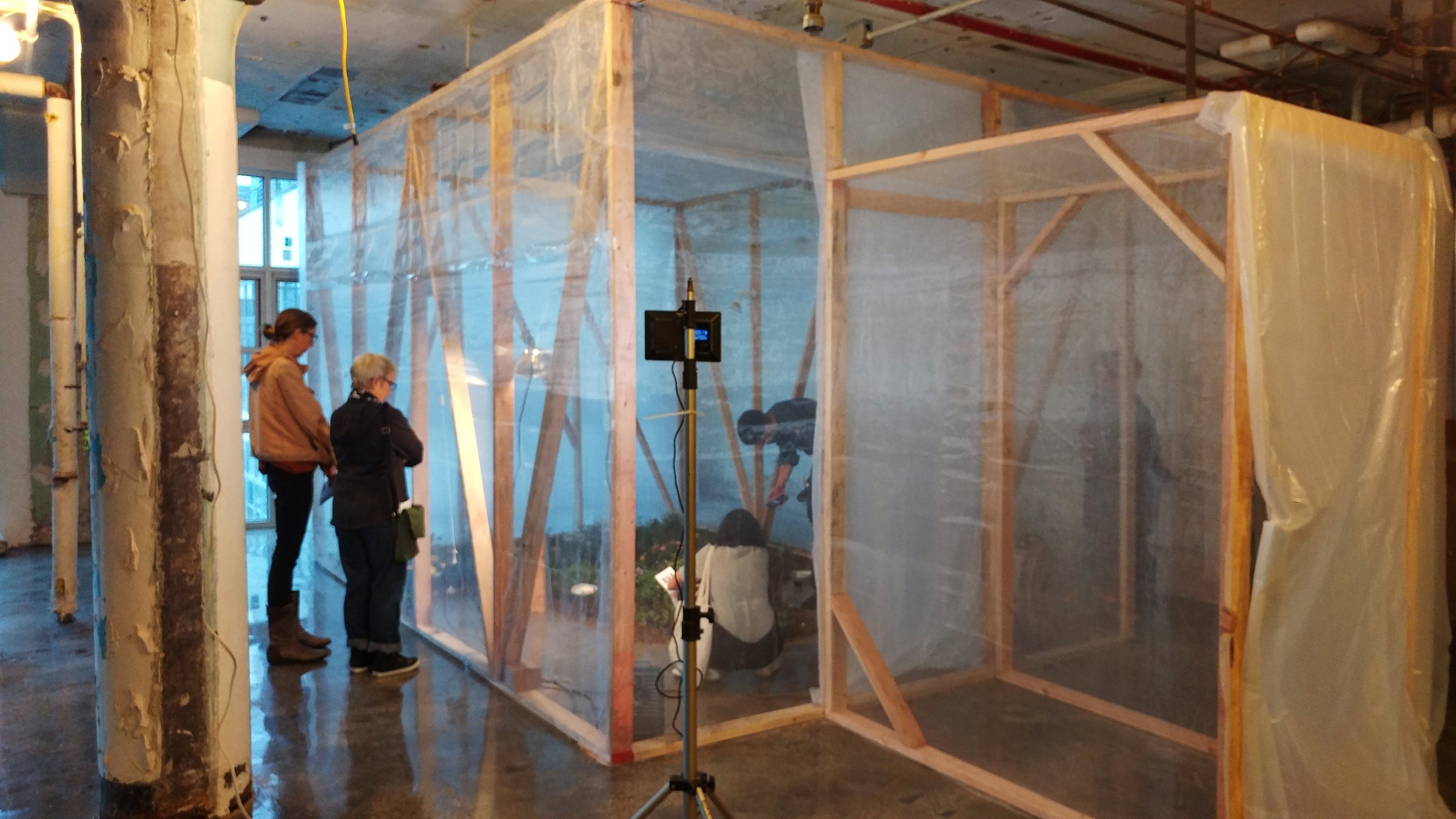
For California Dreaming, a group exhibition staged inside an abandoned rectory on Rumsey Street in Grand Rapids, Michigan, Kessler was drawn to the gap between memory and representation that sits inside an emptied building — the traces of a life that took place there, invisible to a visitor except in intangible ways. On the rectory’s second floor, working with Matthew VanSweden, he built Habitat: a greenhouse enclosure planted with native, pesticide-free host plants and inoculated with caterpillars of several native butterfly species, left to complete their life cycle in front of the viewer.
The piece is explicit about what it’s correcting for. A museum visitor standing before a sublime landscape painting, Kessler notes, experiences it in “an odorless, climate-controlled white box” — sight only, no smell, no weather, no risk. Habitat asks for the opposite: a real, slow, seasonal process, undertaken with real butterflies whose populations are collapsing under prestagedesticide use in exactly the suburban and agricultural landscapes that surround the rectory. Access to plants and pollinators that have “almost vanished from our experience” becomes both an aesthetic encounter and, Kessler is direct about this, a piece of environmental education — a demonstration, staged as art, of what a lawn or garden looks likewithout the chemicals.
Works