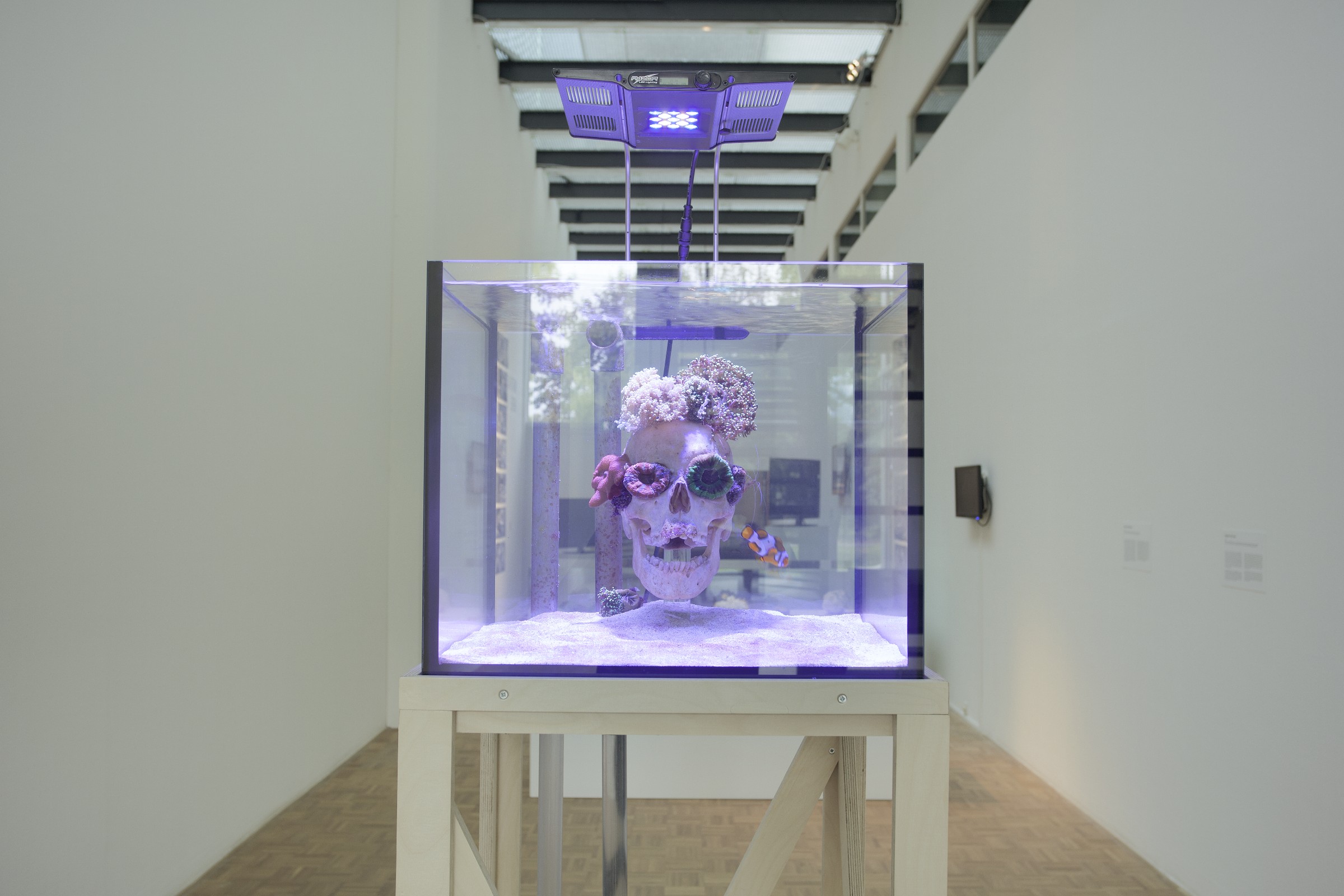
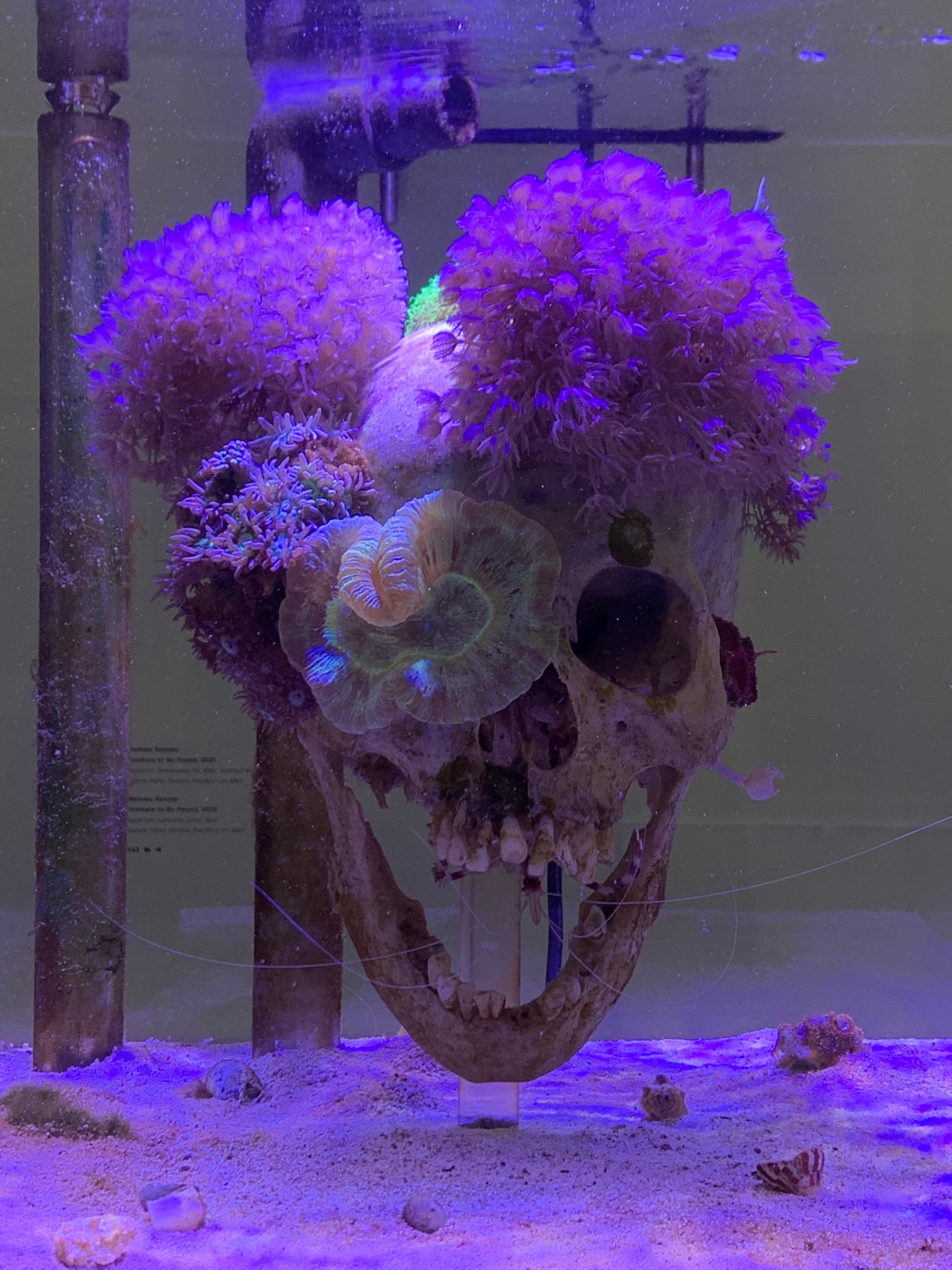
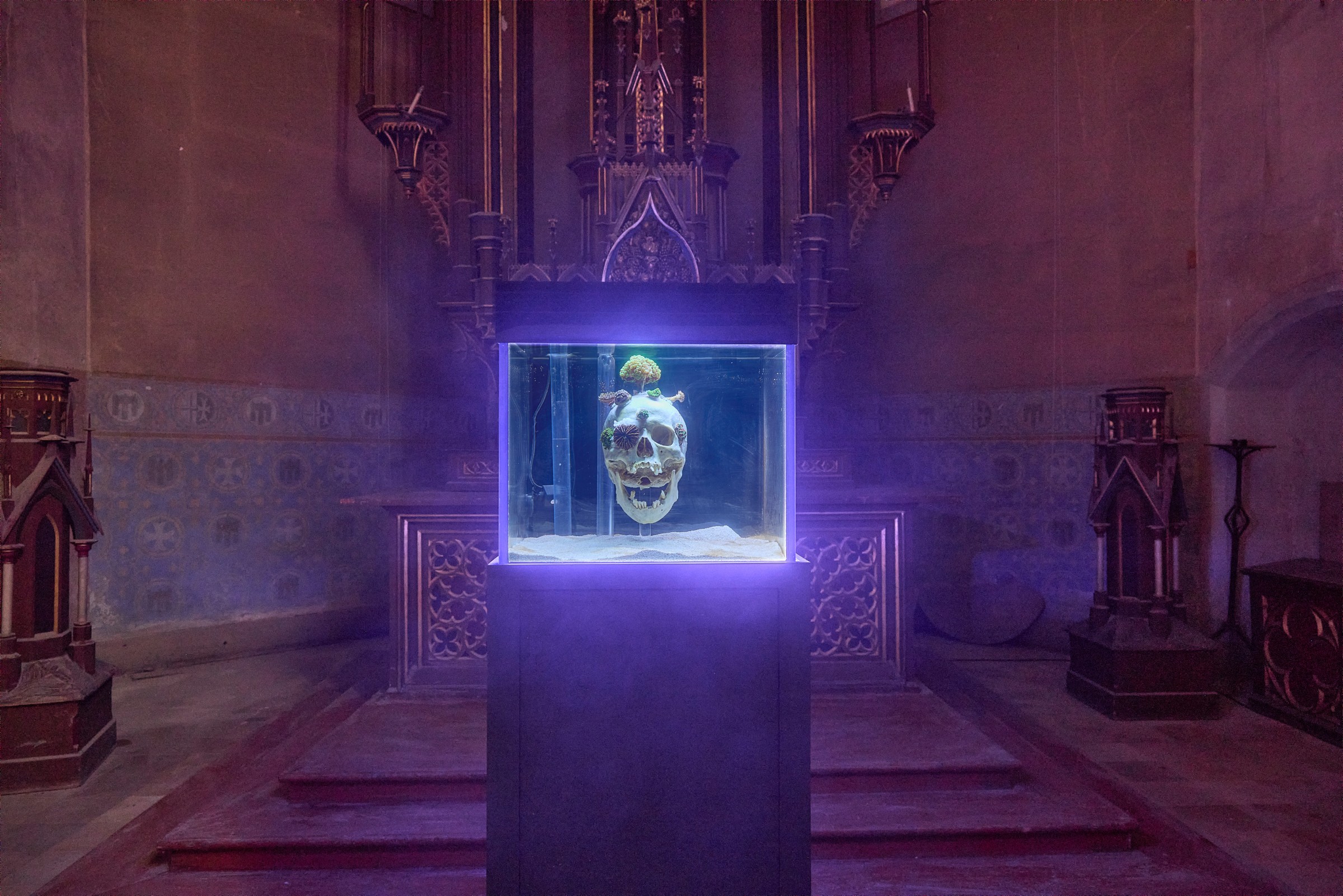
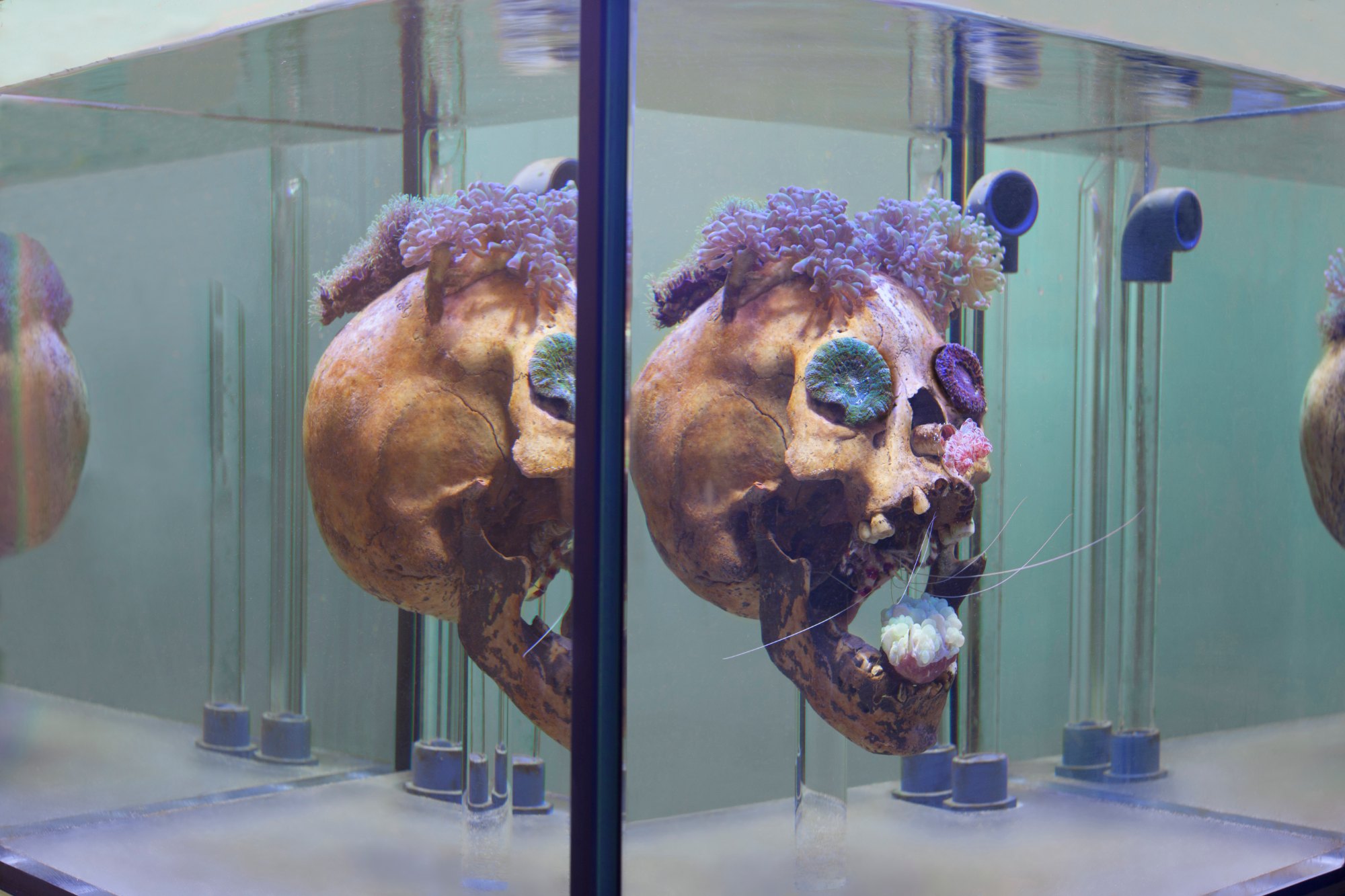
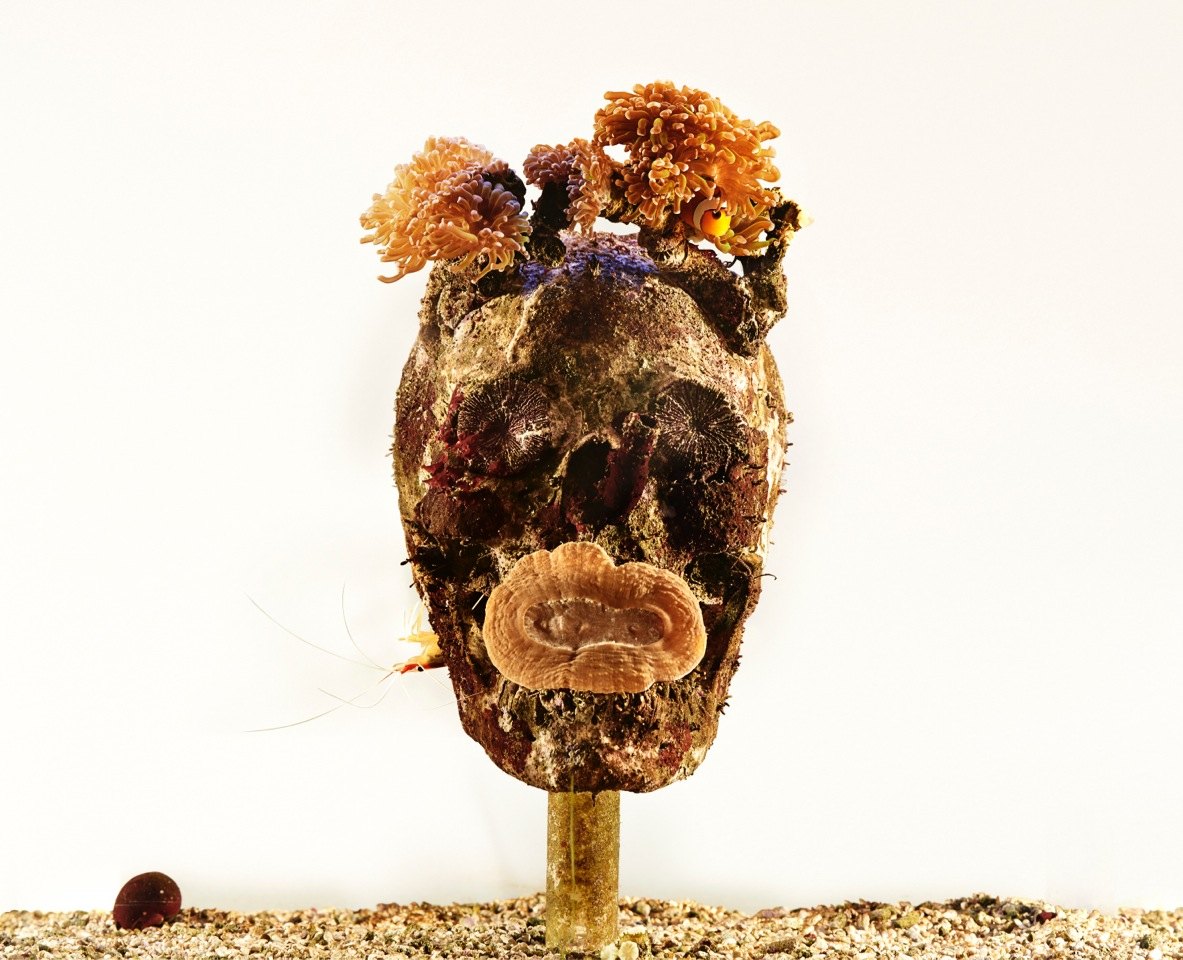
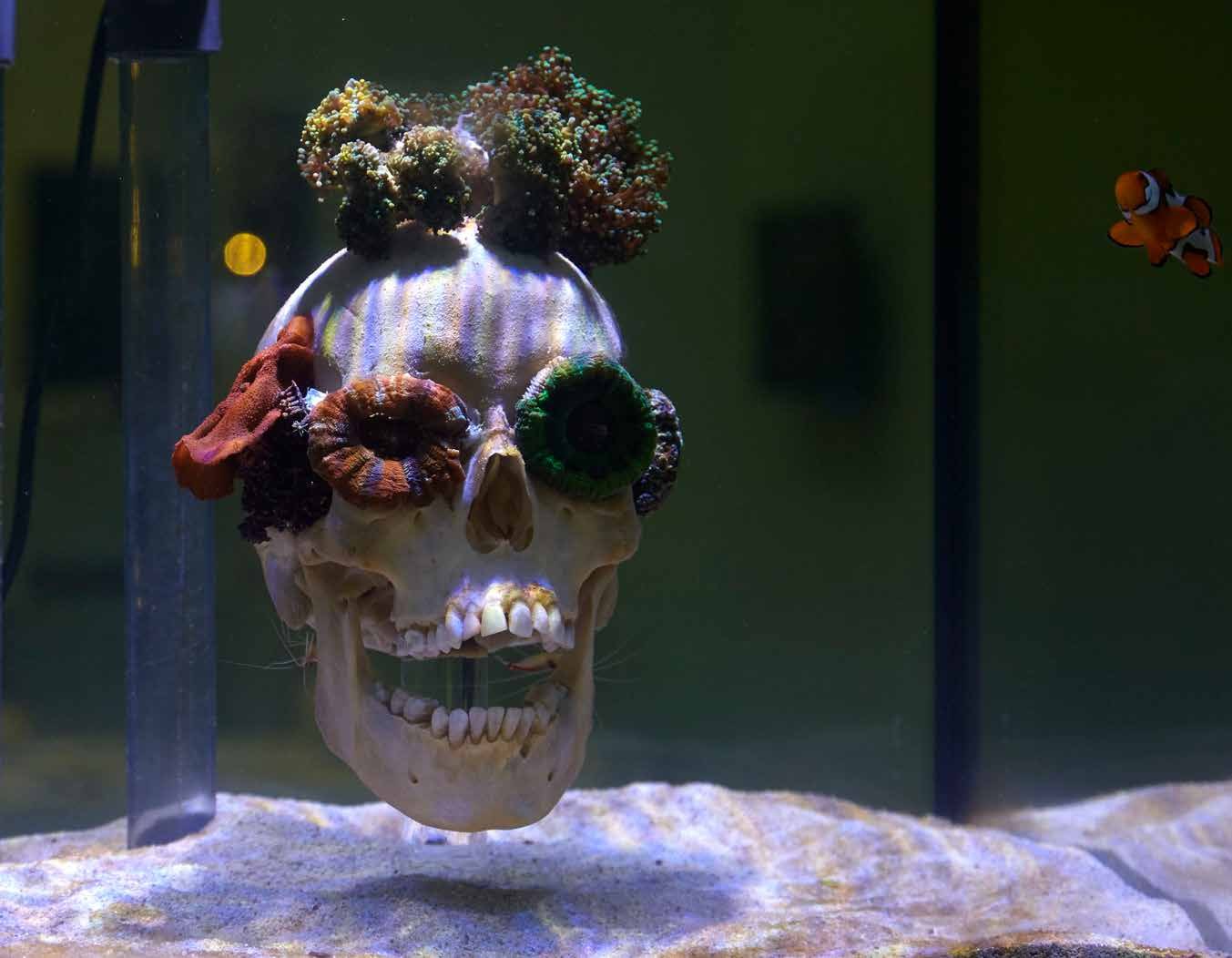
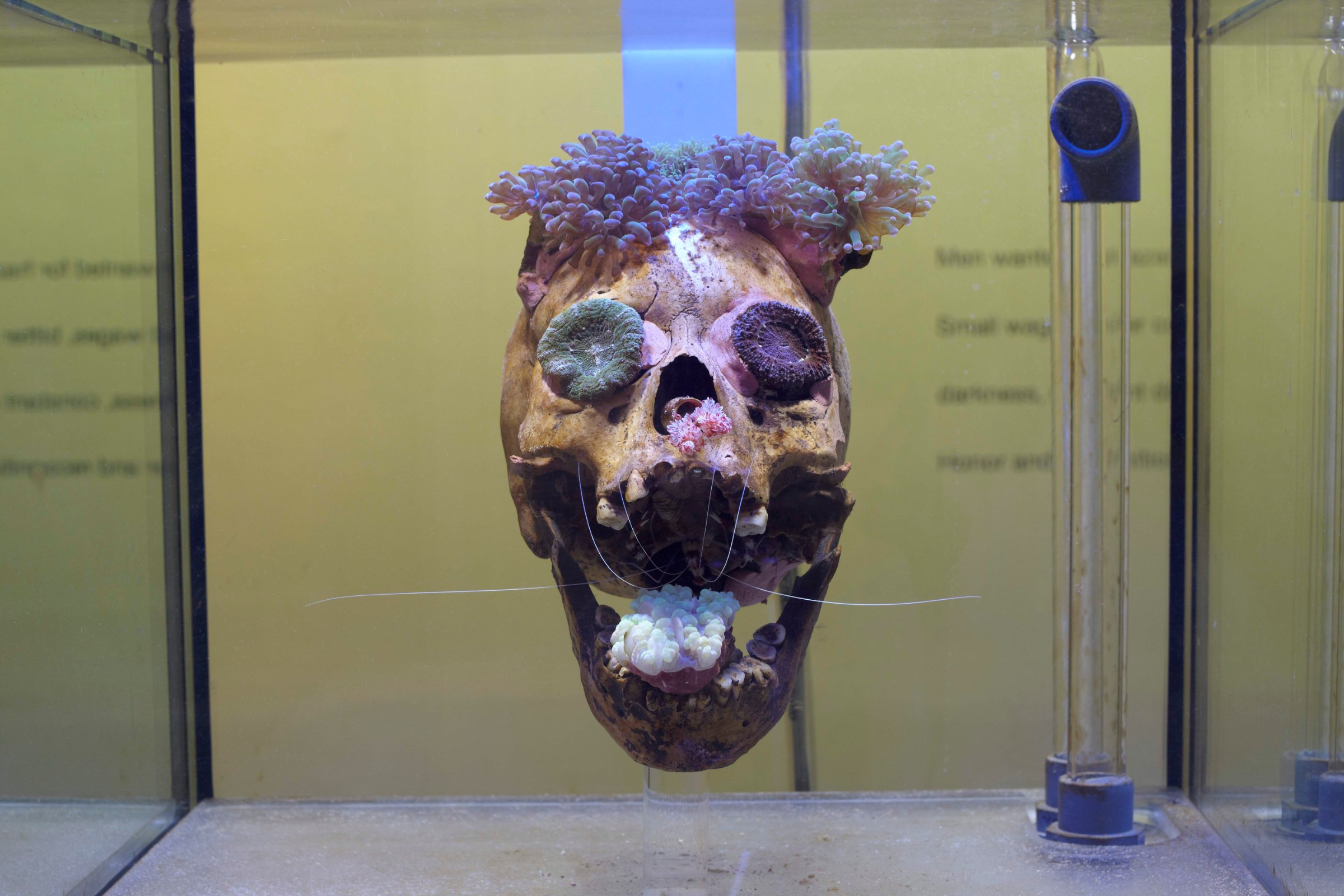
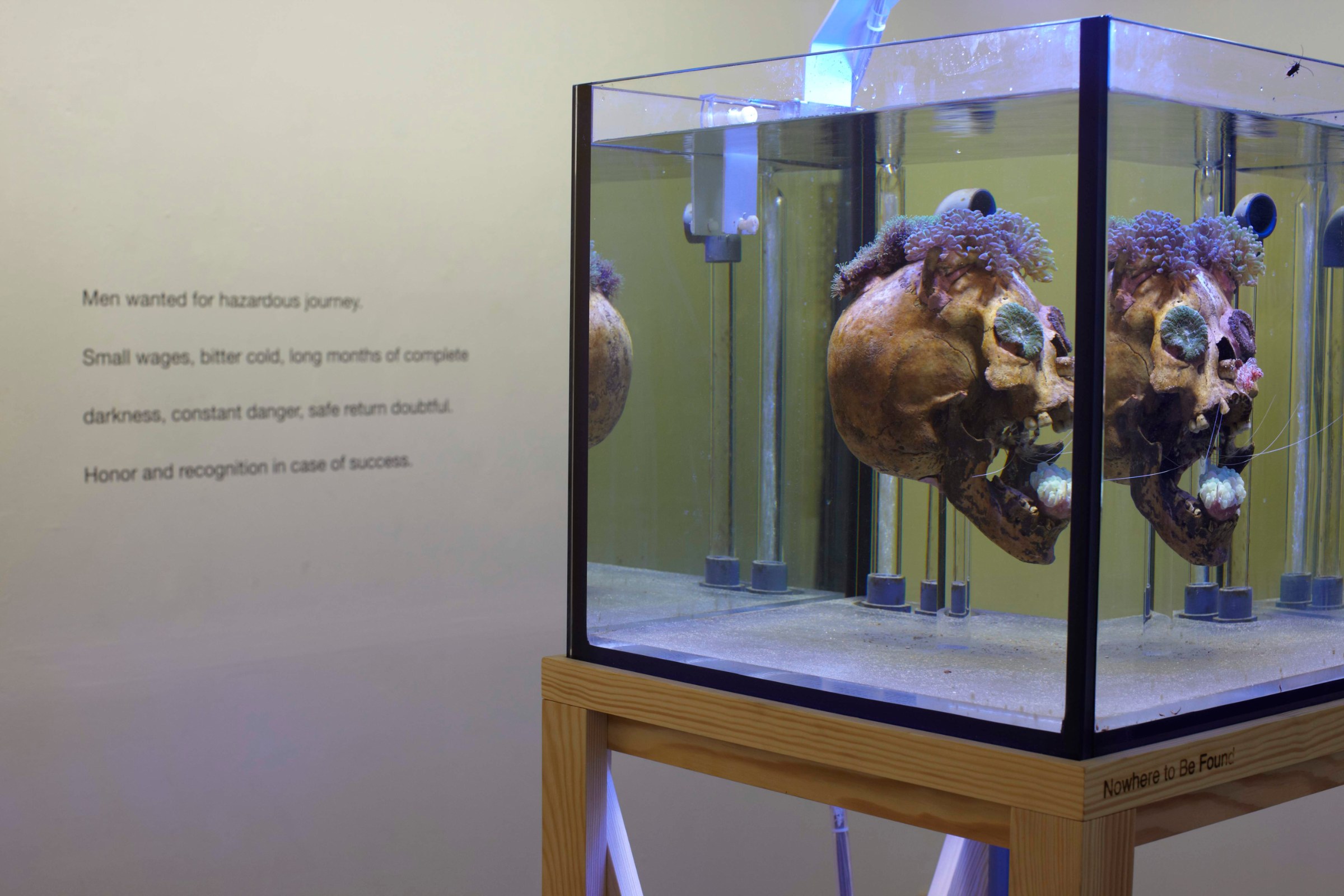
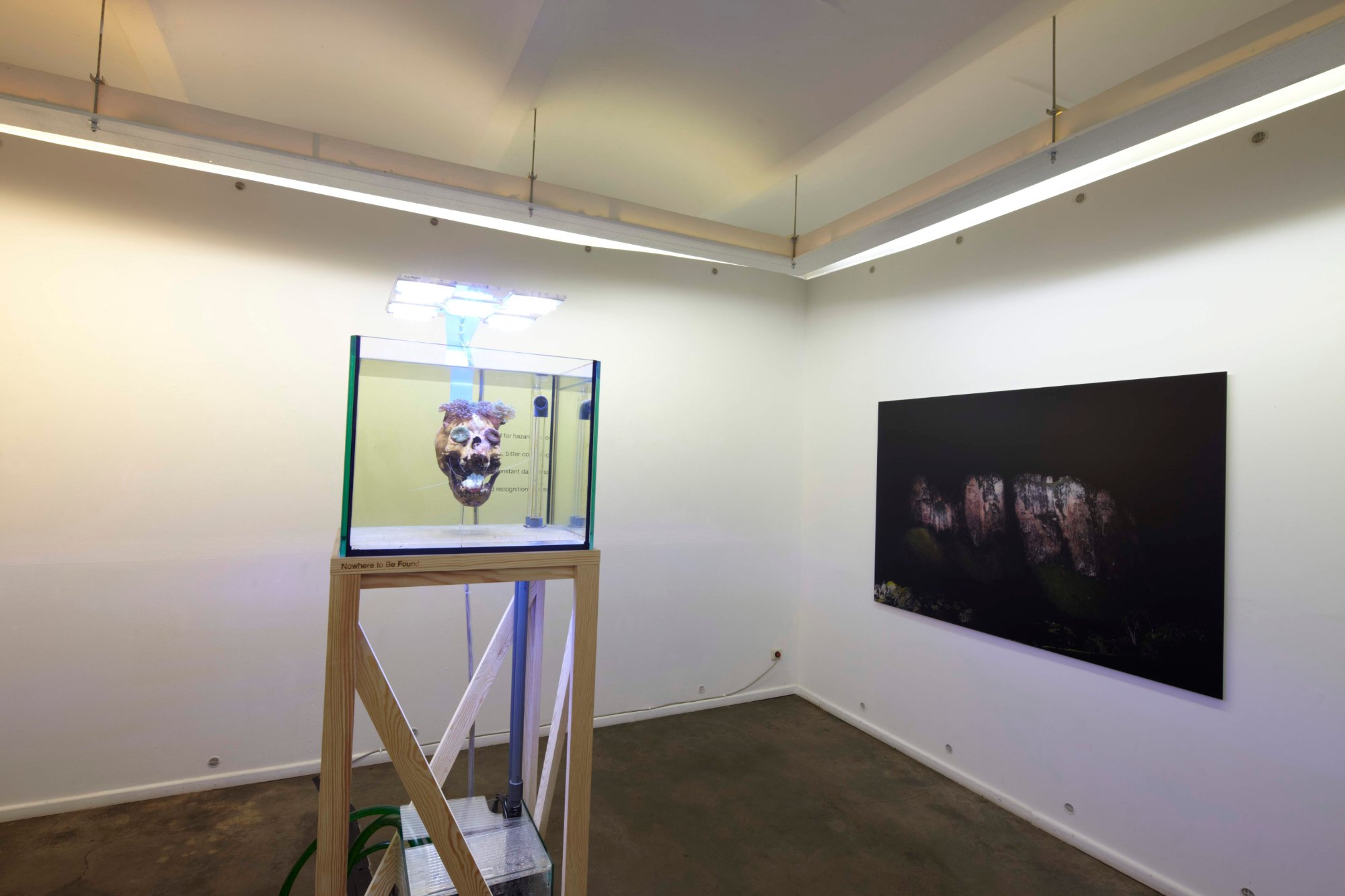
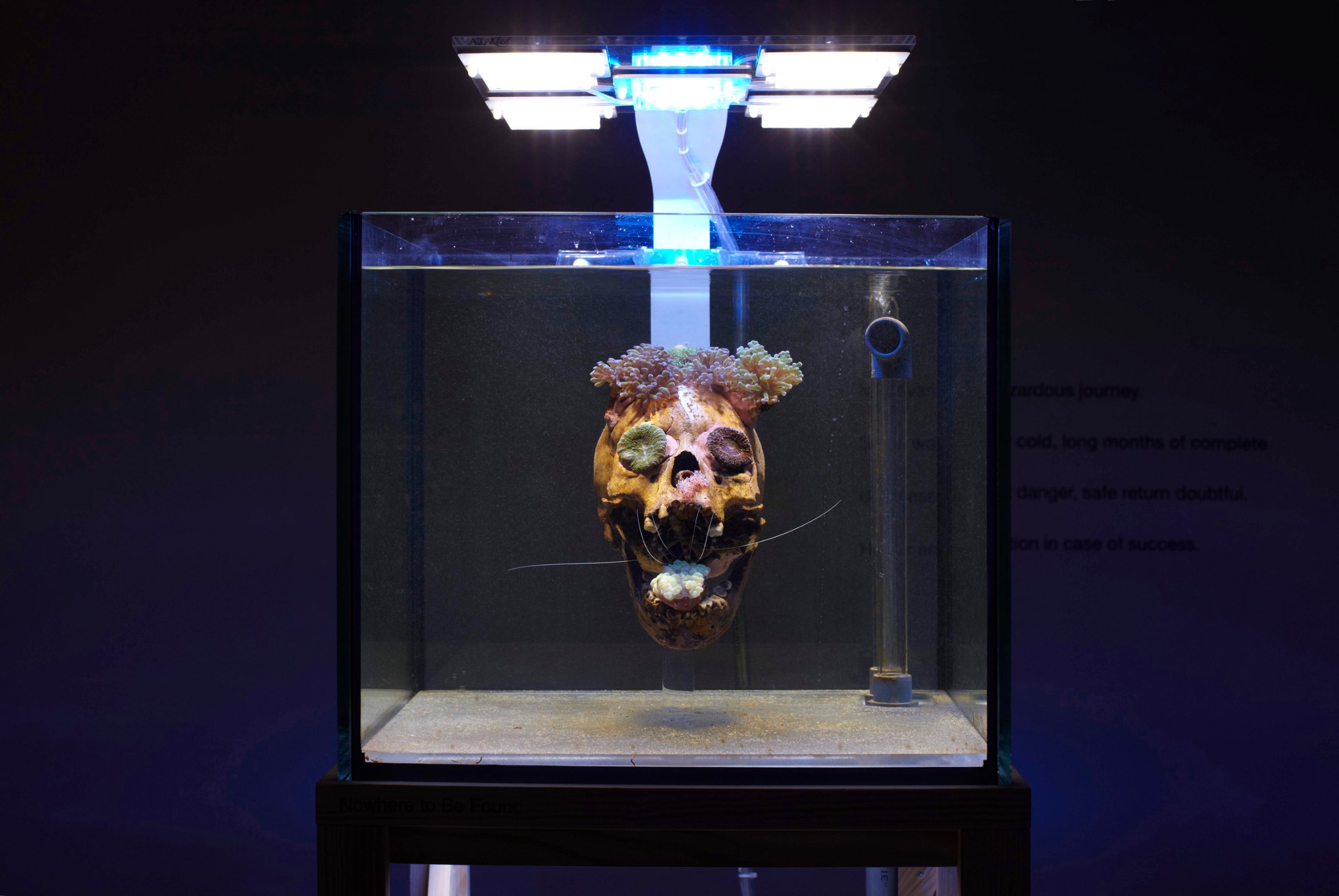
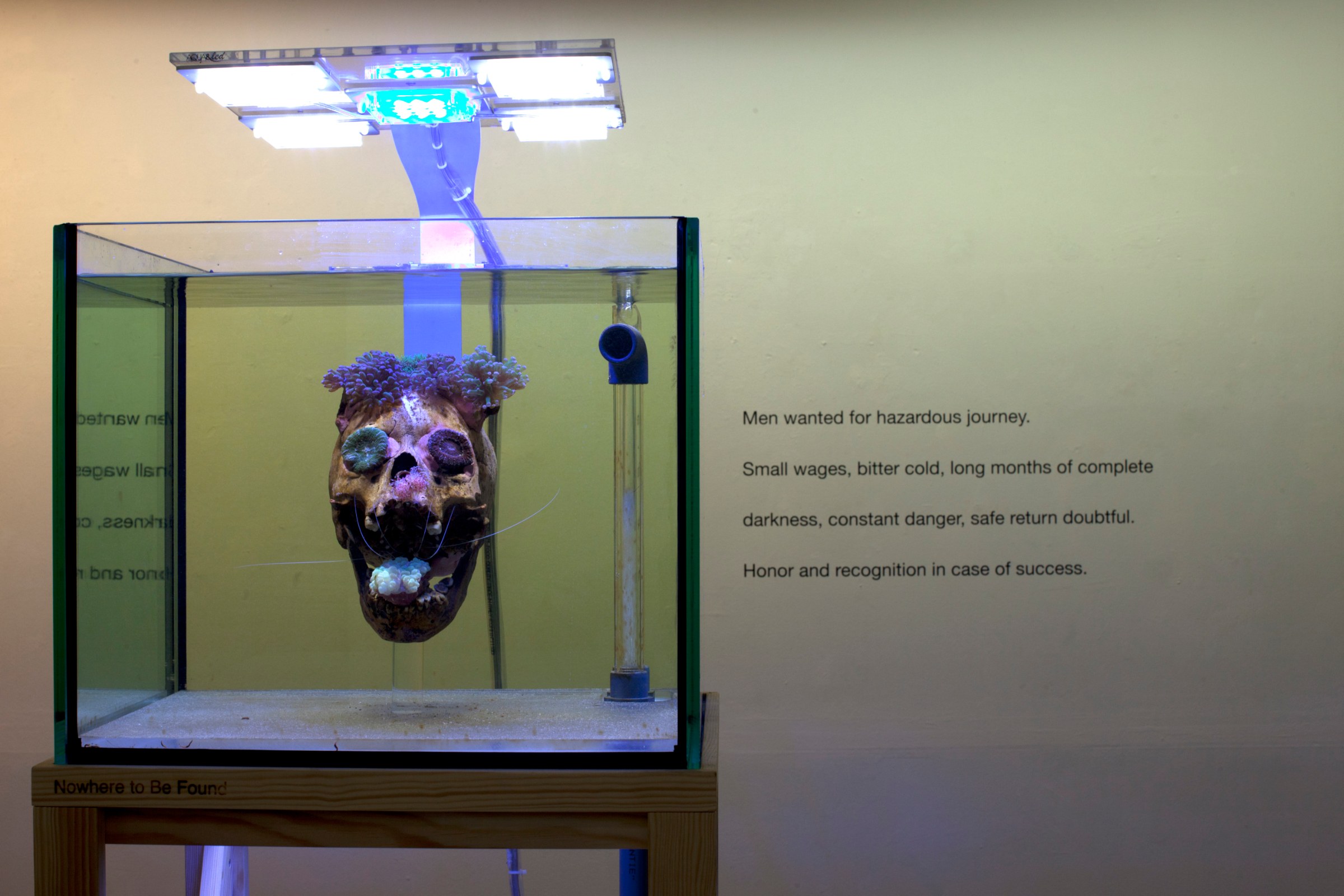
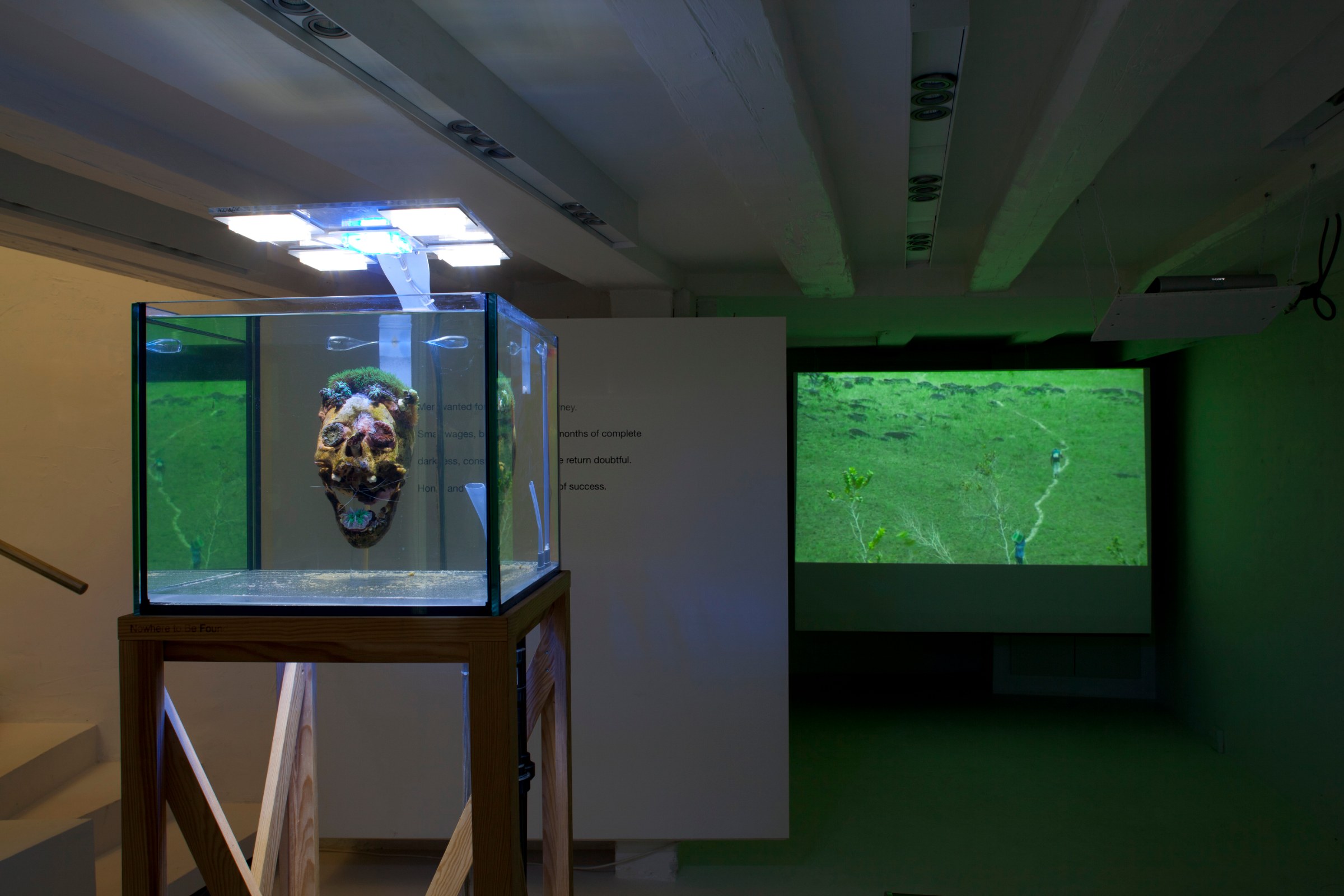
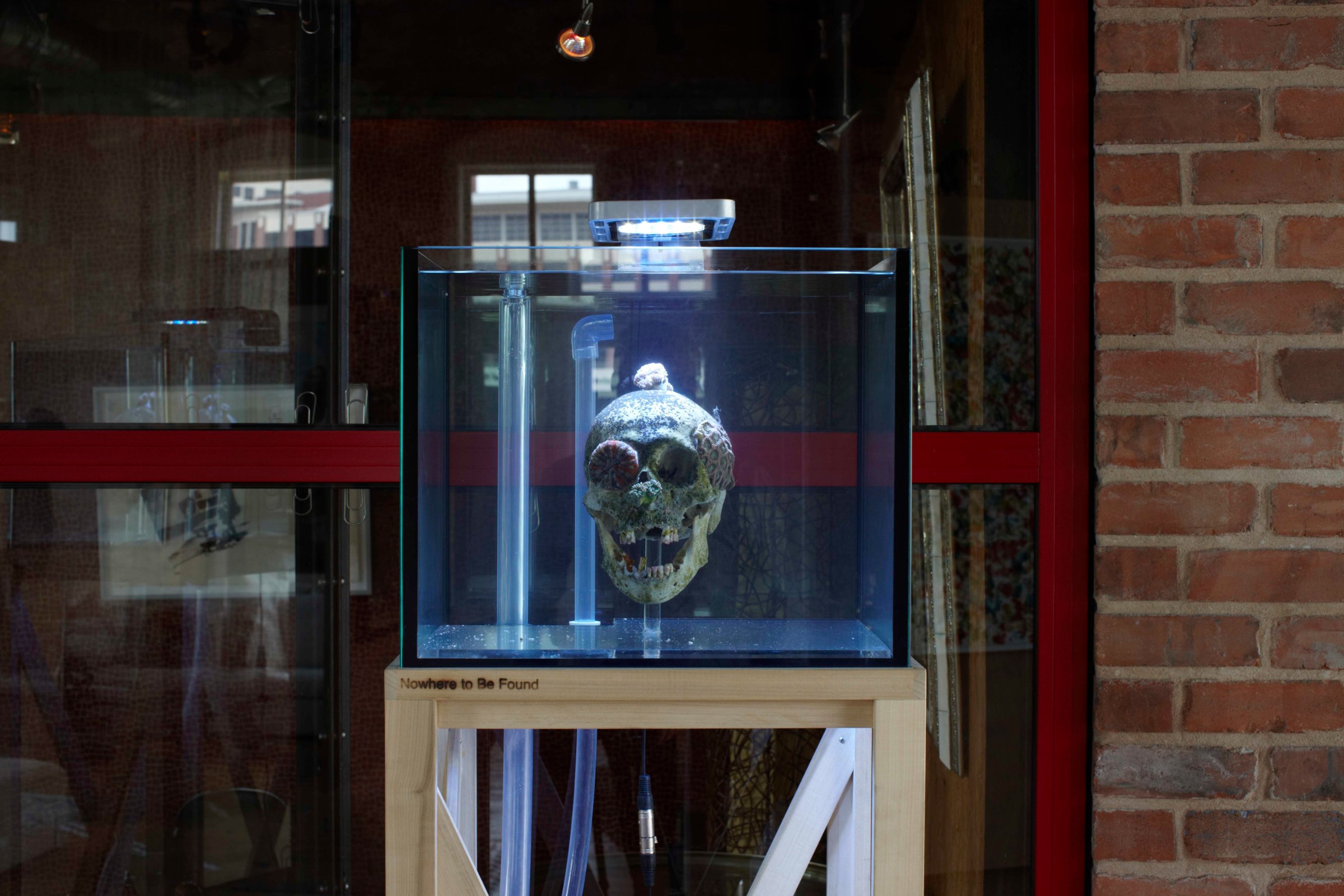
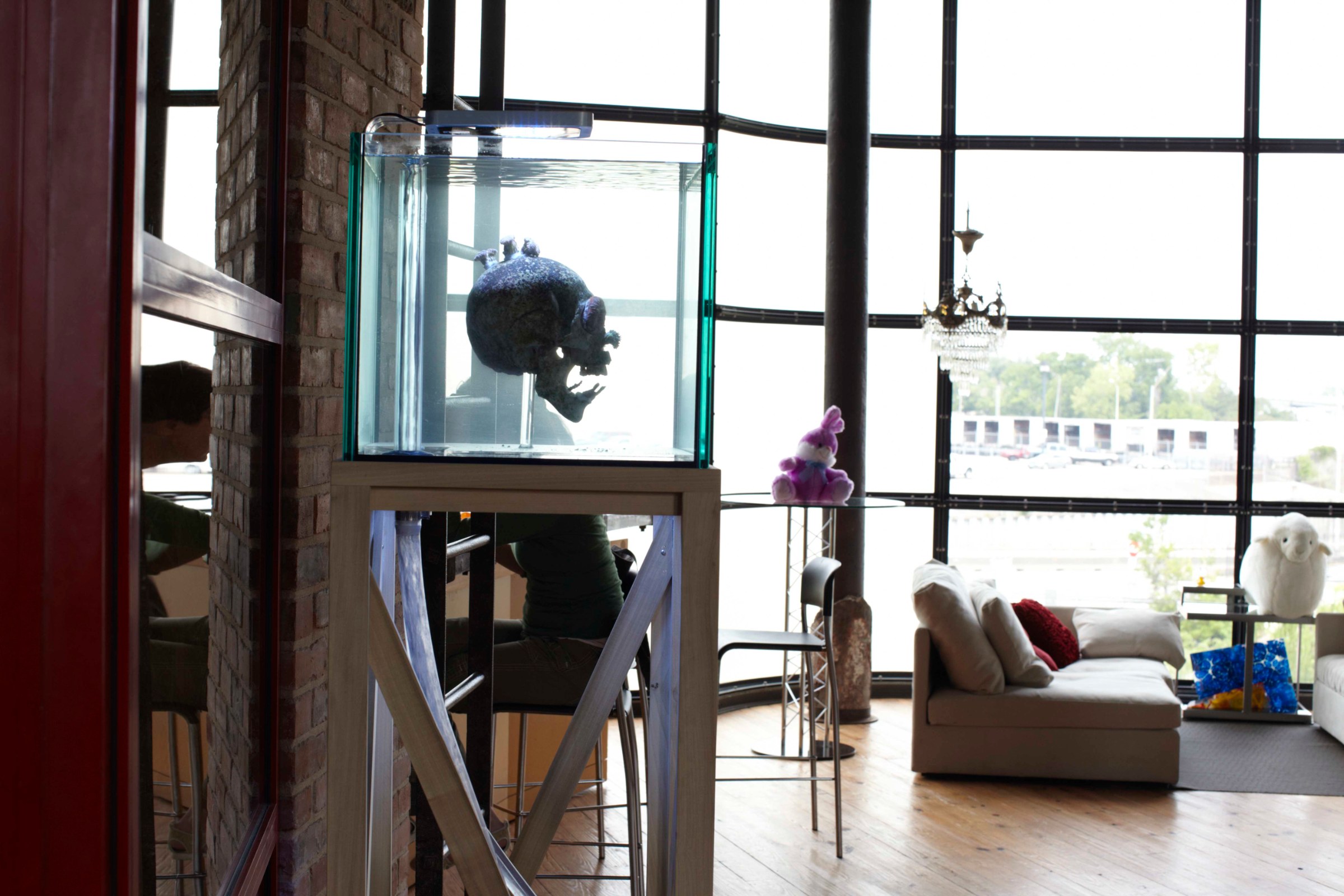
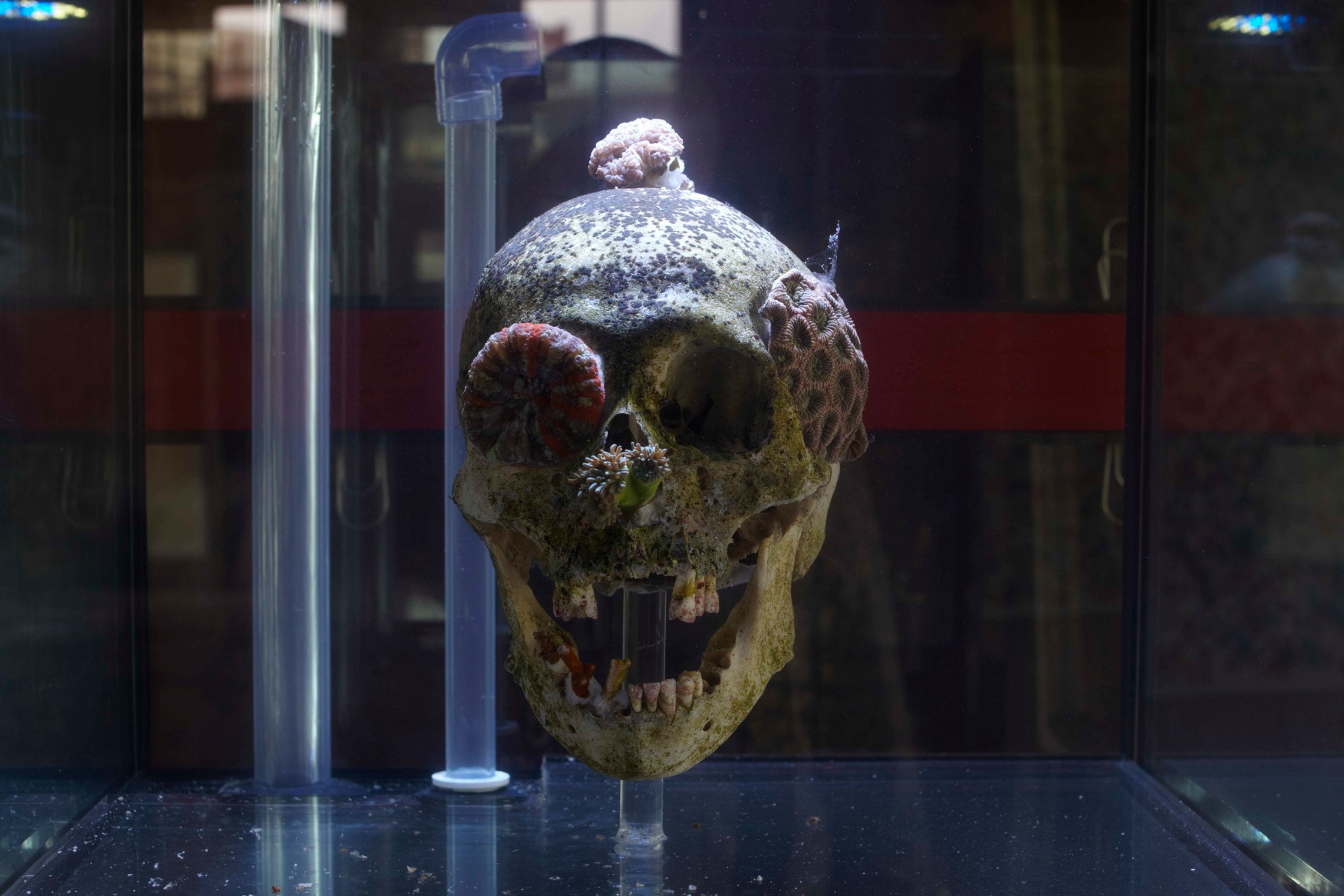
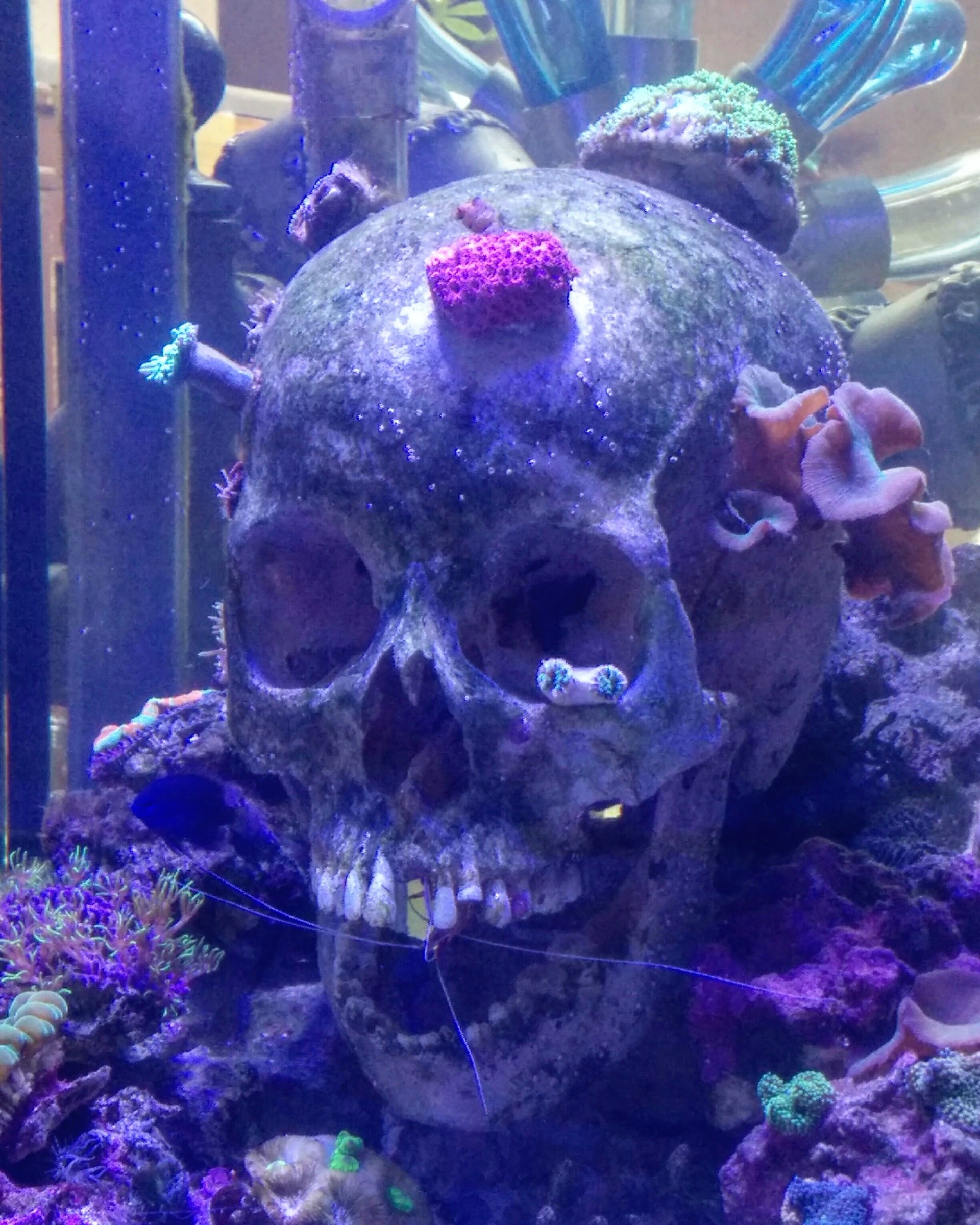
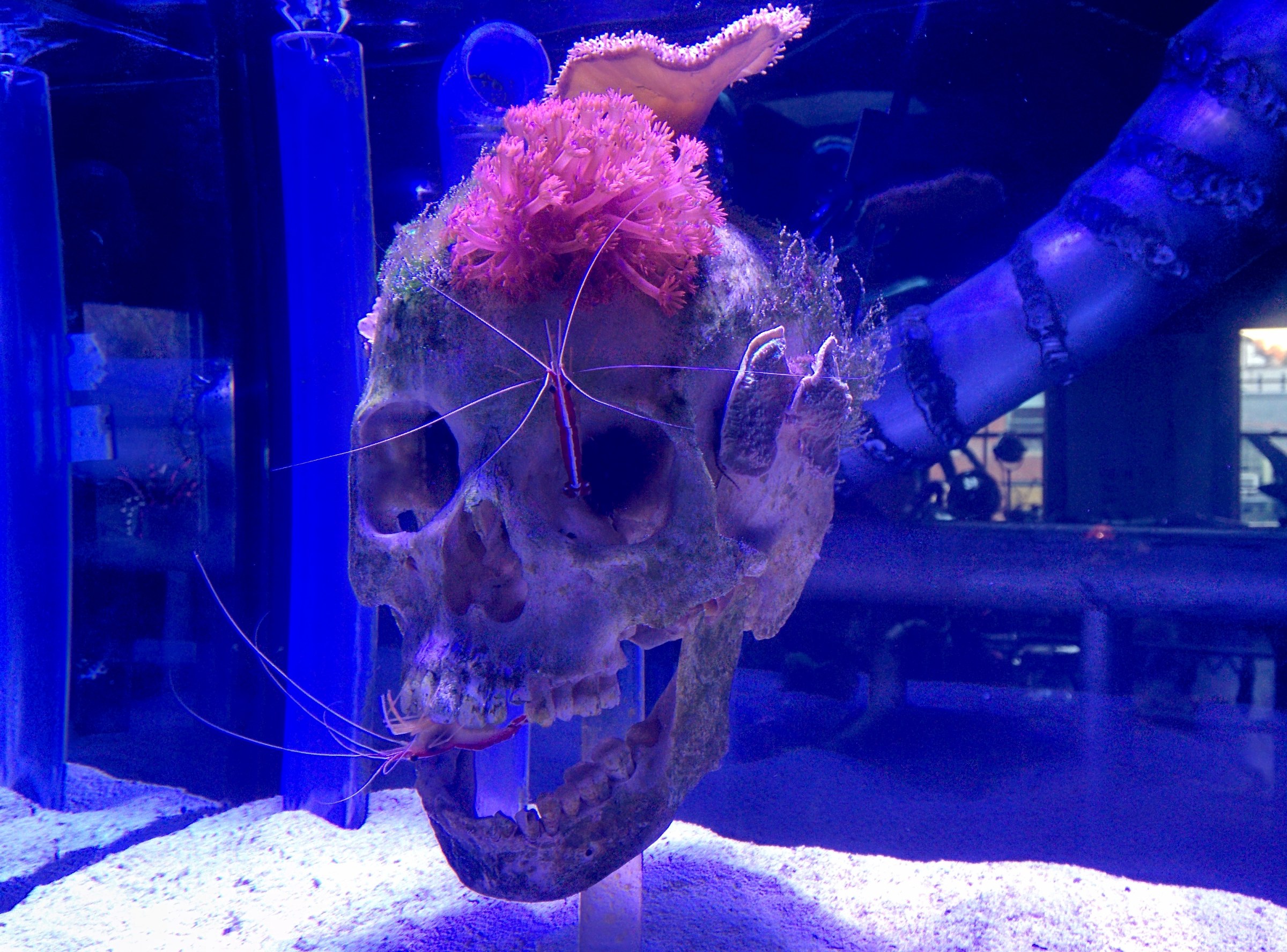
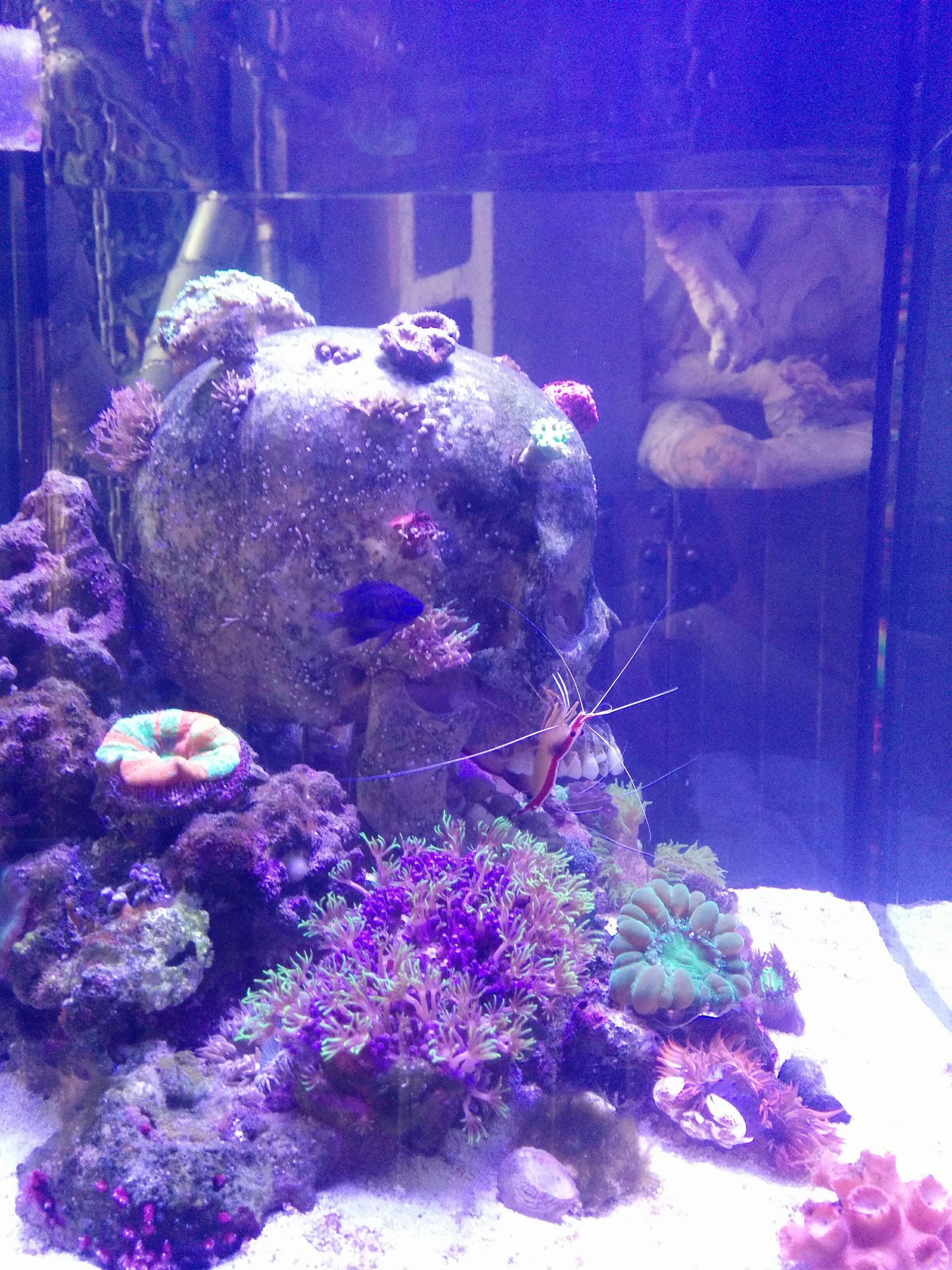
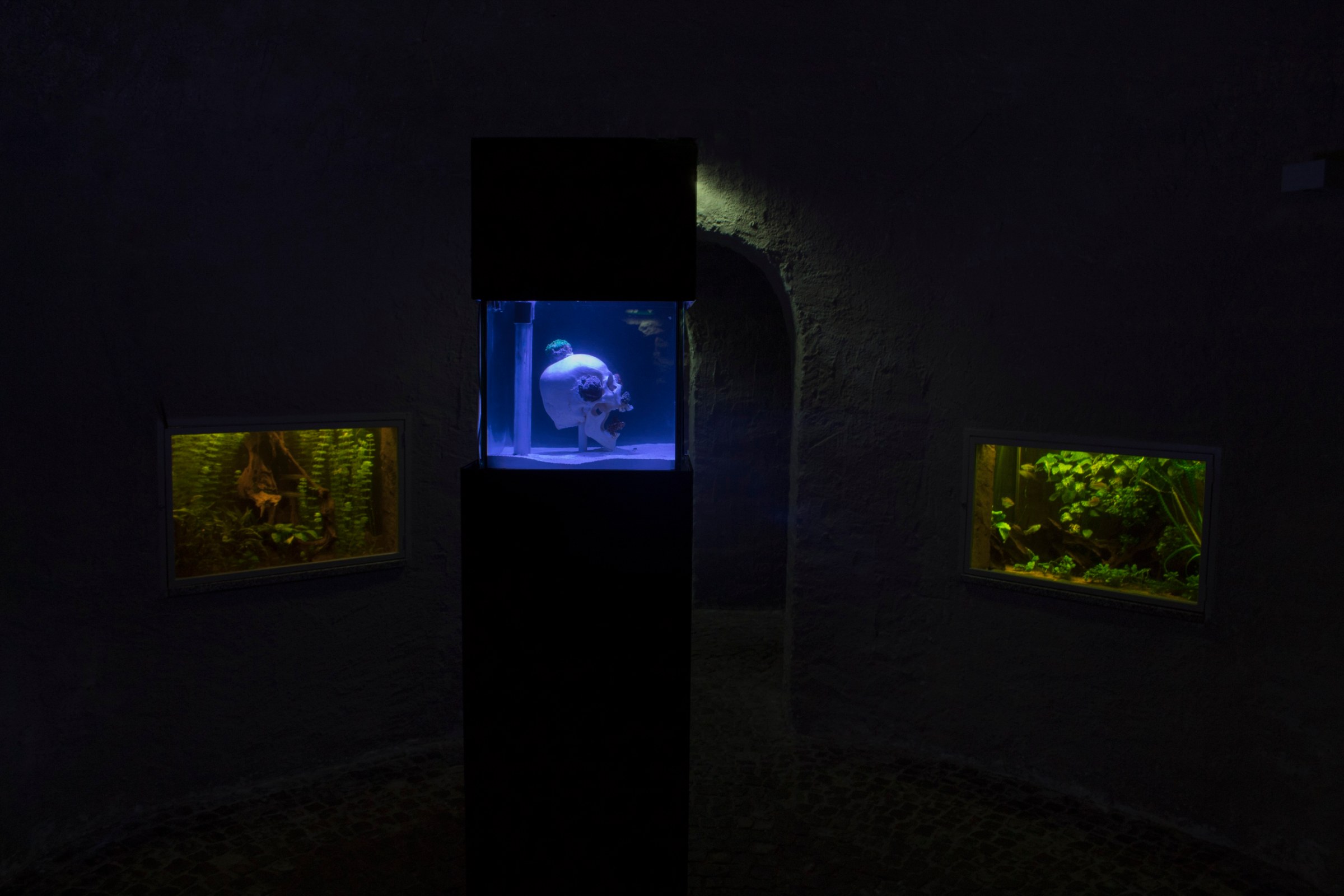
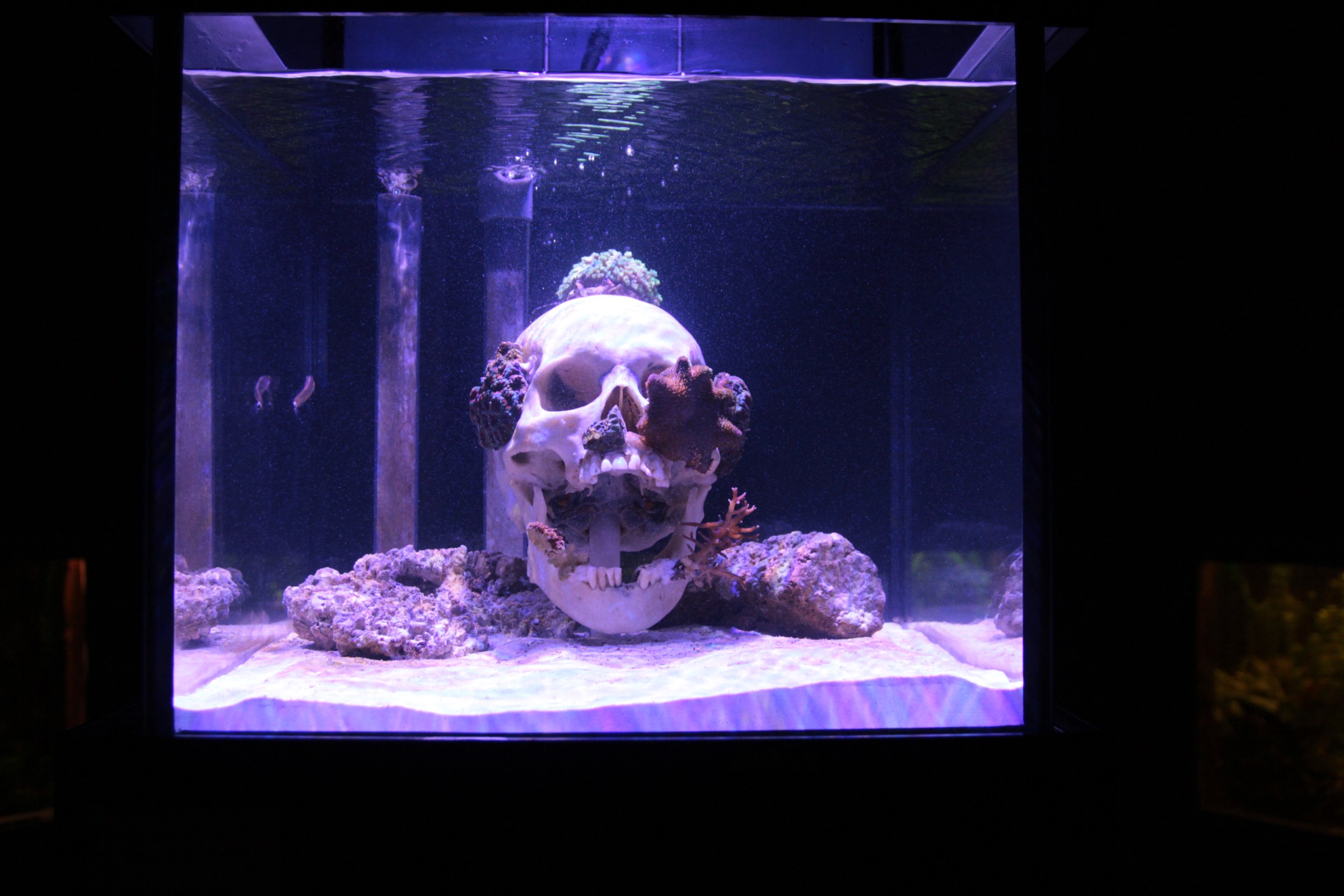
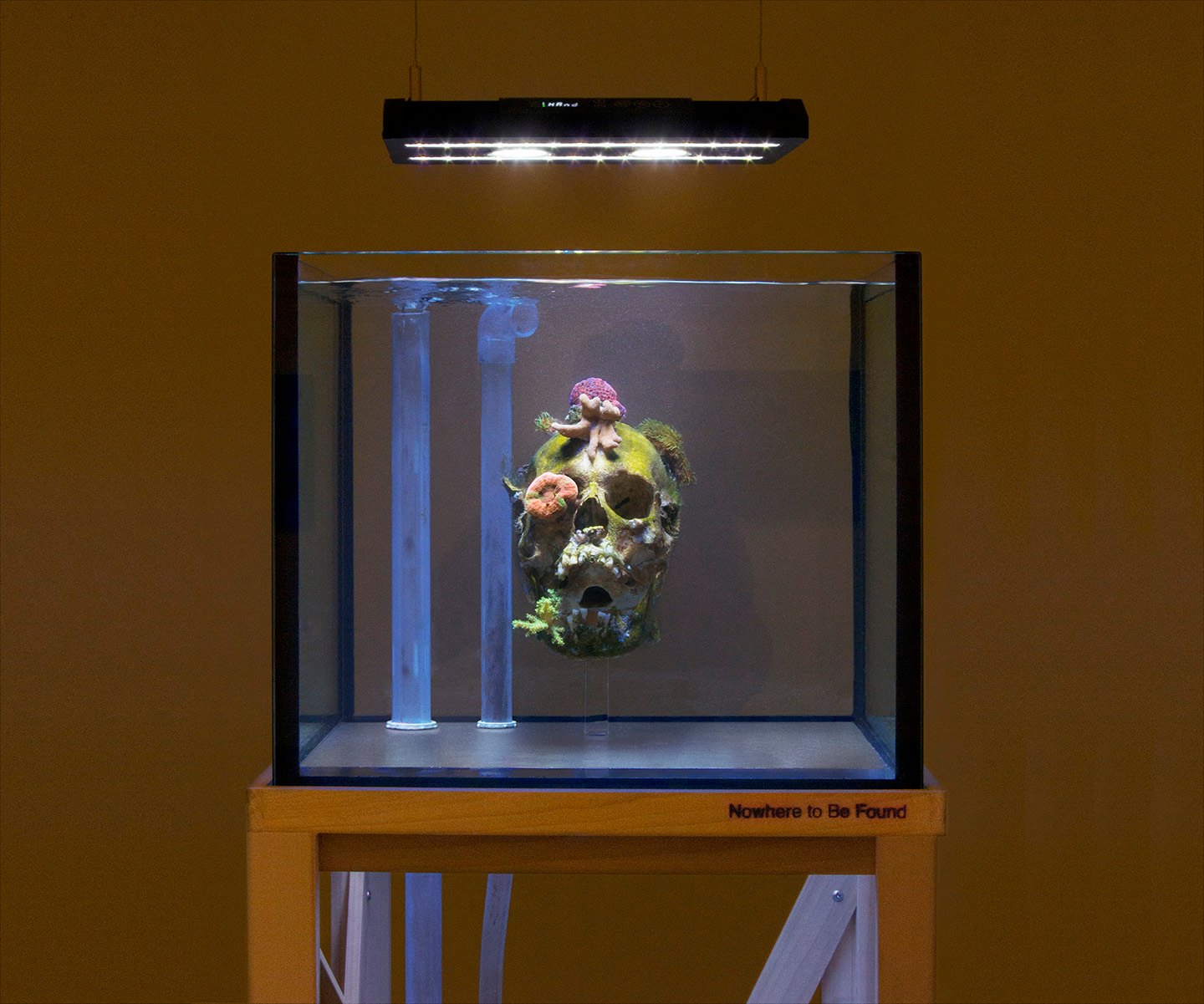
Nowhere to Be Found (2010) is a human skull suspended in a saltwater aquarium, seeded with live coral. Over several years the coral colonizes the bone, slowly building a reef where a face used to be. The work sits inside the vanitas still-life tradition — Caravaggio and the Dutch masters, through Cézanne, Max Ernst, Basquiat, Subodh Gupta, to Damien Hirst’s diamond skull — carrying the genre’s double charge of memento mori and carpe diem: death as part of life, and a reminder to live for the moment.
Unlike most vanitas objects, this one is not an illustration but an active process. The corals need the calcium in the bone to live and grow; the piece requires its owner to maintain a balanced mineral and micronutrient mix or the coral dies. Responsibility for the work’s continued existence sits with whoever keeps it — a small, literal version of the stewardship the piece is otherwise only depicting. Read alongside The Taste of Discovery, the man-sized skull also stands as a monument to those lost in the polar seas during the age of arctic exploration: people who, like the piece’s title, are nowhere to be found.
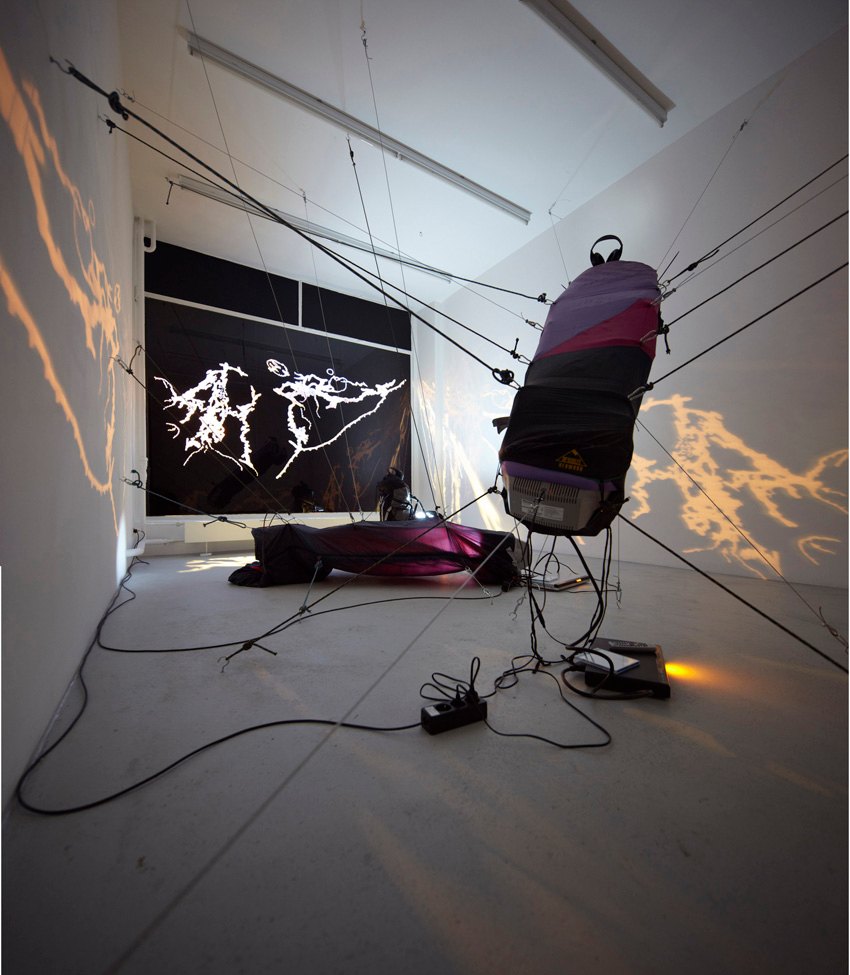
A related strand of the project, shown at Heike Strelow Gallery, Frankfurt (2010), extends the same themes into a sculptural installation of mountaineering sleeping bags, hooks, and rope, suspended and rigged with video monitors playing looped expedition footage — bodies in survival gear, staged as their own kind of vanitas.
Works
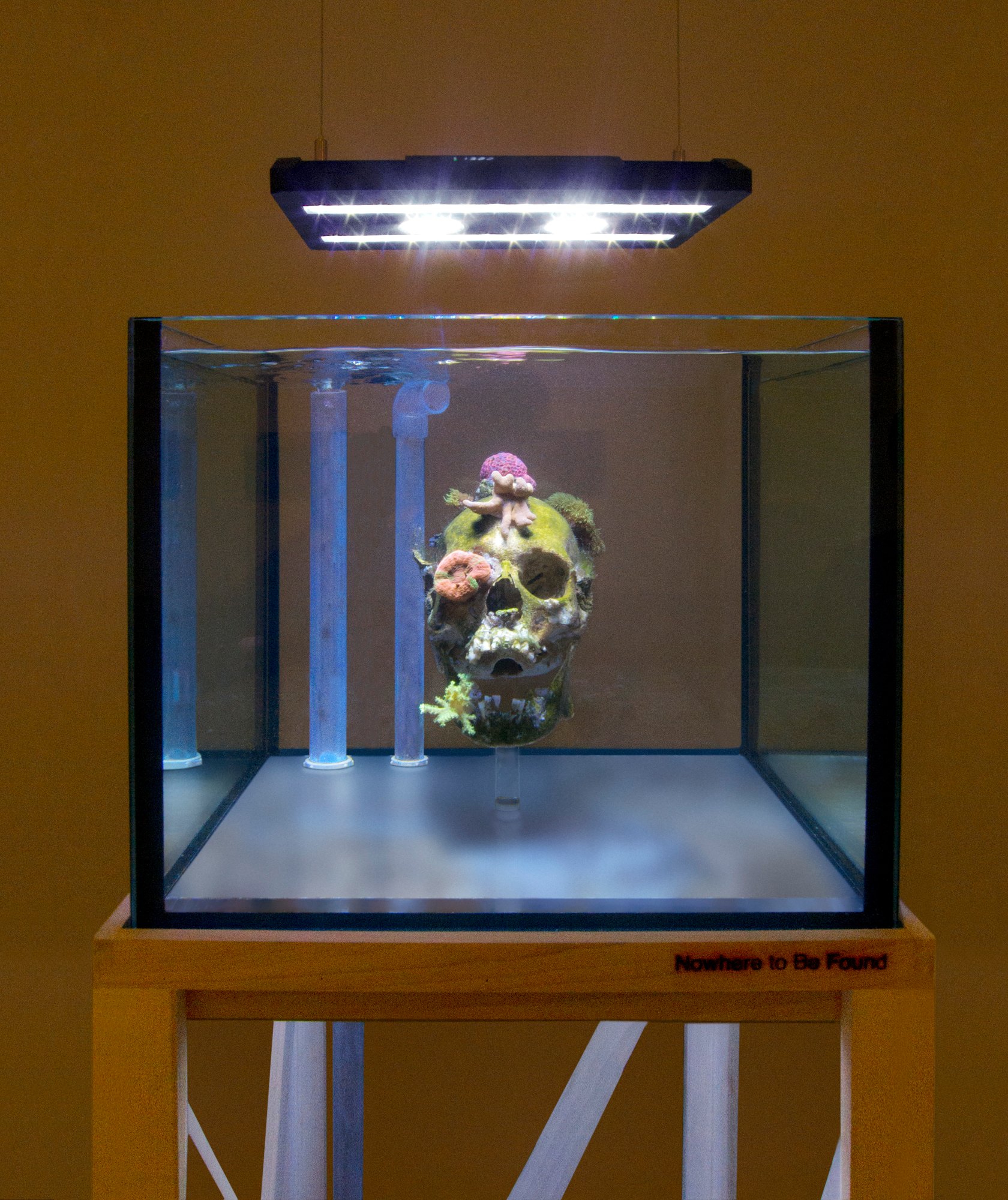
Nowhere to Be Found began in 2010 as an exhibition at Galerie Heike Strelow in Frankfurt and was shown again that year at Brotfabrik in Berlin. Sleeping bags hang from ropes and hooks across the room like bodies left behind by a failed expedition; inside them, small monitors play footage from Kessler’s own Arctic journeys. The coral skull belongs to the same story: the explorer who set out to master nature, slowly being taken back by it. Seen today, the work also points at the modern adventurer, the paid Arctic trip and the selfie at the edge of the ice, a search for the sublime that leaves its seeker just as lost.
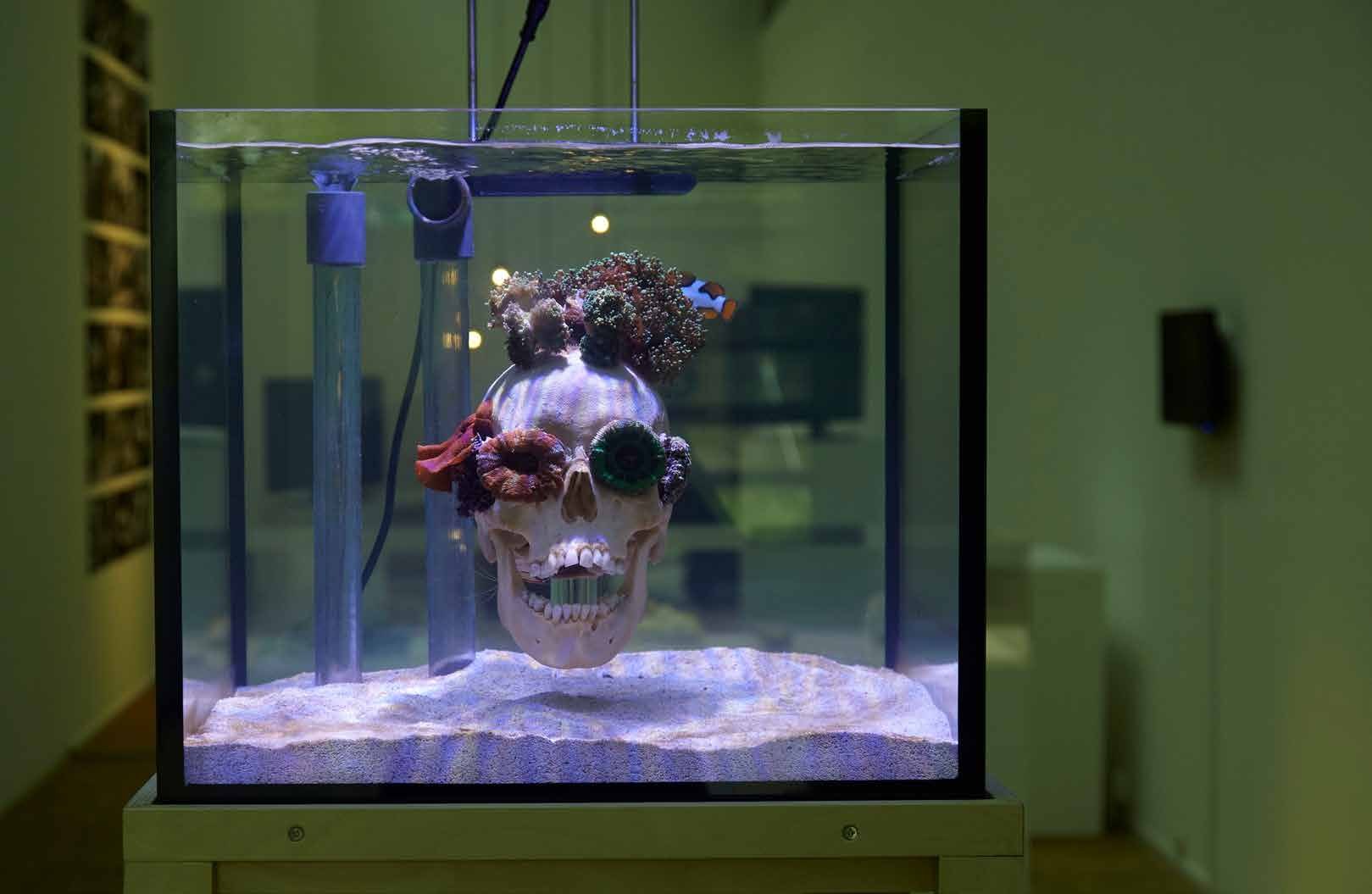
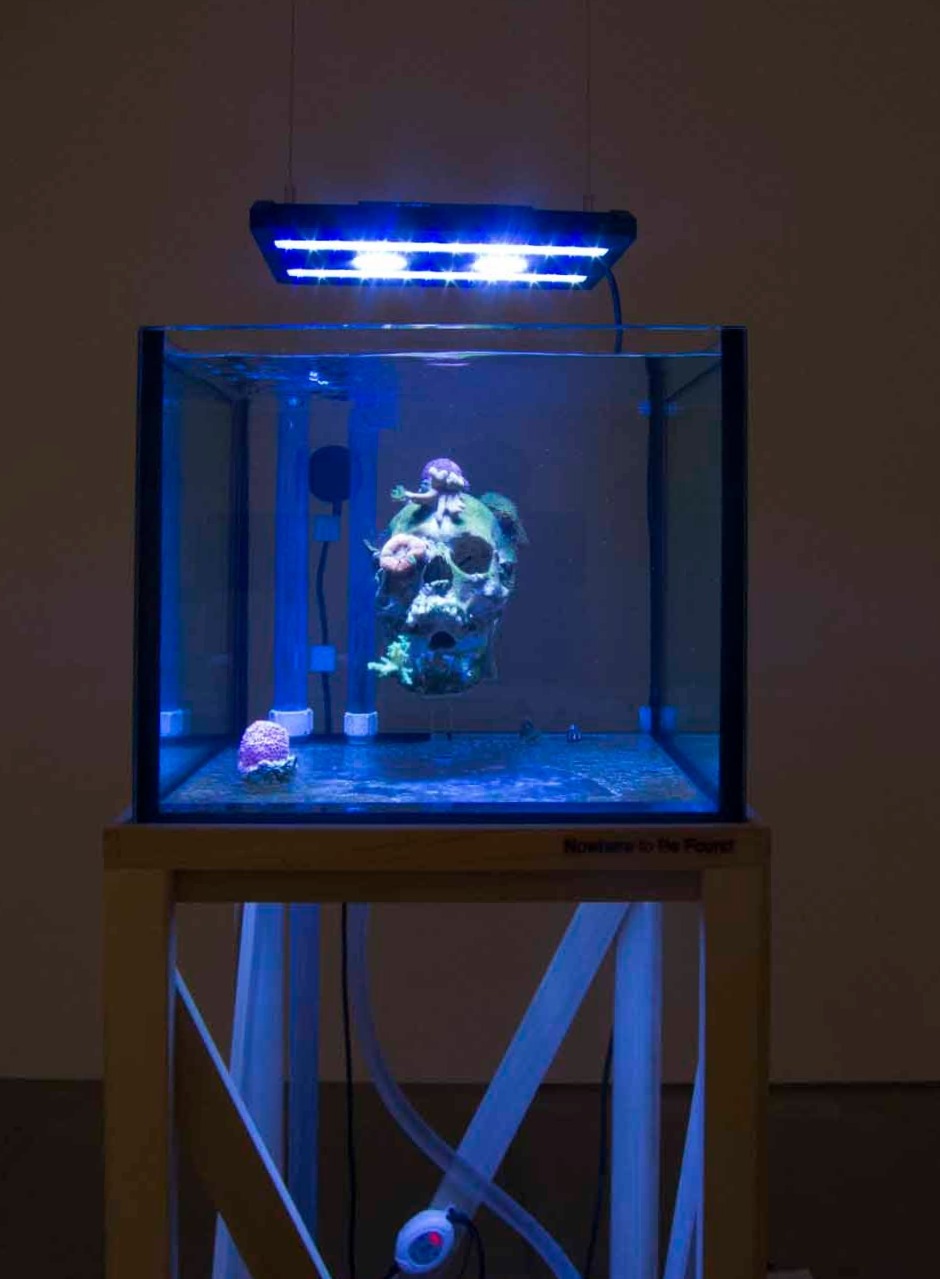
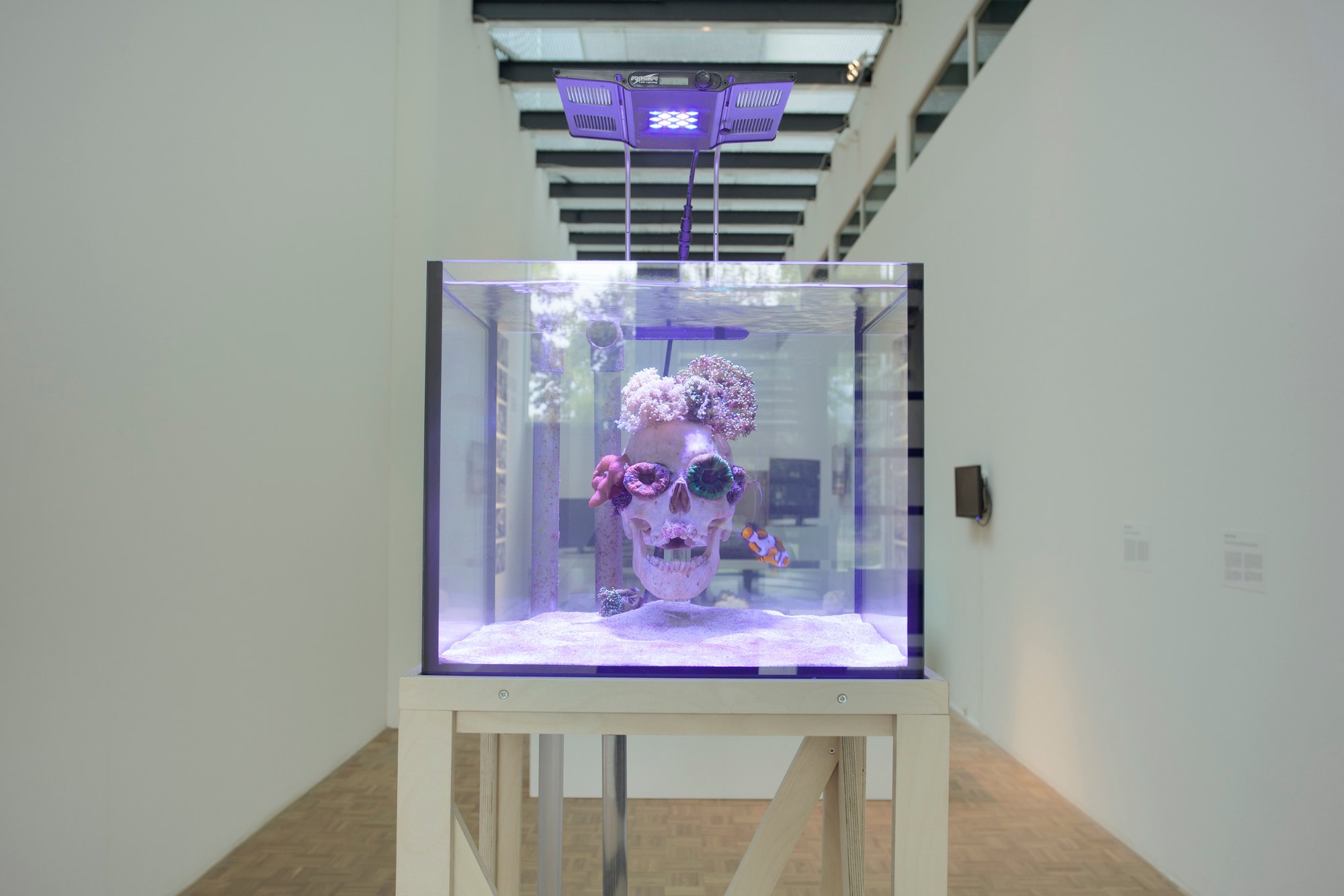
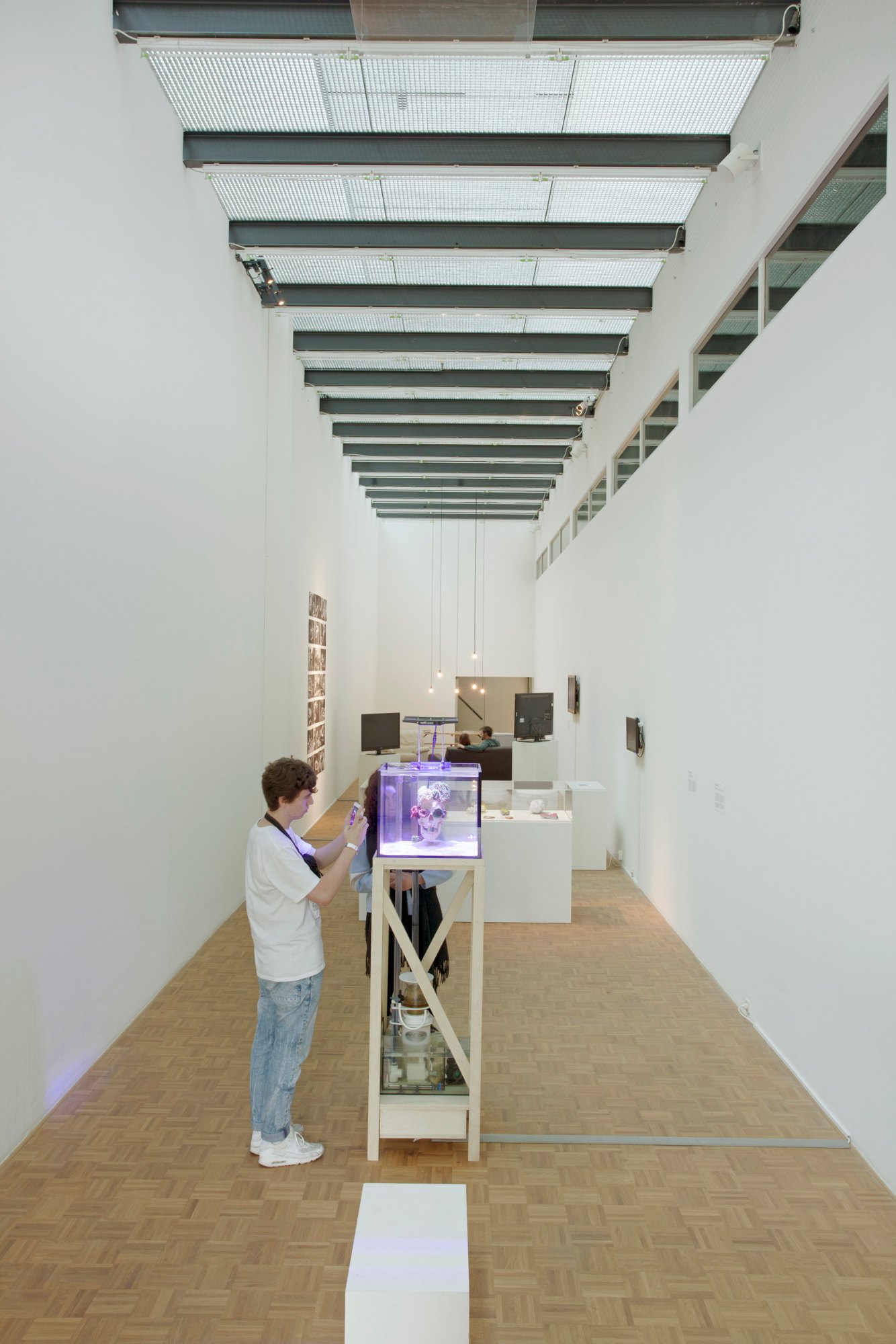
Installation views