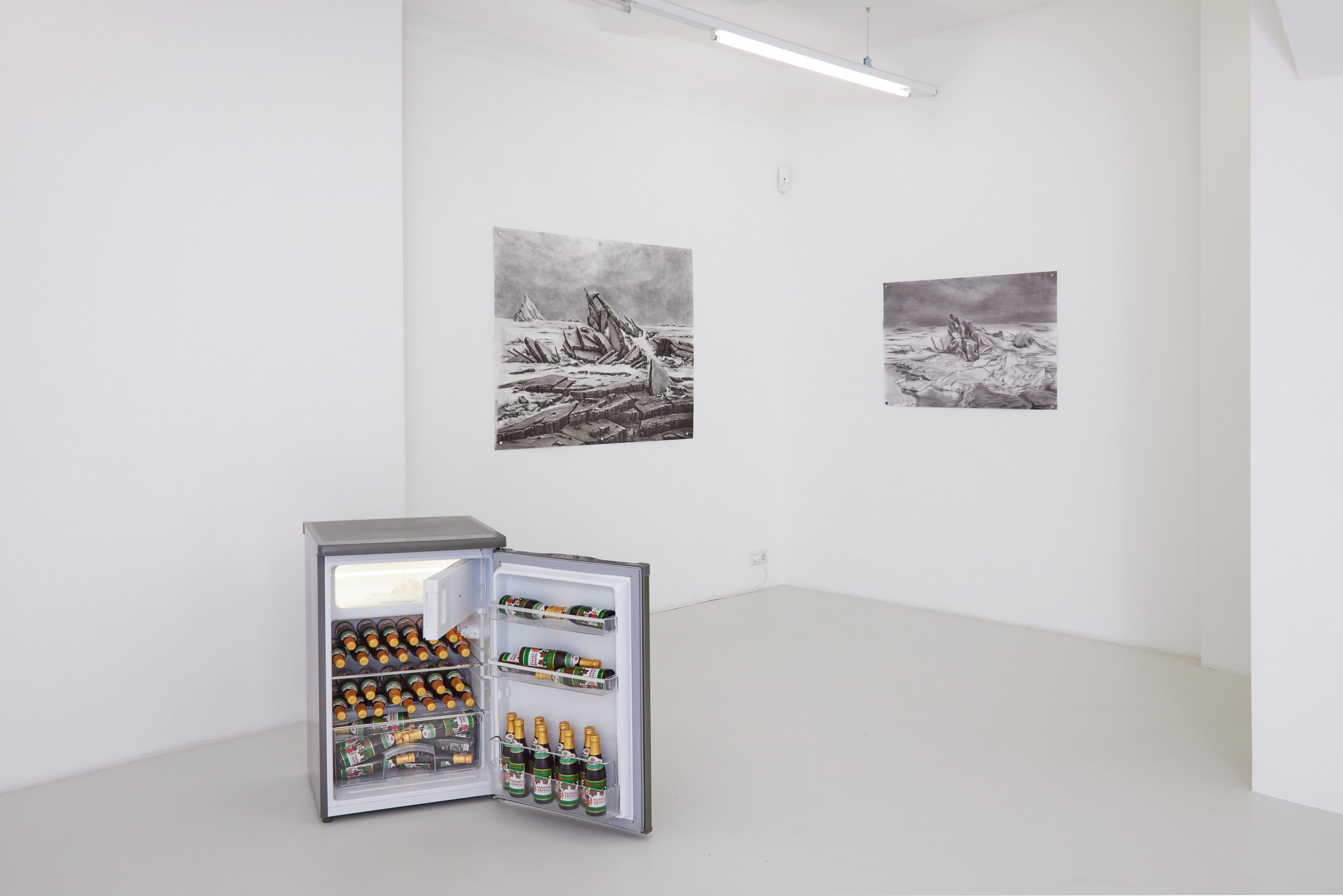
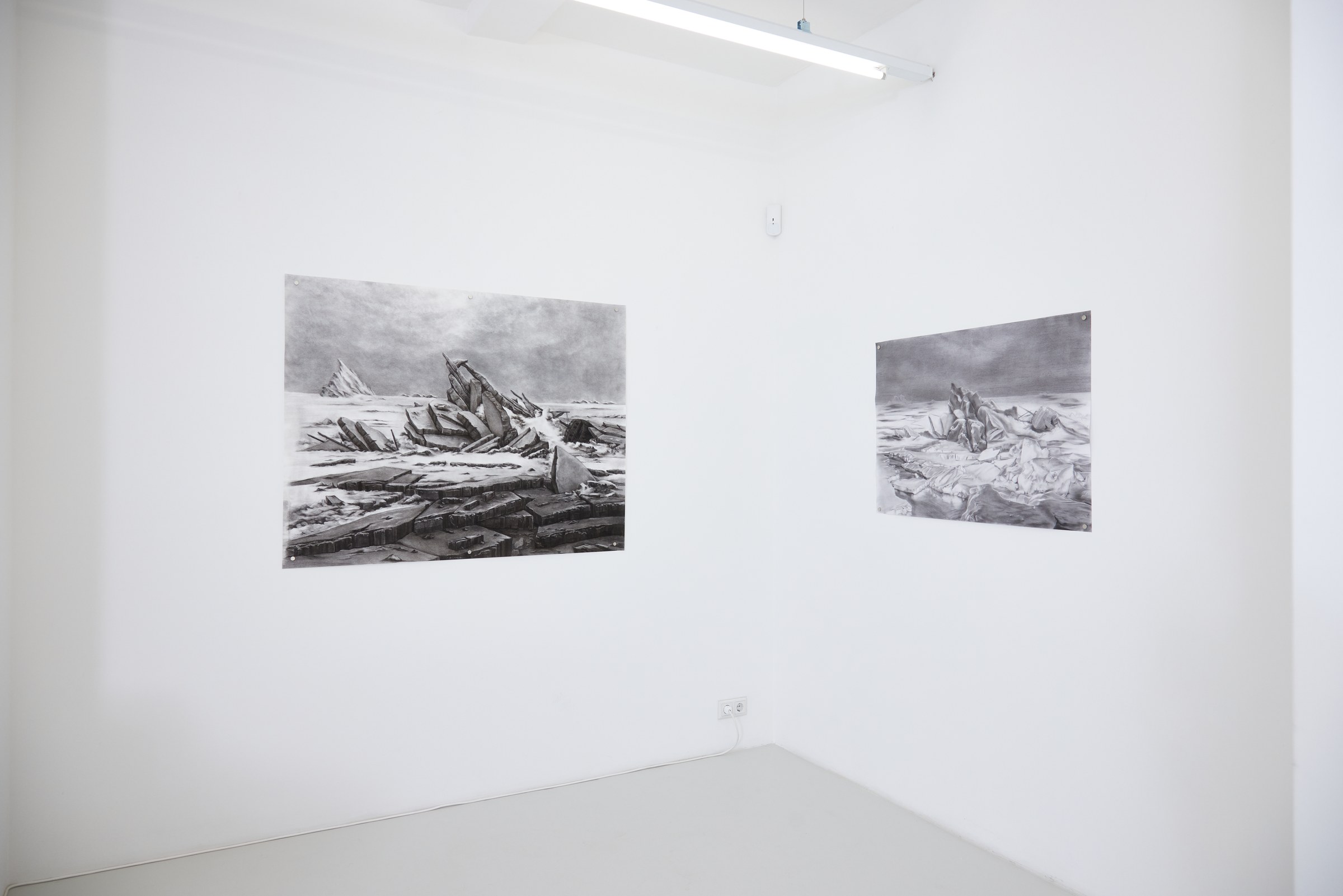
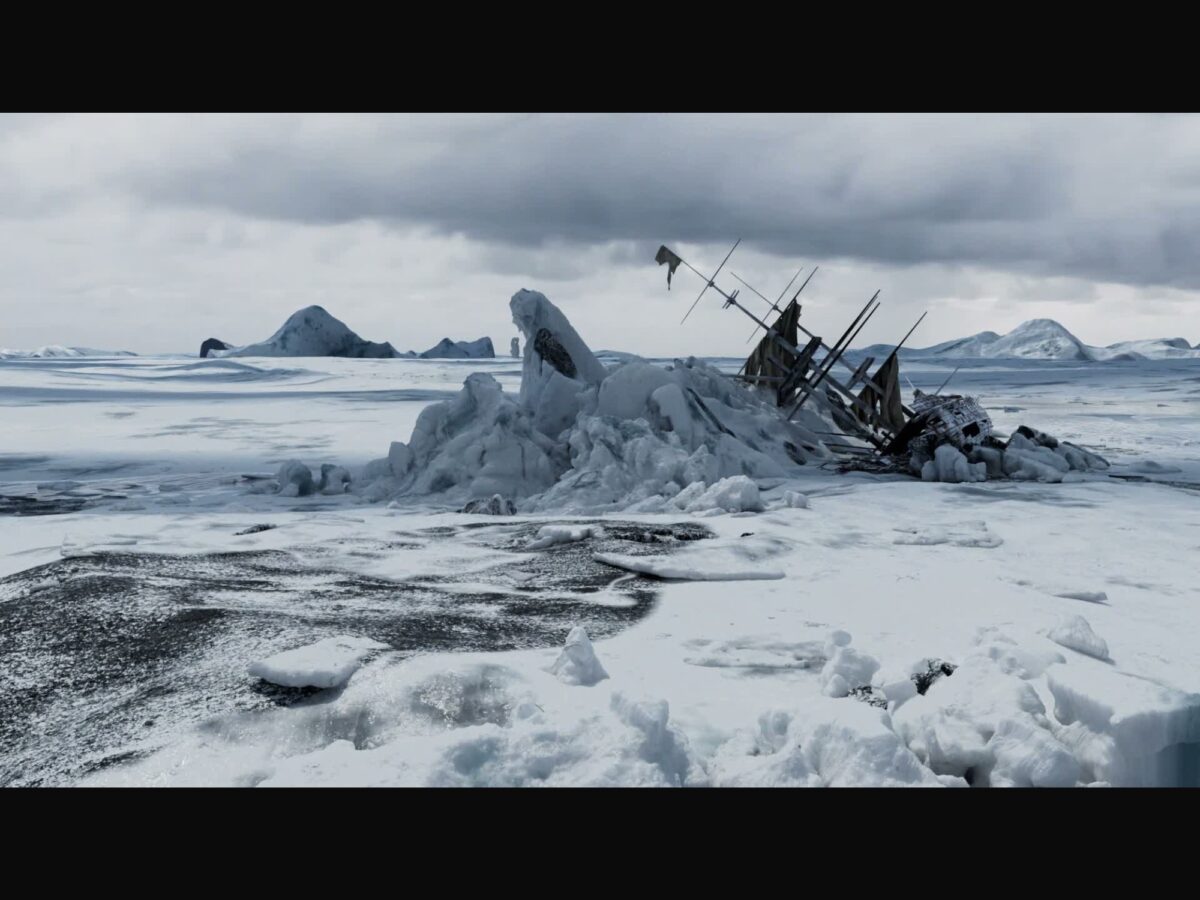
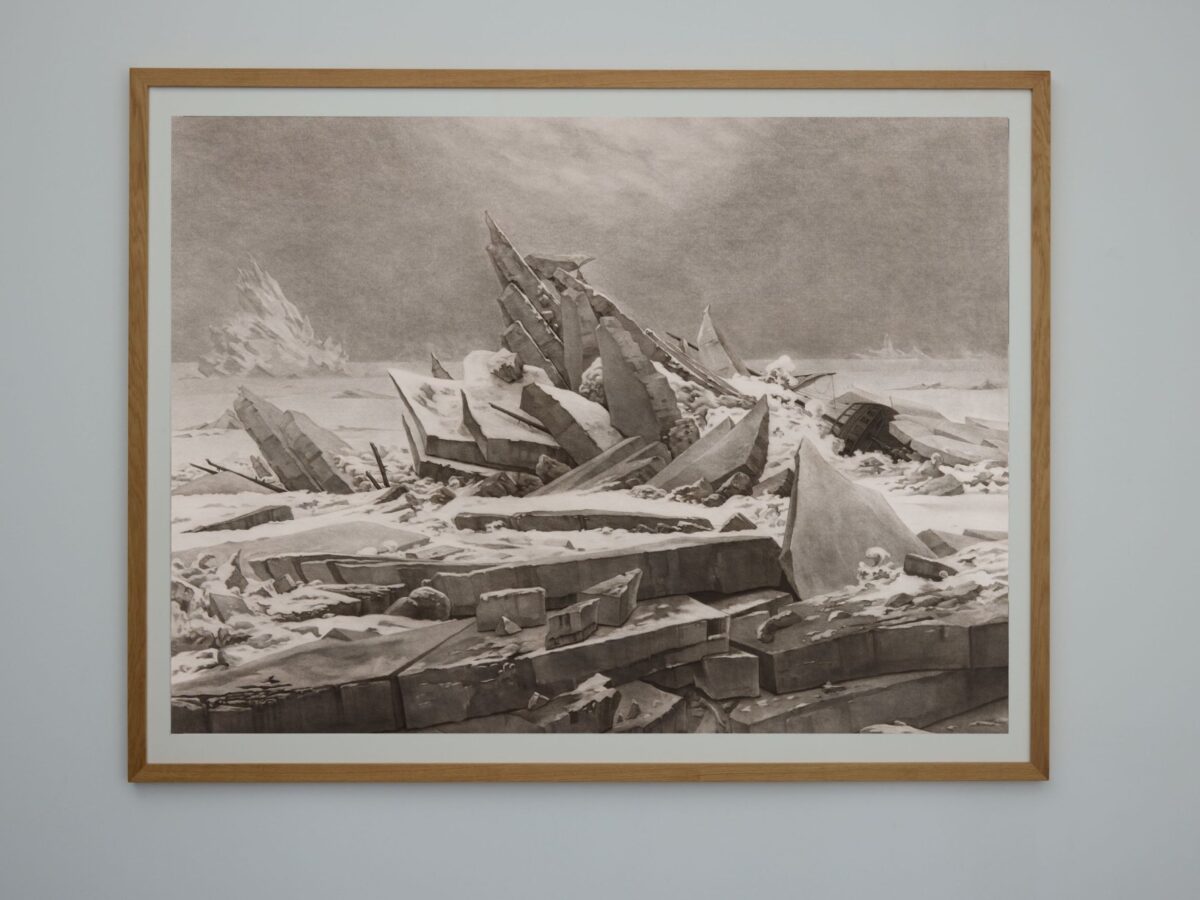
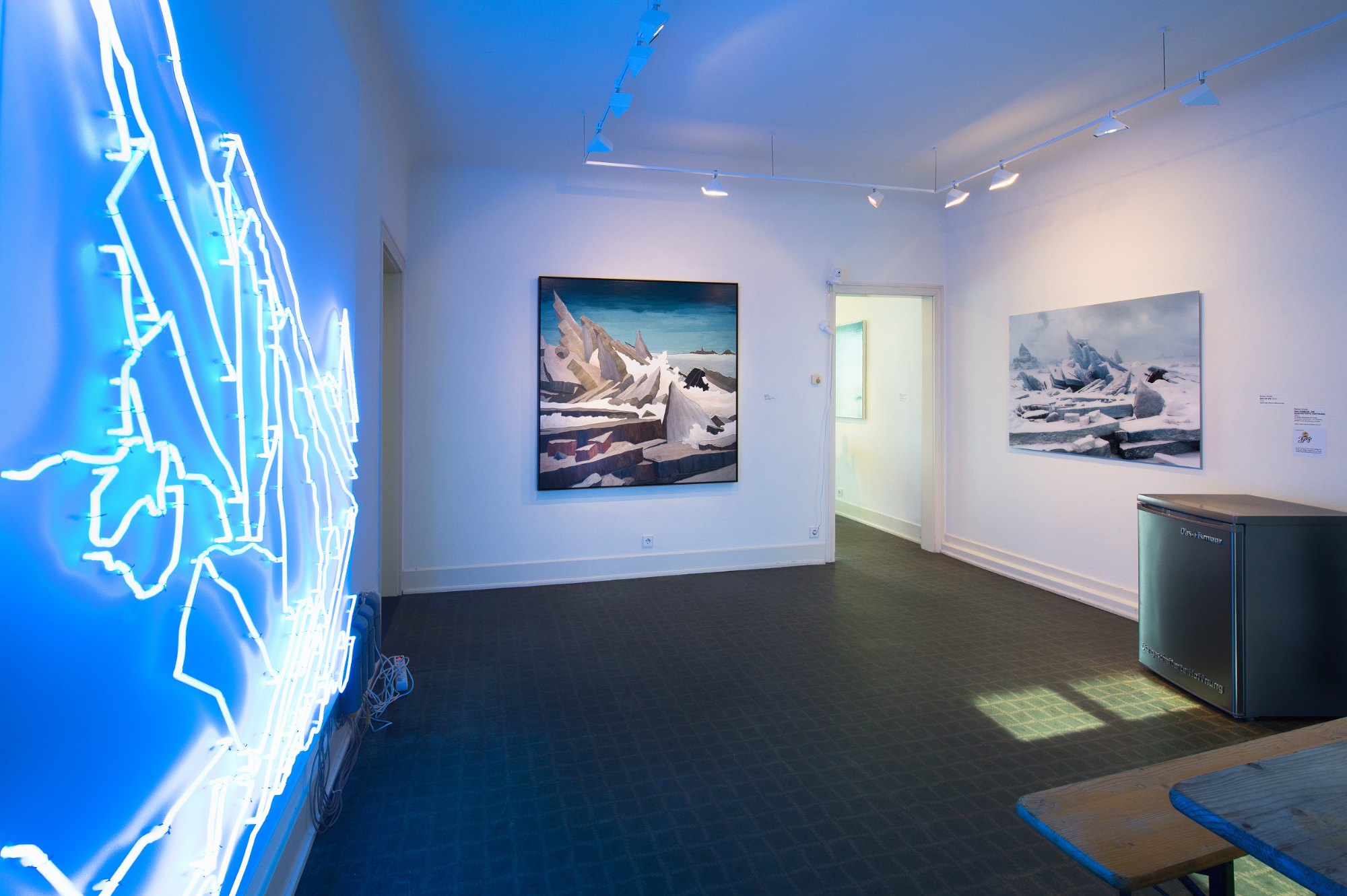
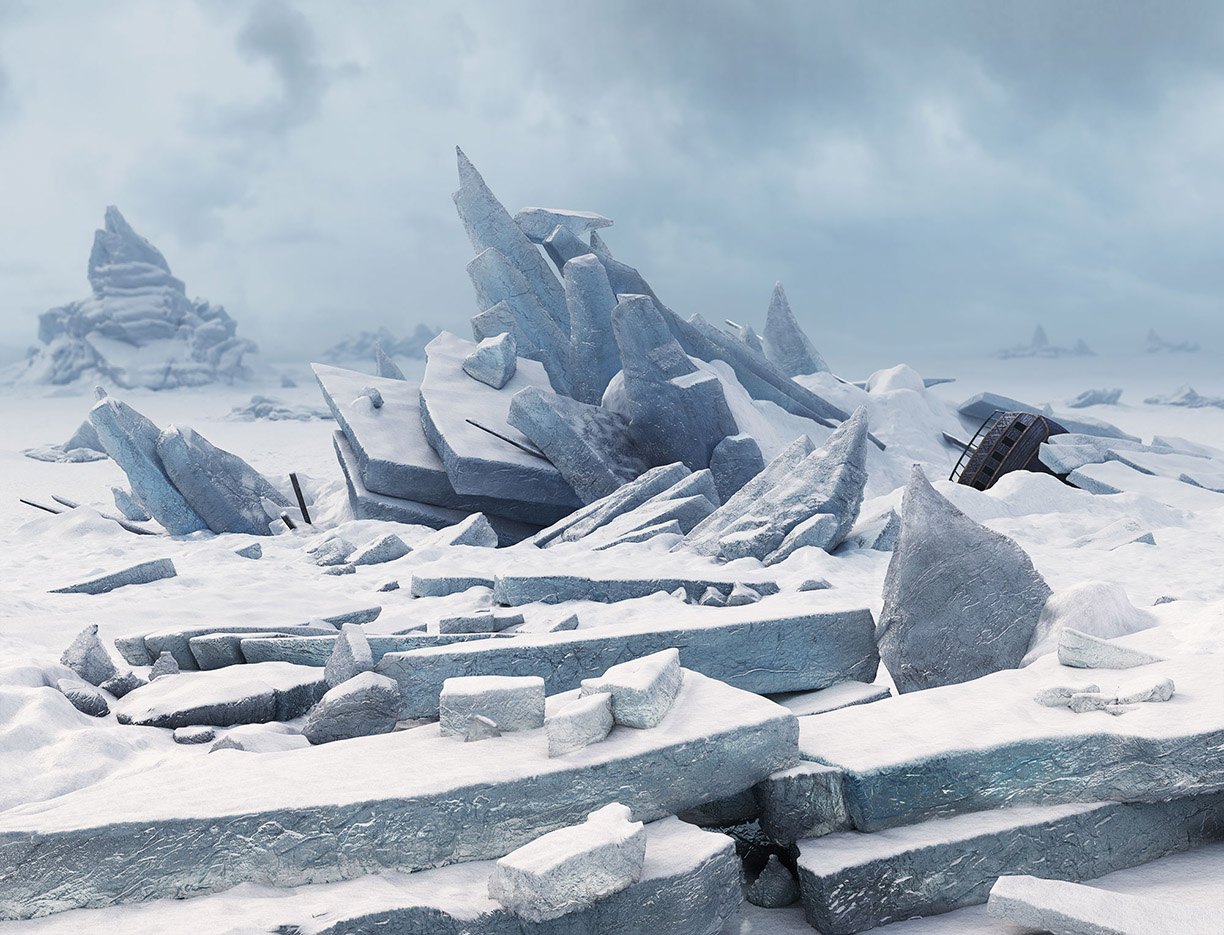
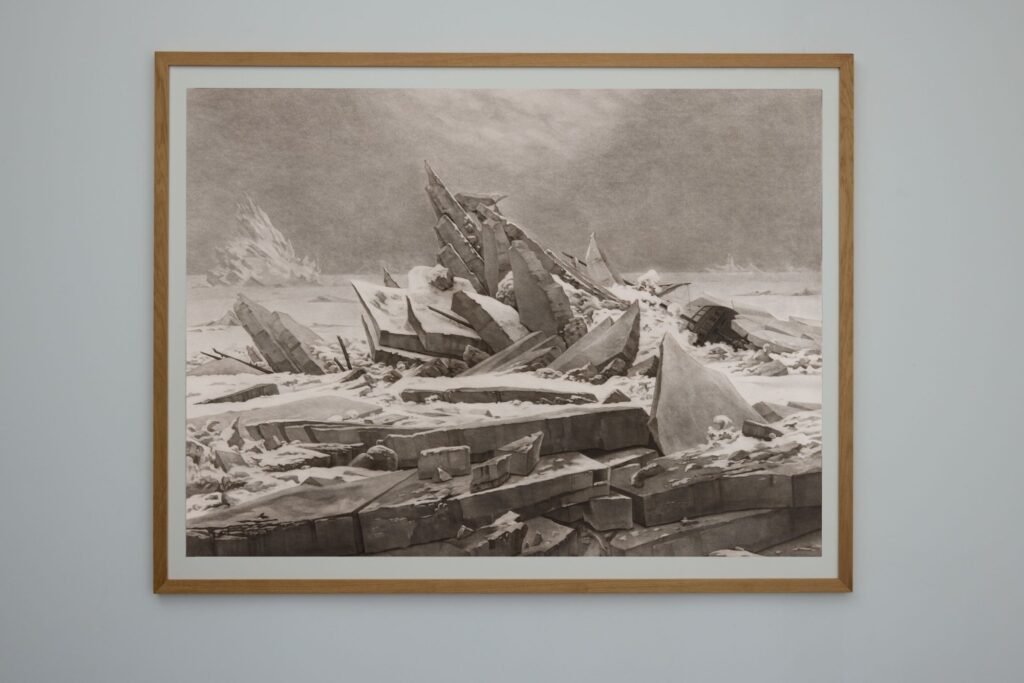
The Sea of Ice (Das Eismeer), also known as The Wreck of Hope (Die gescheiterte Hoffnung), takes its title and image from Caspar David Friedrich’s 1823-24 painting of the same name – a work already layered with history: the crushed political hope that followed Germany’s failed post-Napoleonic push for freedom, and the Romantic fantasy of the Northwest Passage, fed by expeditions like Franklin’s, in which ships and men vanished. Those voyages, funded by nations chasing global trade routes, were early instances of the same economic expansion into unknown territory that now defines the climate crisis.
Kessler rebuilds Friedrich’s composition as a photorealistic 3D rendering — a fantasy made to look like a photograph of a real place that never existed, using software instead of a camera. “What is a photograph in times of digital manipulation, smart phones, and Instagram?” he asks. “And how can a fantasy become reality in a photographic representation?” The 2013 edition translates the painting directly into this uncanny, camera-less photorealism.
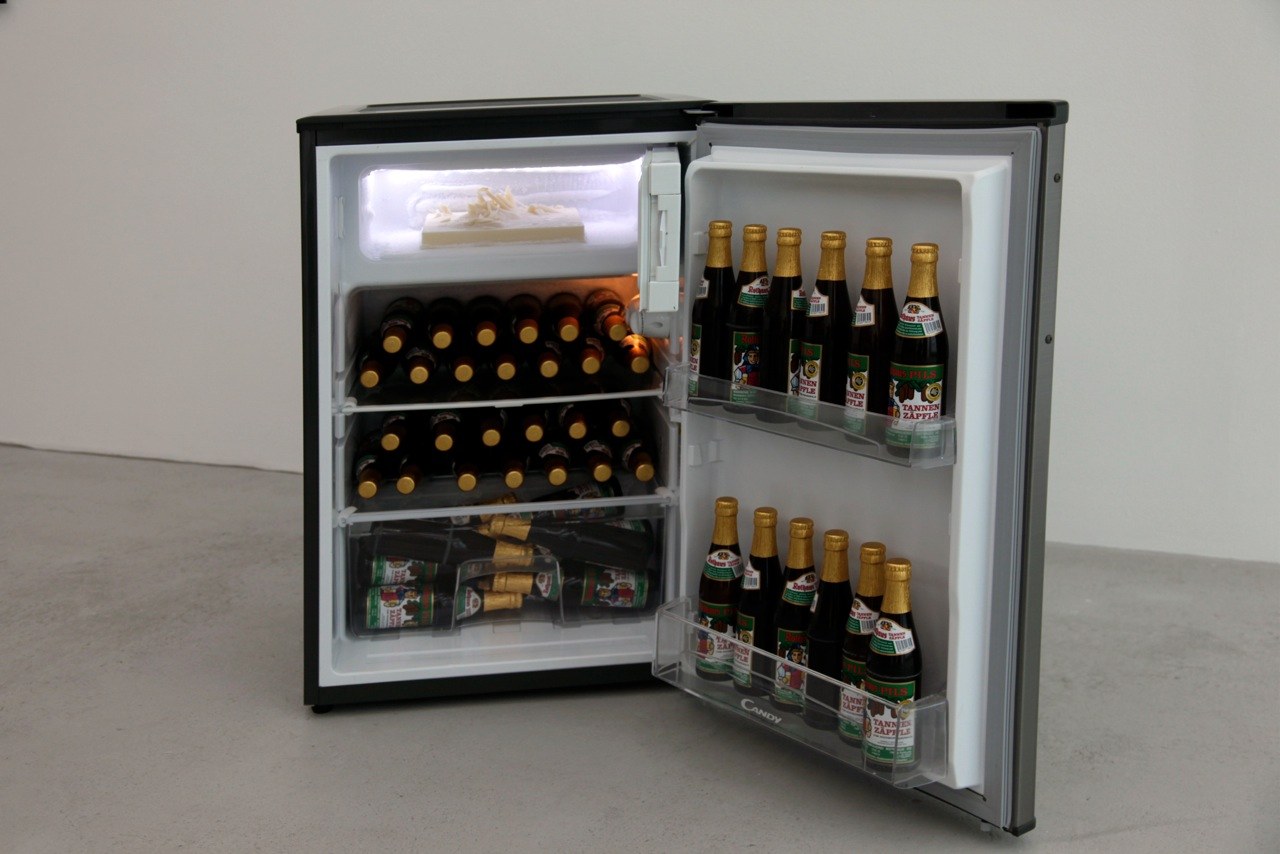
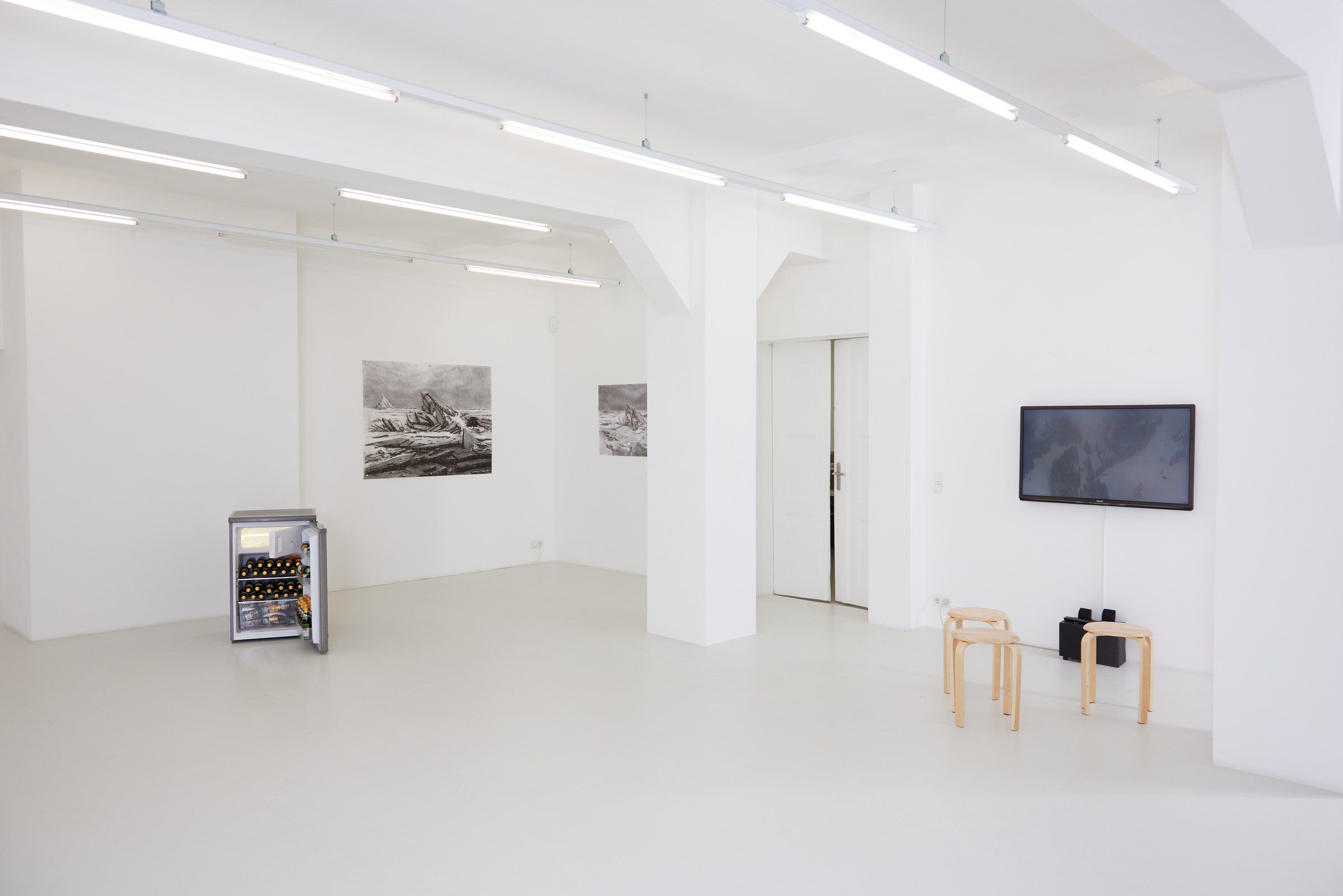
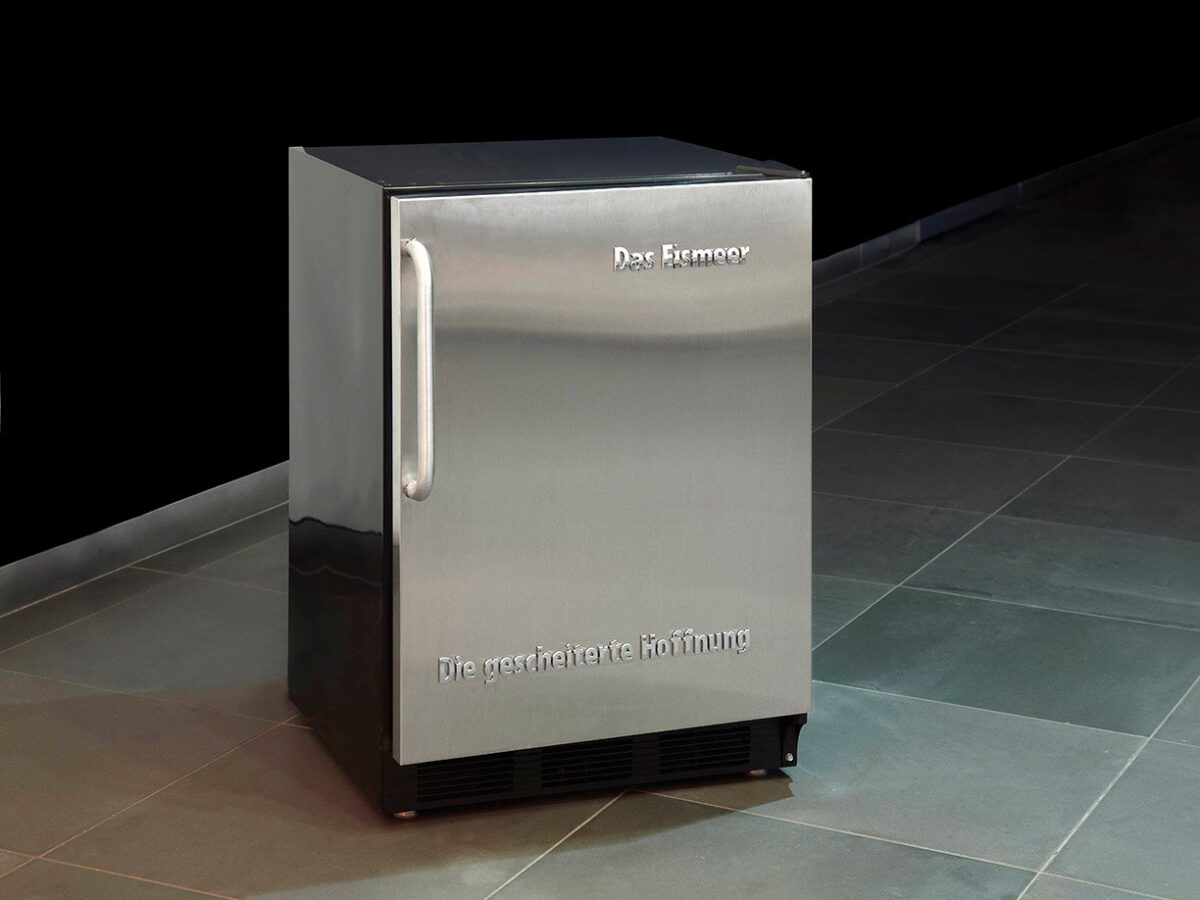
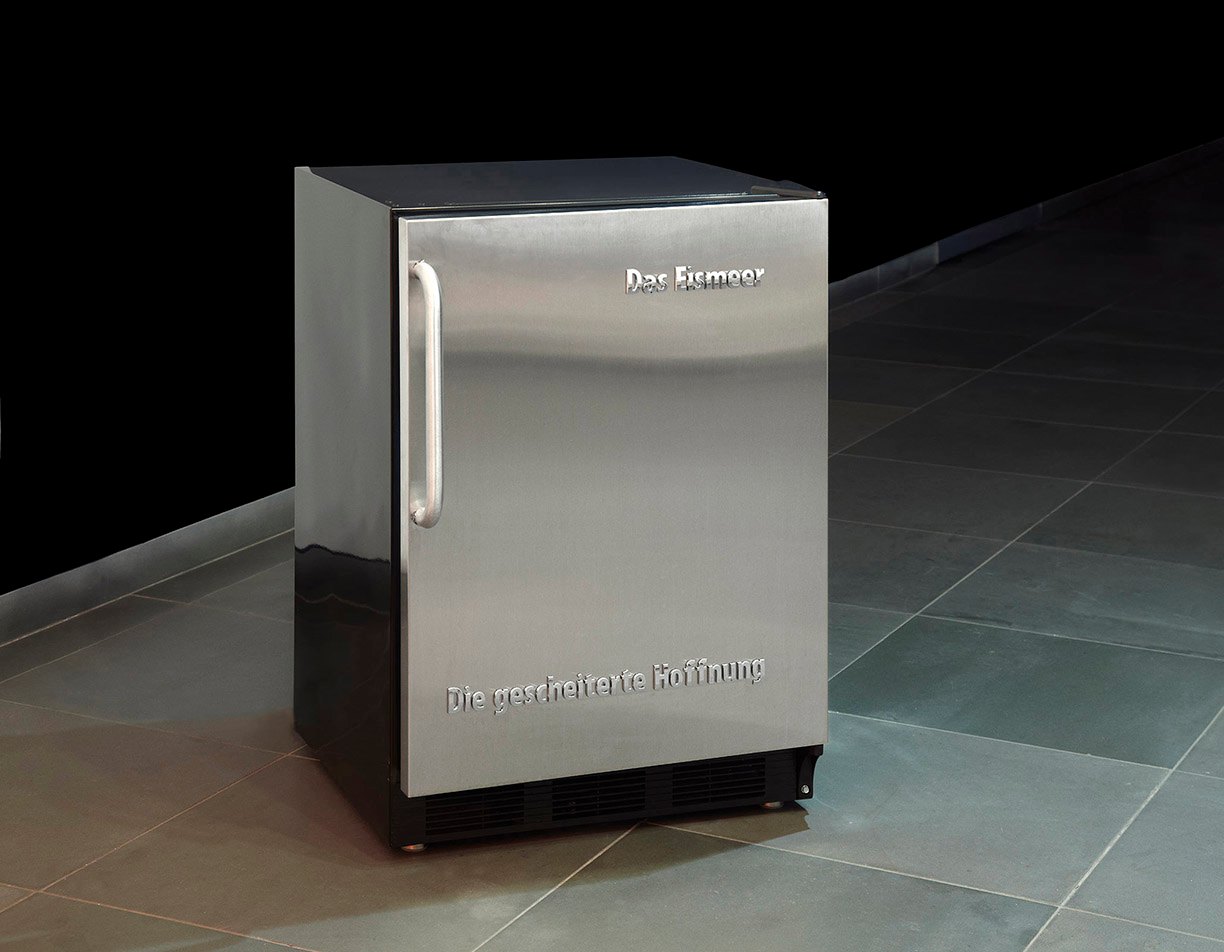
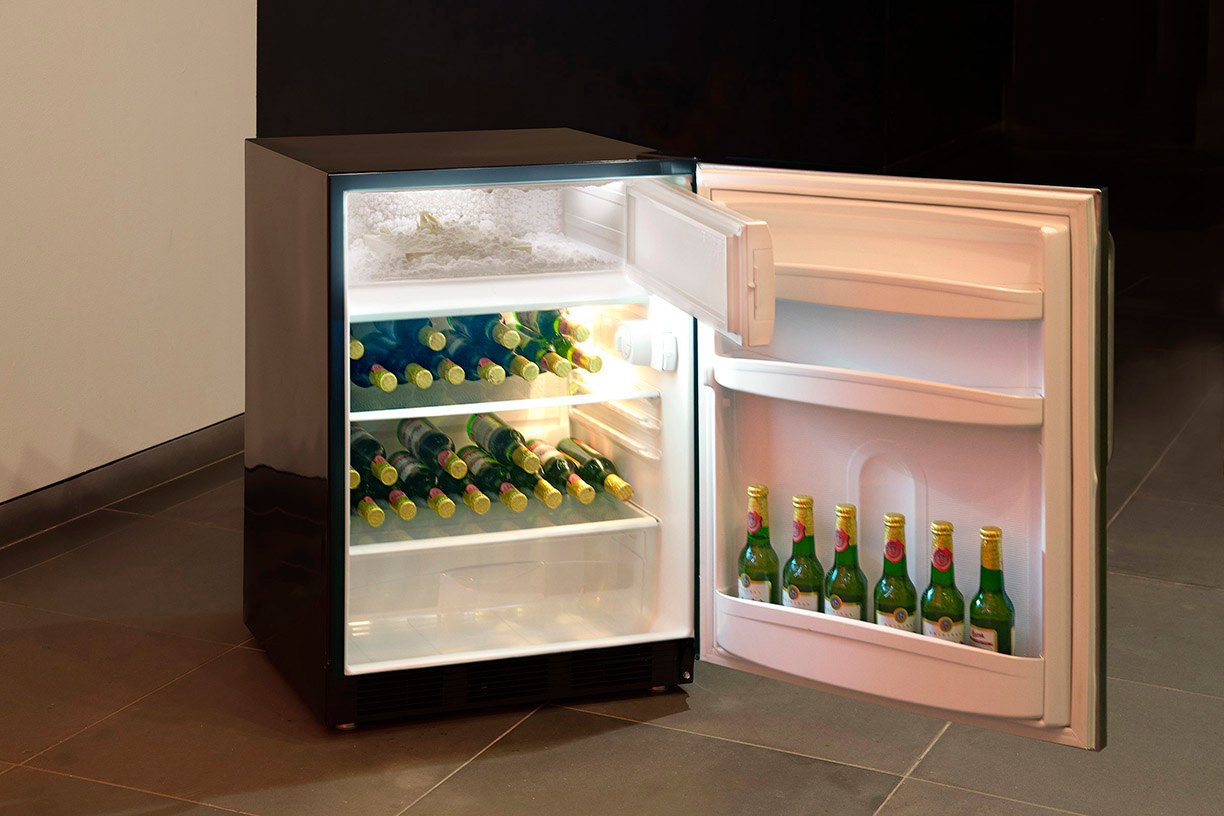
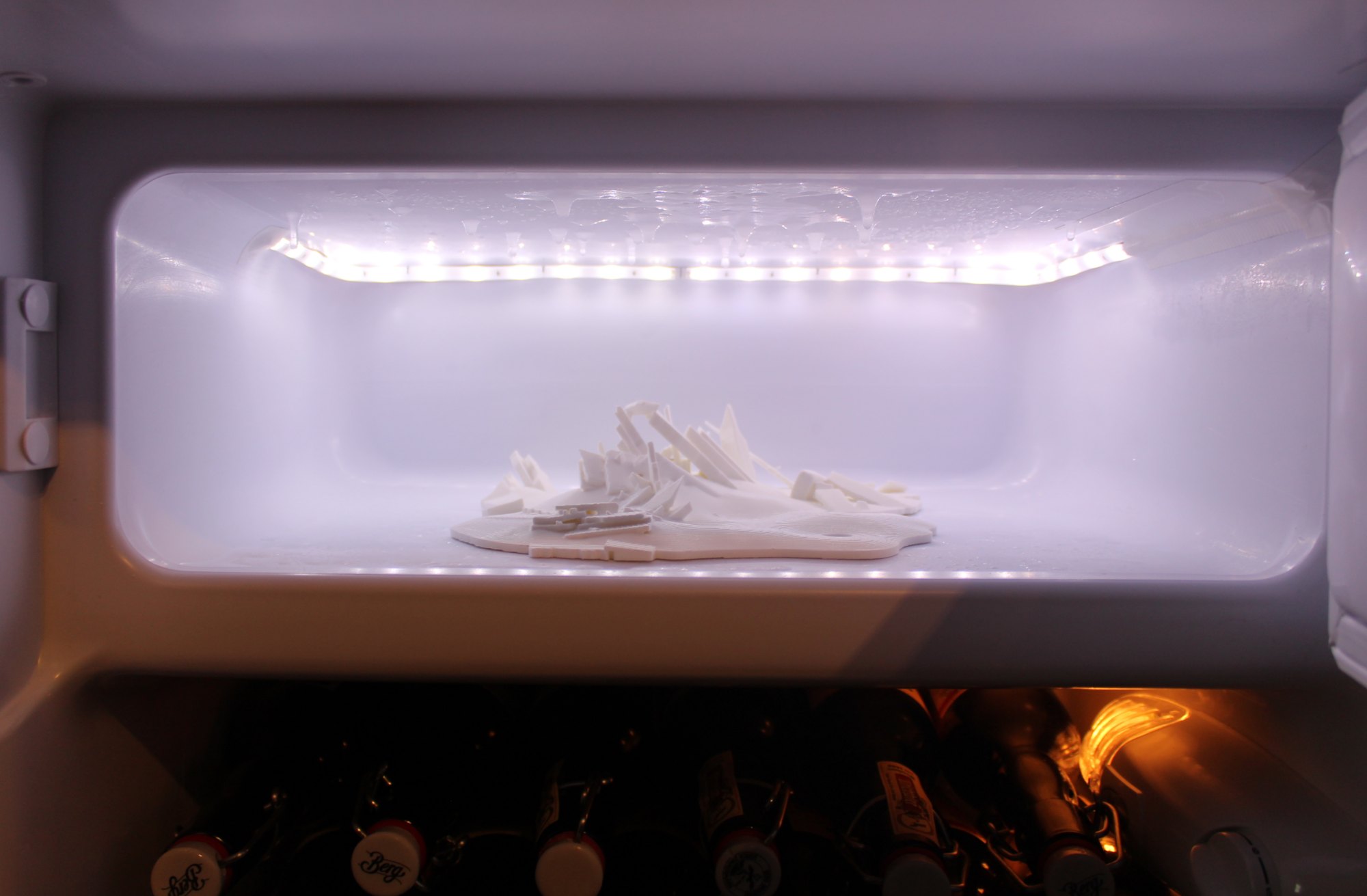
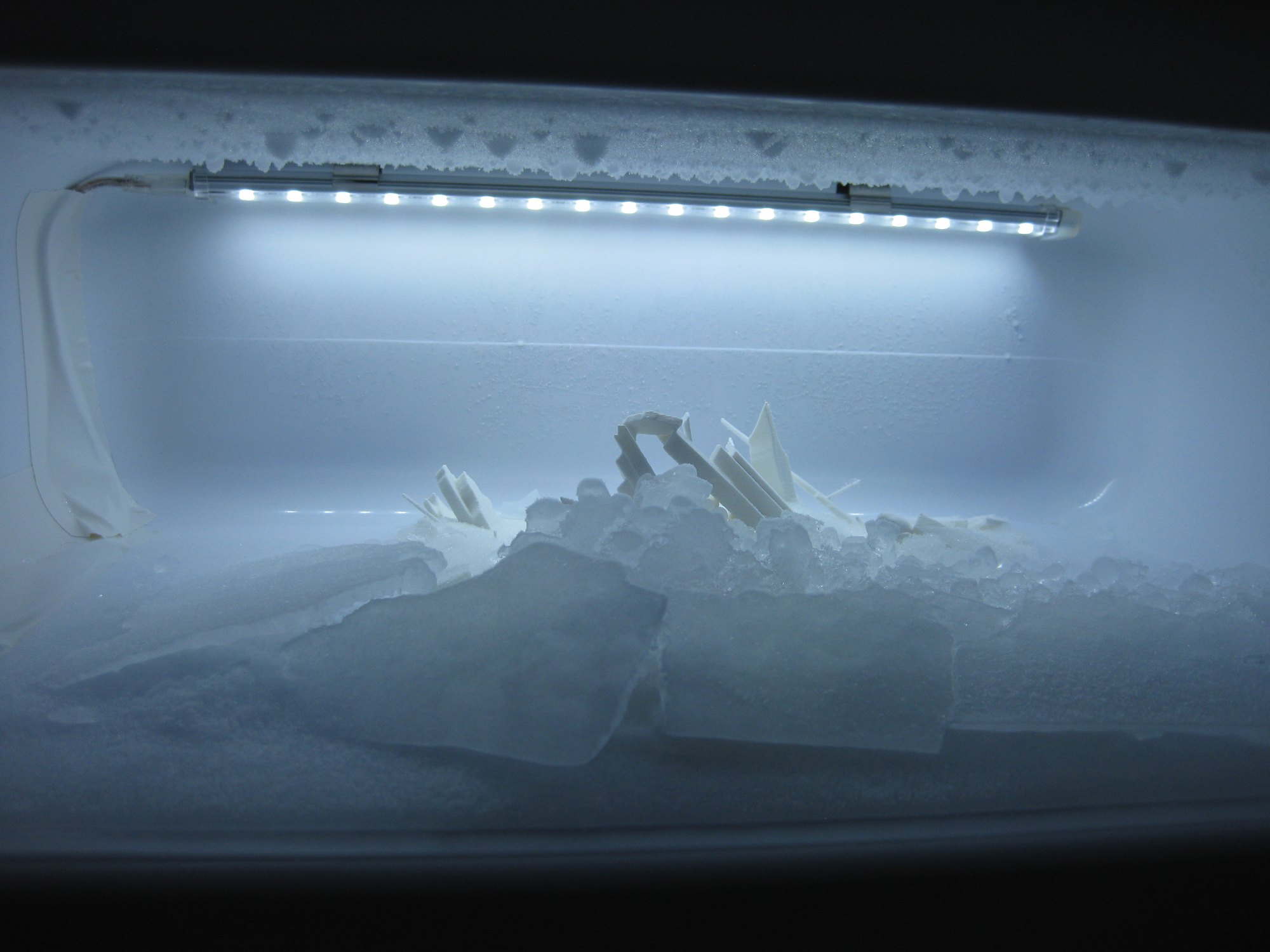
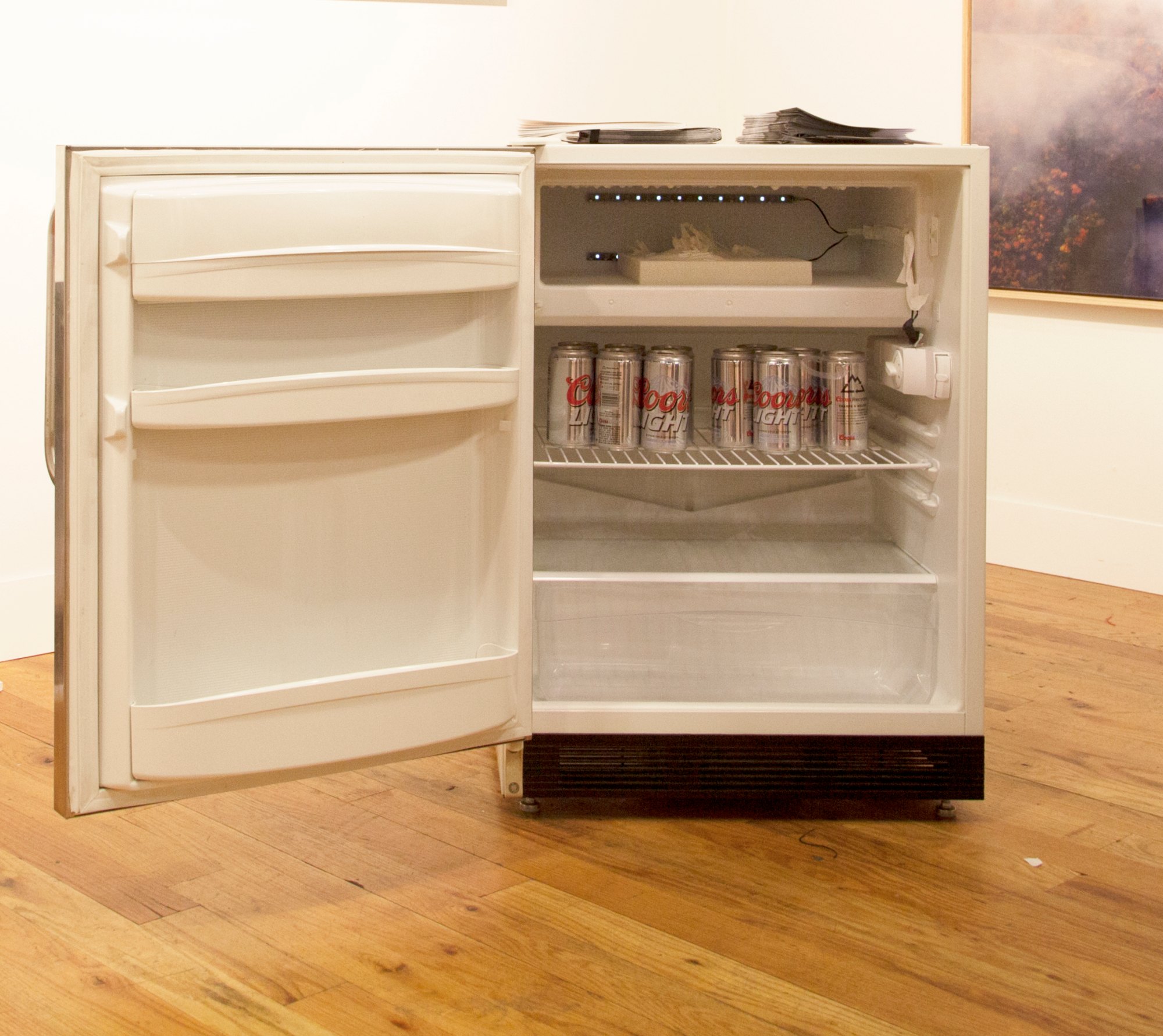
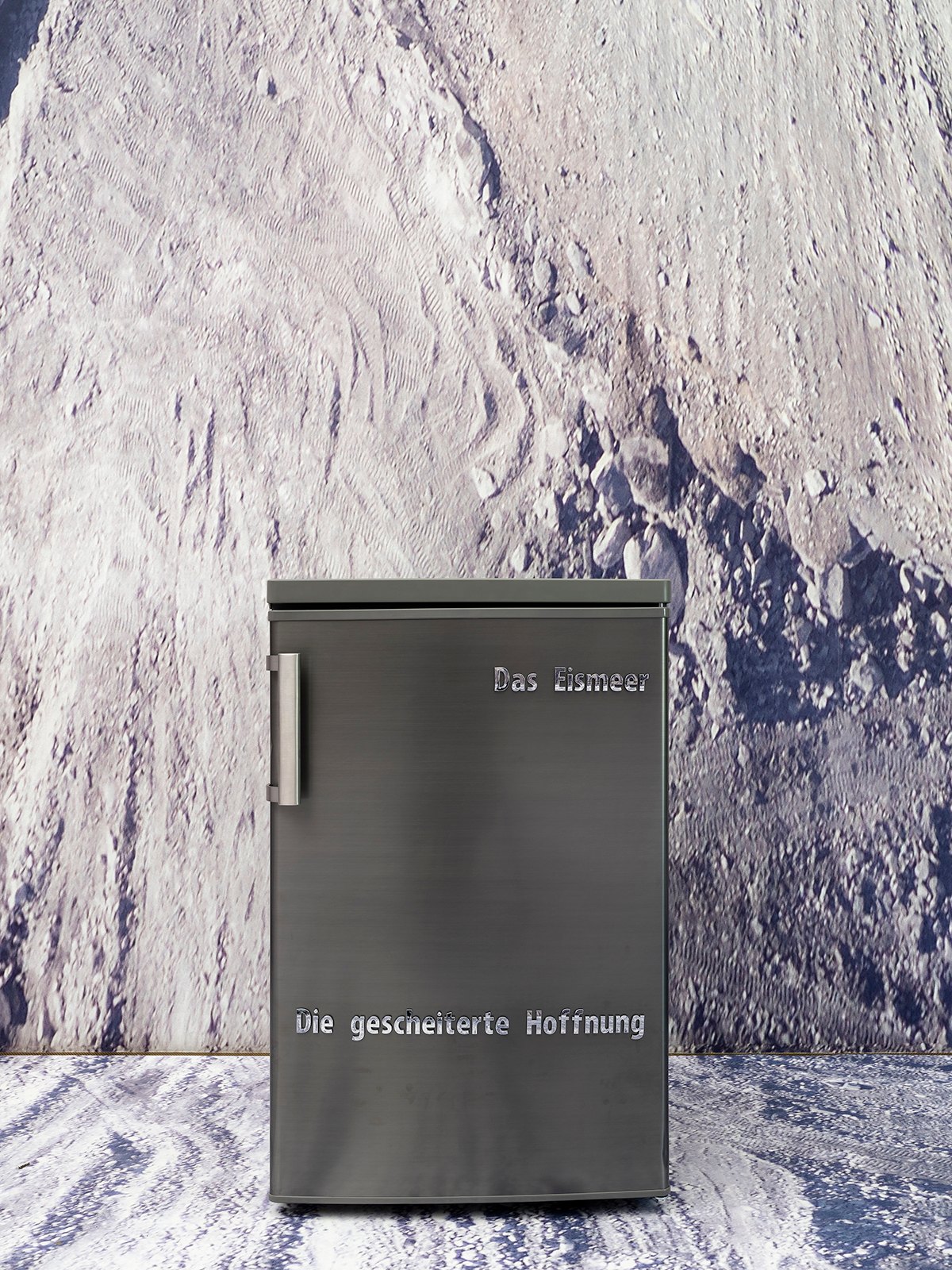
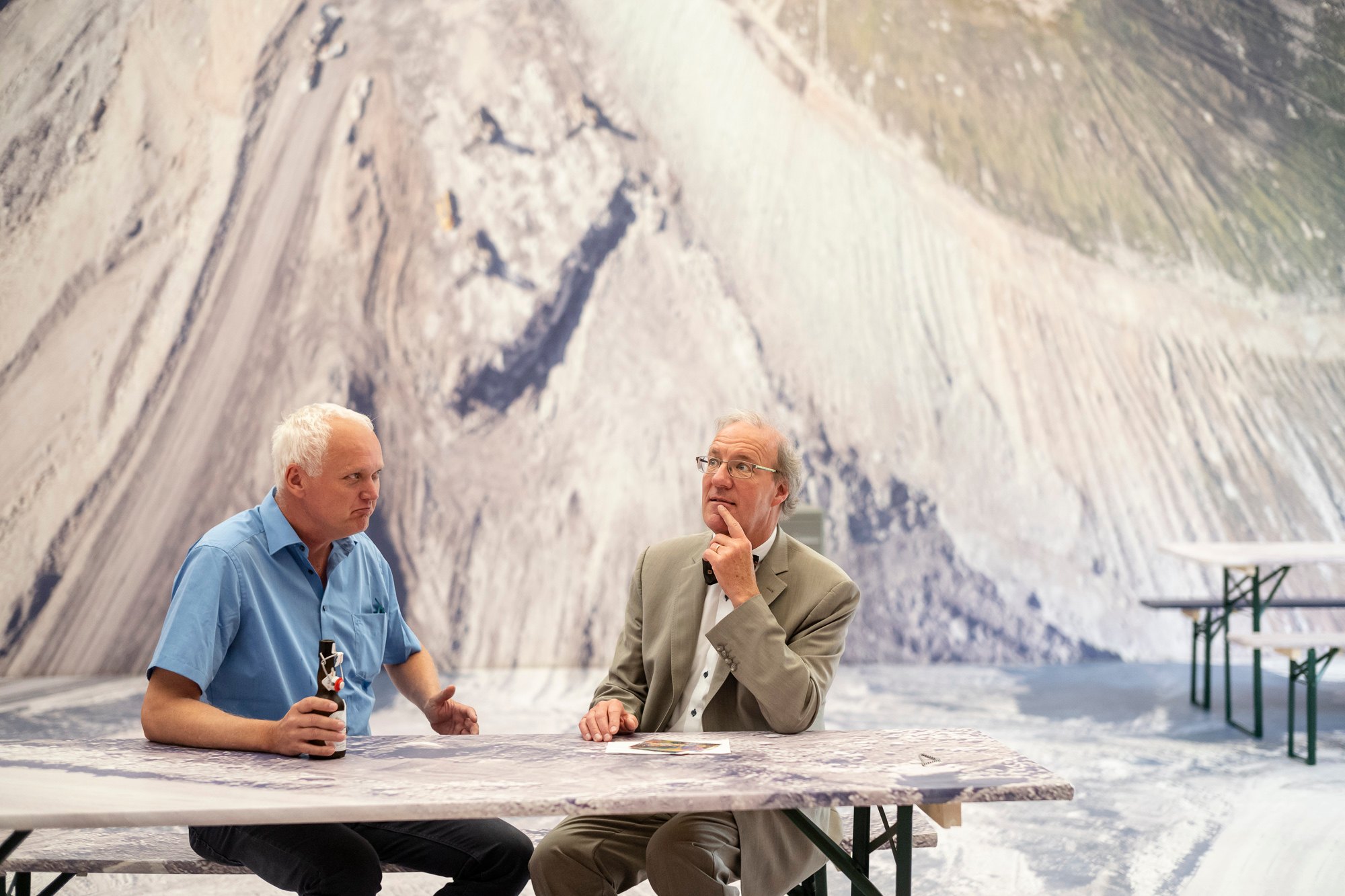
The 2012 companion piece takes the opposite route: a miniature 3D-printed model of the same ice wreck, installed inside the freezer compartment of a working mini-fridge stocked with beer, its door embossed with a custom chrome emblem reading “Das Eismeer, Die gescheiterte Hoffnung.” Viewers open the fridge themselves to find the piece — Friedrich’s sublime disaster shrunk to a barroom prop, framed by consumption, refrigeration, and the small, literal cold of home appliances. The gesture folds the painting’s Romantic weight into “social sculpture”: the fridge invites handling, drinking, conversation — dismantling the ideological monumentality of the original image by returning it to an ordinary, communal, unheroic context.
In this project
Works
Video Animation
Charcoal Drawings
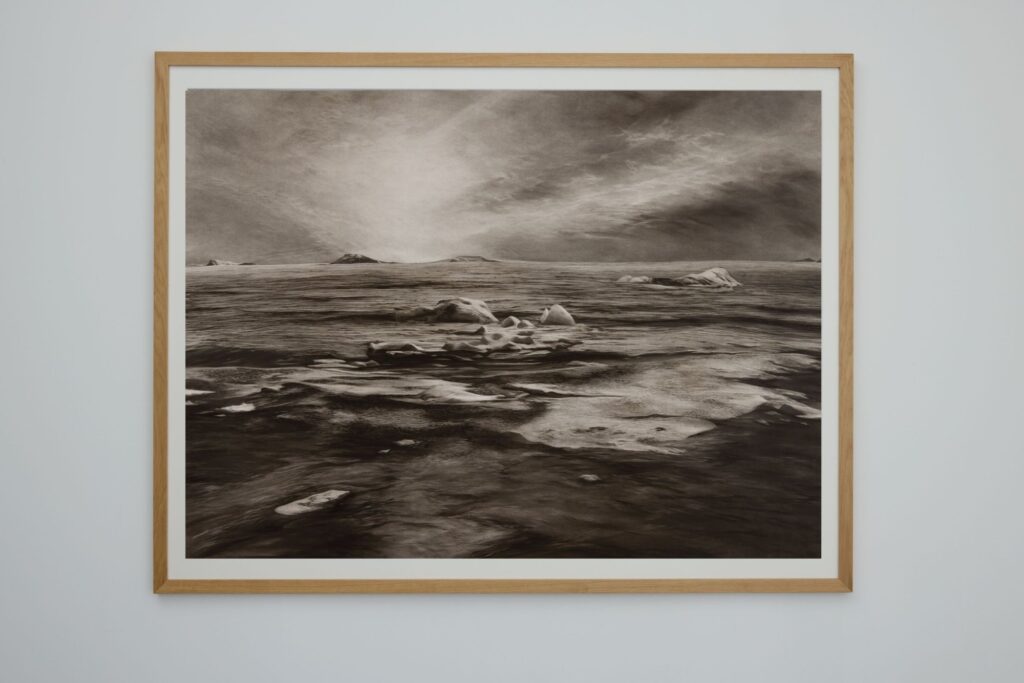
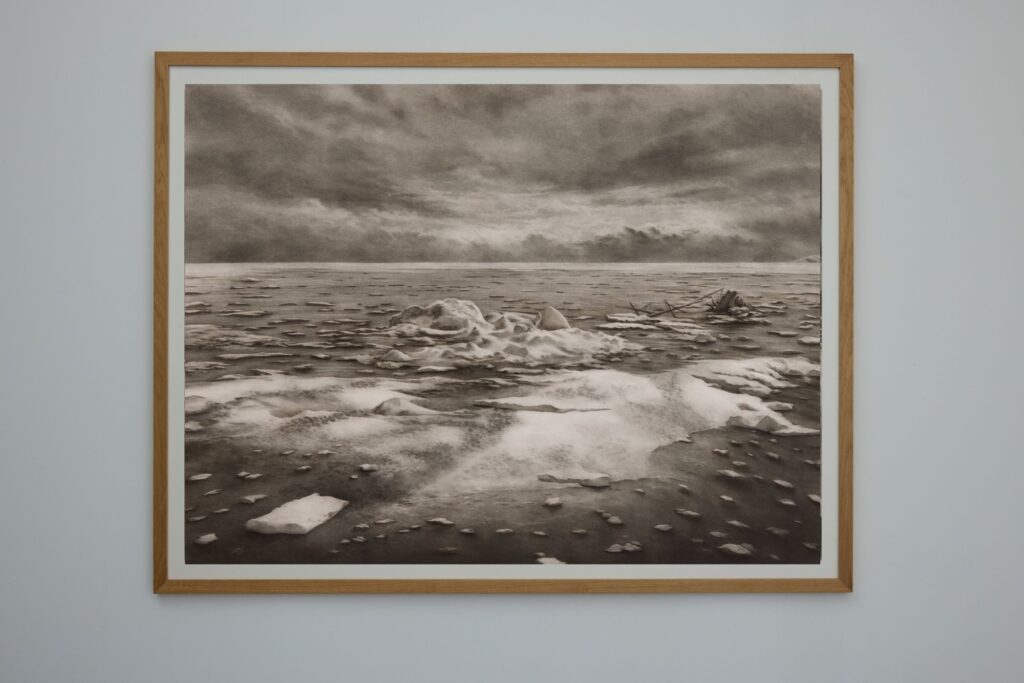
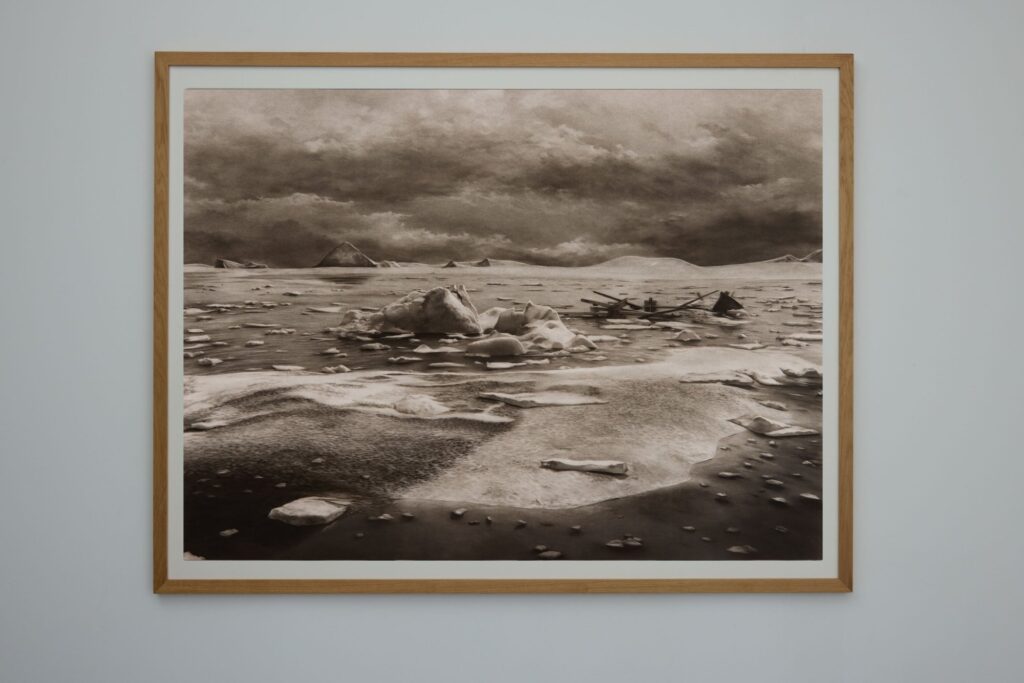
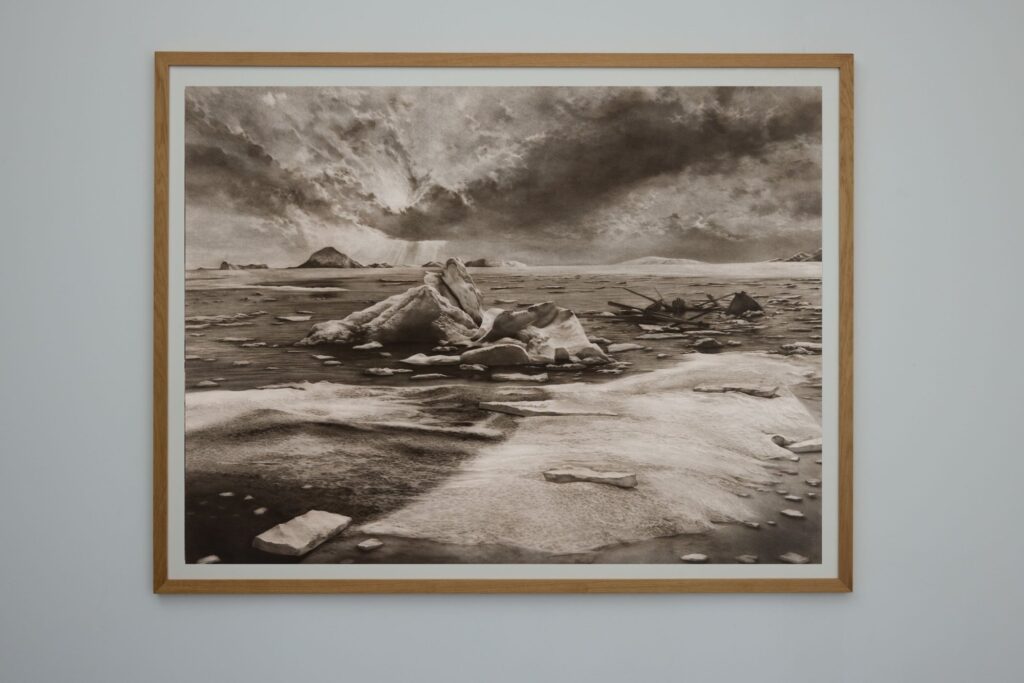
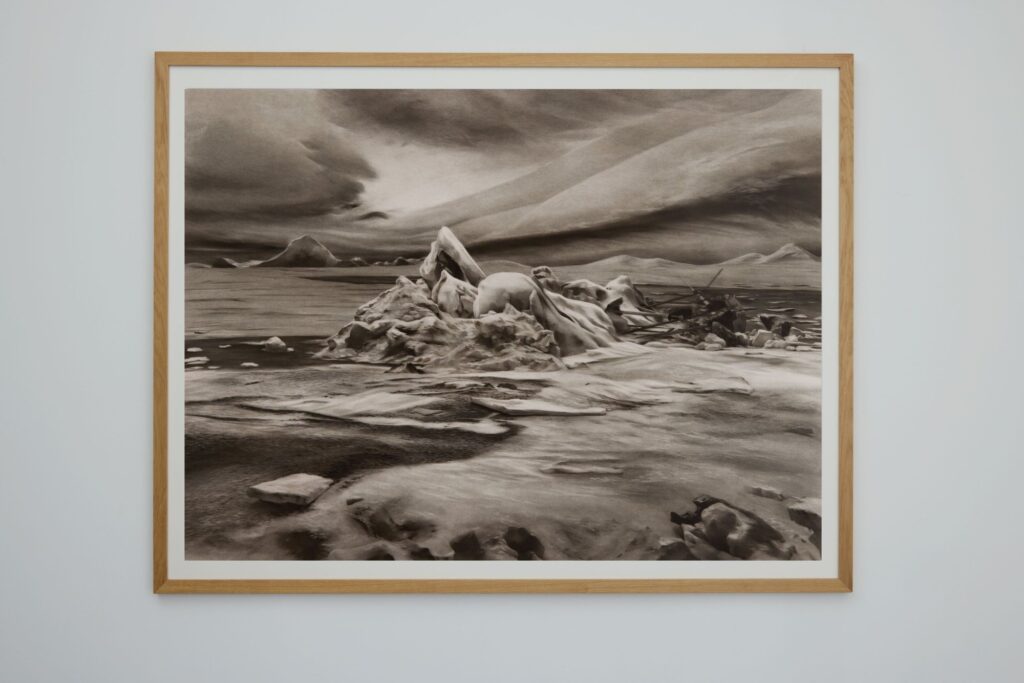
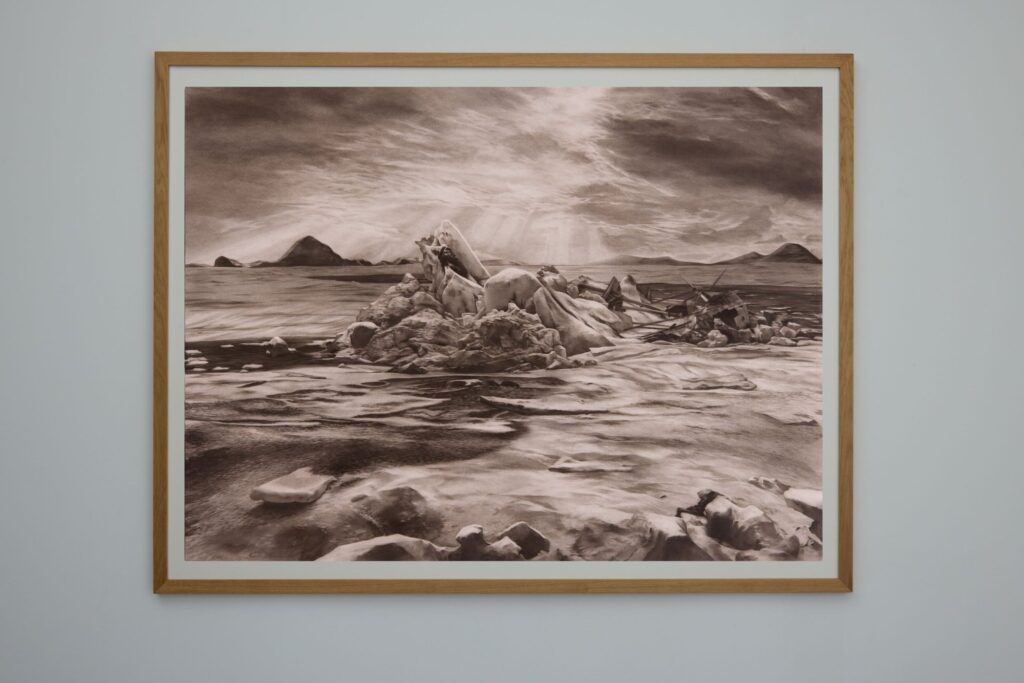
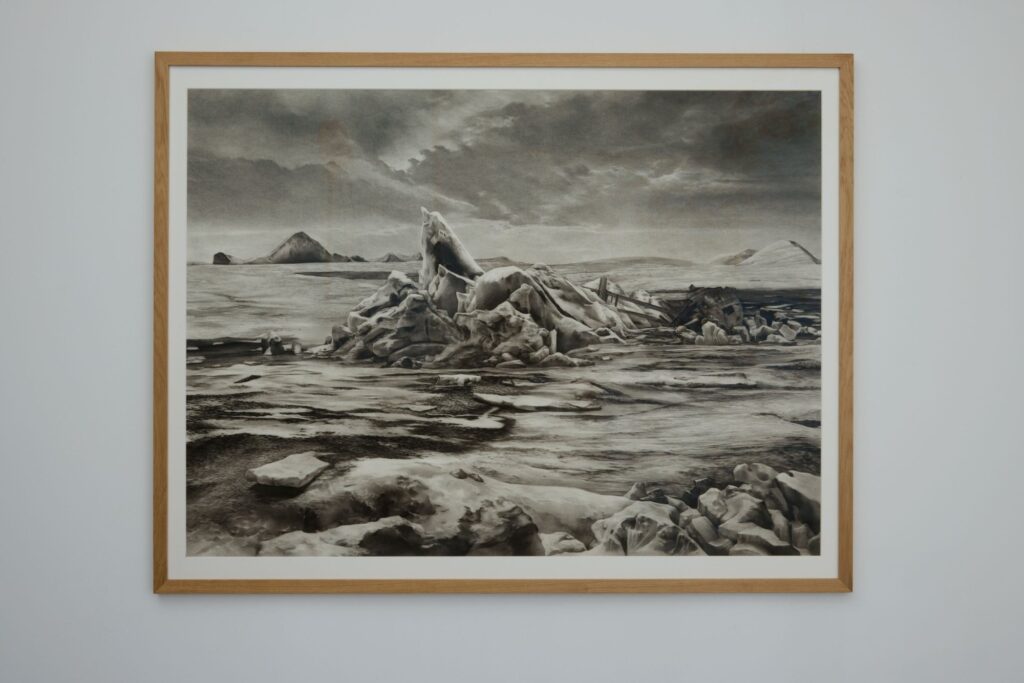
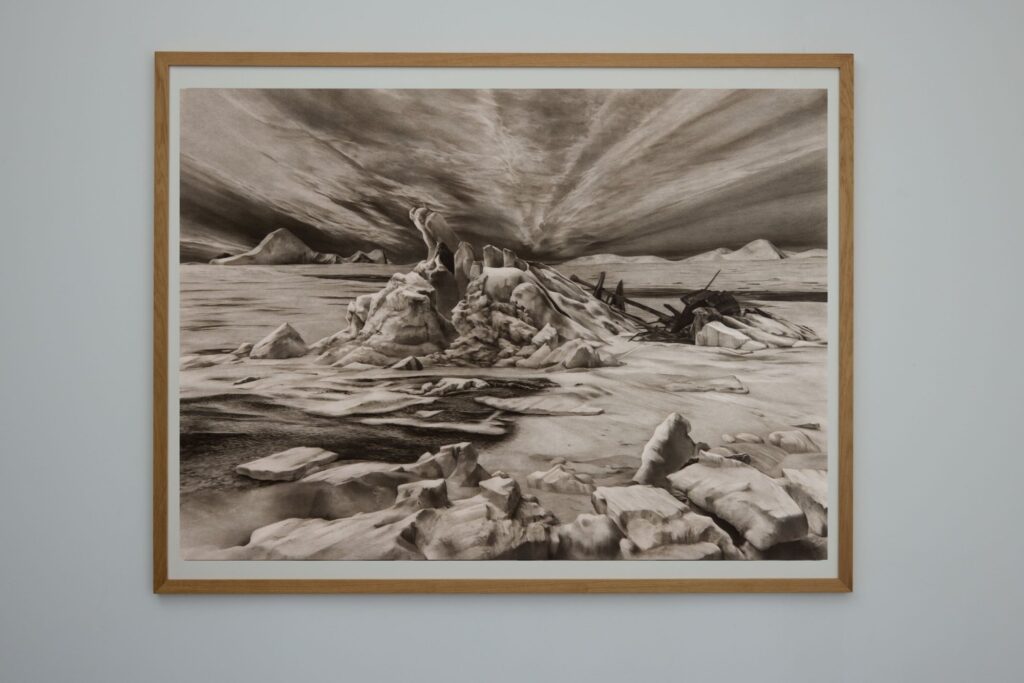
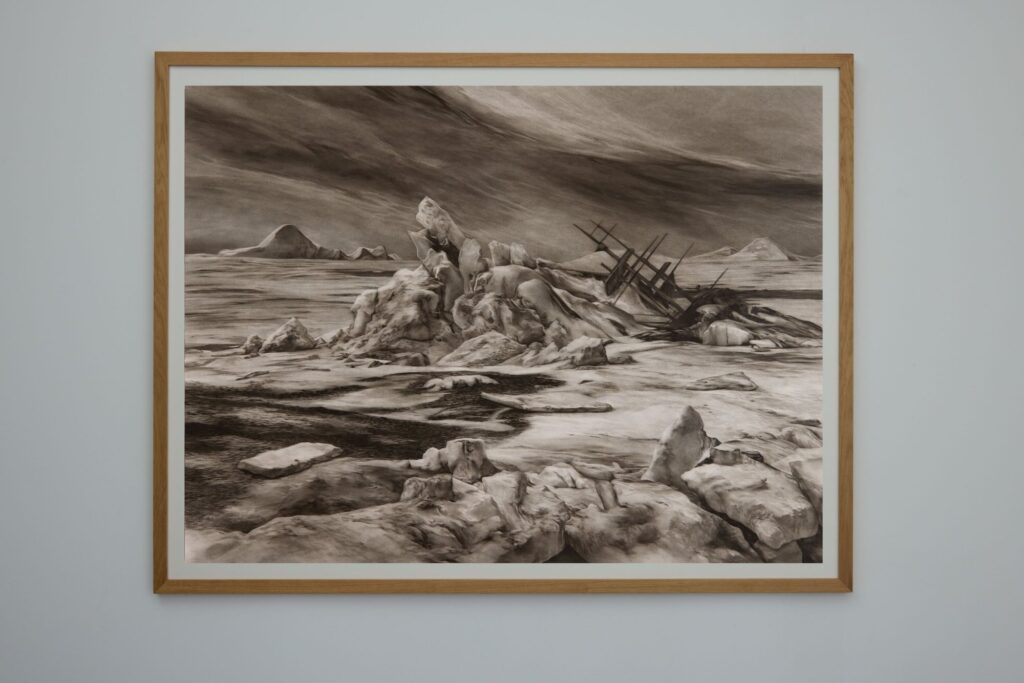
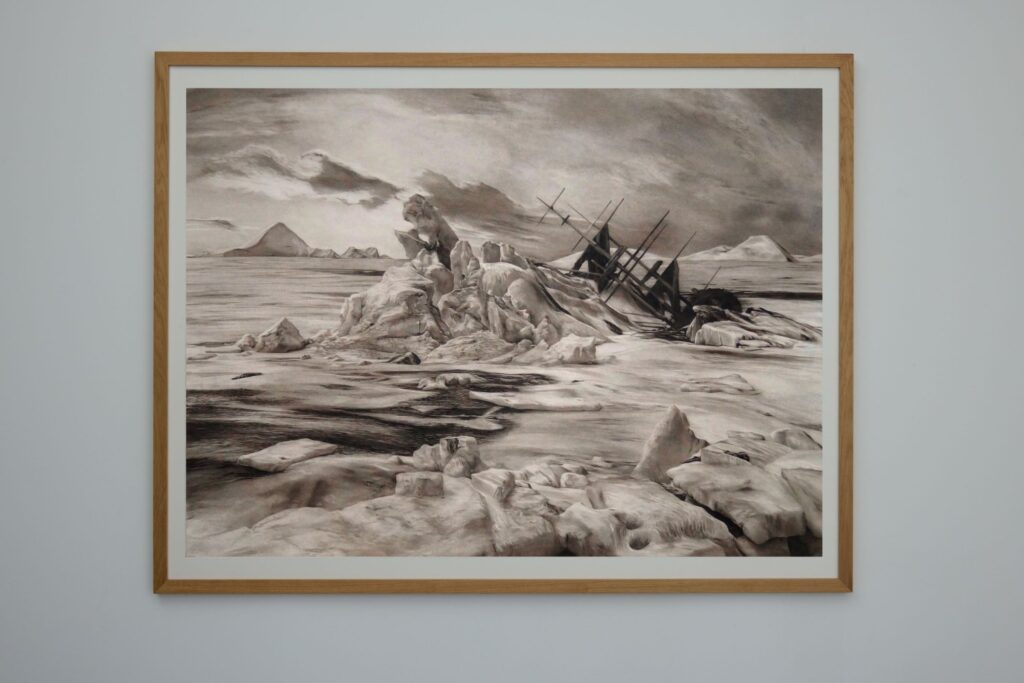
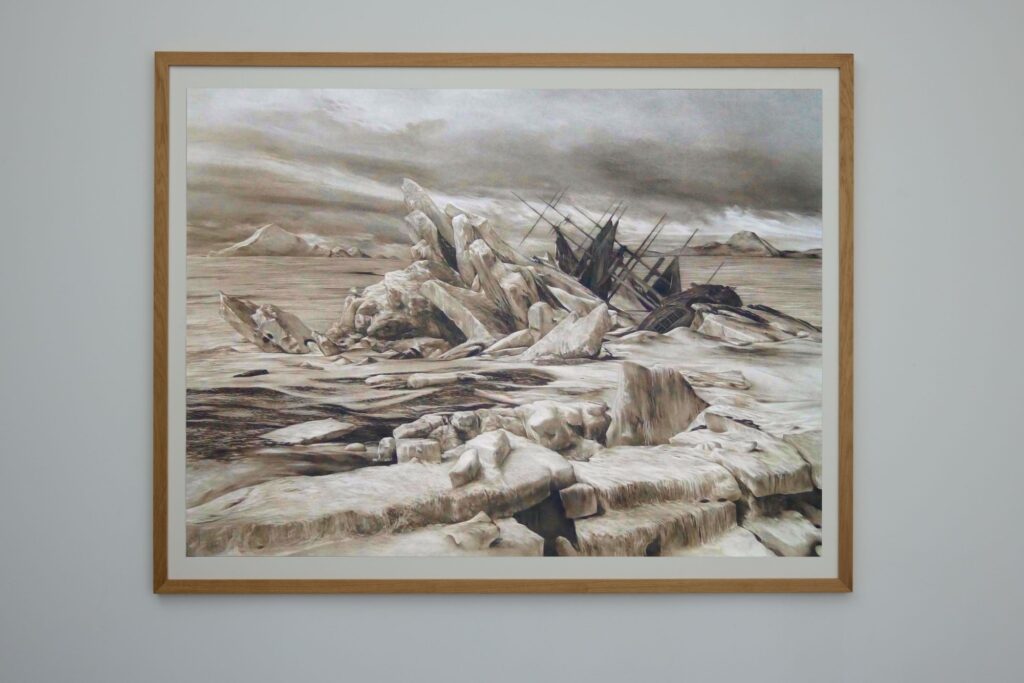
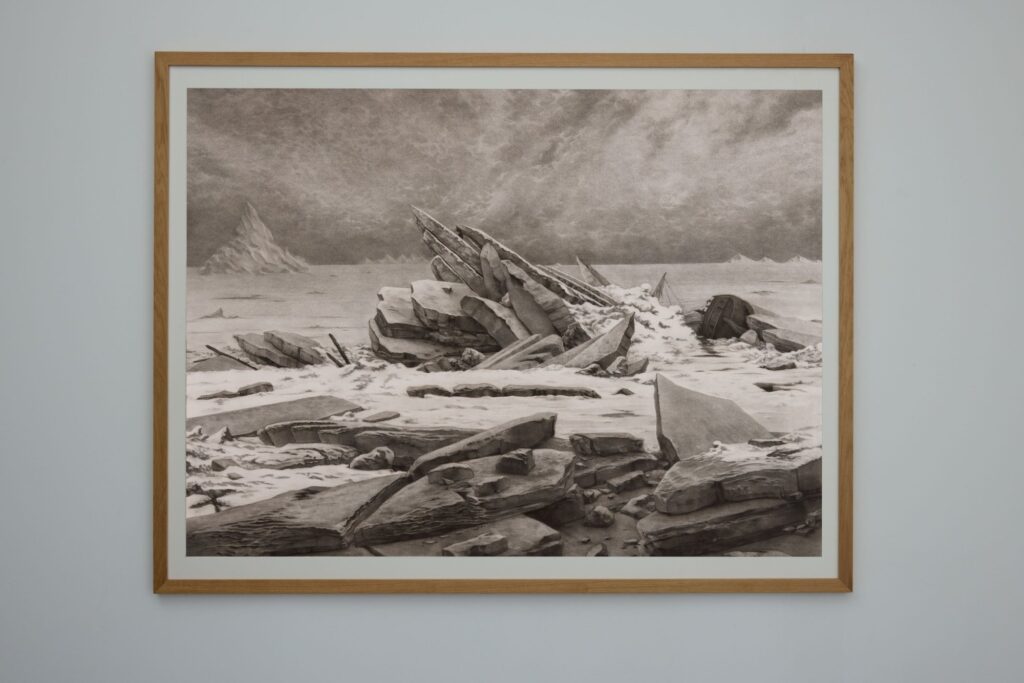
Installation views