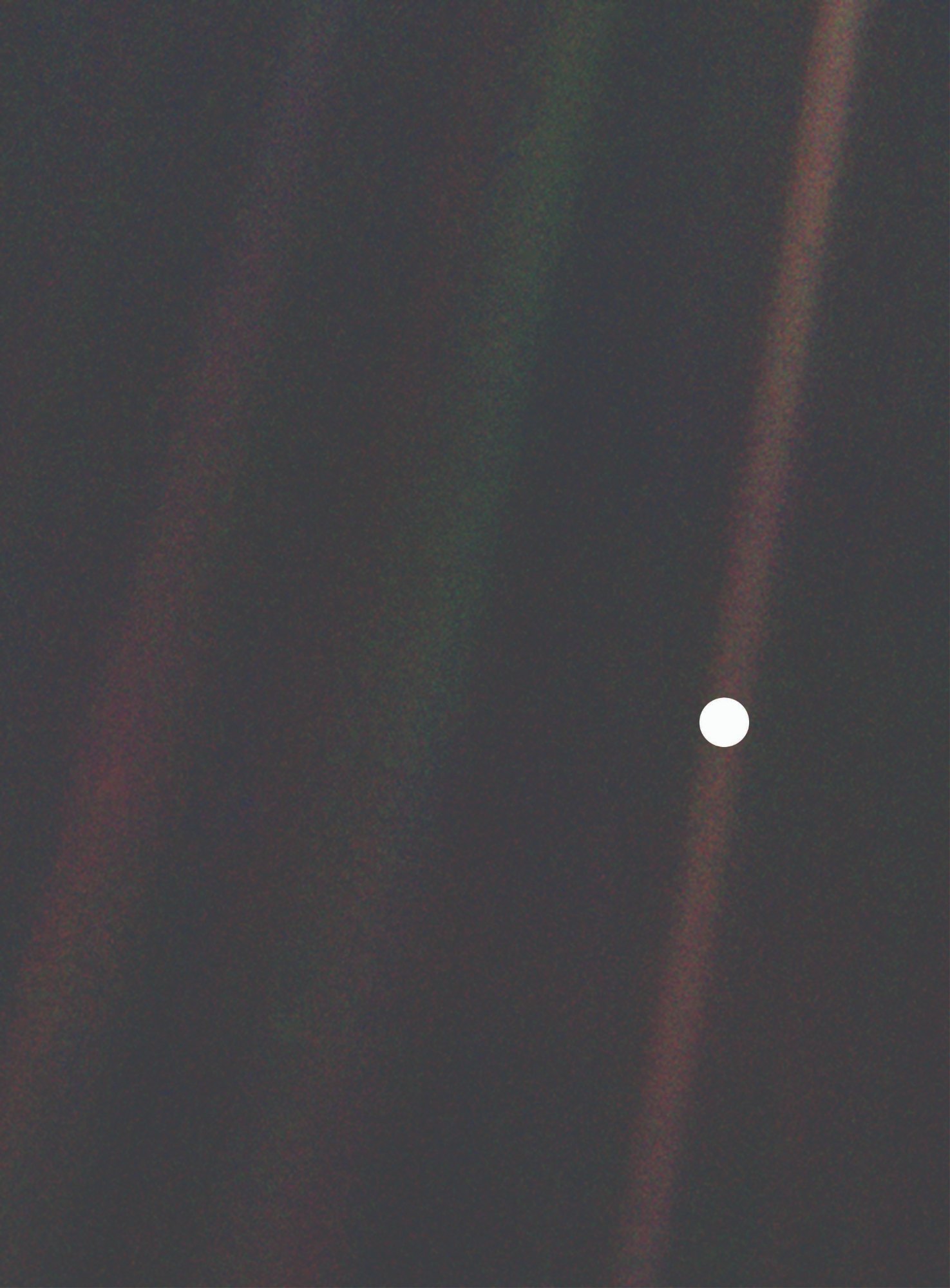
Where the Renaissance placed the individual at the center of a newly mapped universe, and the 1968 Apollo photographs of the “pale blue dot” returned us to the center of the frame, digital and robotic imaging has completed the circle: we no longer need to walk, fly, or sail into a landscape. We click on it. A remote-controlled camera on a rover or a satellite does the looking for us, and the result — Kessler’s “nature 2.0” — arrives already downloaded, already resolved, waiting on a screen in an apartment, on a couch.
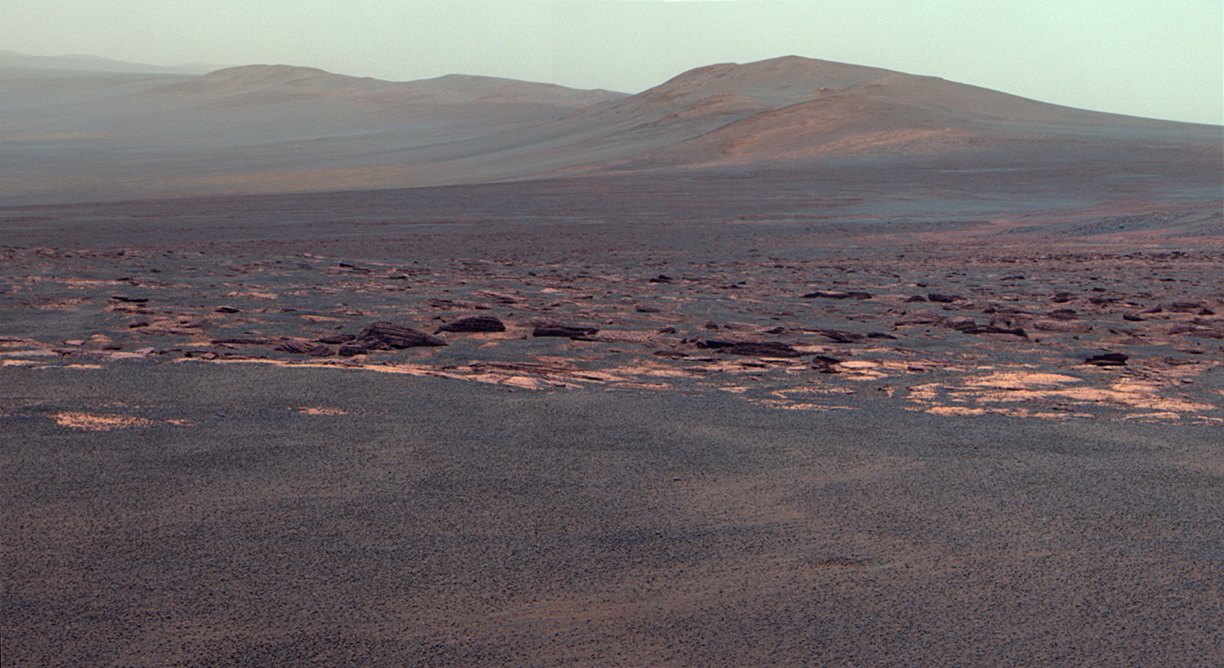
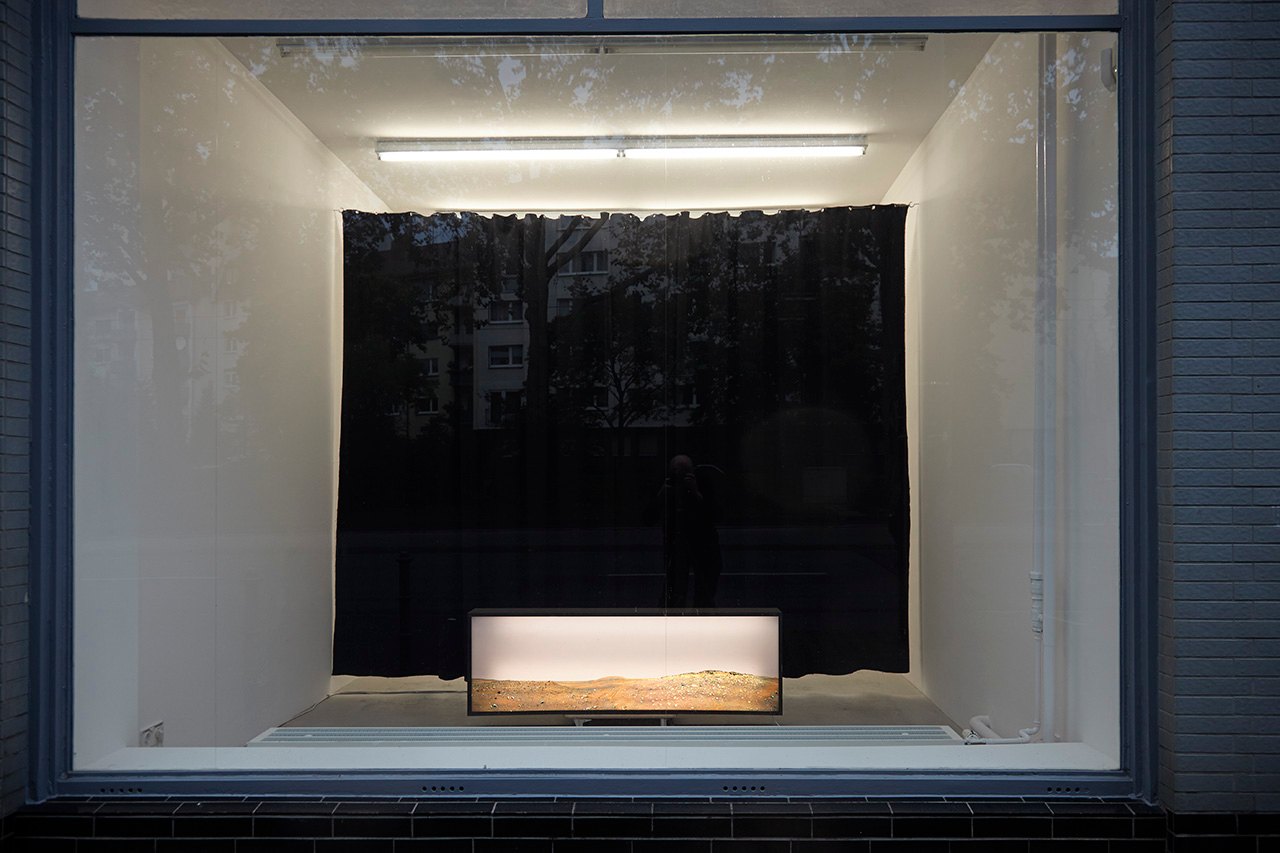
Cyberspace gathers the works built directly from this premise: source imagery generated by machines standing in for human presence. Mars Calypso uses a full-circle panorama stitched from hundreds of frames shot by NASA’s Spirit rover at “Troy,” Mars, in 2009 — a landscape photograph with no human witness anywhere near it, of a place no person has ever stood. The Pale Blue Dot appropriates the Voyager 1 image of Earth as a single pixel in a band of scattered light — the origin point of the “we are the center” loop the whole cycle traces, abstracted here into a minimal blue disc as well as the source photograph itself.
“In the future,” Kessler writes, “landscape images will be produced by robot-controlled cameras. The artist is removed from the production entirely, and predator drones fly around, viewing the landscape from a newly found vantage point.”
Works