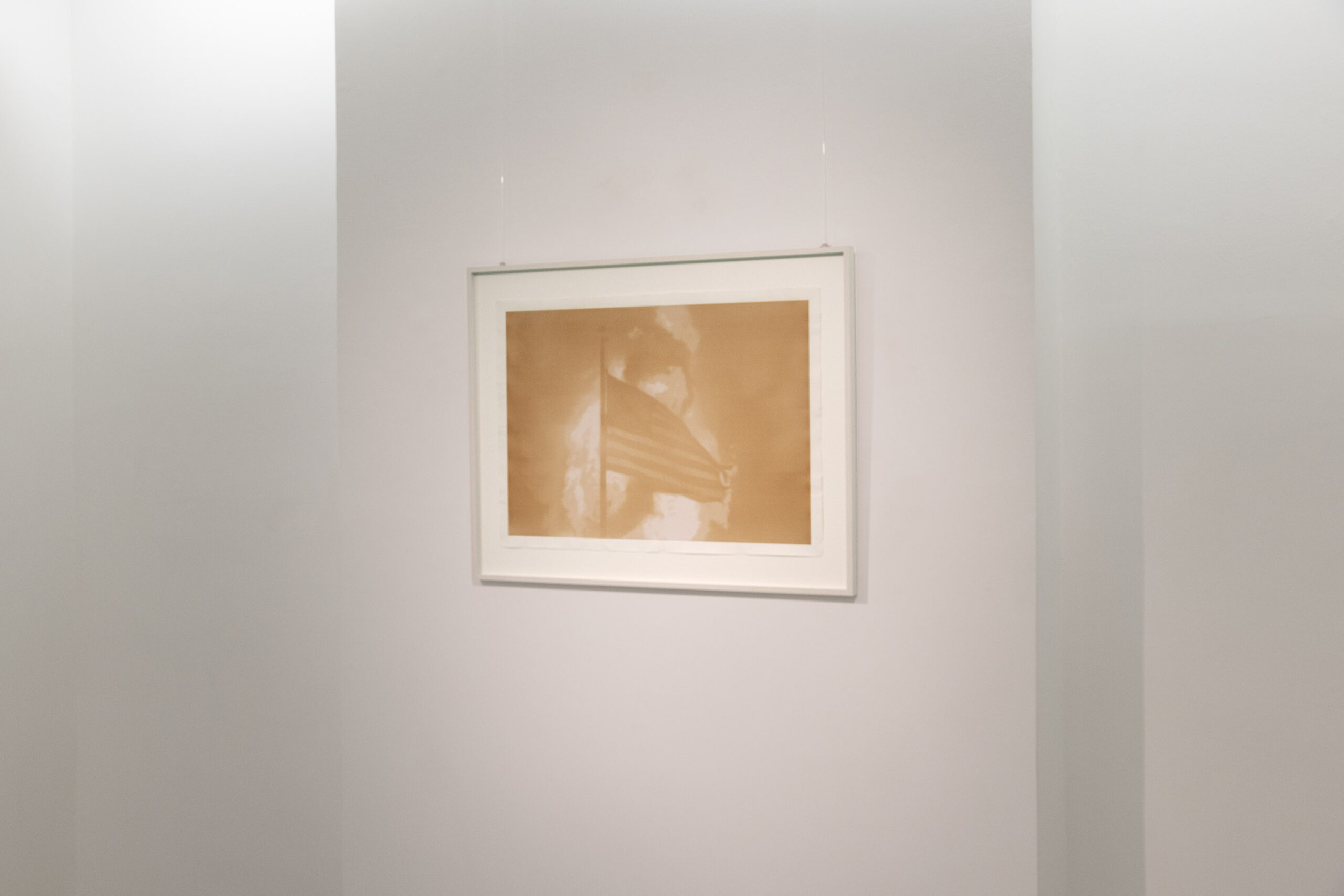
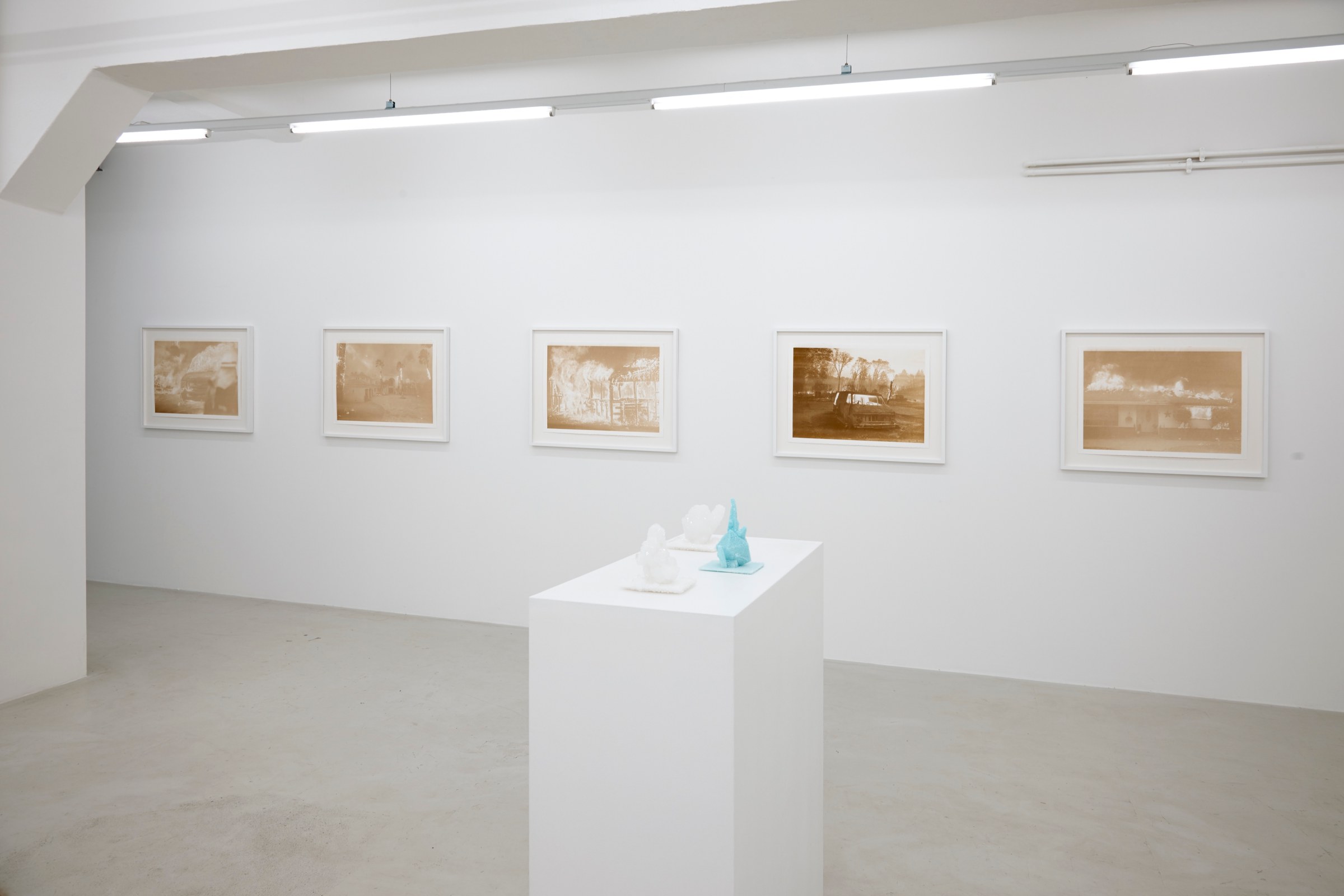
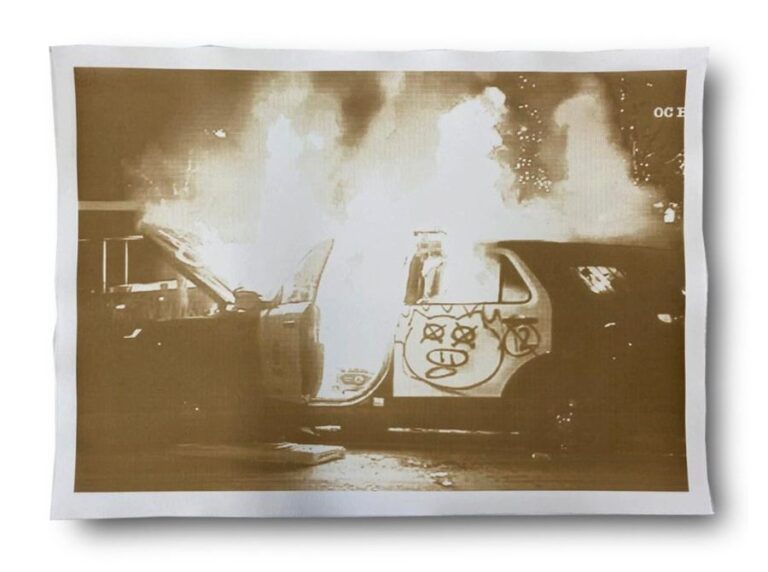
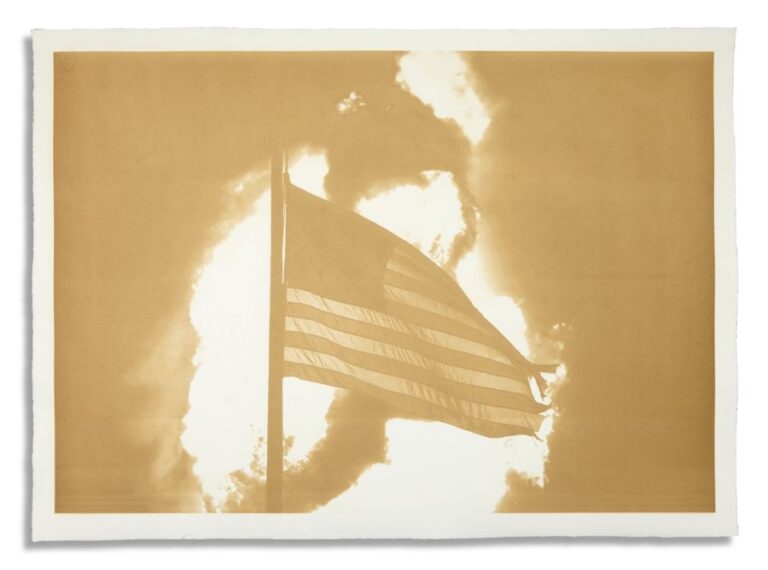
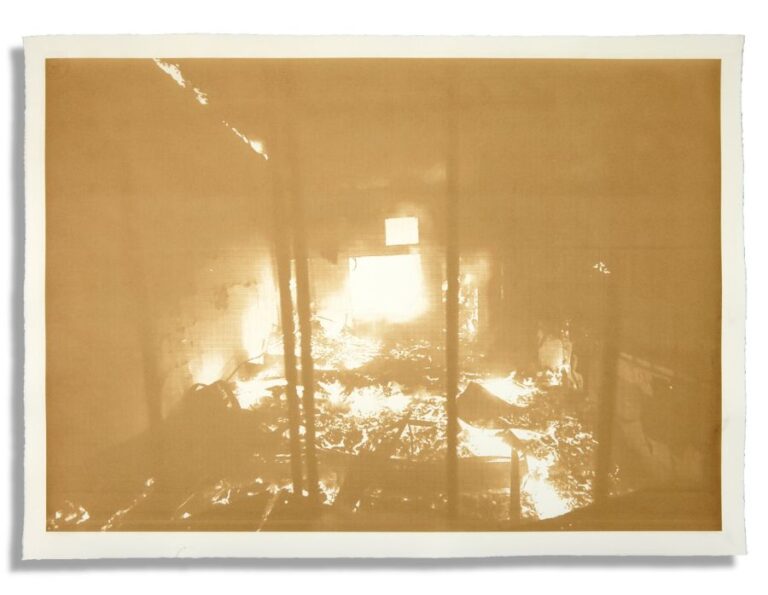
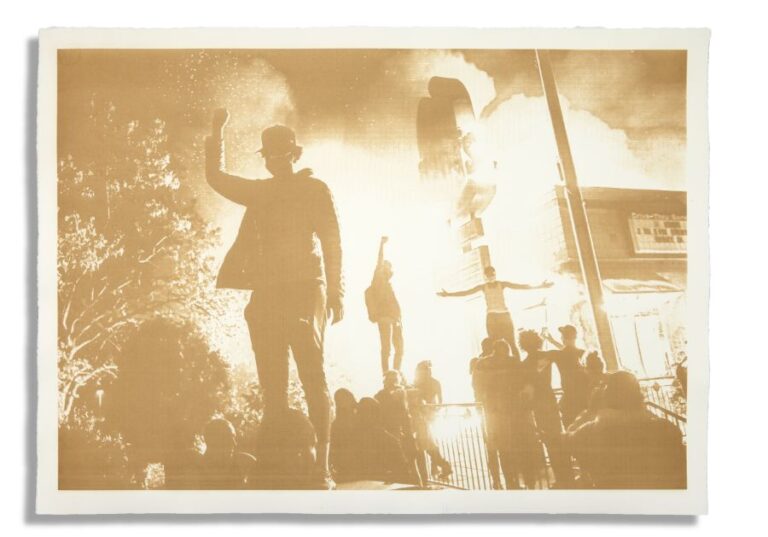
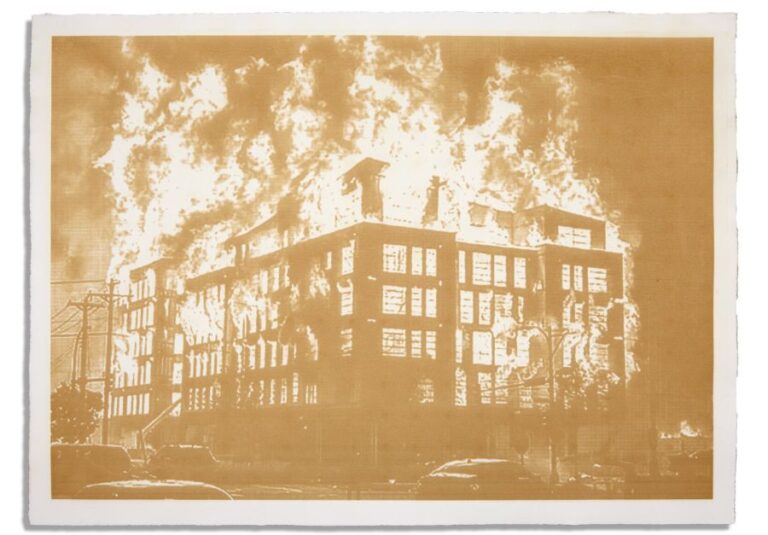
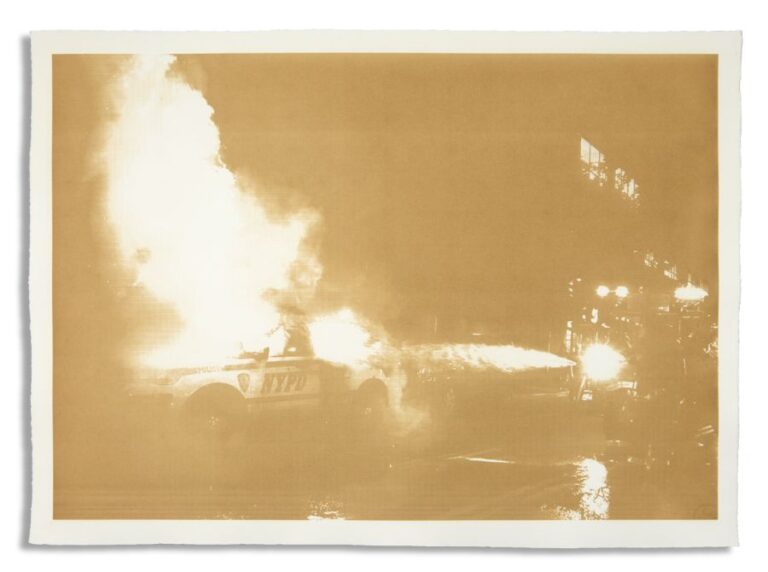
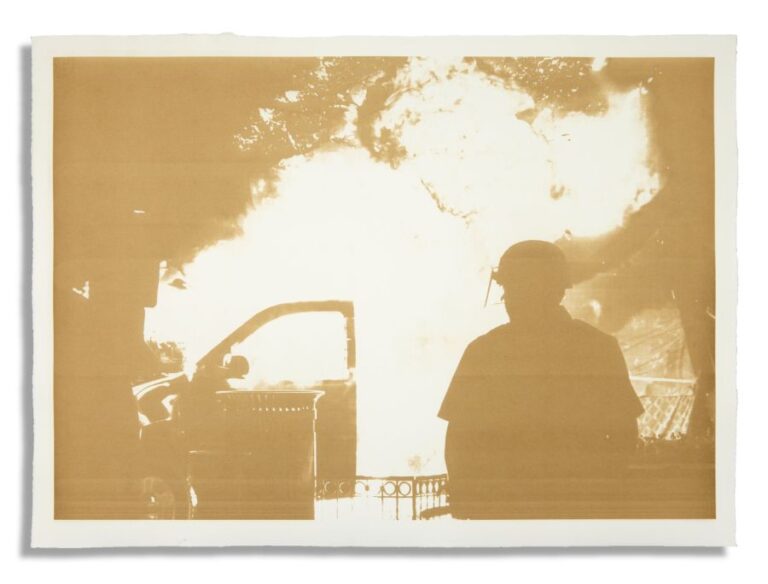
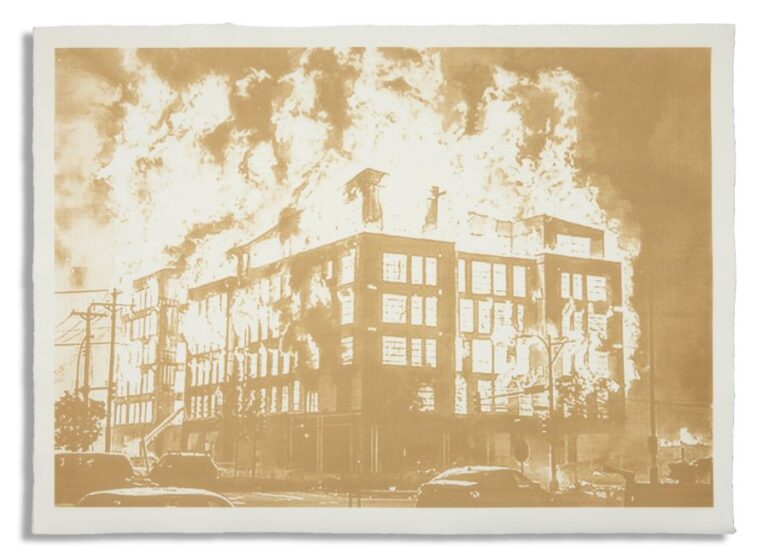
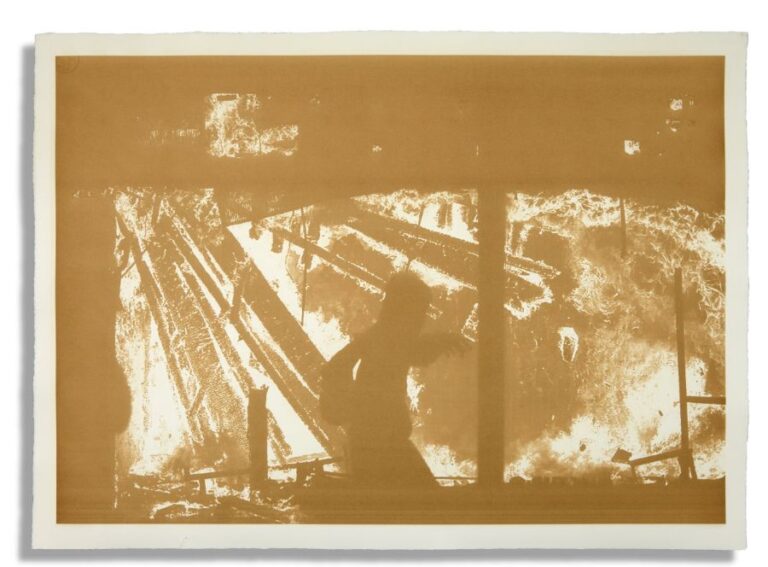
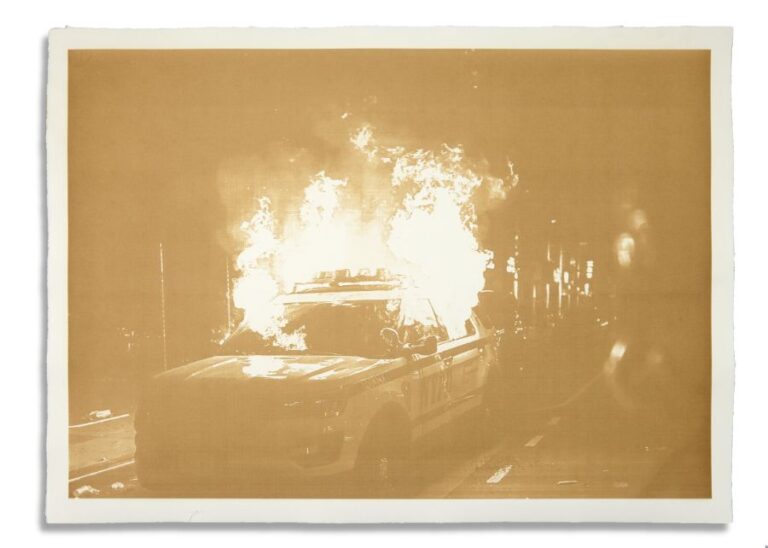
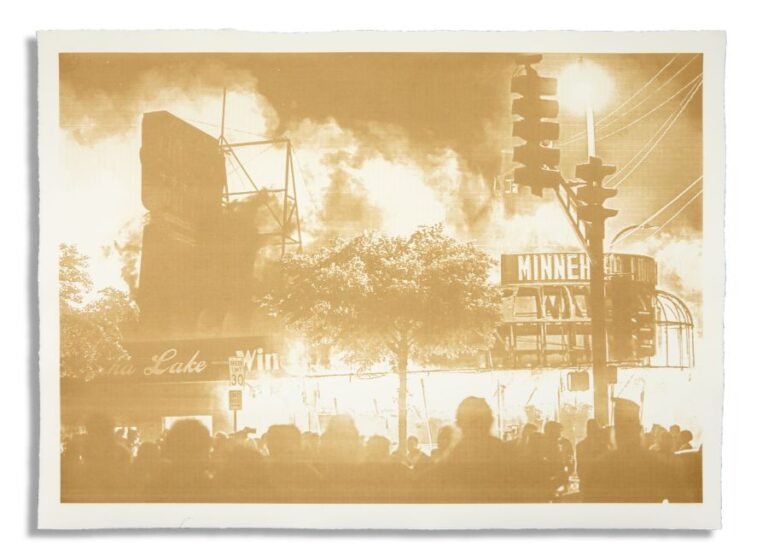
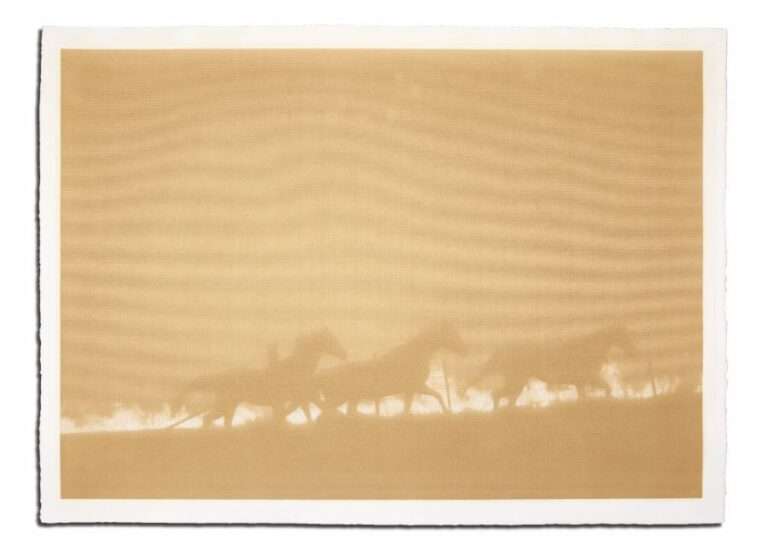
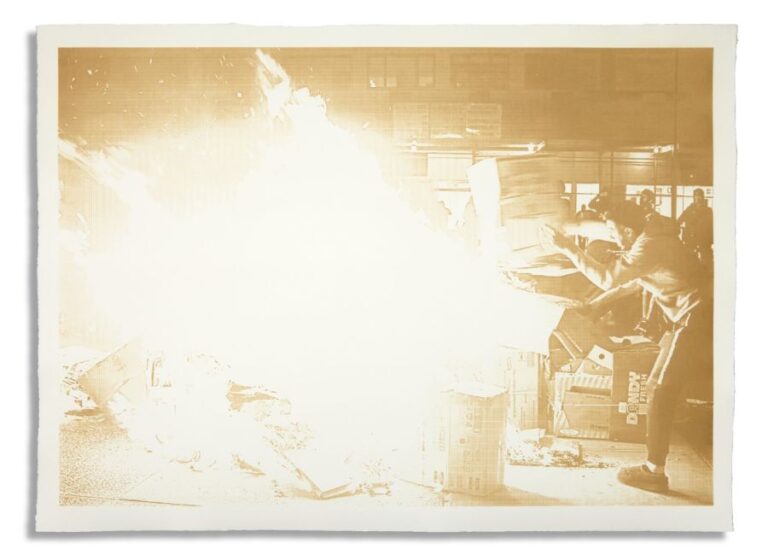
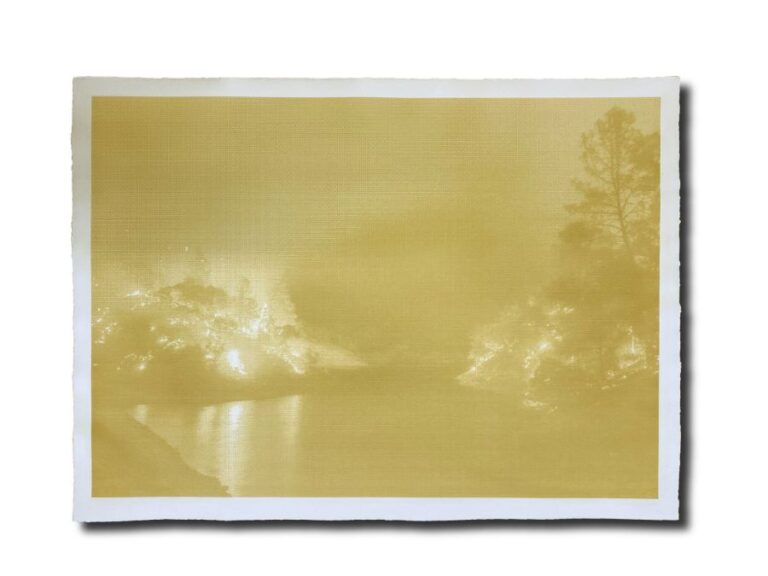
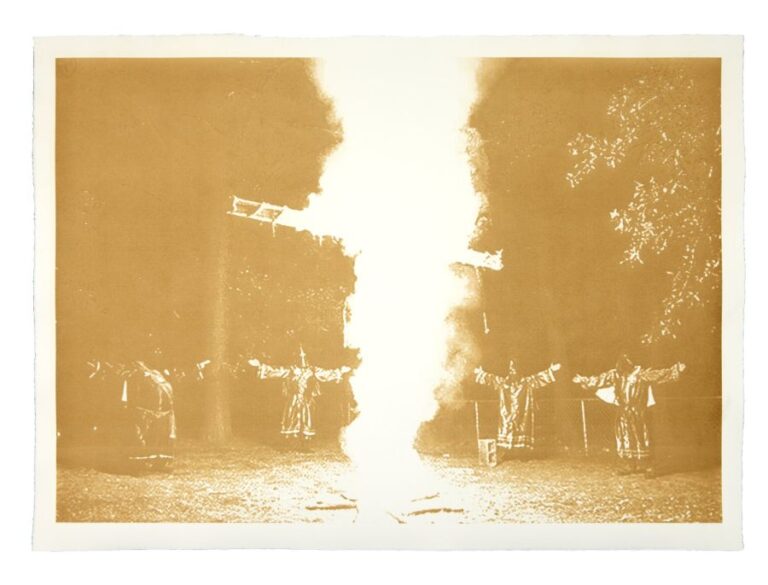
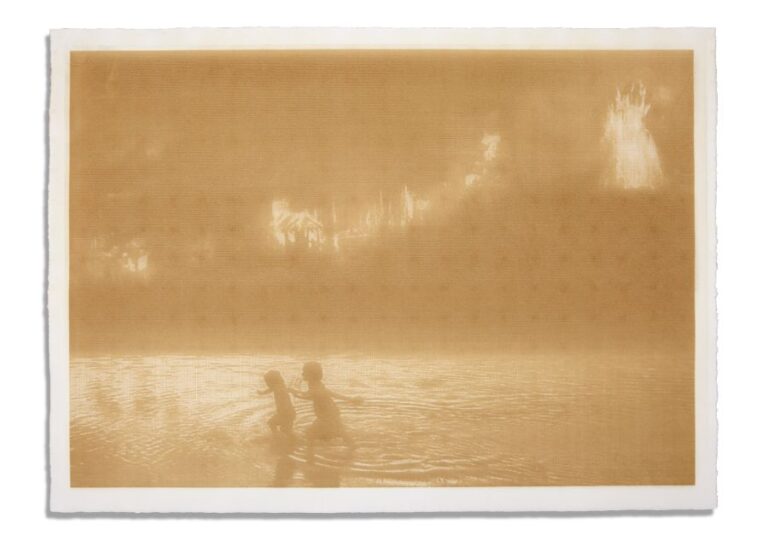
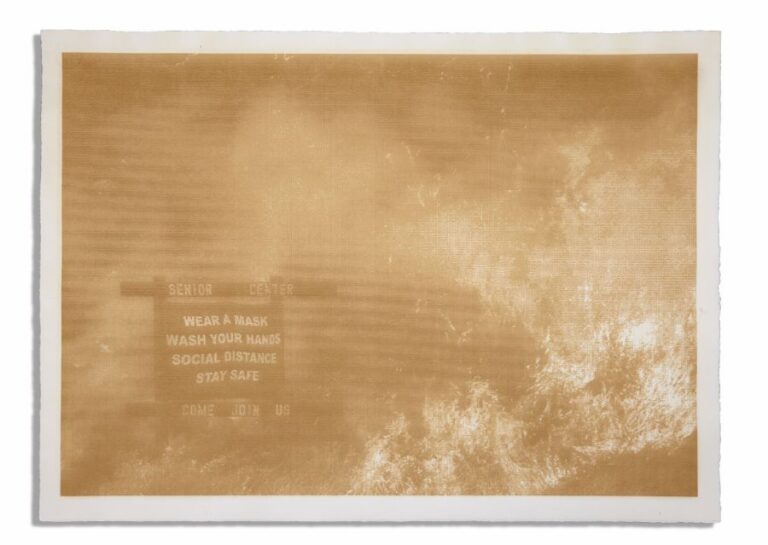
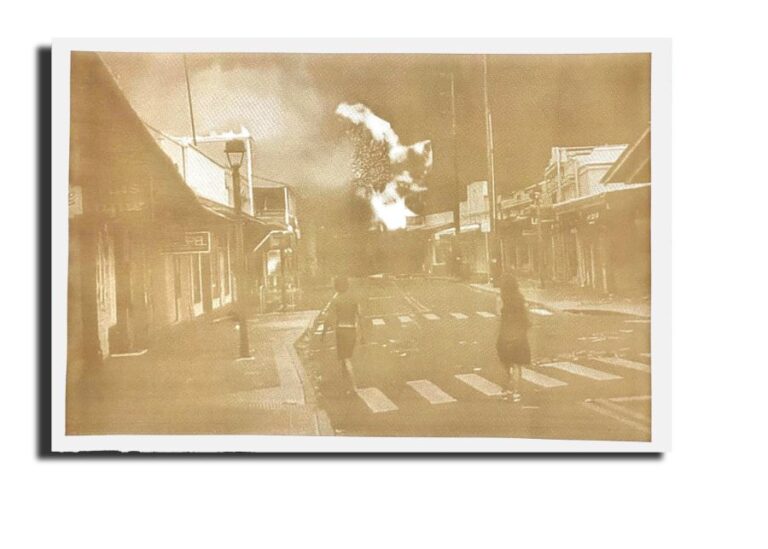
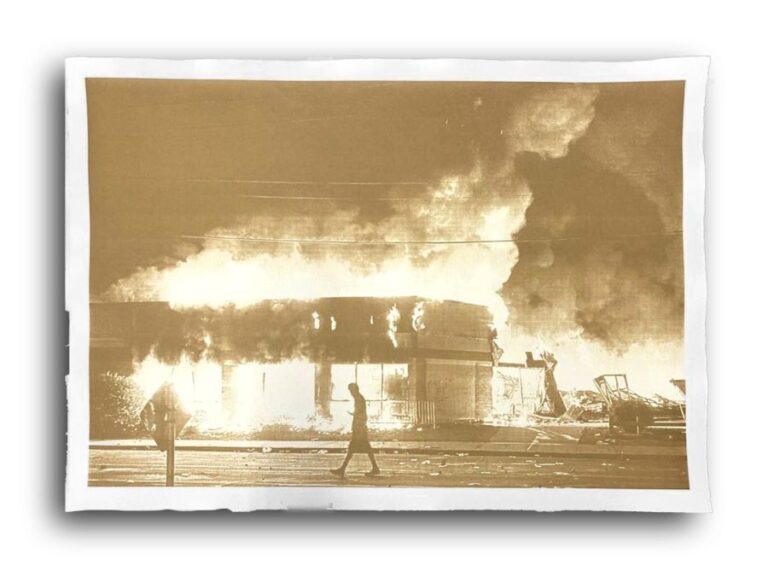
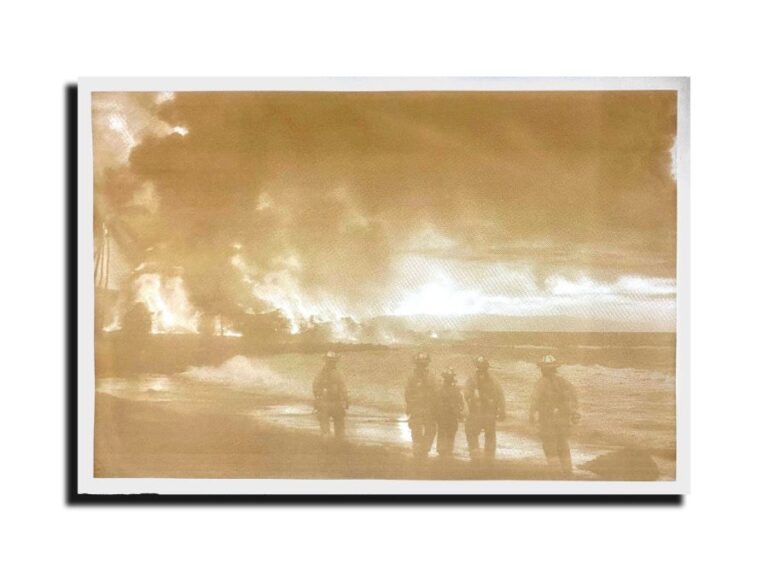
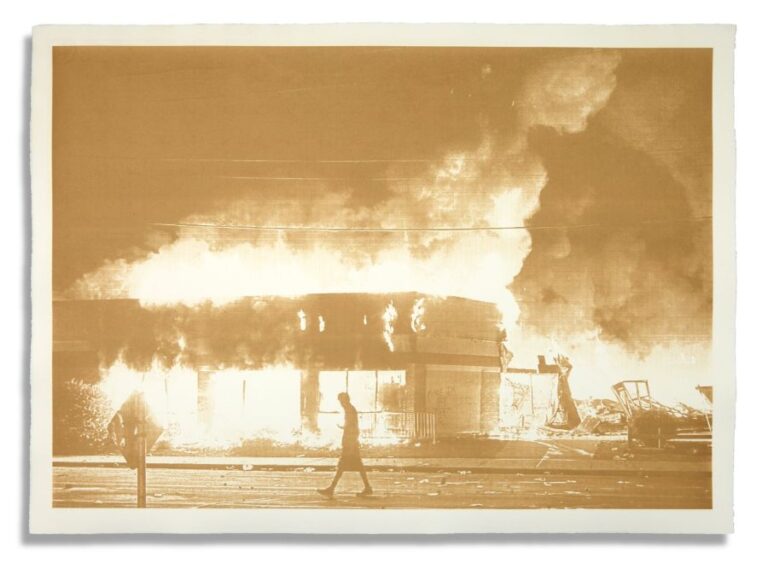
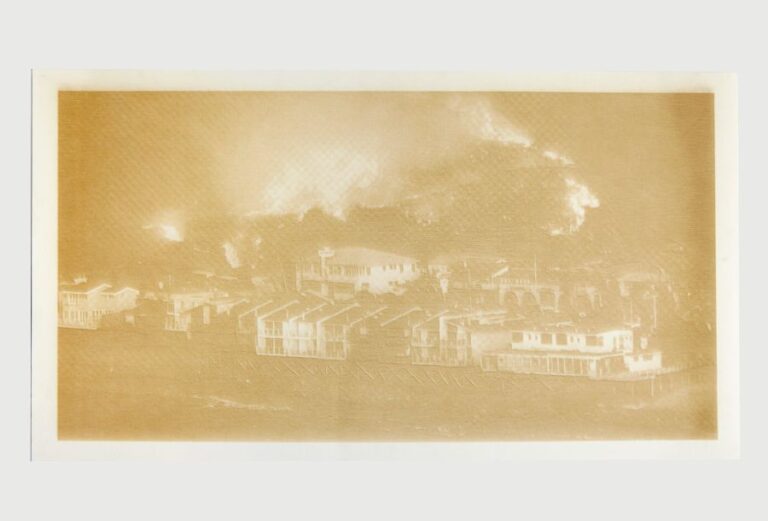
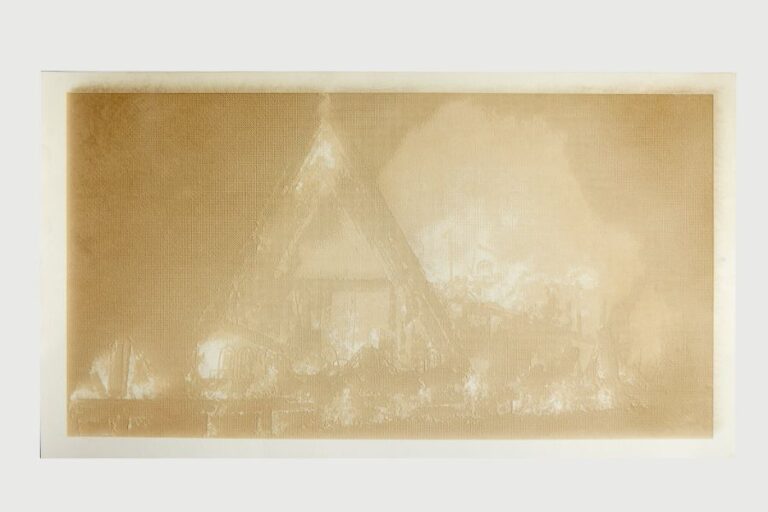
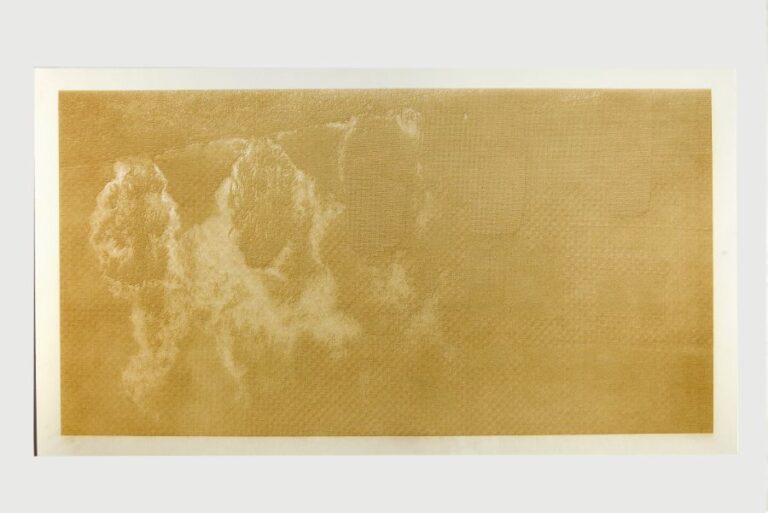
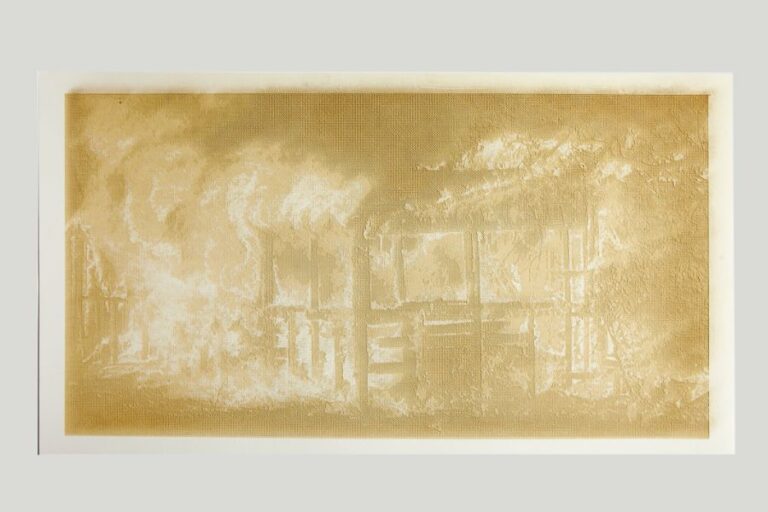
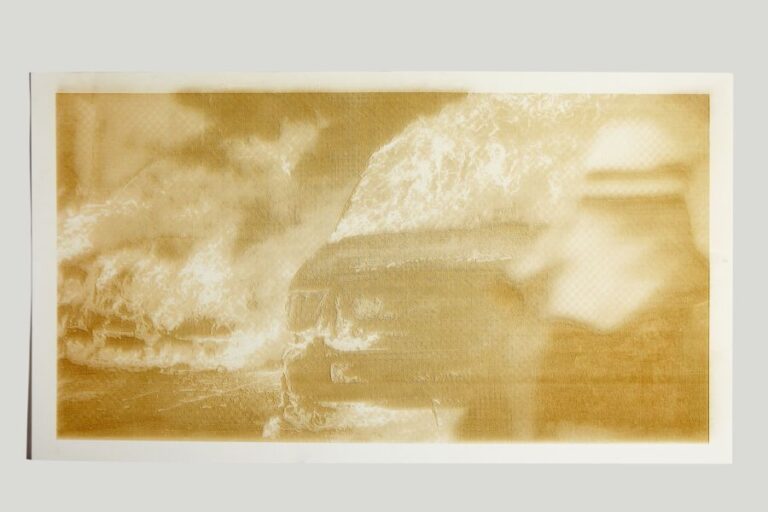
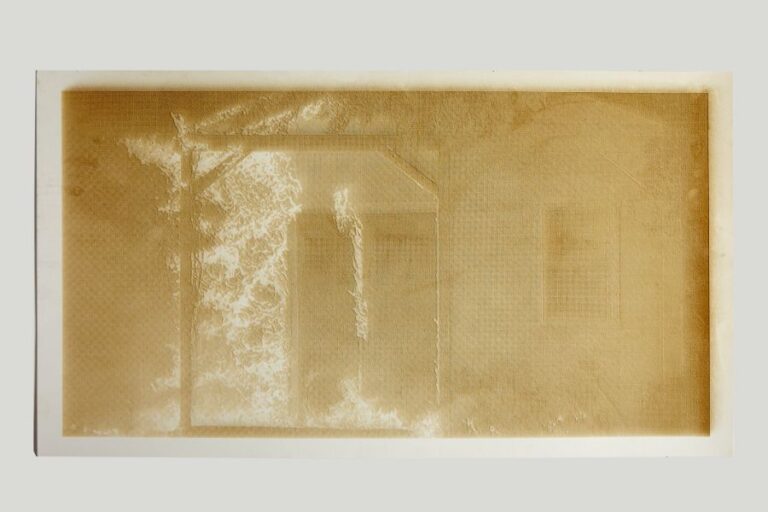
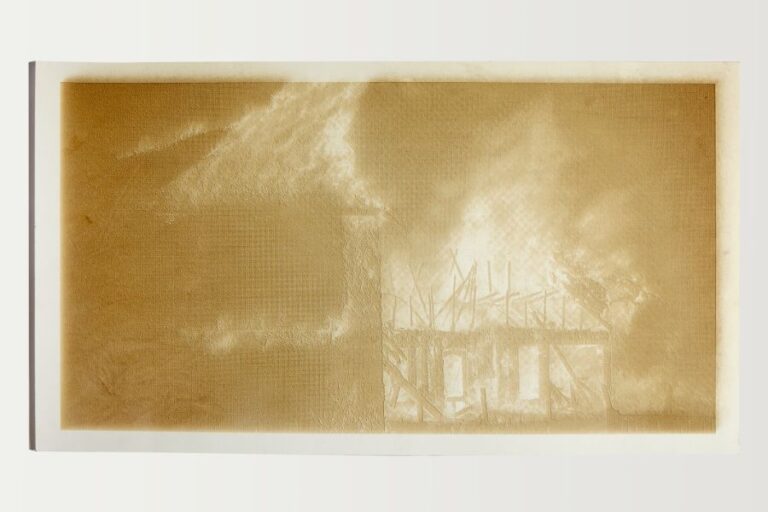
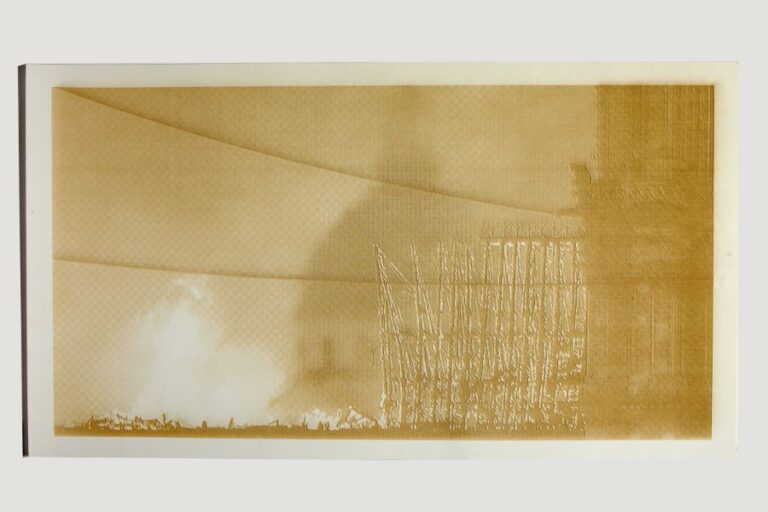
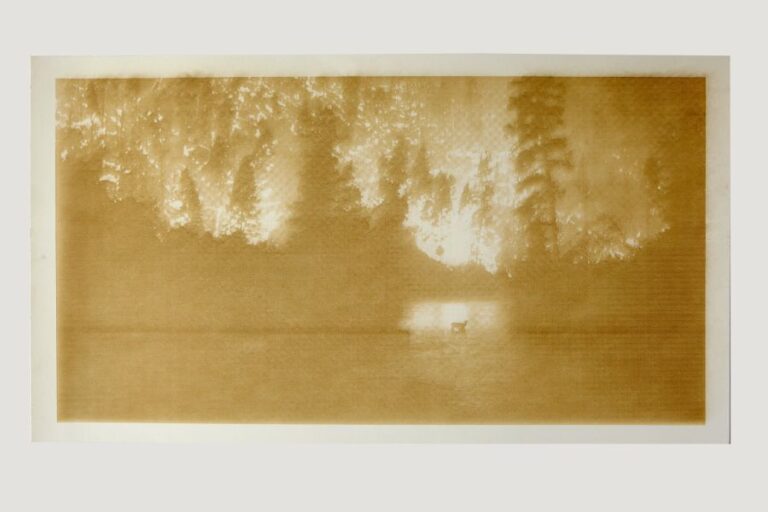
Goya’s The Disasters of War (1810–1820) recorded atrocity as it happened, image by numbered image, refusing to let the viewer look away or look past. Kessler borrows the series’ numbering, scale, and accumulating structure — Roman numerals, one incident per sheet — and replaces Goya’s etched battlefield with press photographs of the 21st century’s own recurring disaster: fire. Each work takes a news photograph — a burning building, a crowd silhouetted against smoke, an oil-slicked horizon, the aftermath of a wildfire — and burns it into standard graphic paper with a laser cutter, converting the source image into a monochrome, sepia-toned bitmap that reads simultaneously as antique print, protest photograph, and scorch mark. The burning of the image is not incidental to its subject; the object bears the same kind of damage it depicts.
The 26 works span 2020 to 2023 and draw on specific, identifiable events: the Deepwater Horizon oil spill in the Gulf of Mexico (XX — The Sea Is Burning, XXI — Our Engine) and the 2023 Lahaina, Maui wildfire (XXV — The Morning After) recur as anchor images, framed by titles adapted directly from Goya’s own captions — “And There Is No Remedy,” “Why?,” “One Cannot Look” — now redirected from 19th-century war atrocity to climate-era disaster and the civil unrest that accompanies it. The effect is not a simple update of Goya for the Anthropocene: by routing contemporary disaster photography through Goya’s own titling system, Kessler asks whether the emotional register available to document war is the same one now required to document a burning planet — and whether repeating that register risks its own kind of numbness.
The ten works reproduced here are the artist’s own selected highlights from the full 26-work series, drawn from the current gallery presentation with Galerie Heike Strelow.
Works
Installation views
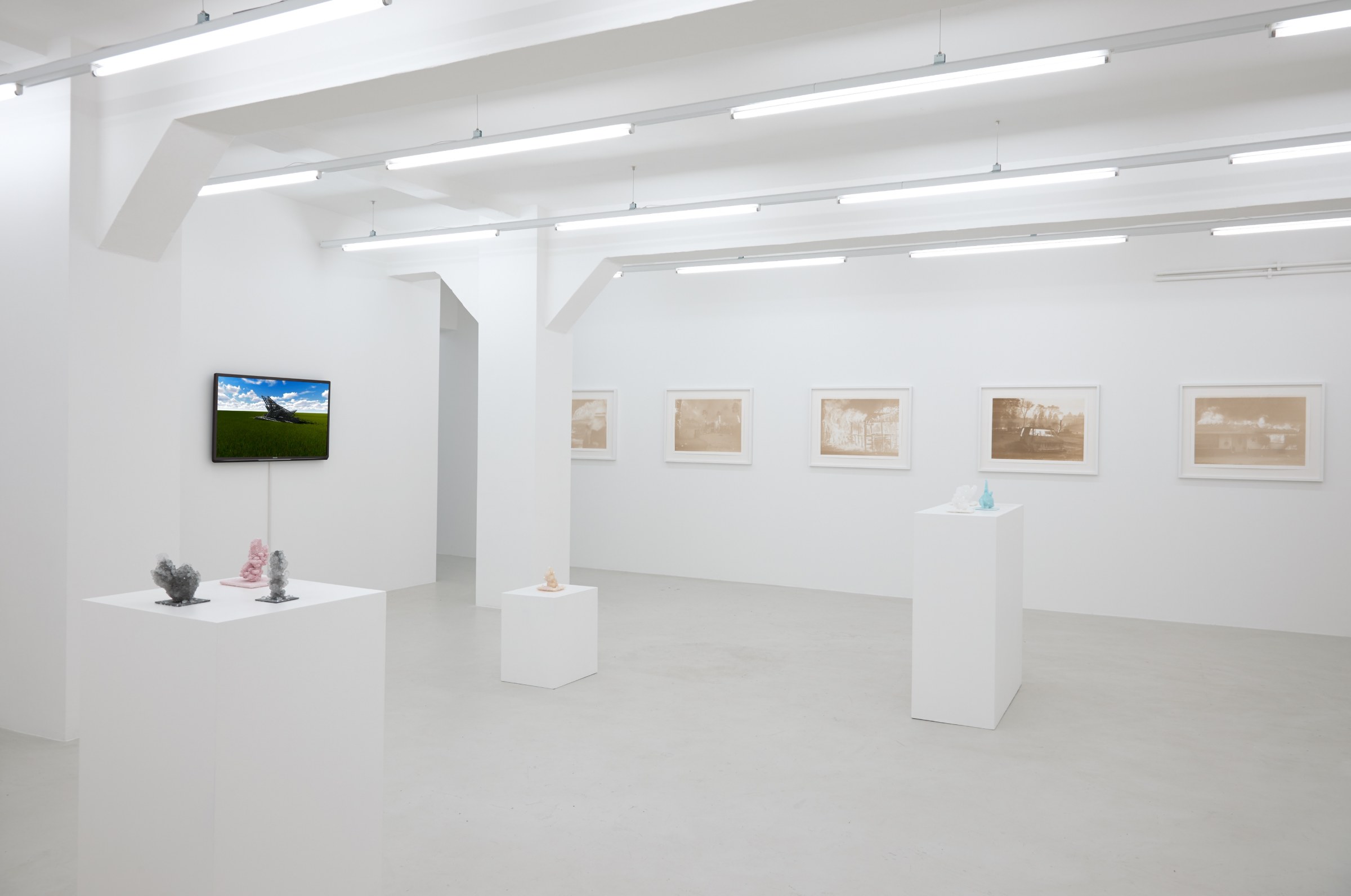
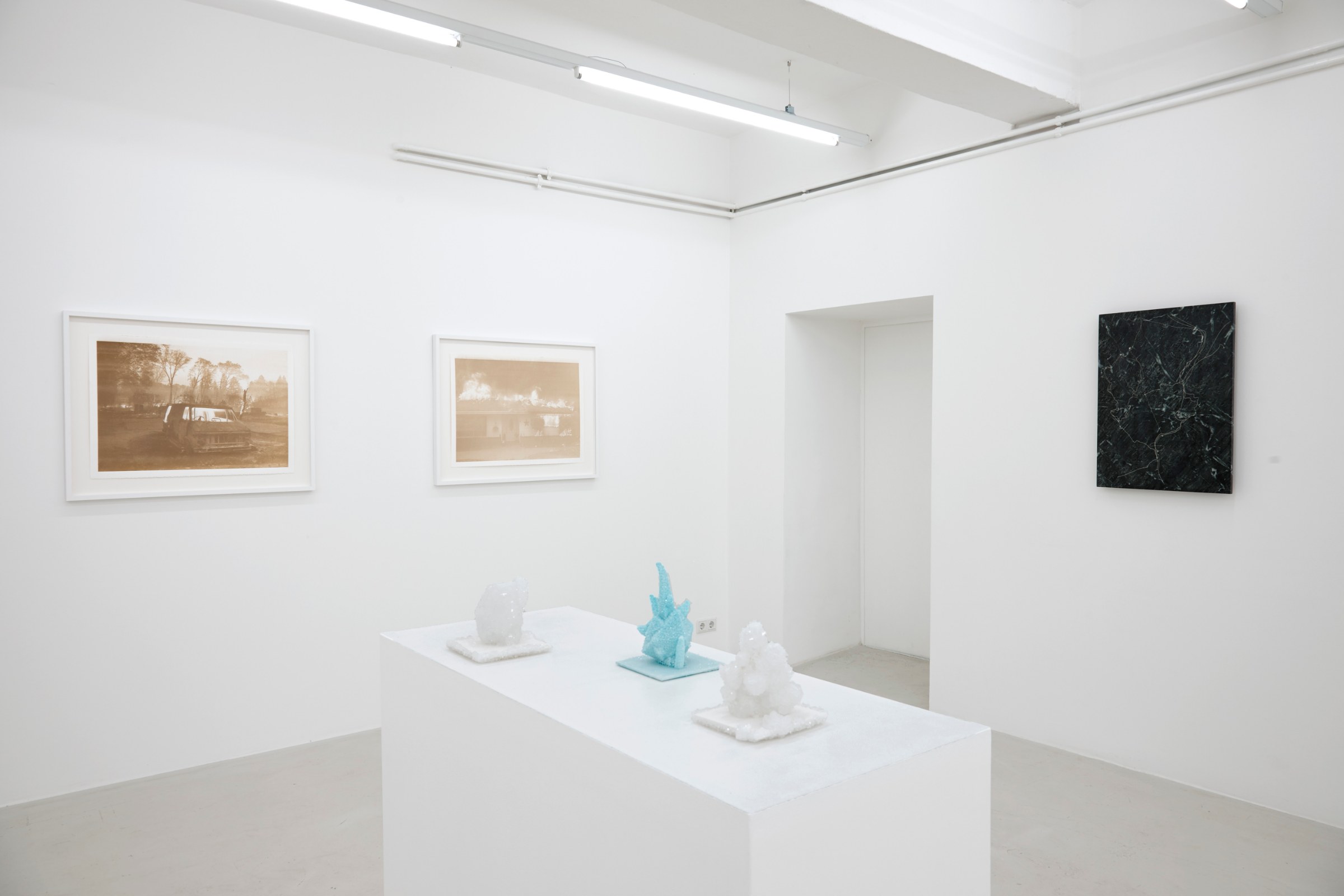
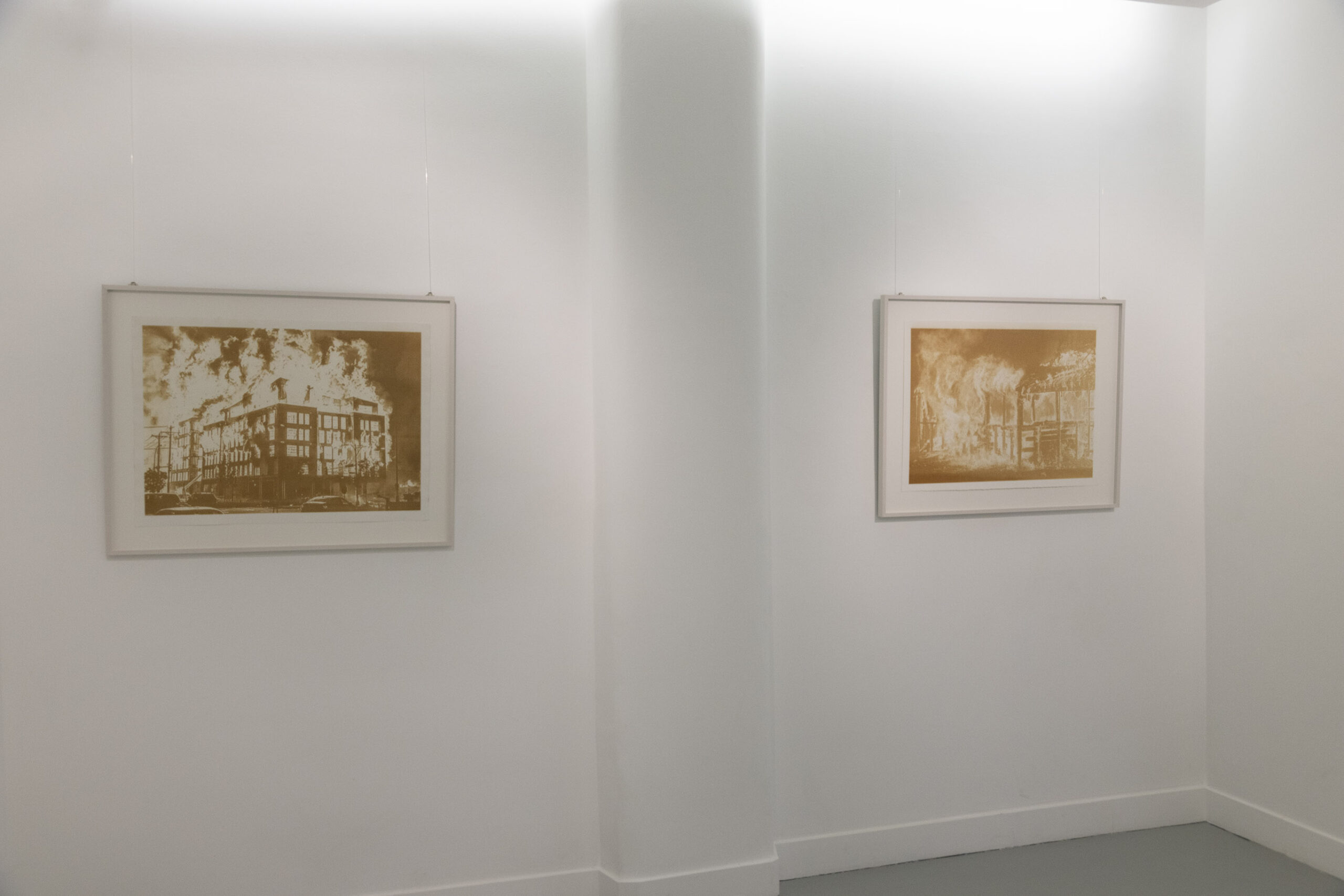
The series was first shown as five laser-burned prints in Forever and Sunsmell, Galerie Heike Strelow, Frankfurt, 2019.