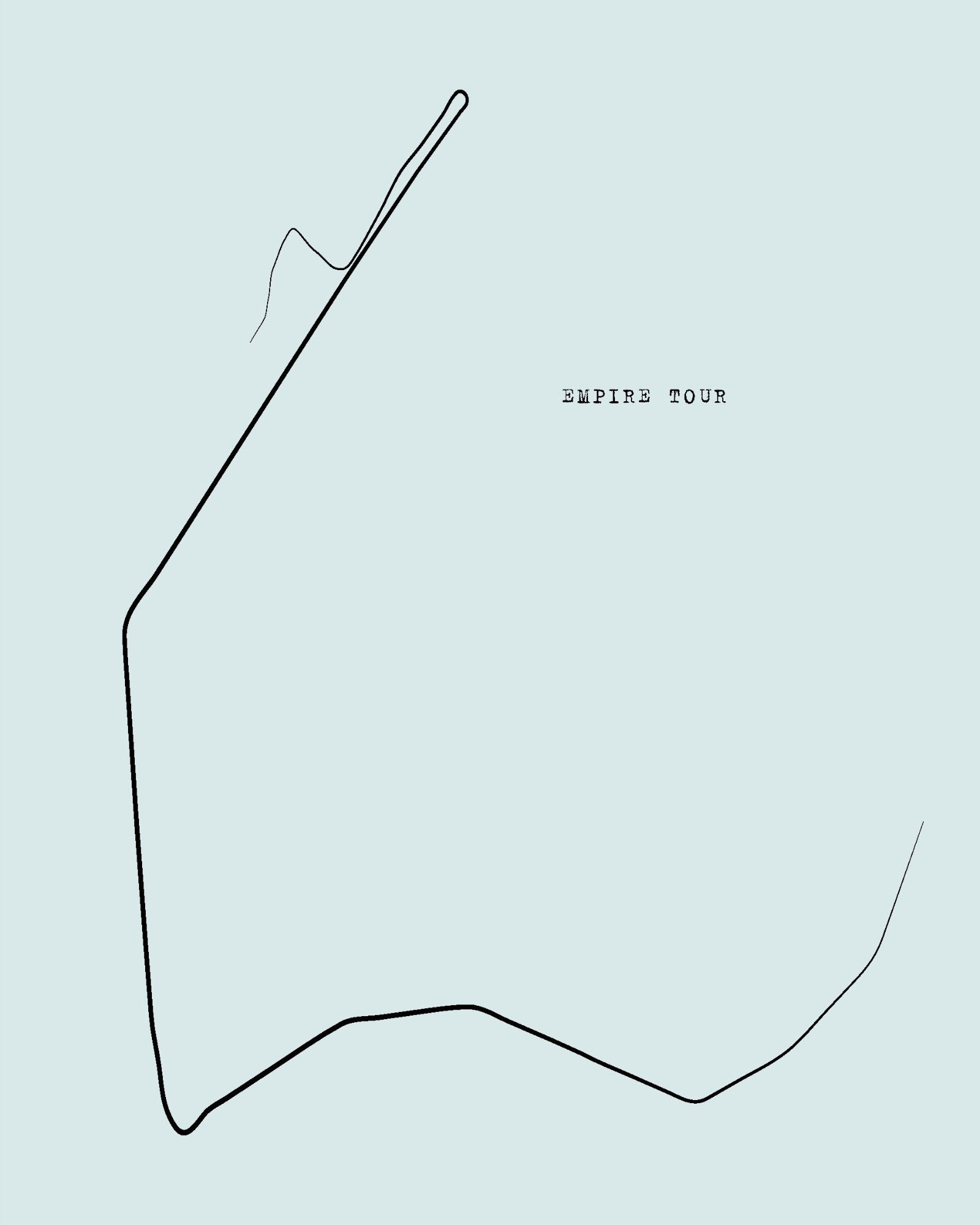
Empire Tour is a canoe ride, not a metaphor for one. Four times over the summer of 2013 — June 18th, June 19th, June 28th, July 30th, and August 8th — Kessler led small groups of invited participants (artists, critics, curators, architects) on a guided paddle beginning at Four Freedoms Park, Louis Kahn’s 2012 monument to Franklin D. Roosevelt at the southern tip of Roosevelt Island. The route ran past the ruins of the Renwick Smallpox Hospital — the island’s abandoned 1856 quarantine building, left to decay in full view of the monument — out across the East River, and into Newtown Creek, the heavily industrialized, Superfund-designated waterway dividing Brooklyn and Queens.
The pairing is the piece: Kahn’s granite tribute to Roosevelt’s Four Freedoms — a work of civic idealism, executed in a material and language built to outlast its subject — sits in direct sightline of a ruin the city simply stopped maintaining. Paddling from one to the other collapses the distance between the monument’s promise and its material aftermath, without narration. Newtown Creek extends the argument: an industrial waterway of oil terminals, concrete plants, and a wastewater treatment facility, navigated at eye level, at paddling speed, by people who would otherwise only see it from a bridge or a car window.
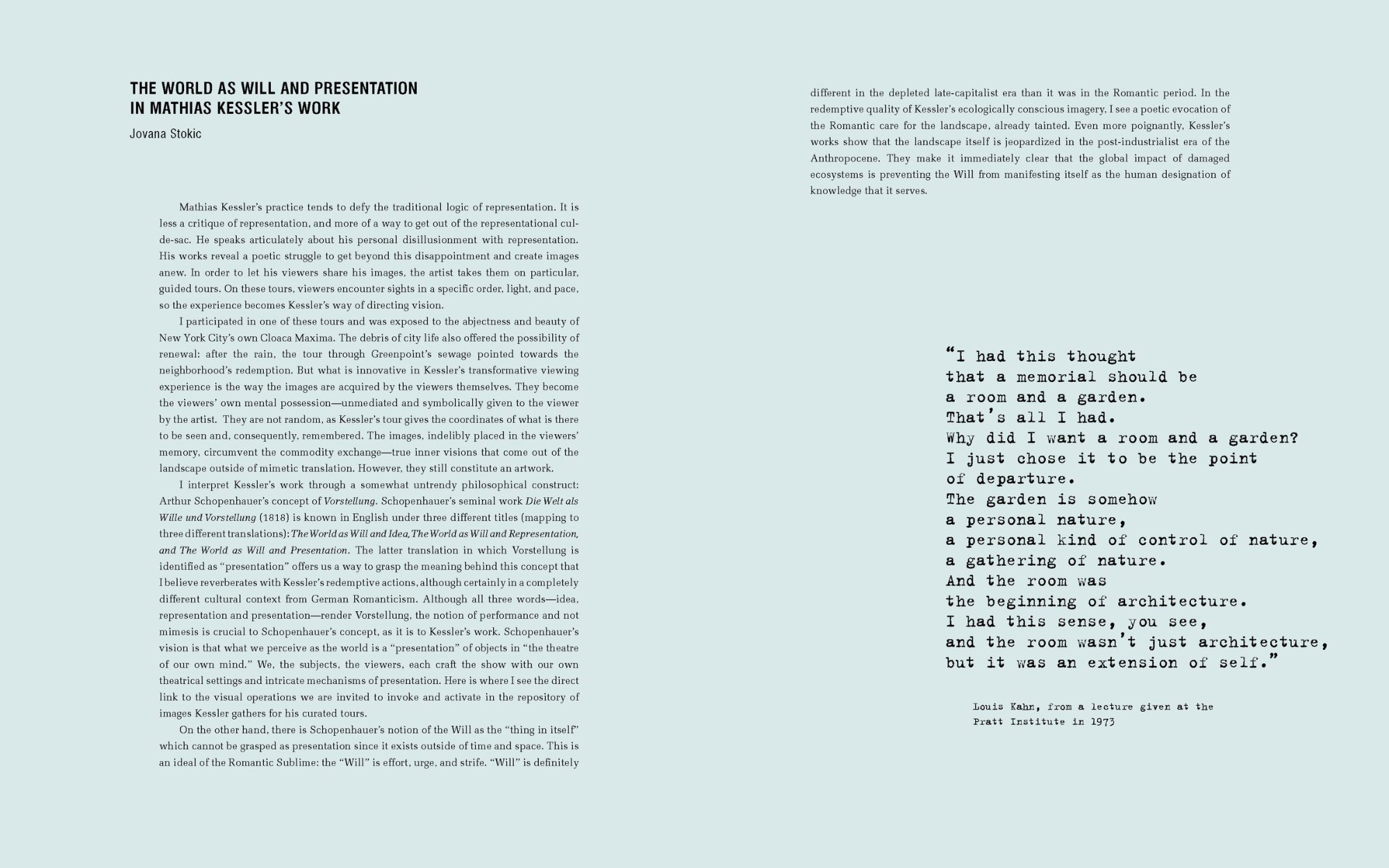
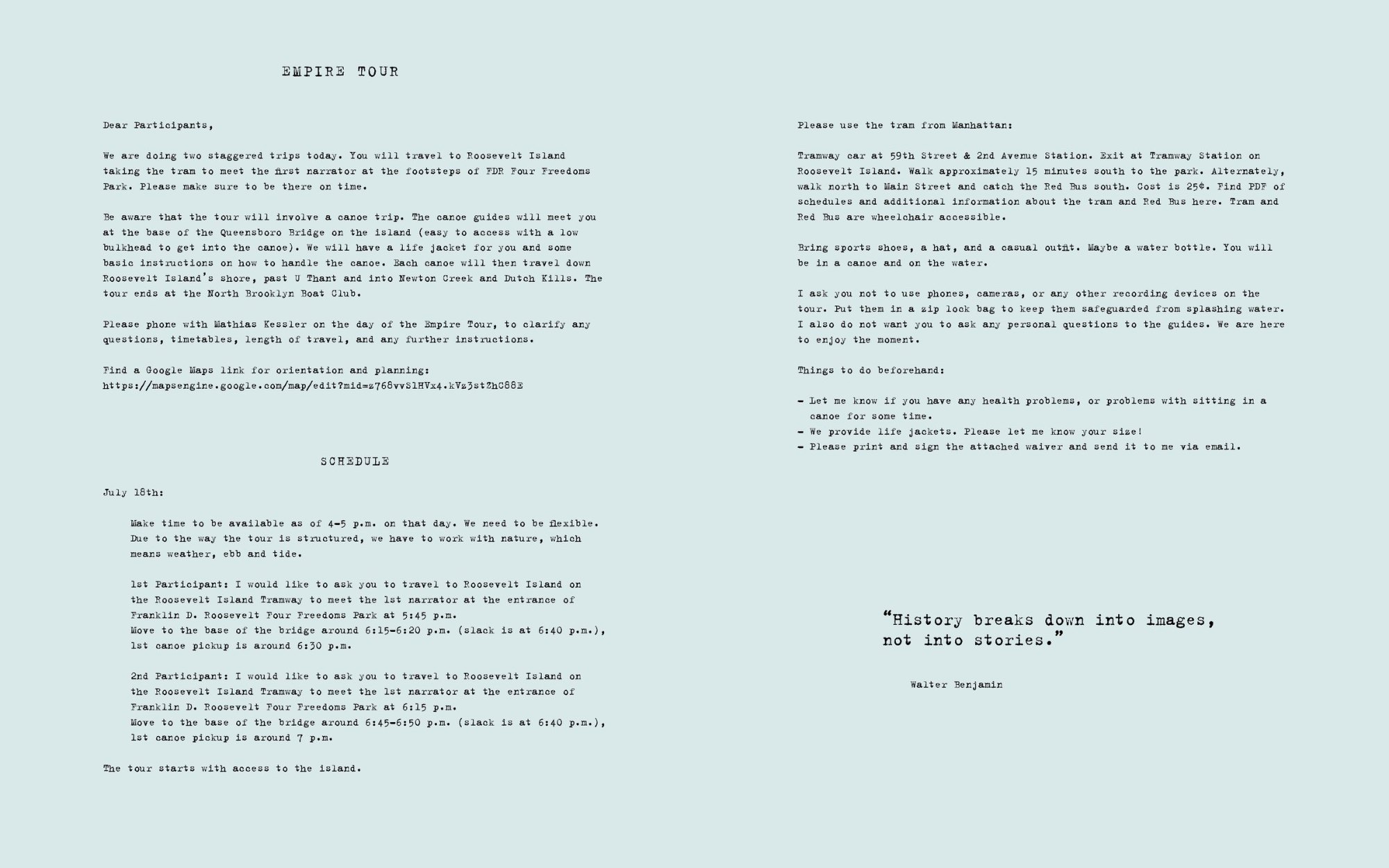
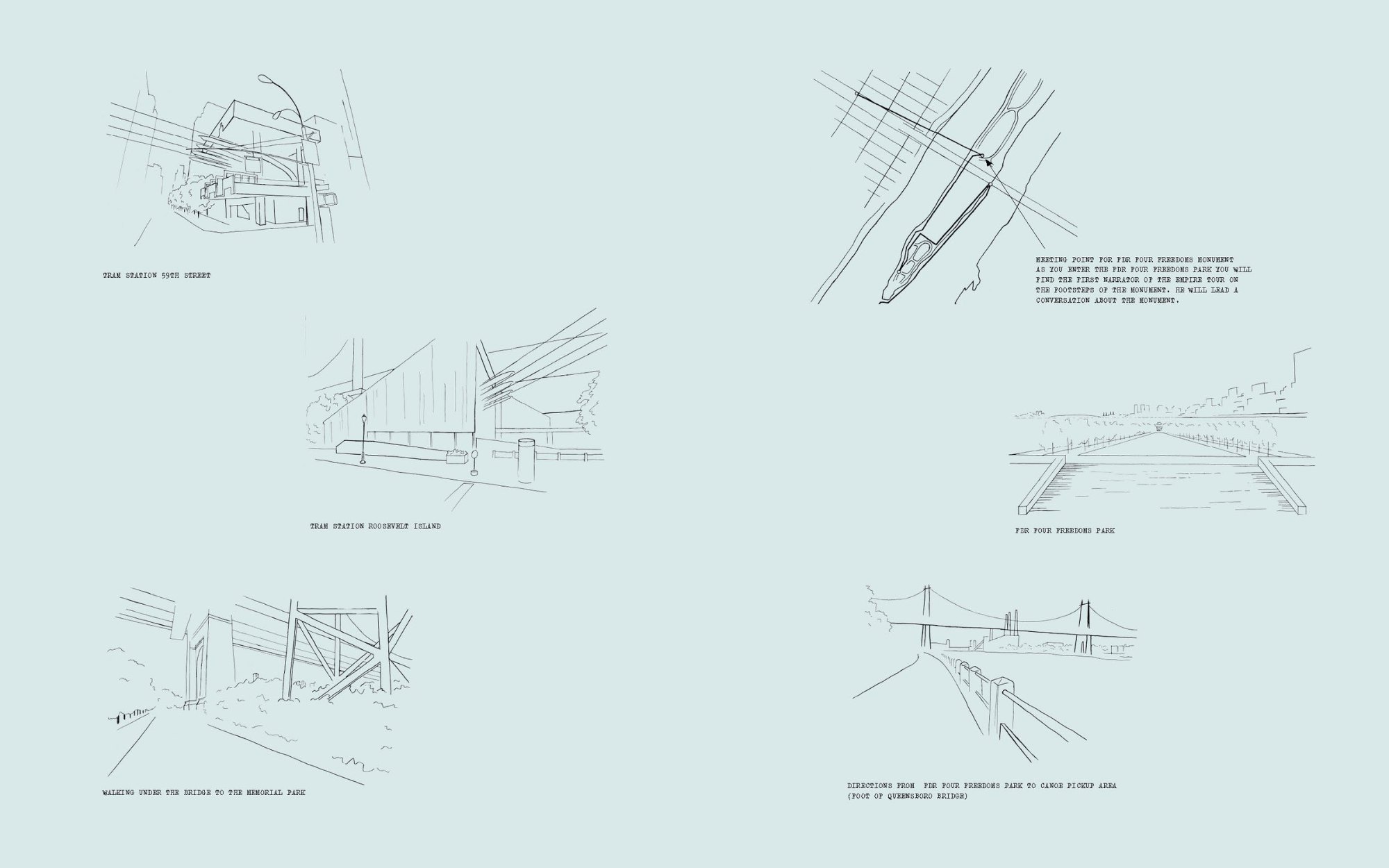
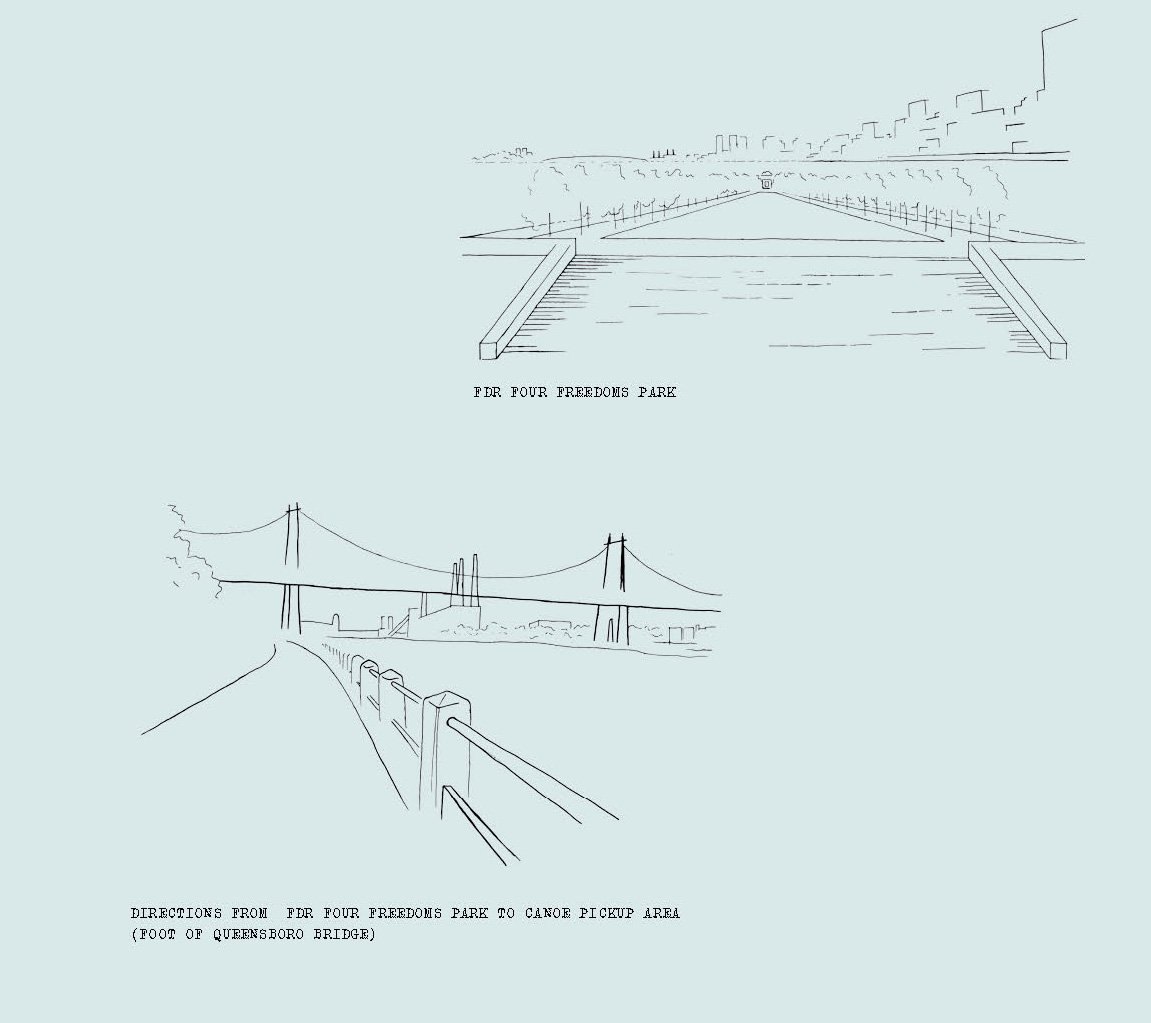
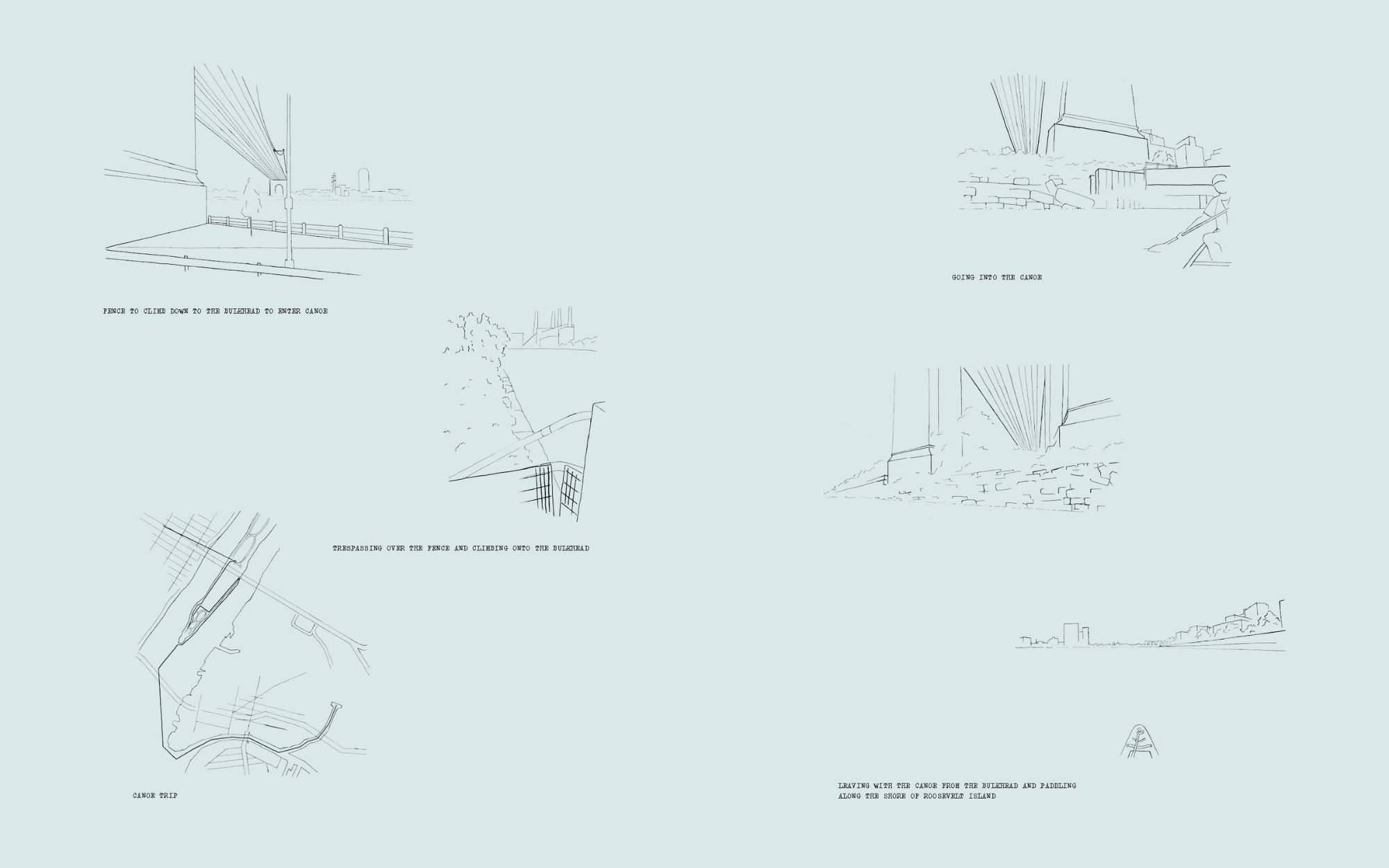
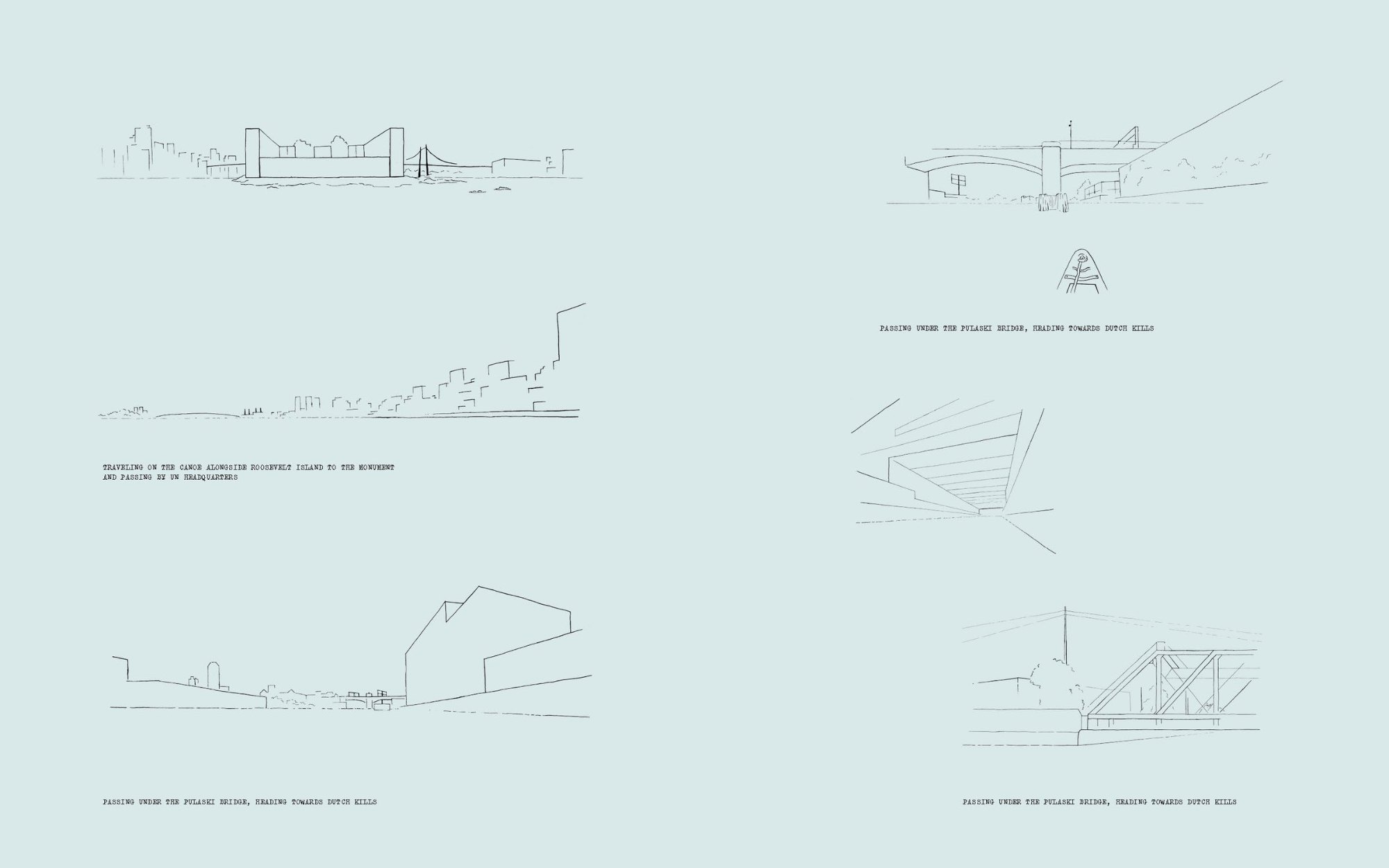
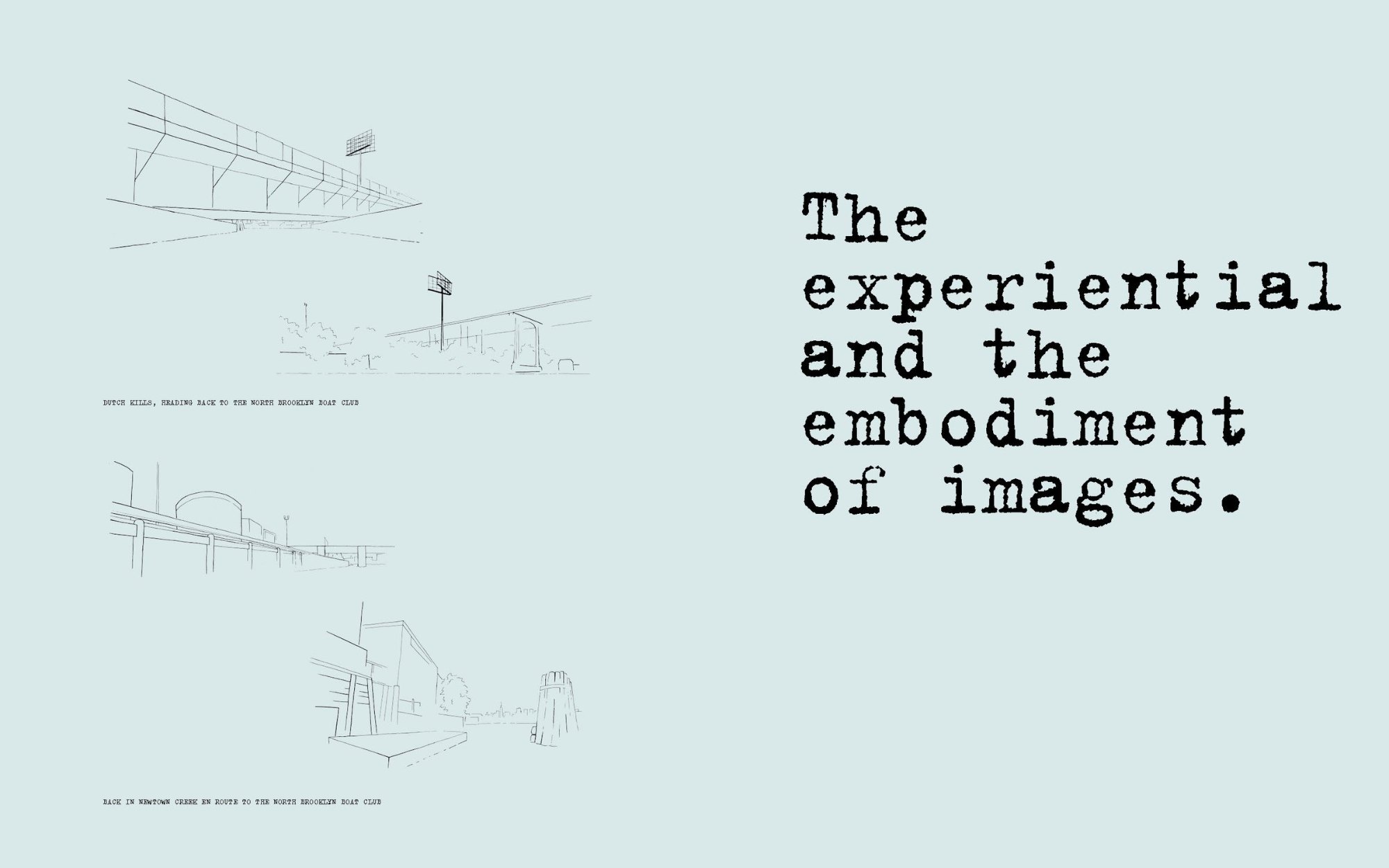
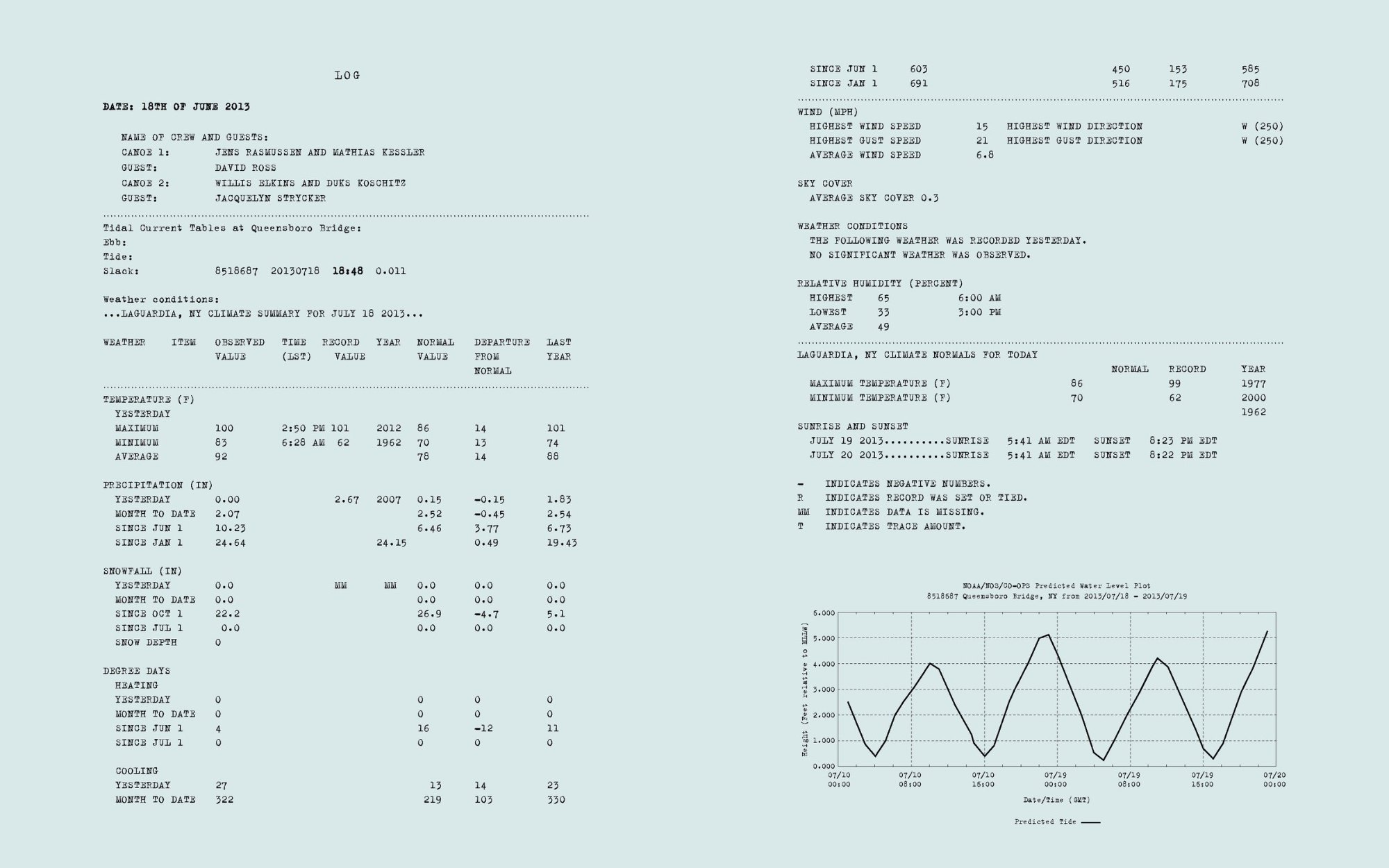
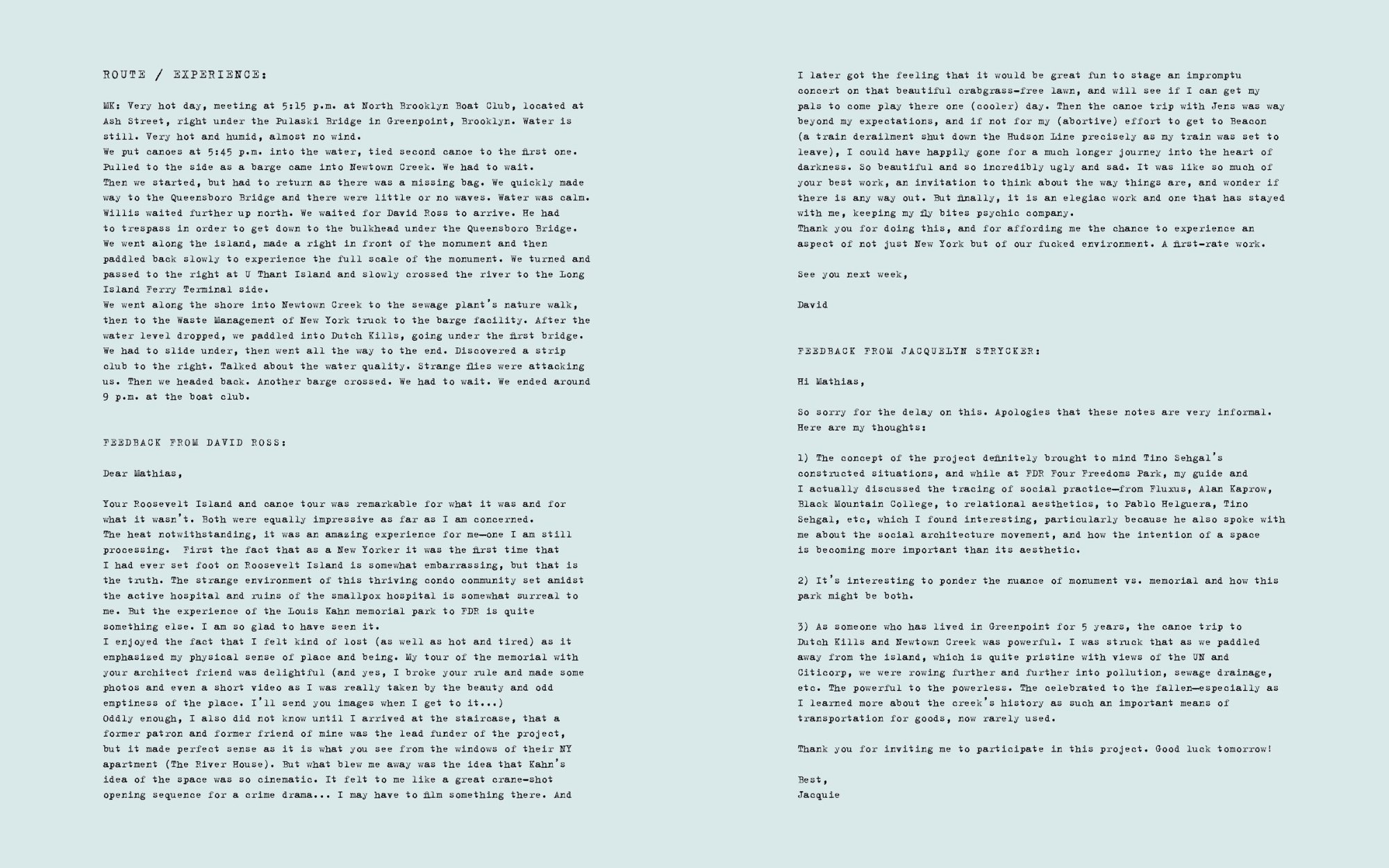
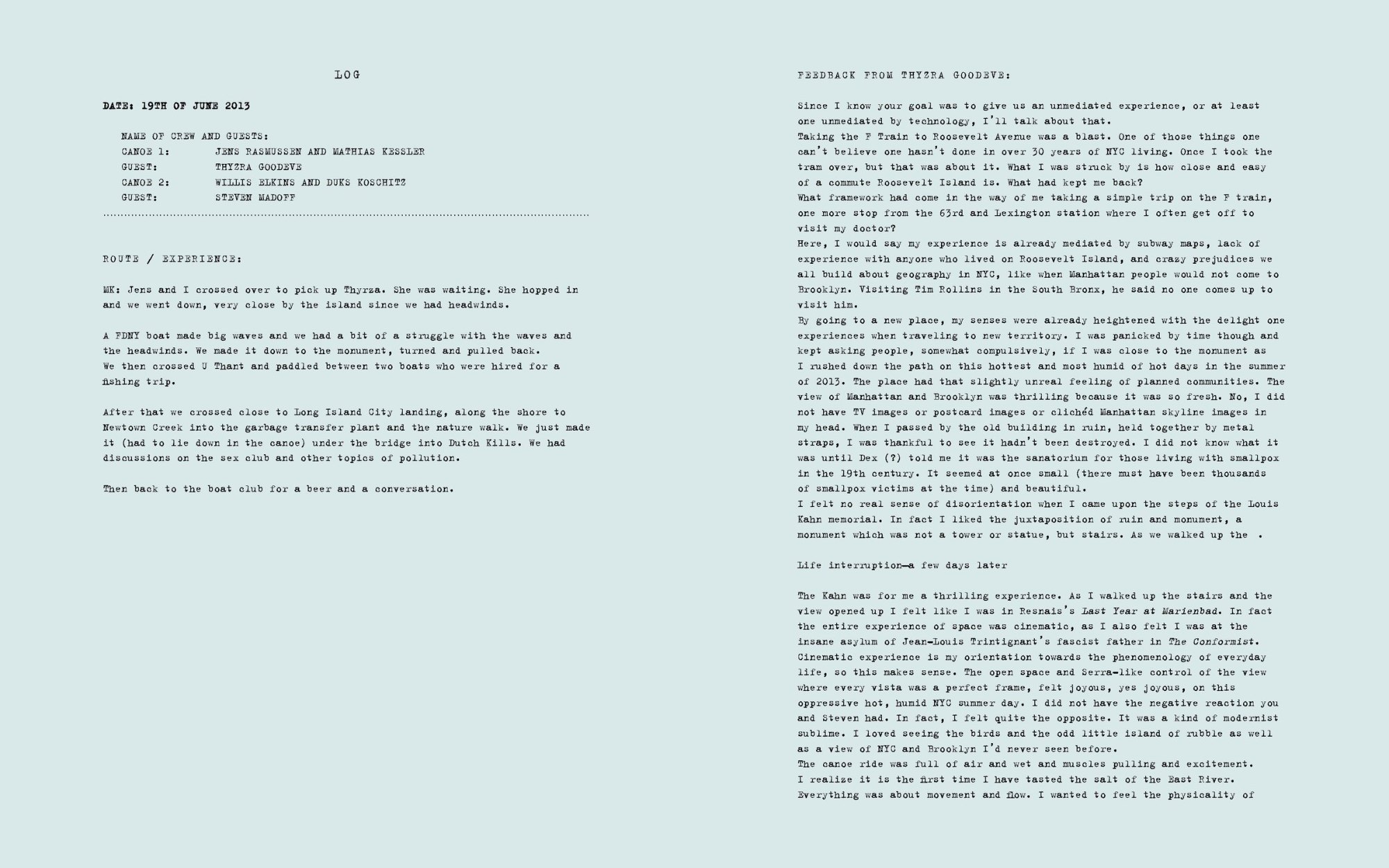
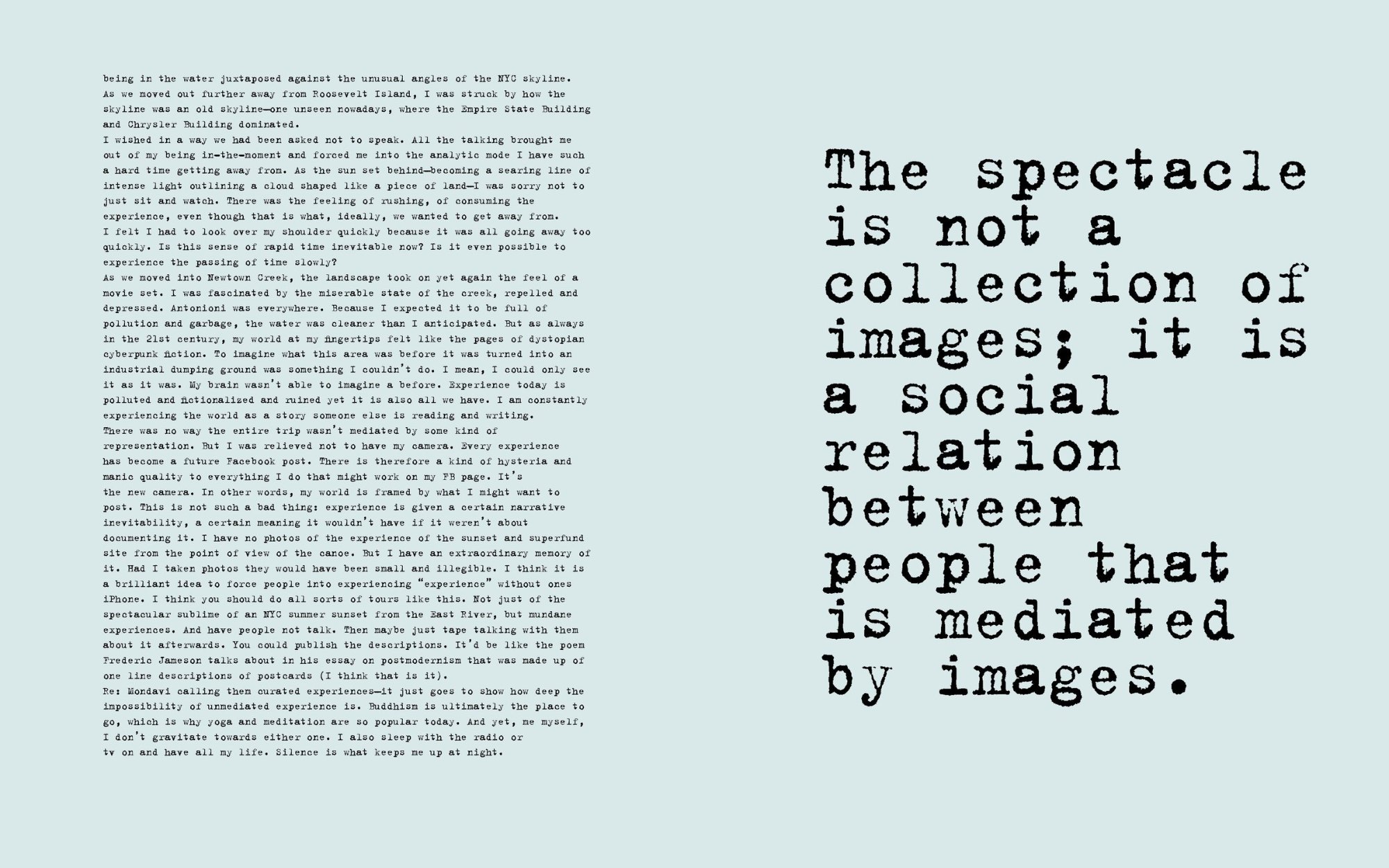
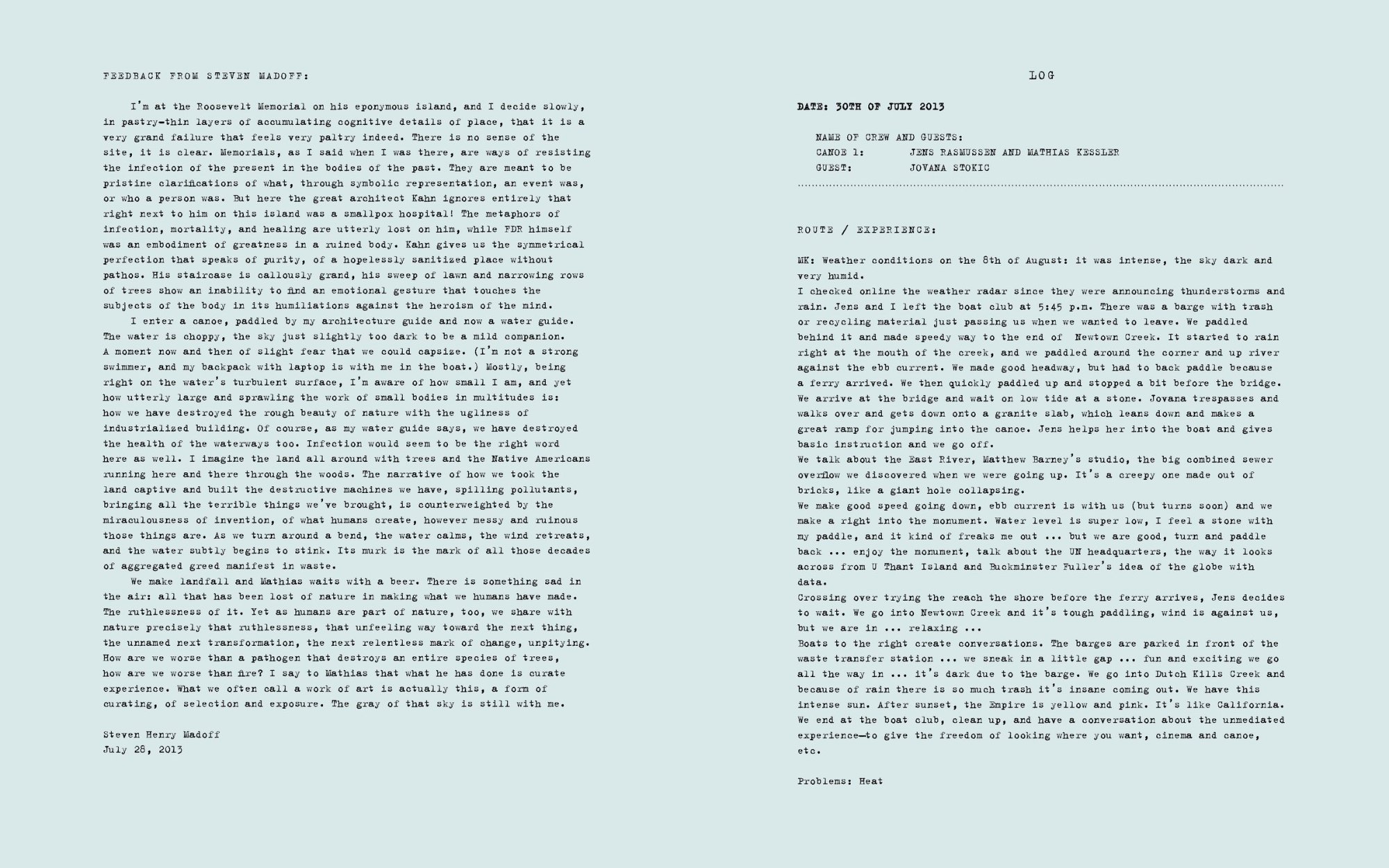
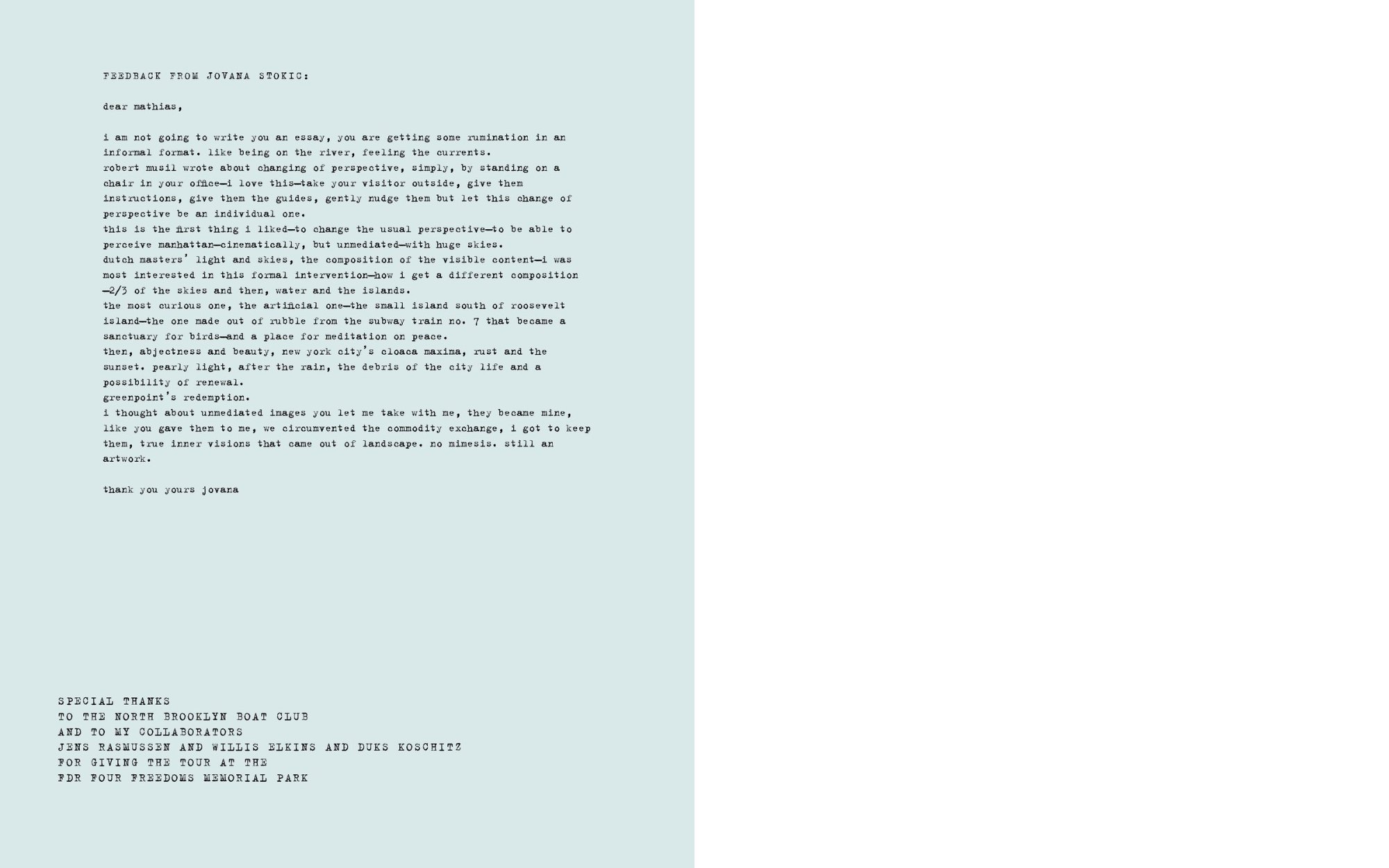
Kessler treats logistics as part of the work rather than incidental to it: participants had to trespass over a fence and climb down onto a bulkhead to reach the canoes, and each trip’s route was planned around NOAA tide charts and wind data, since the East River’s currents are strong enough to make timing a real constraint, not an atmospheric detail. The project exists on paper as an illustrated field guide — hand-drawn maps and observational sketches of the route, bridges, and shoreline in place of photographs — accompanied by written trip logs and, after the fact, unsolicited letters from participants describing the experience in their own words. Contributors on record include David Ross, Jacquelyn Strycker, Thyrza Nichols Goodeve, Steven Henry Madoff, Daniel Allegrucci, Alois Kronschlaeger, Karina Daskalov, Kelly Padden, and Jovana Stokic, with logistical support from Jens Rasmussen, Willis Elkins, Duks Koschitz, and the North Brooklyn Boat Club.
The book opens with a line from Louis Kahn — architect of Four Freedoms Park itself — situating the project explicitly in dialogue with the monument it launches from. As with Habitat and Cultural Cul-de-Sac, the finished artwork is not an object but the accumulated, partly undocumentable experience of the people who took part — here preserved only in drawing, log, and testimony, deliberately without photography.
Works
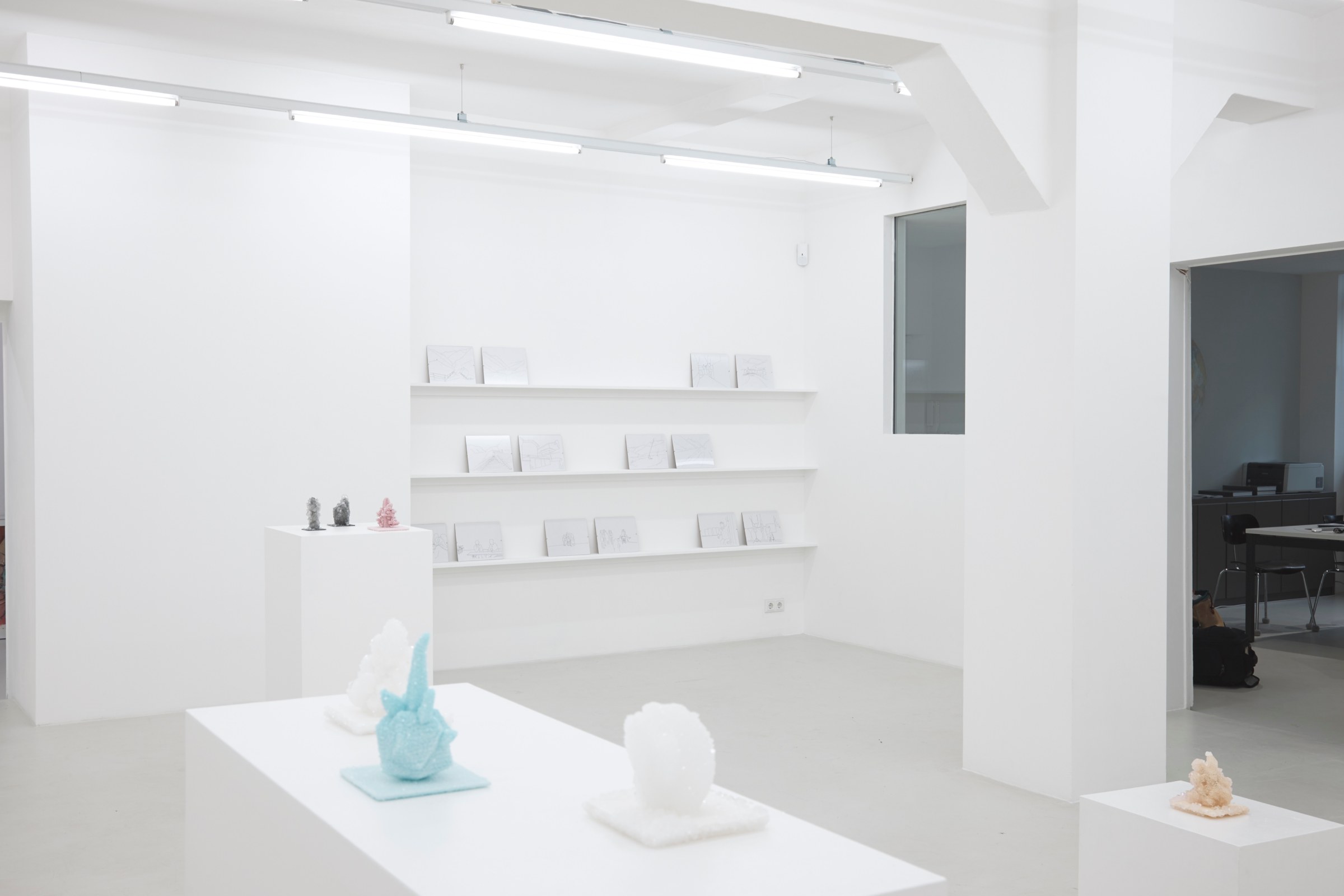
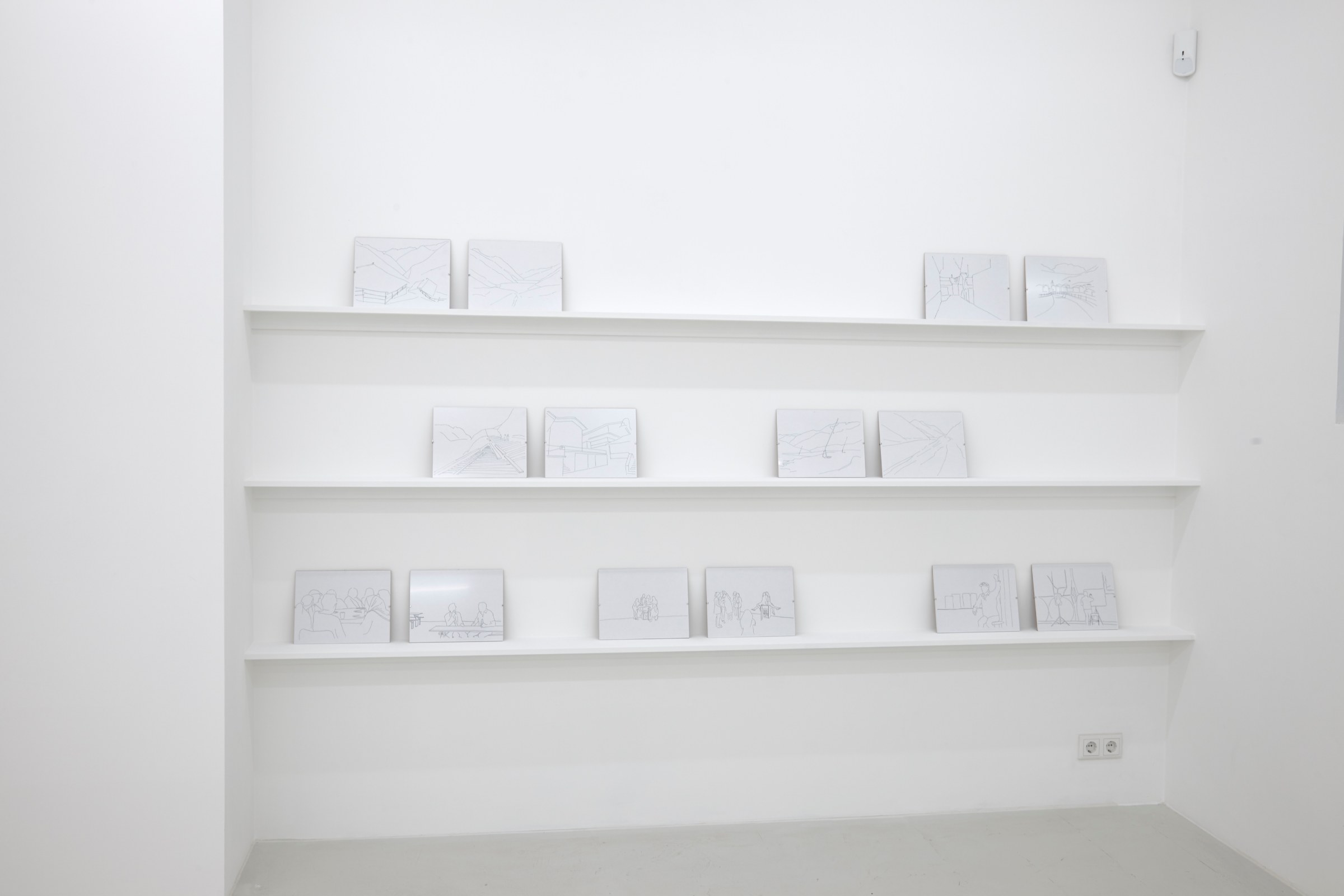
Installation view — Forever and Sunsmell, Galerie Heike Strelow, Frankfurt, 2019