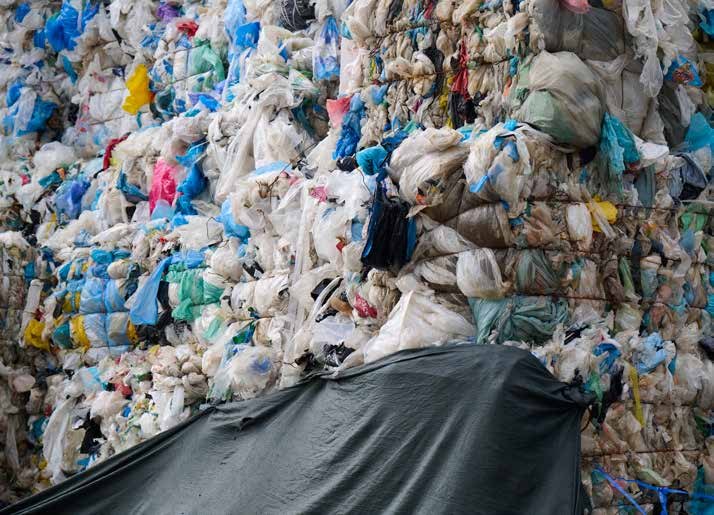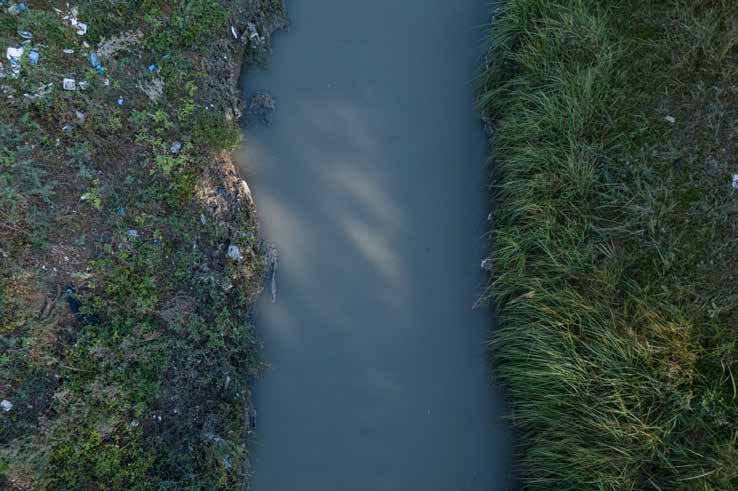
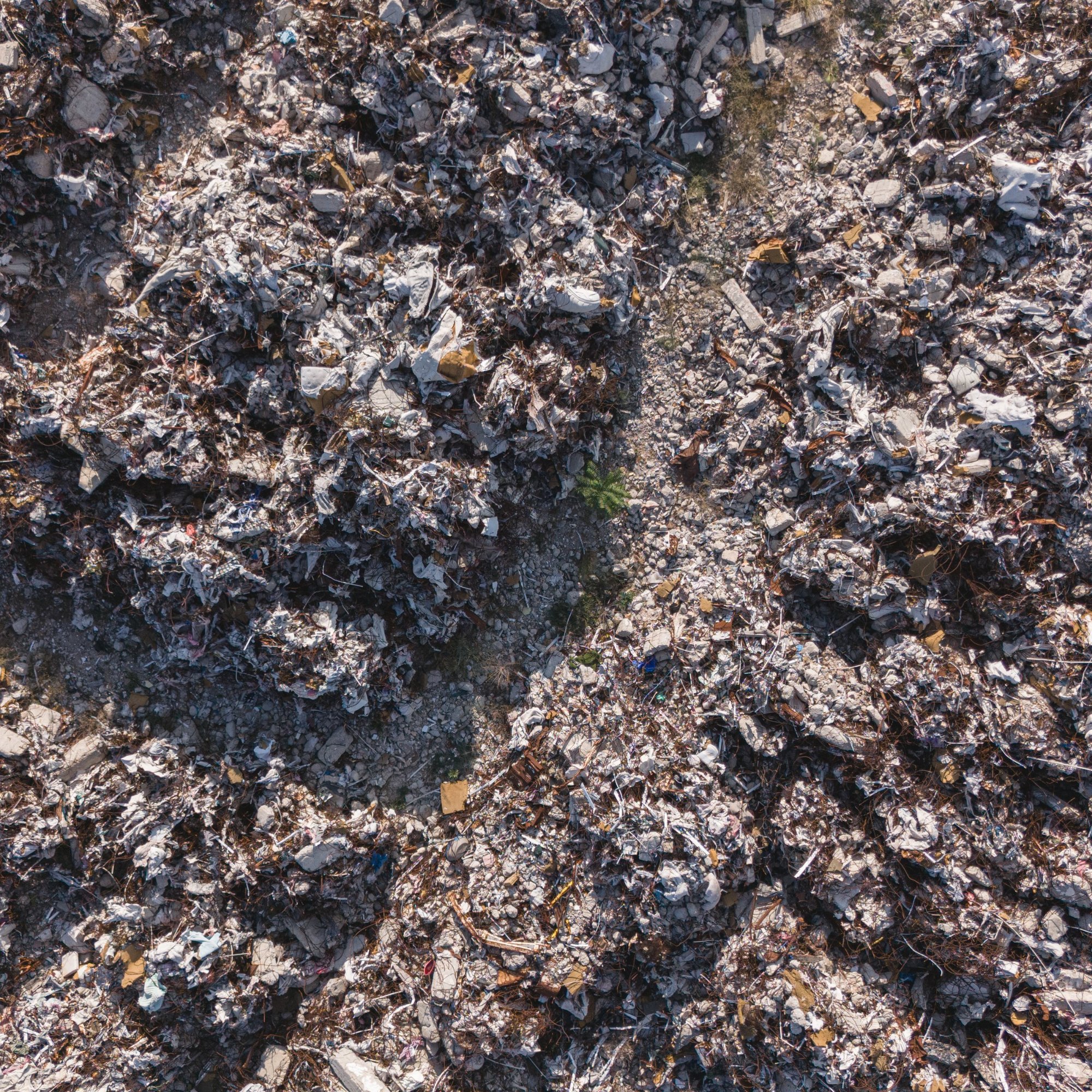
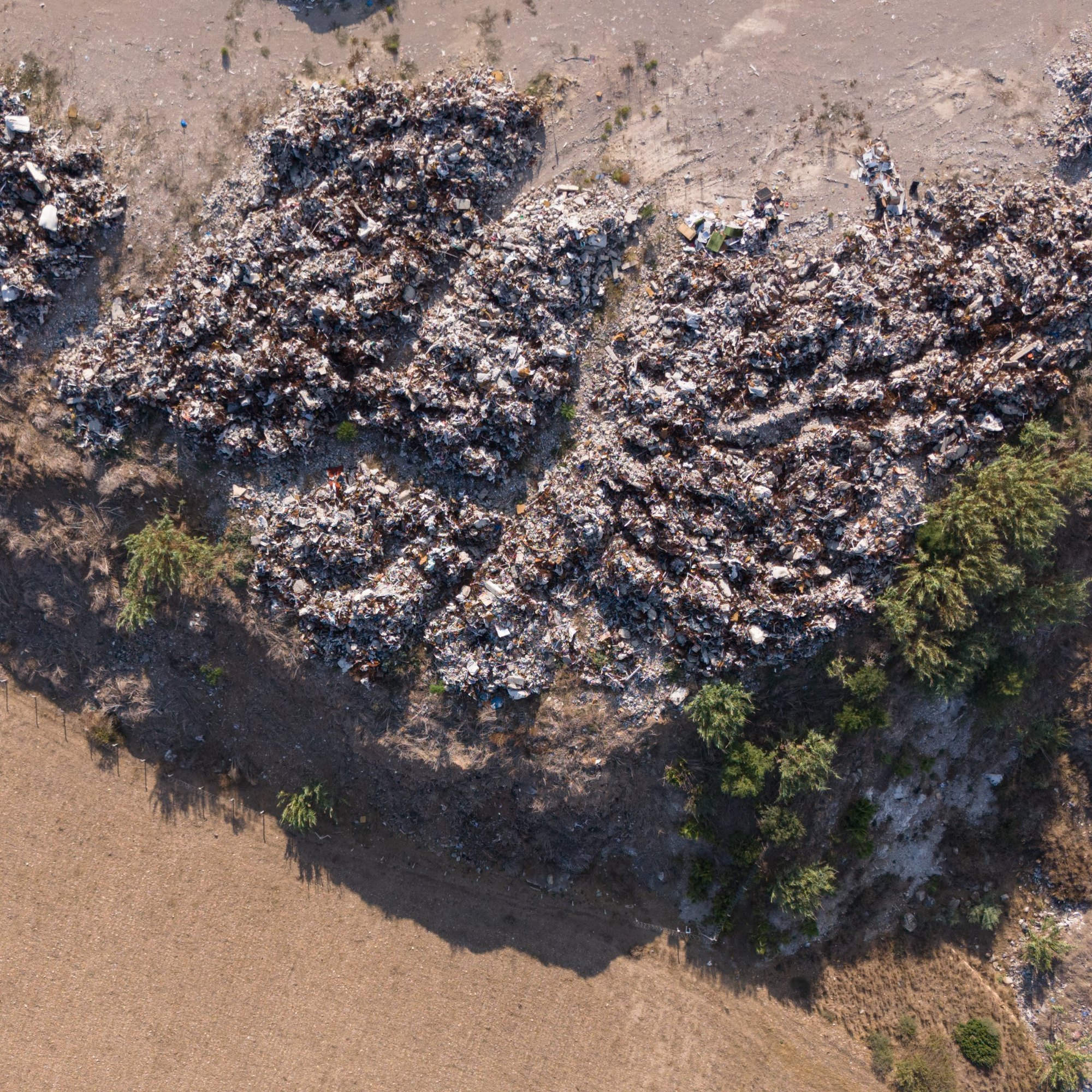
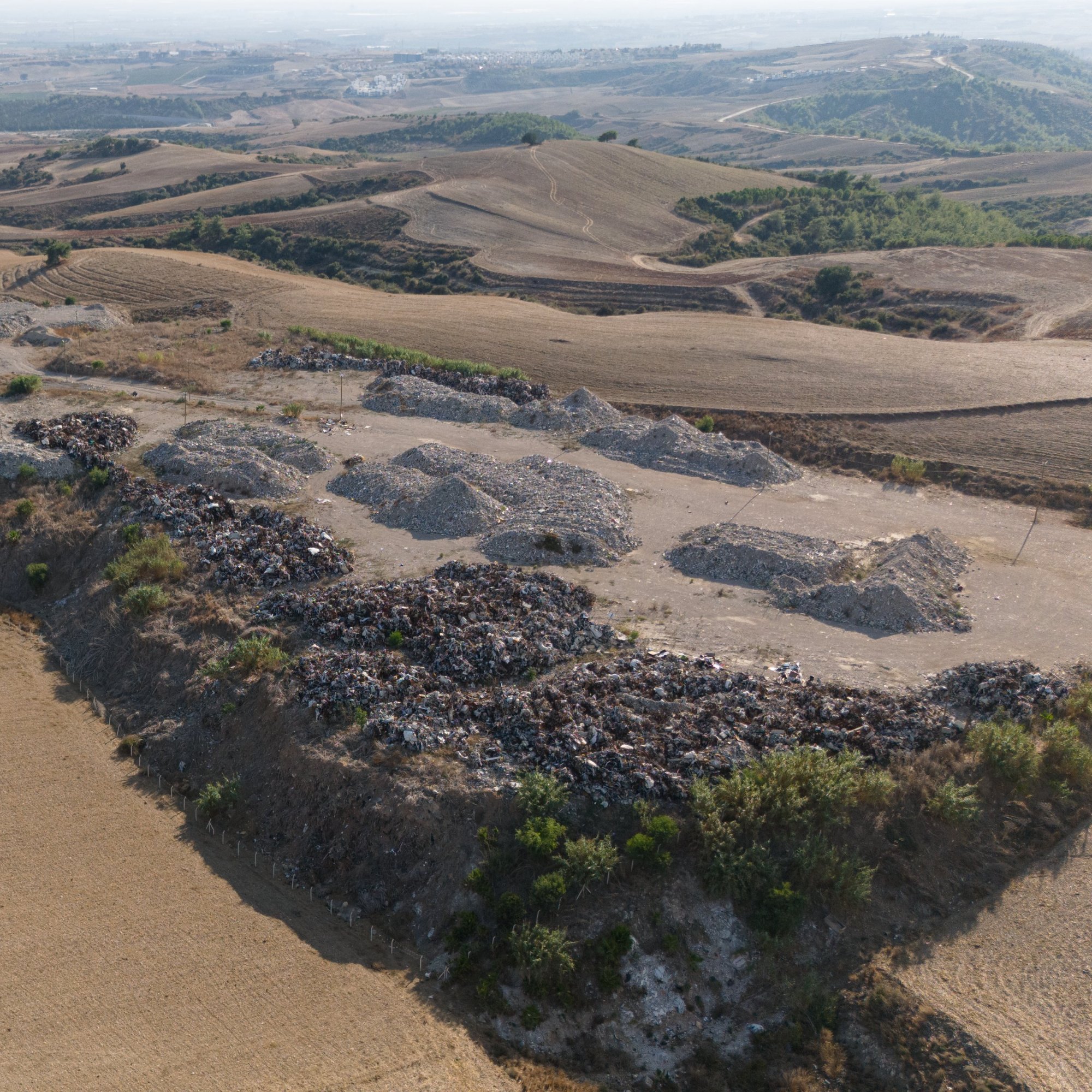
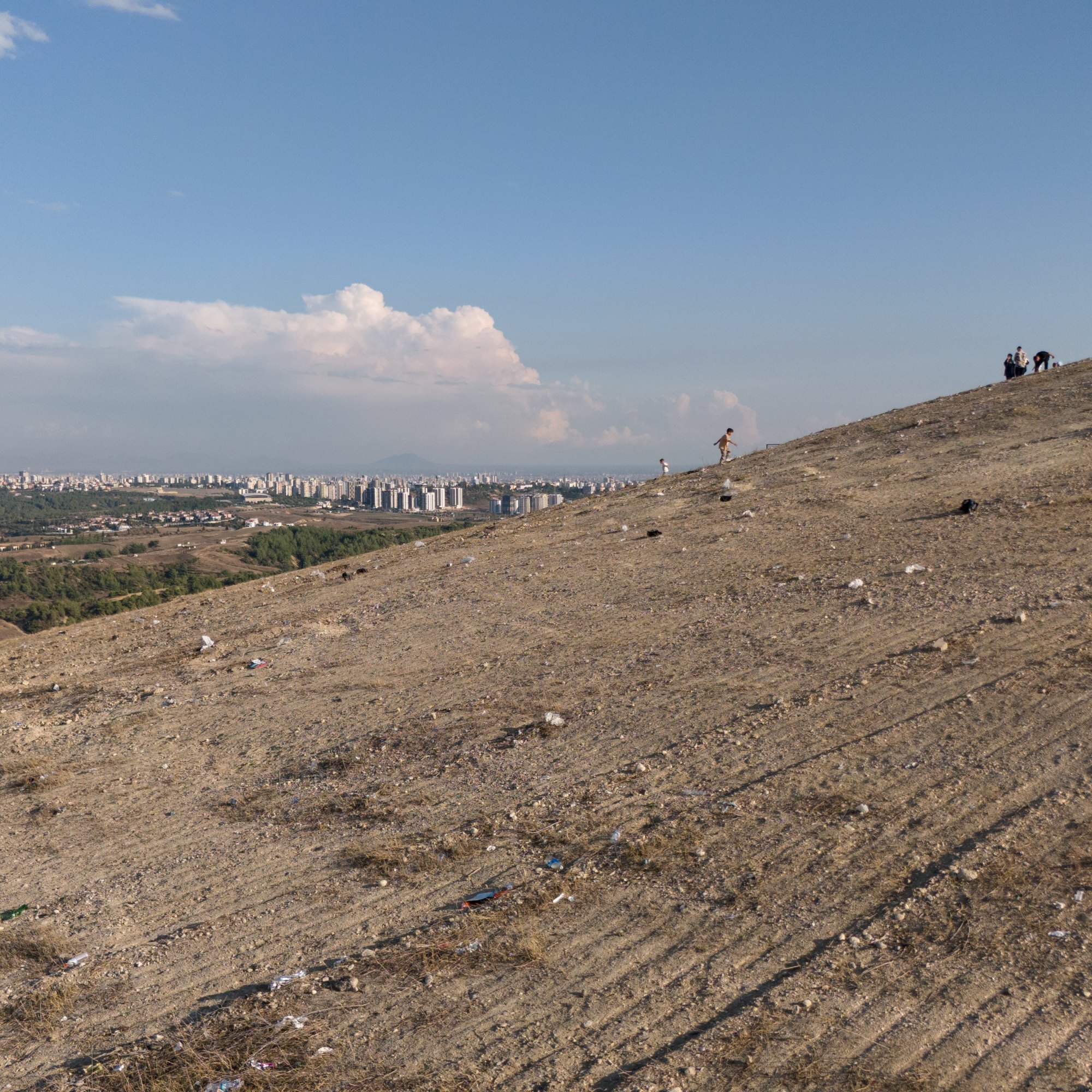
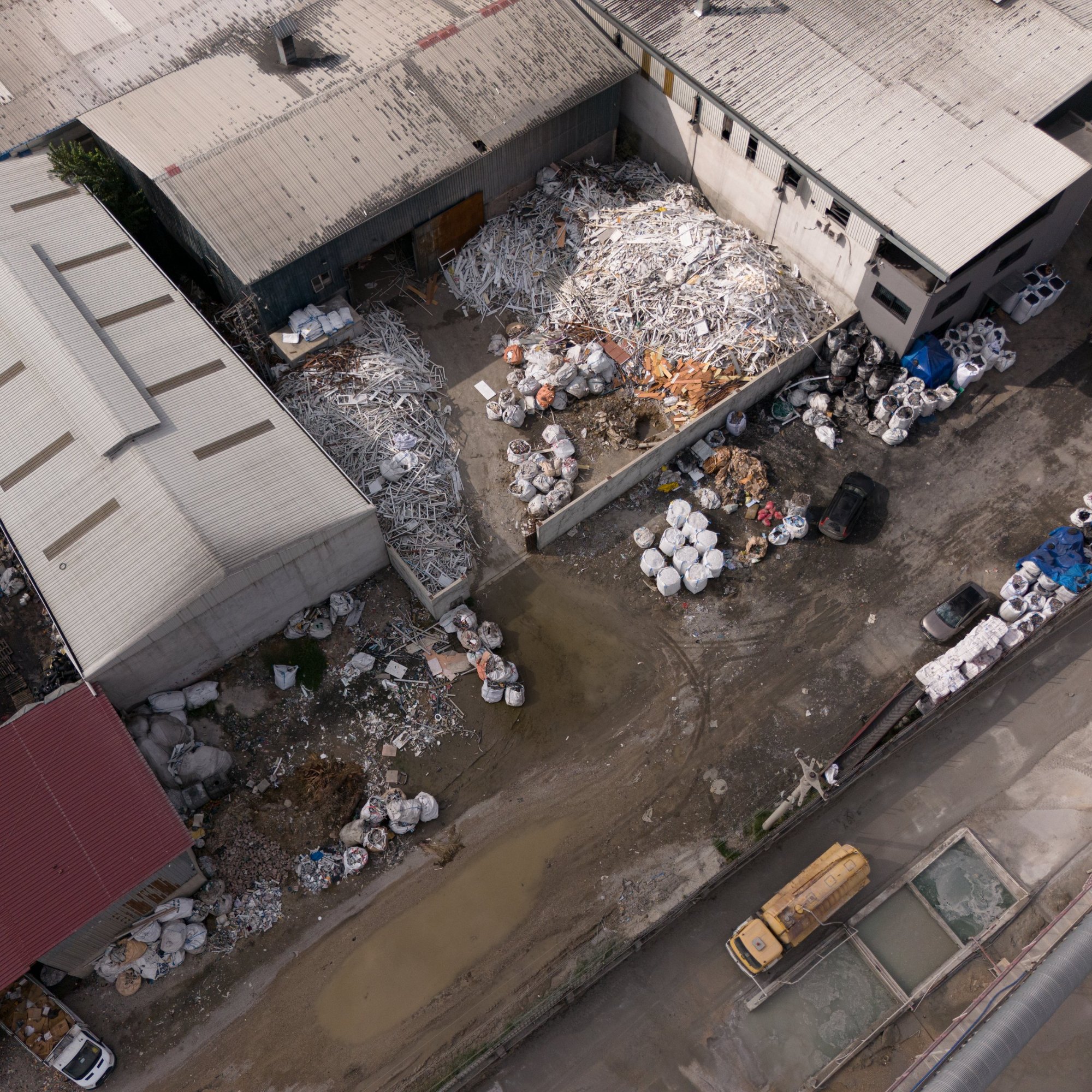
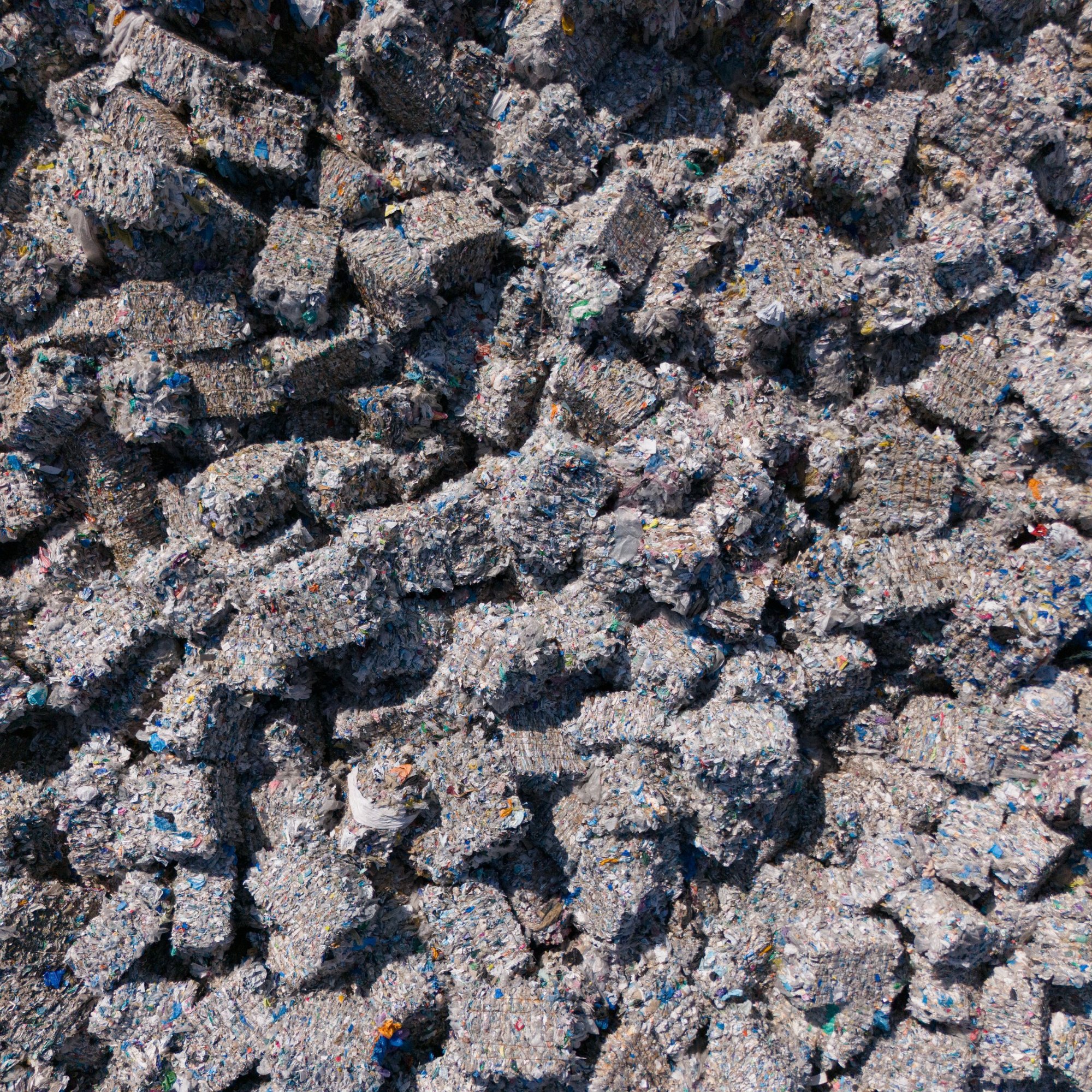
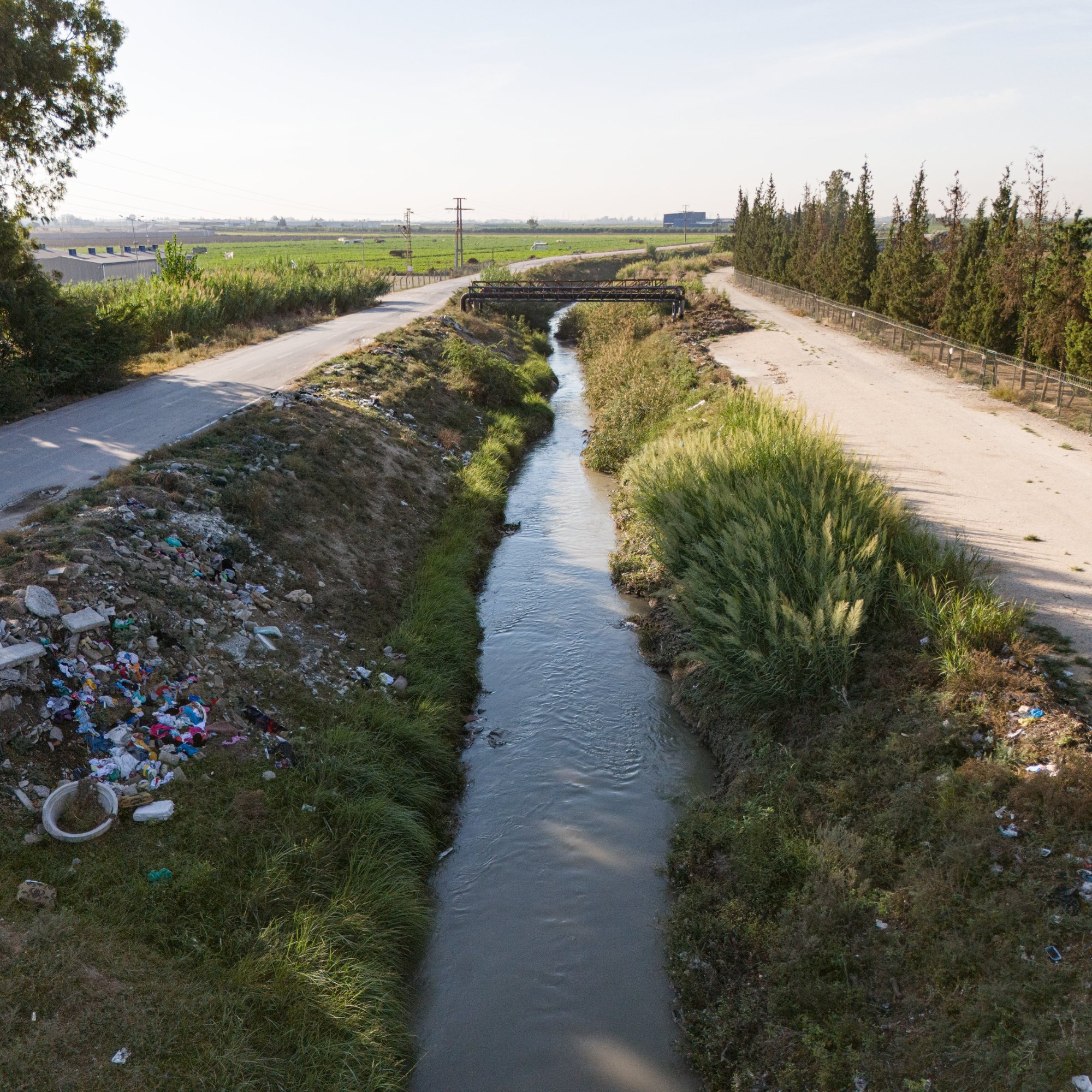
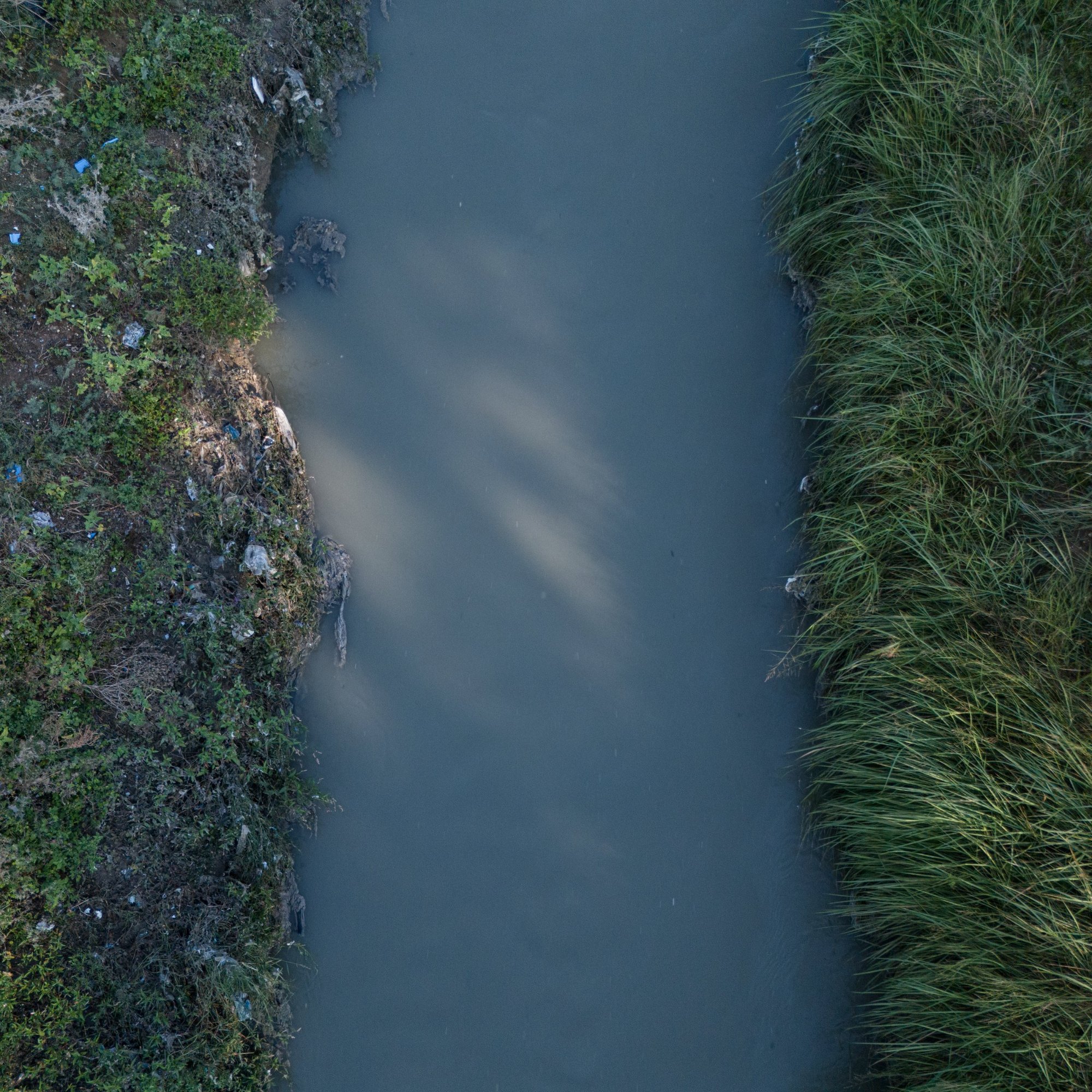
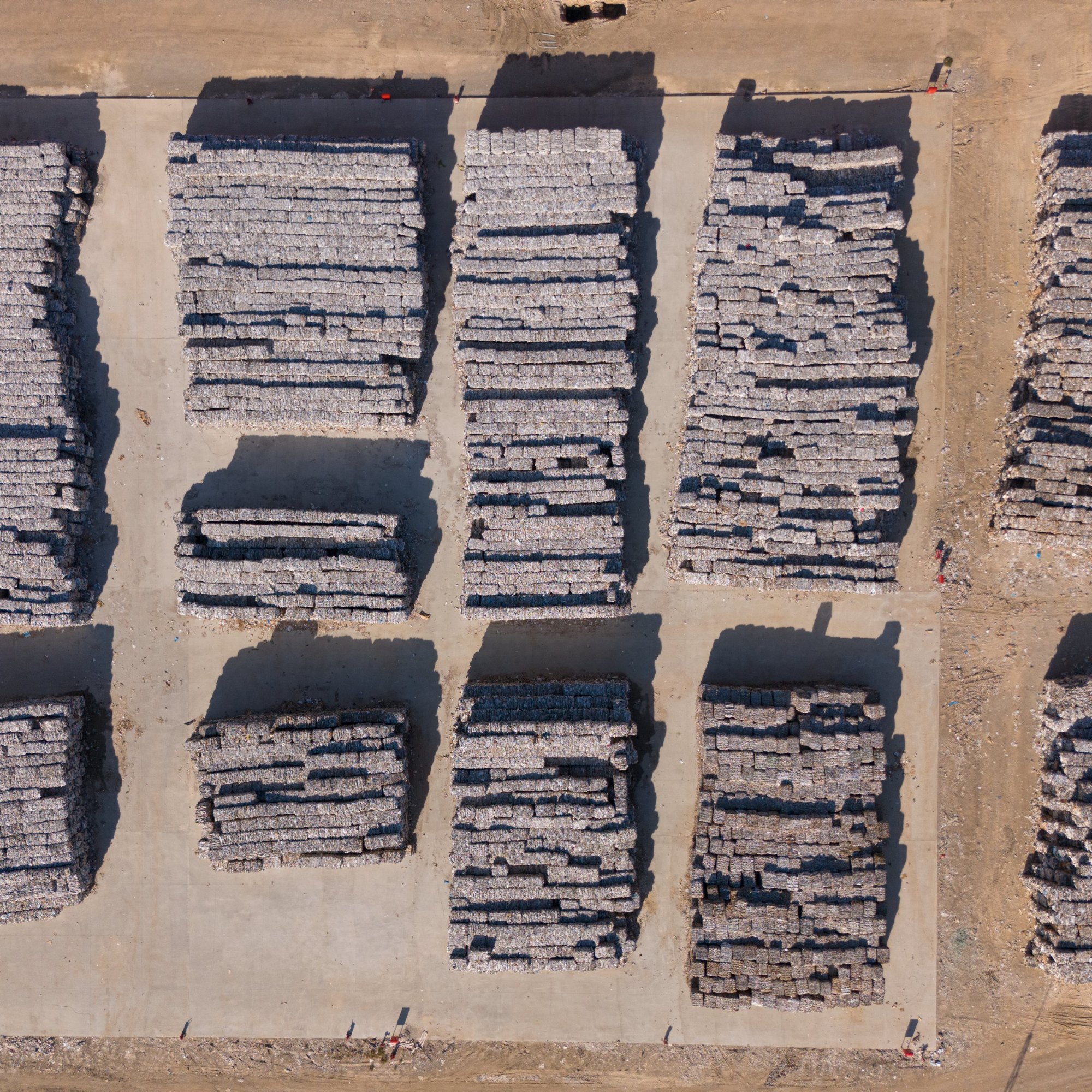
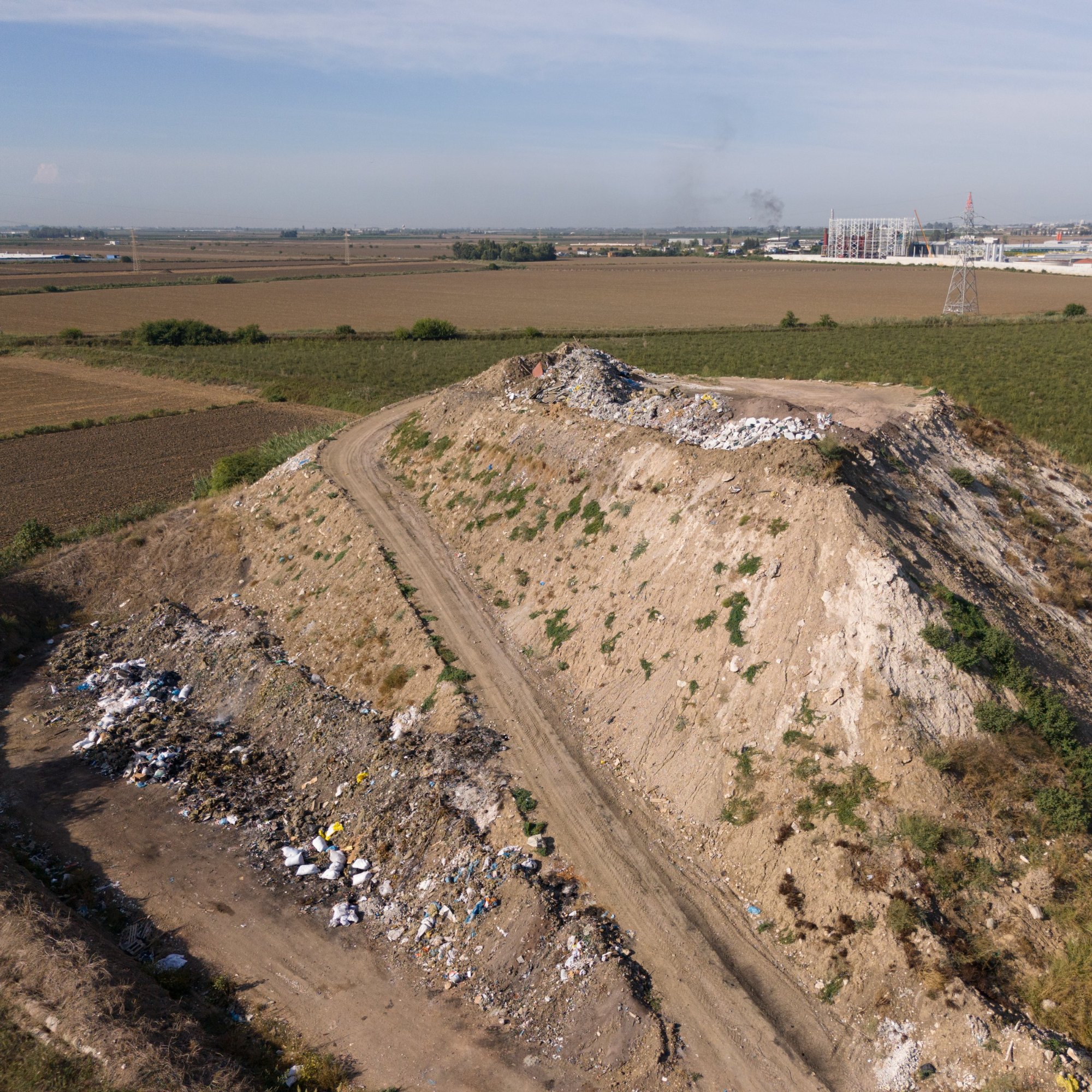
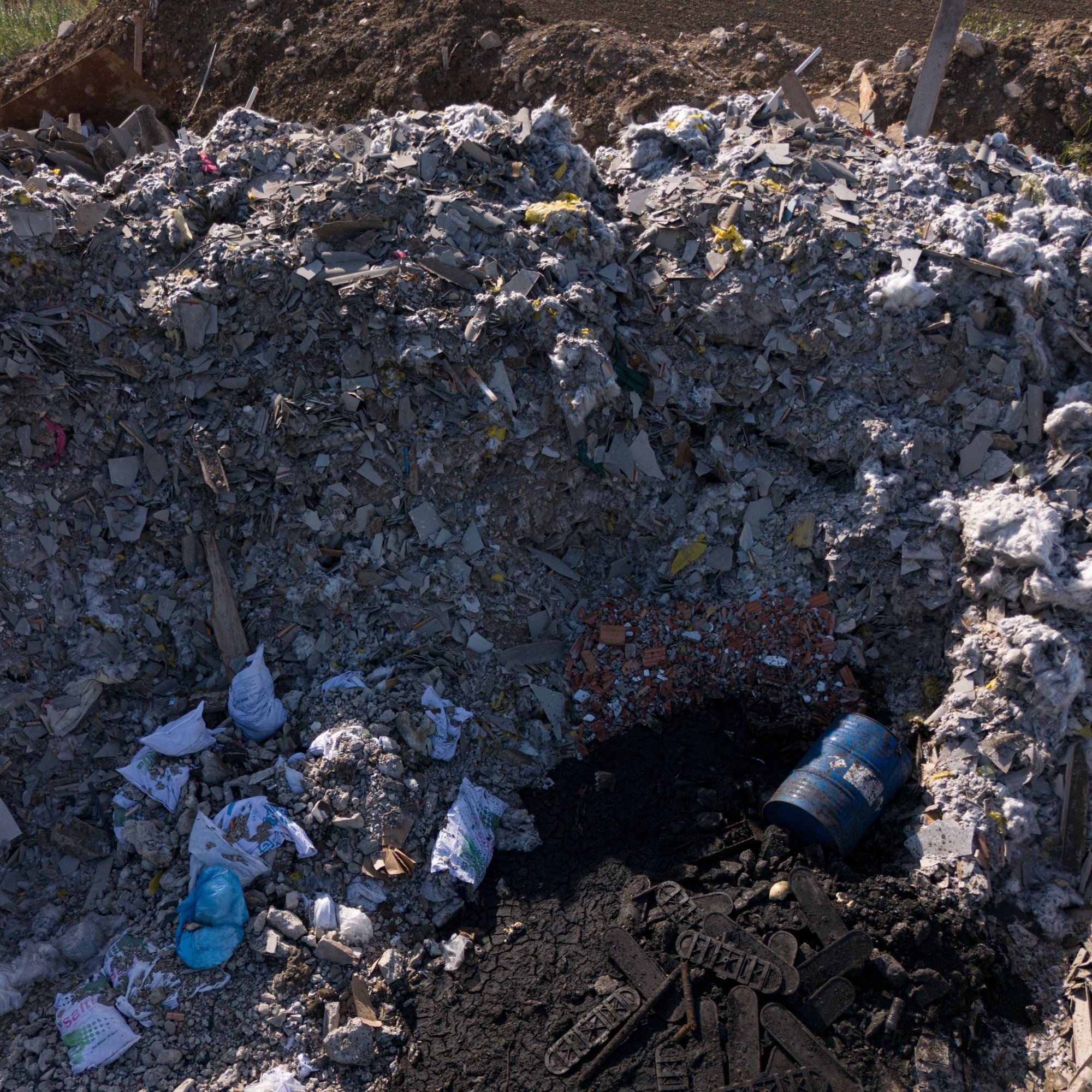
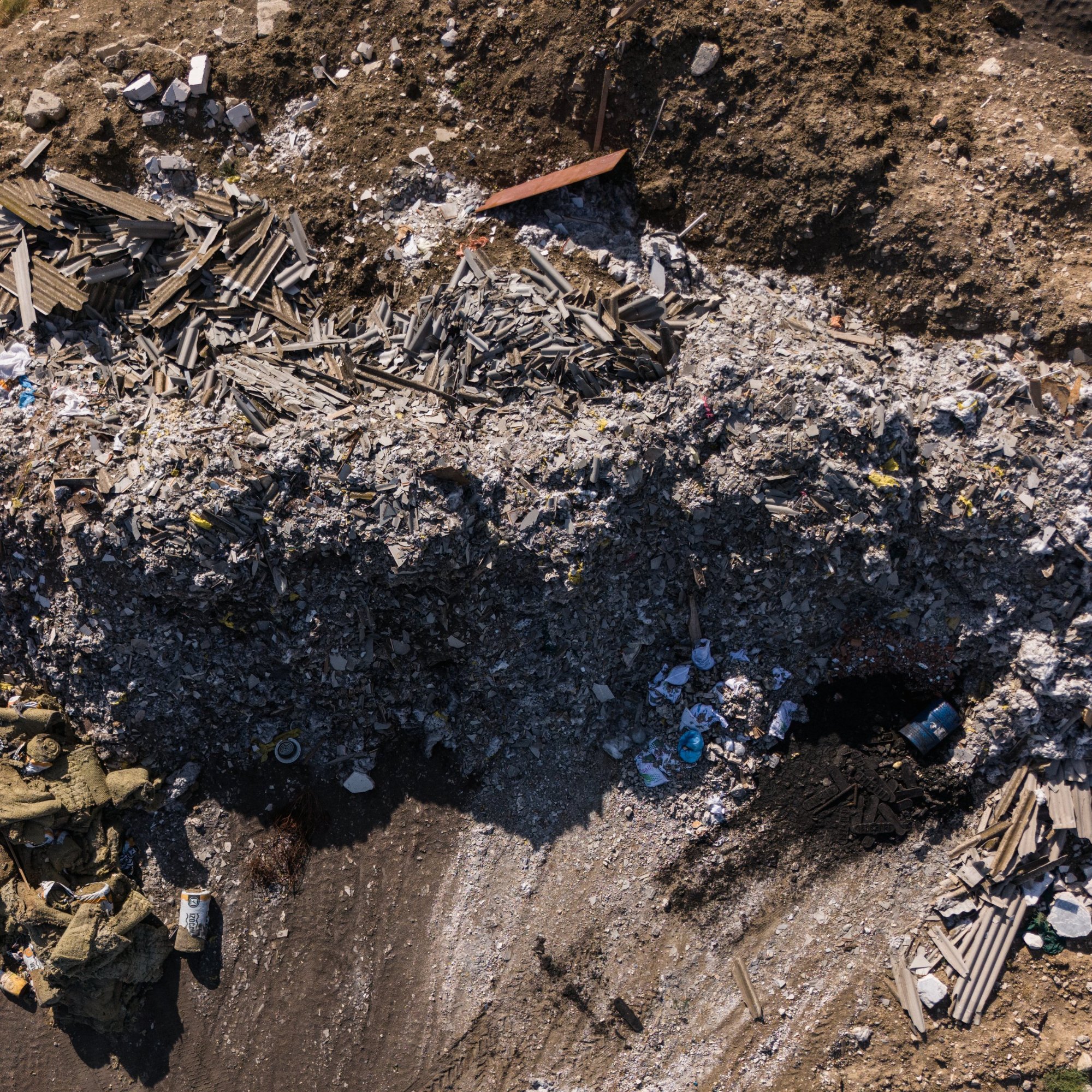
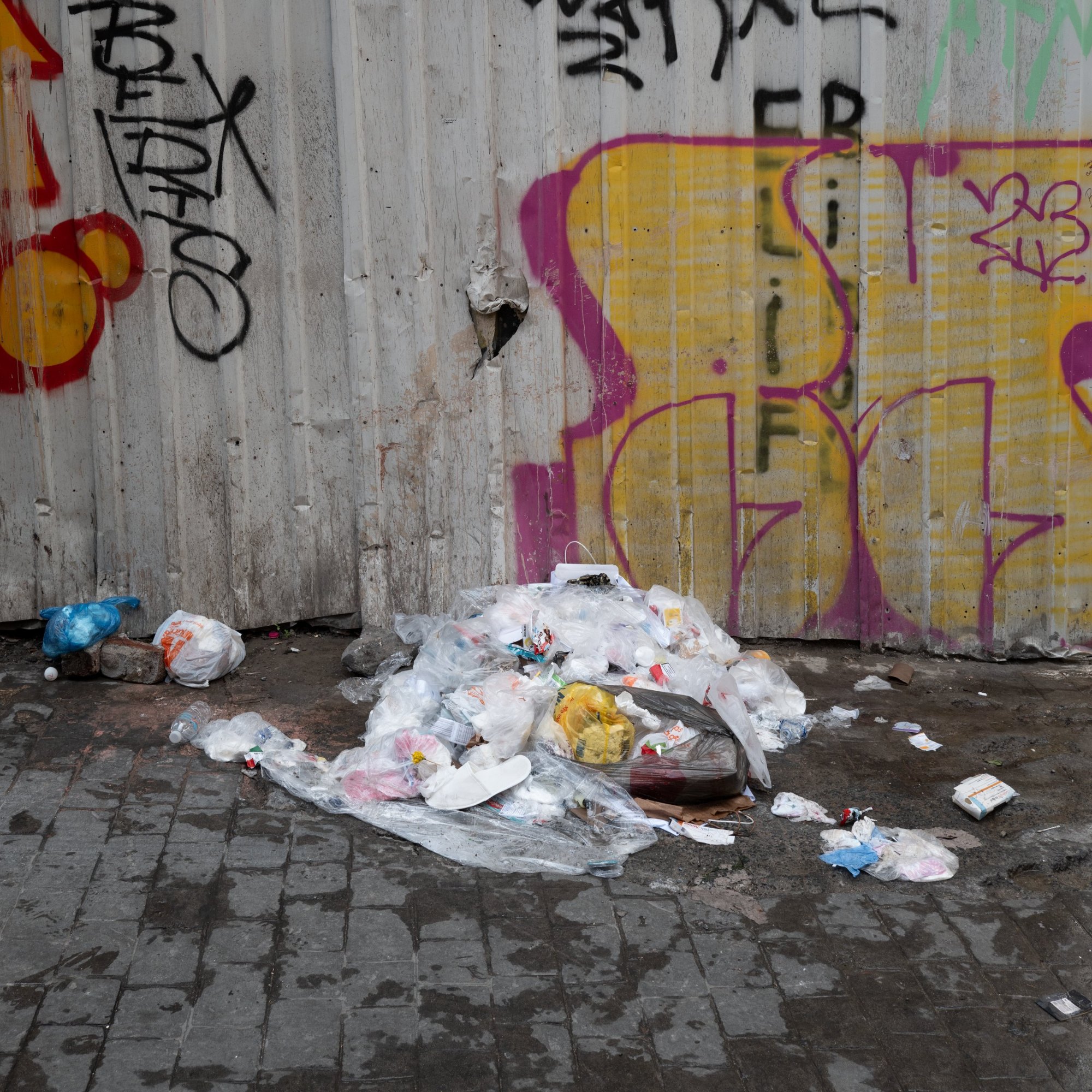
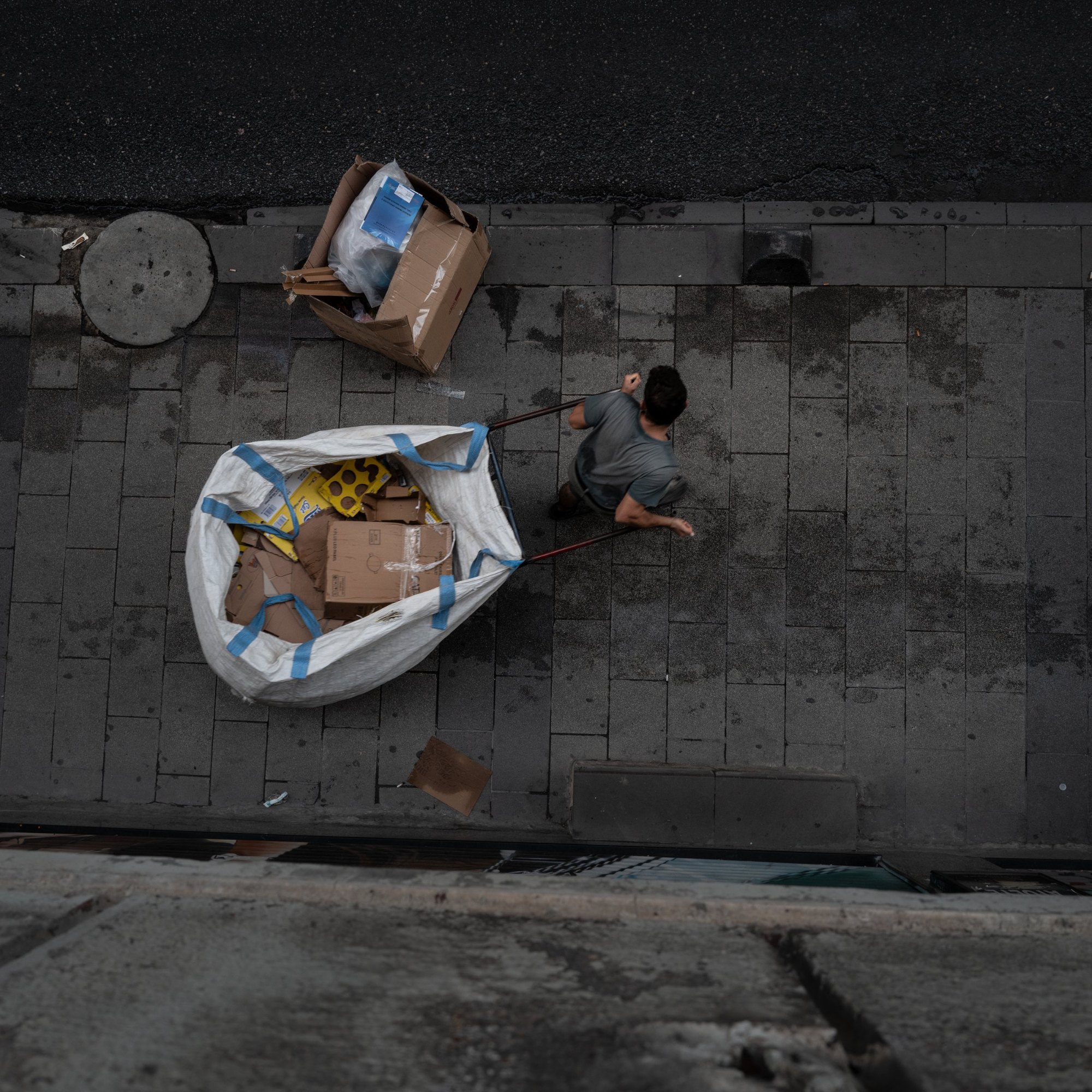
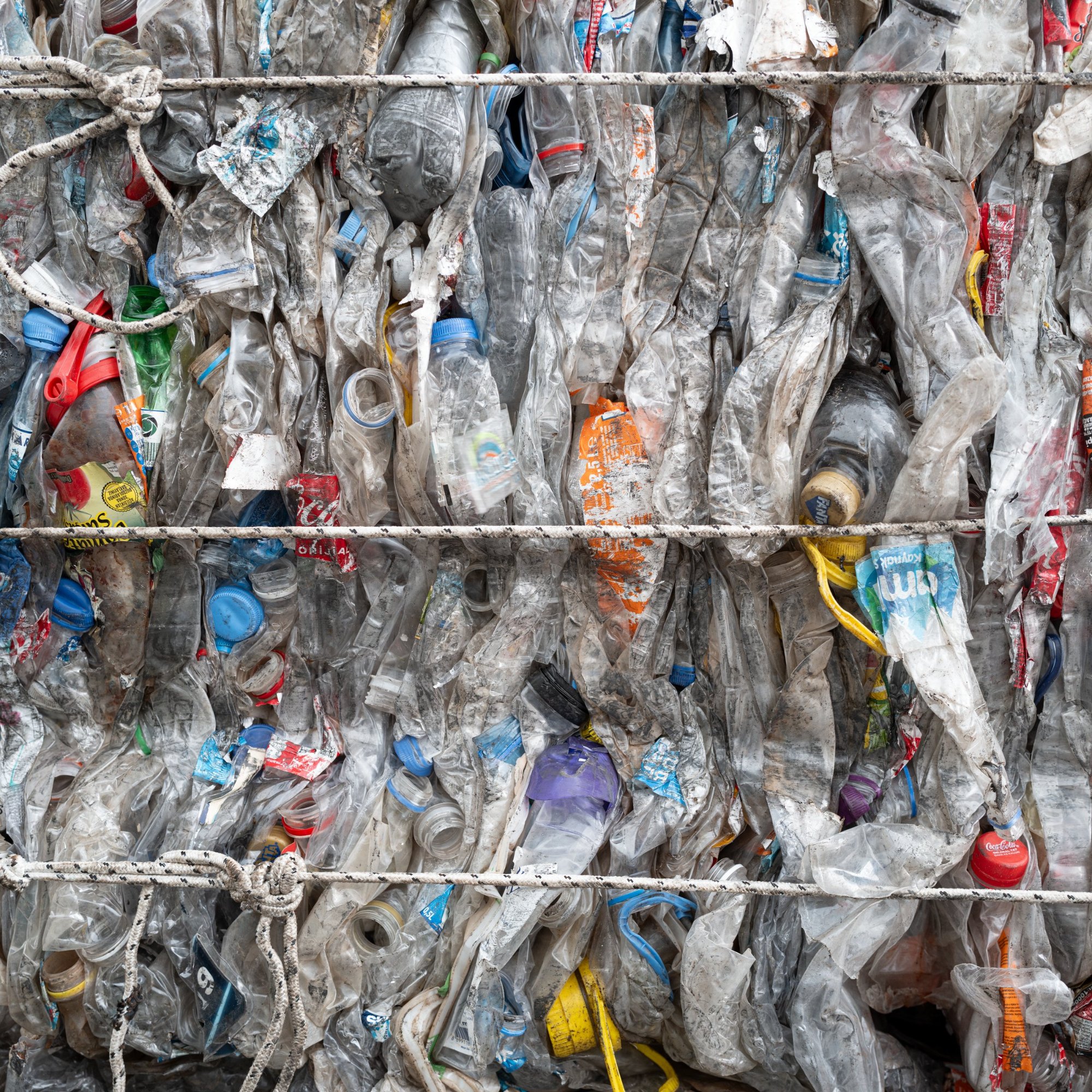
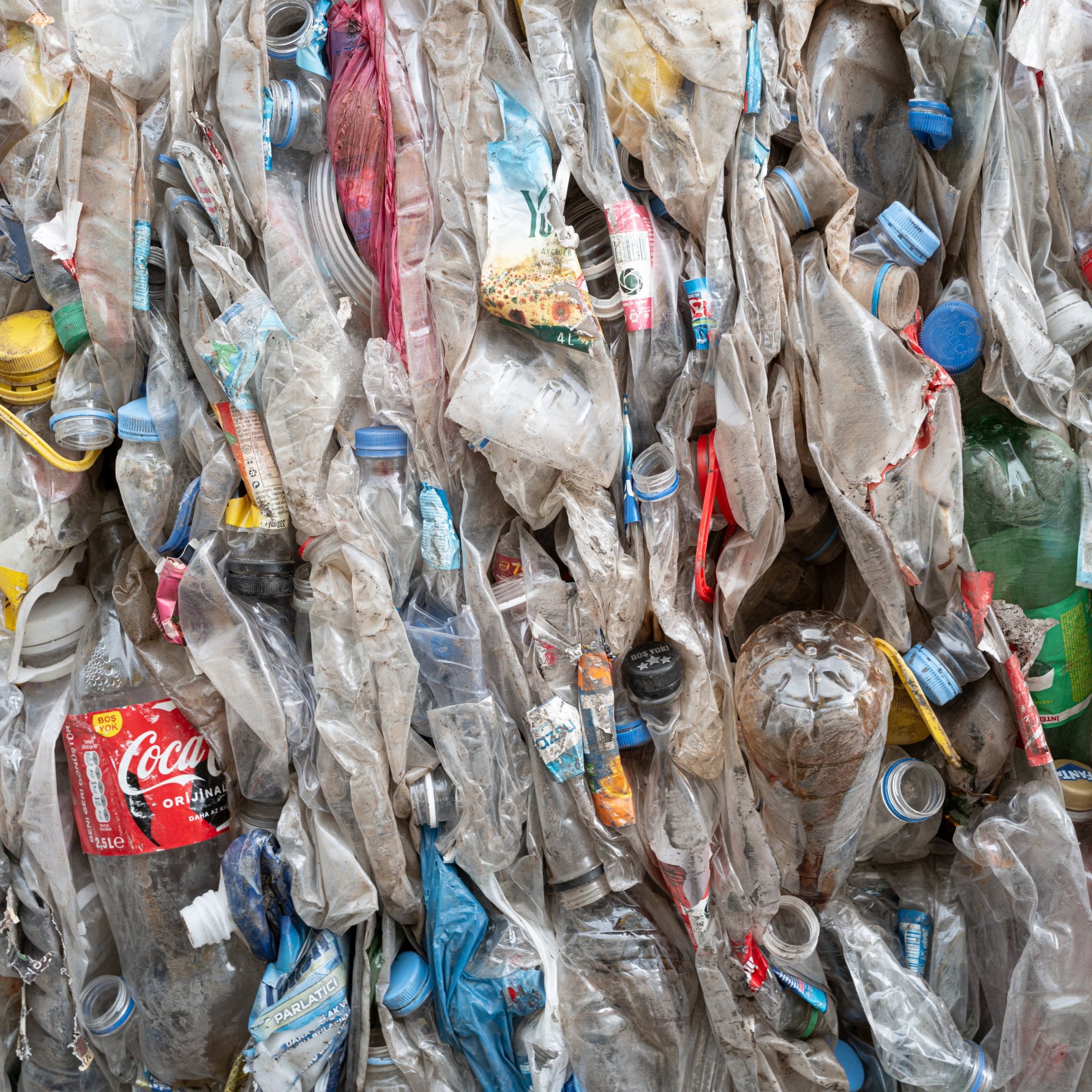
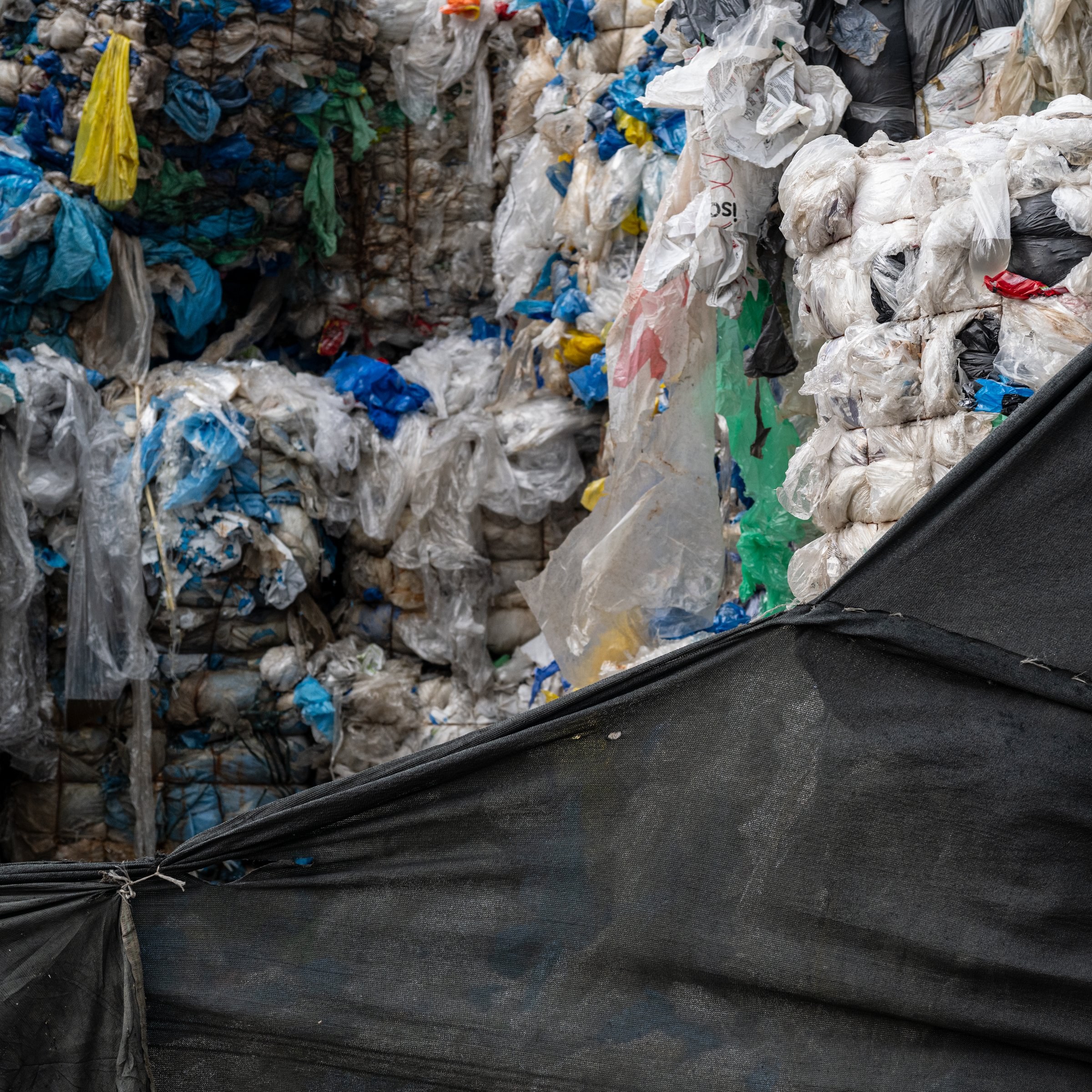
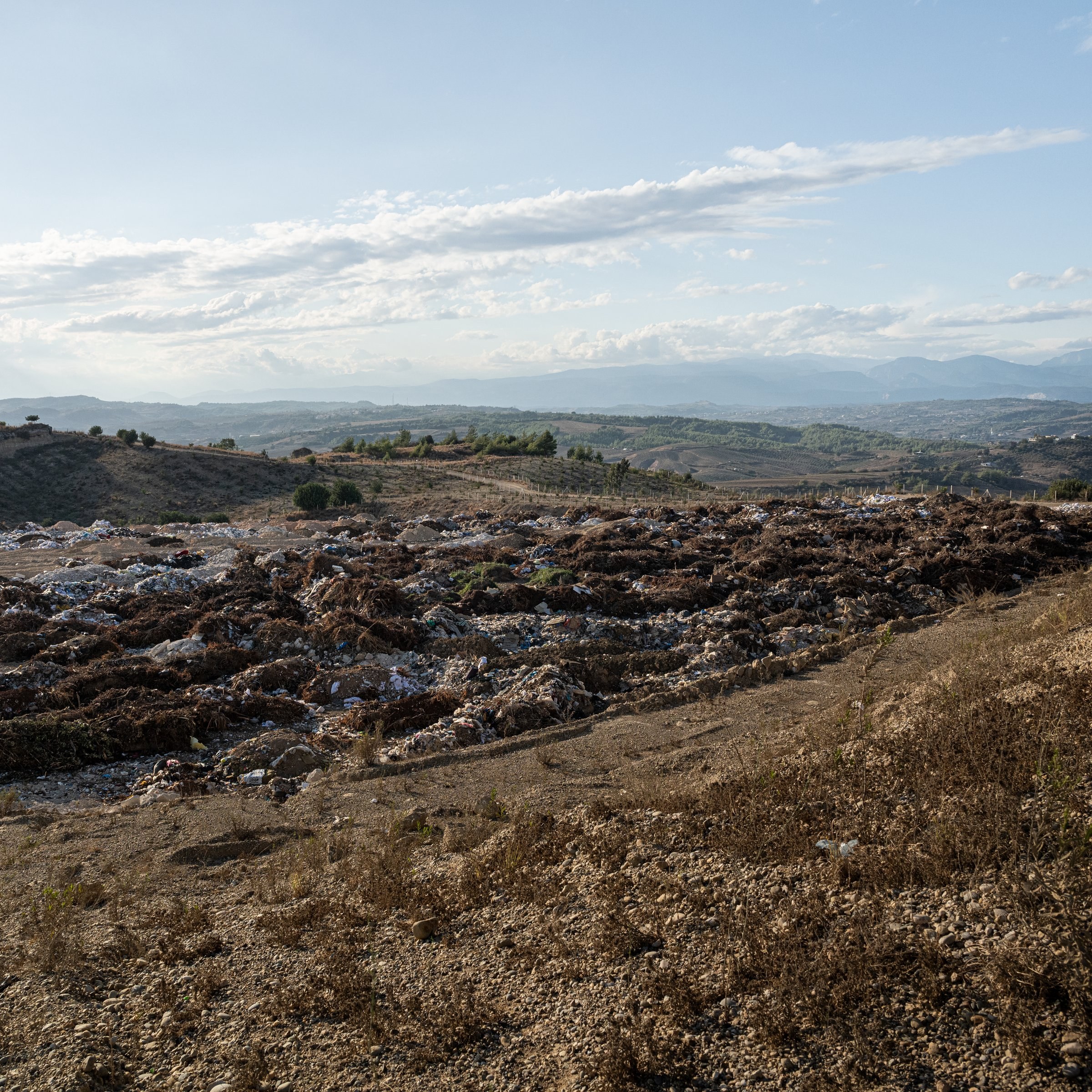
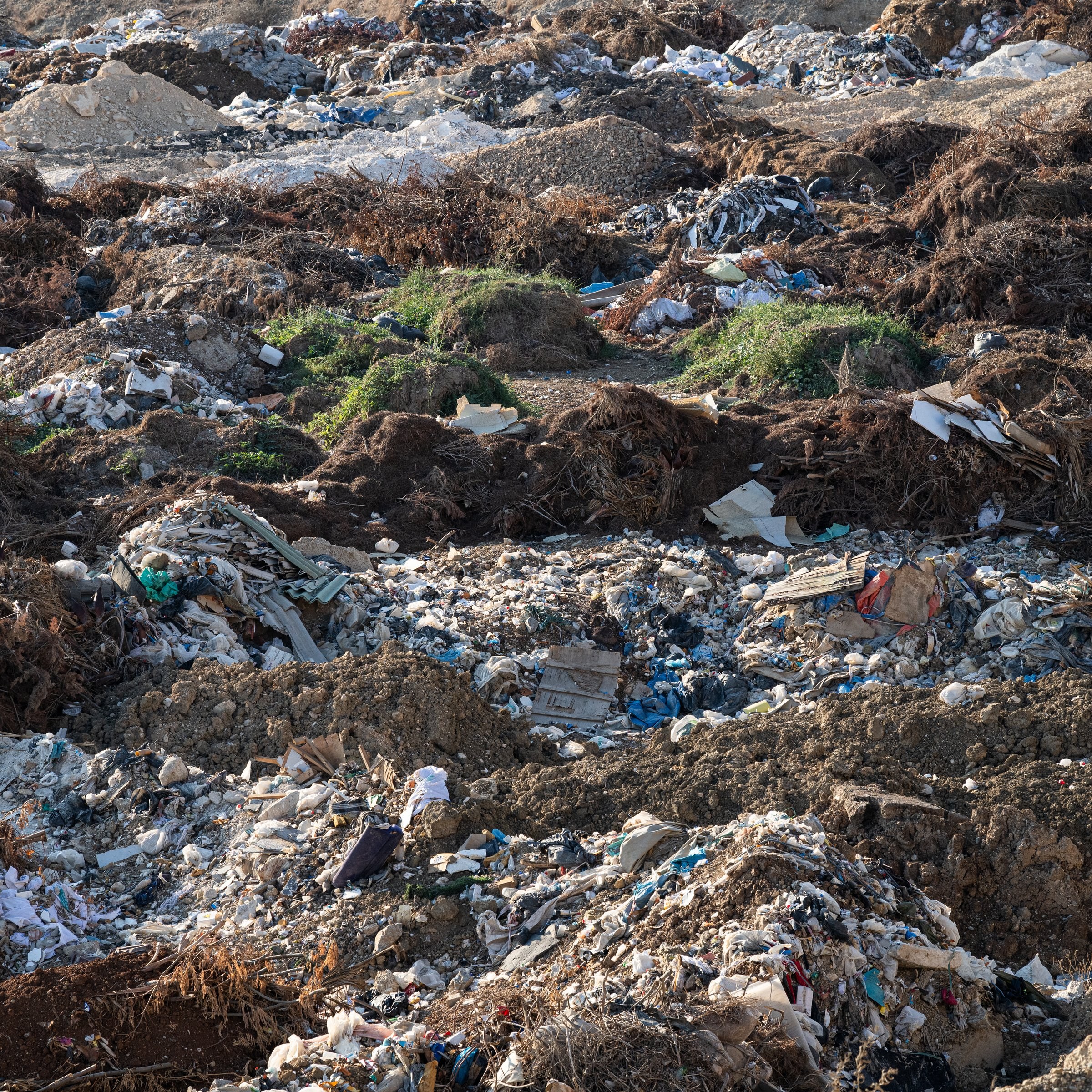
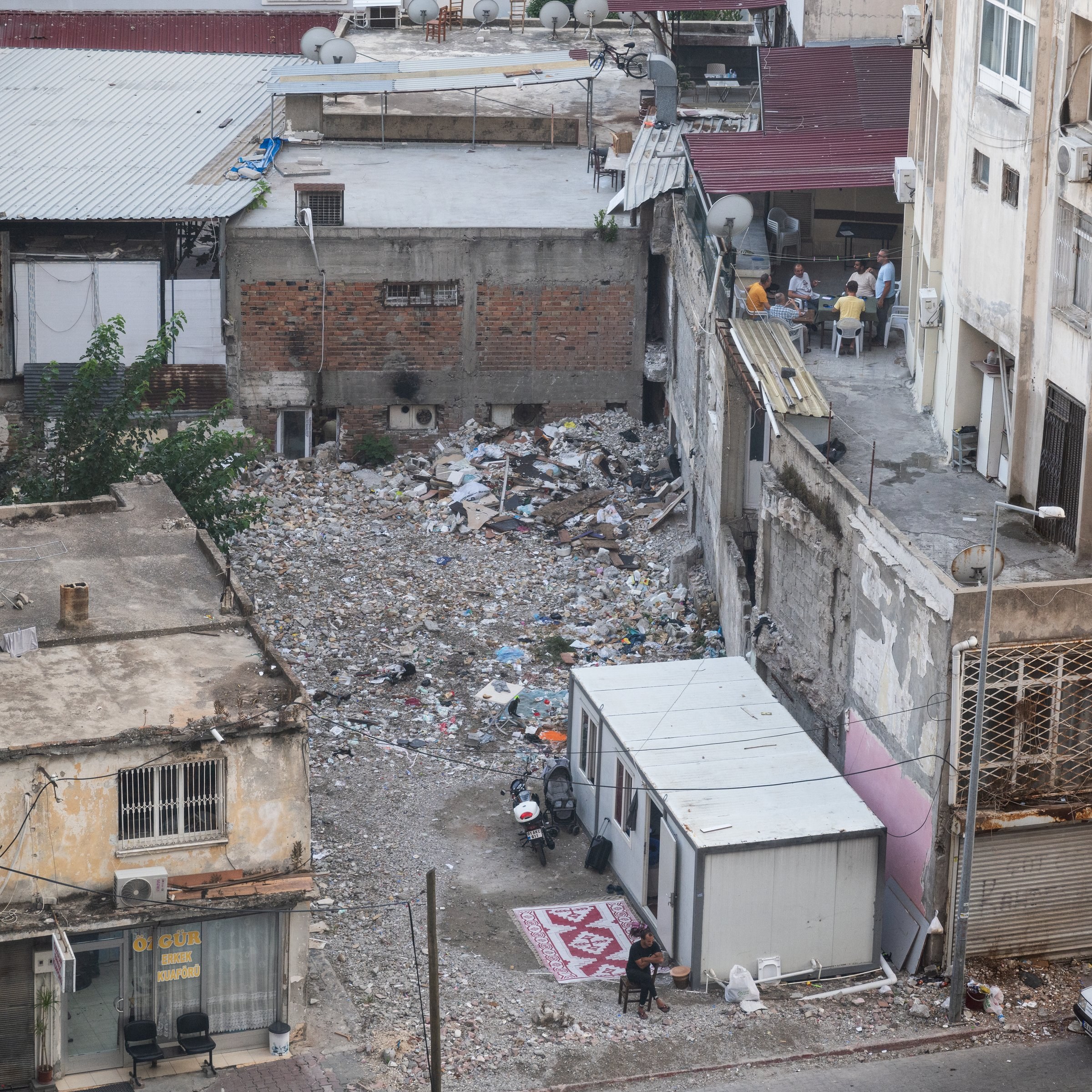
Making Something out of Nothing follows the transnational afterlife of plastic: exported European waste, tracked as it moves into Turkey’s informal economies, then returned to public view as collectively made artworks. The project began as documentary fieldwork. In Adana, Turkey (September 2024), Kessler, Ahmet Civelek, and photographer André Schönherr documented how mixed European plastics — shipped by intermediary companies and relabeled “recyclable” — are intermingled with demolition debris, then illegally burned, buried, or dumped without oversight on the city’s outskirts, contaminating soil, air, and waterways. This research became the project’s ethical and evidentiary foundation for everything that followed.
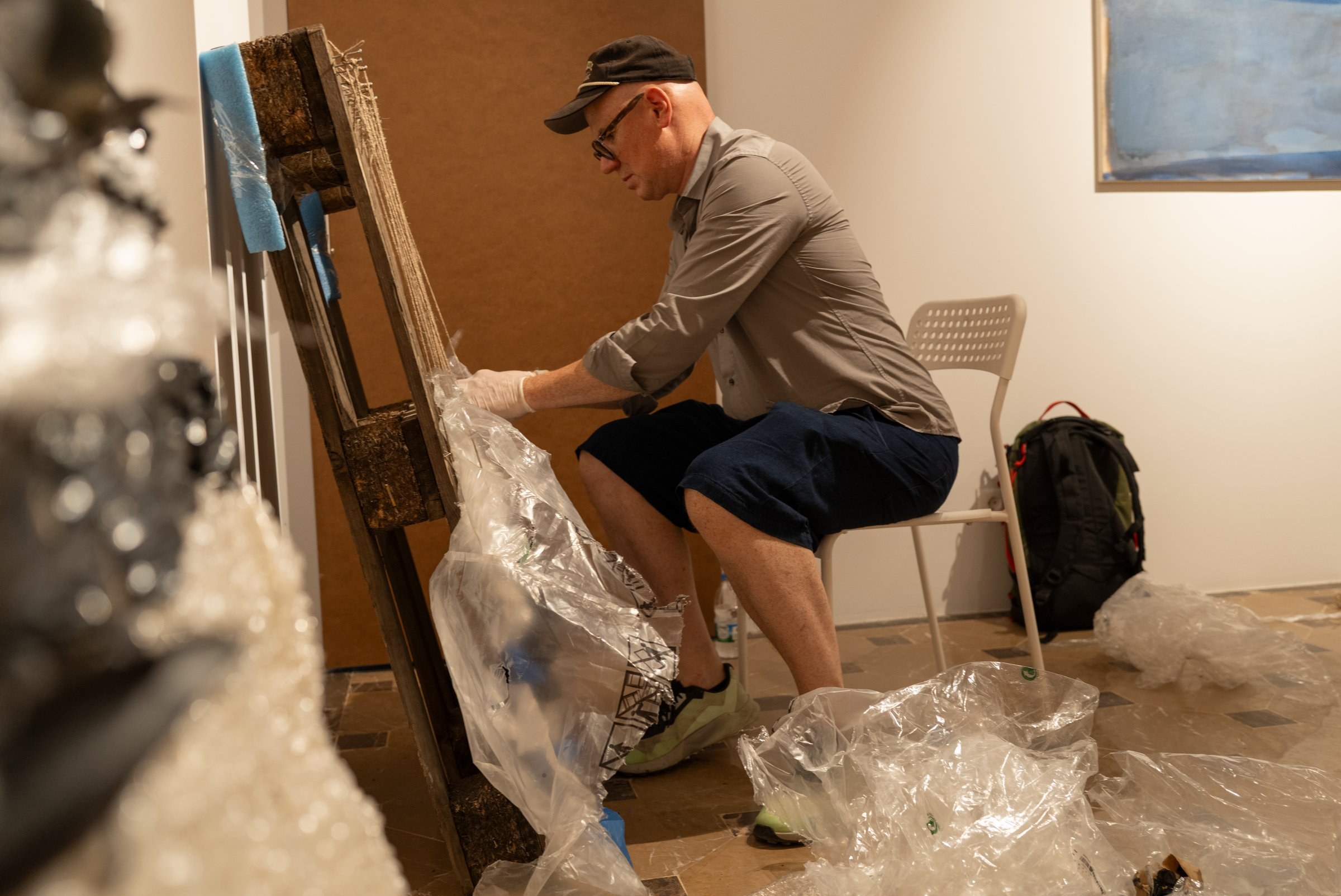
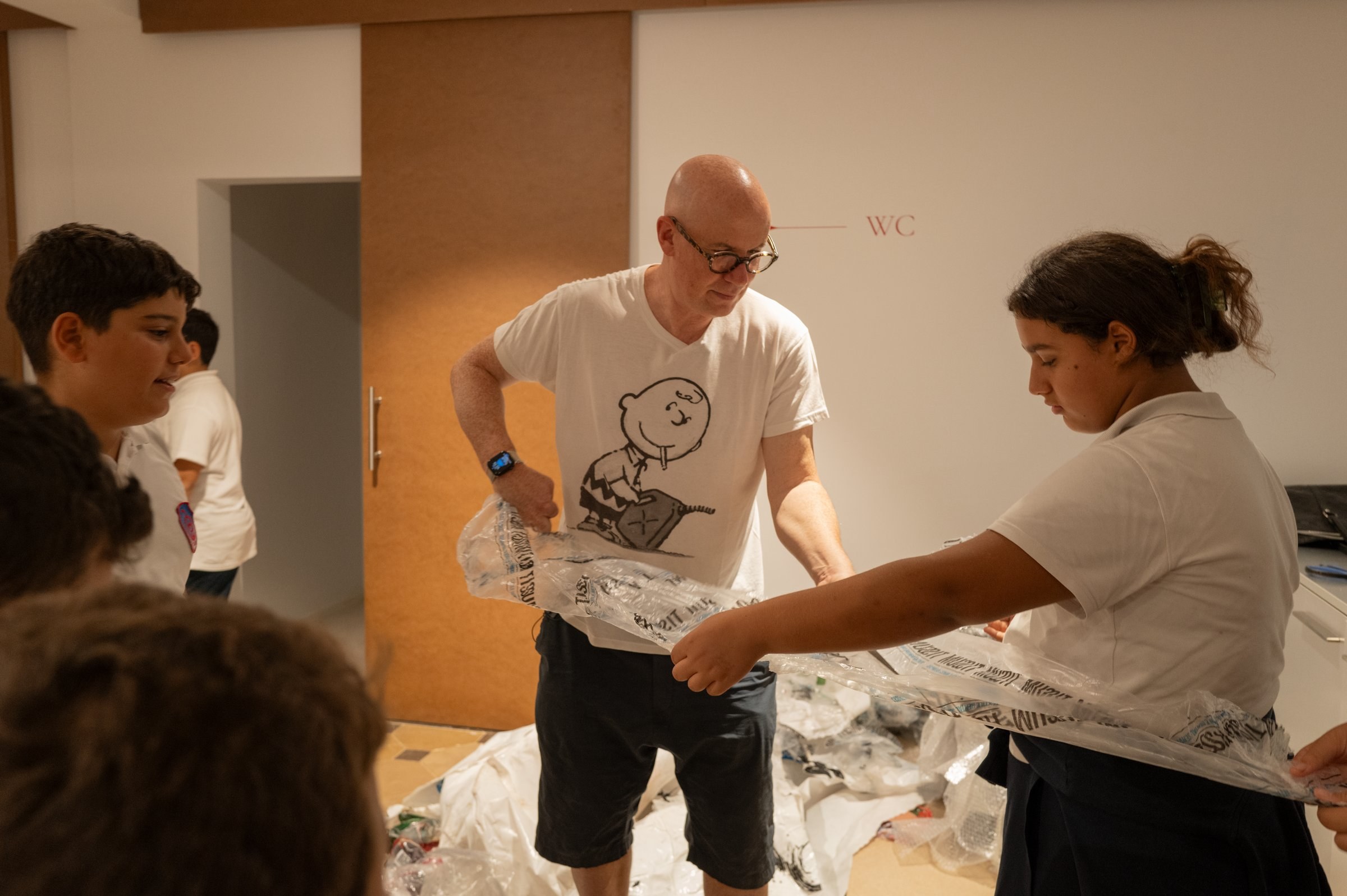
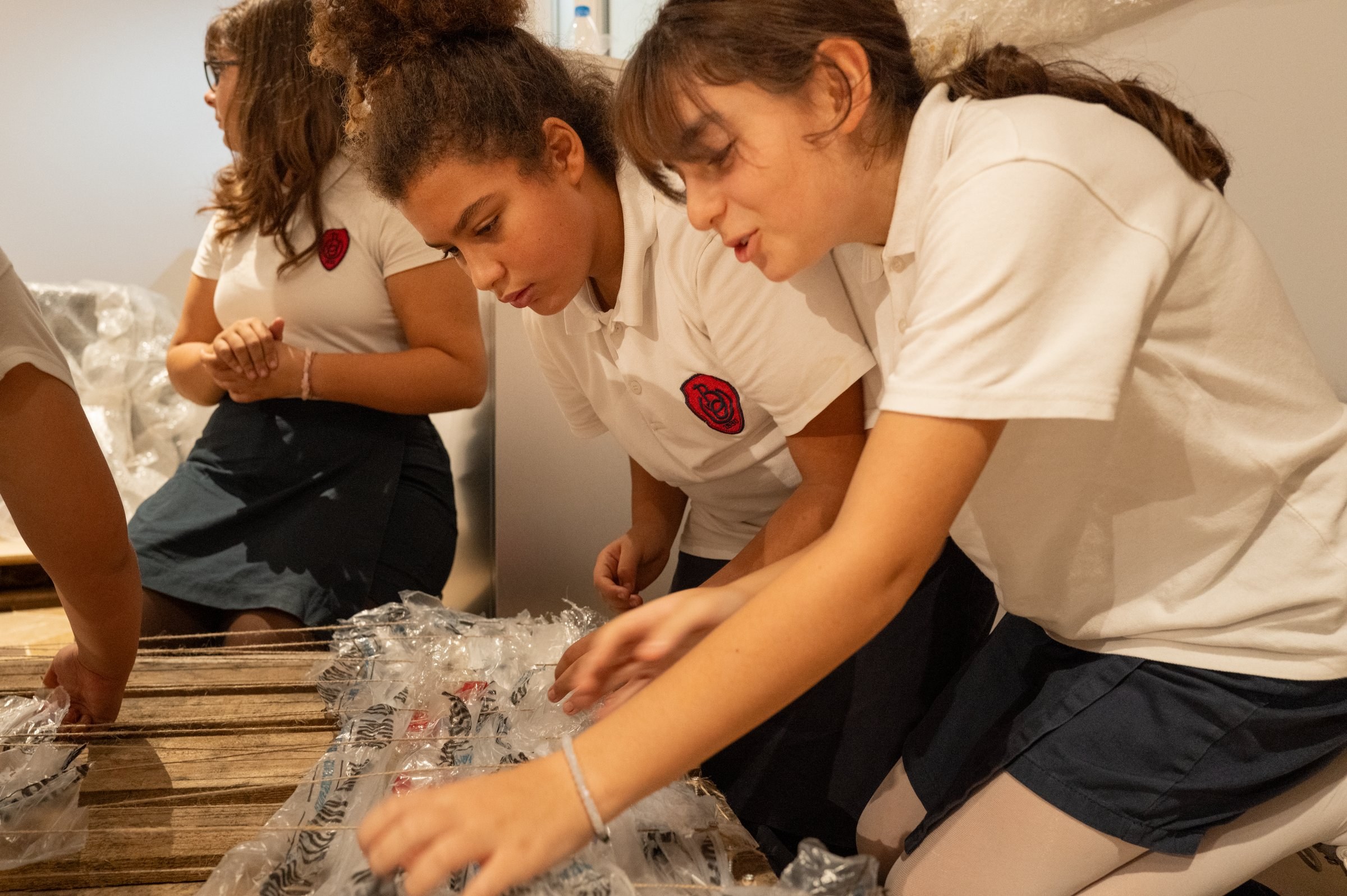
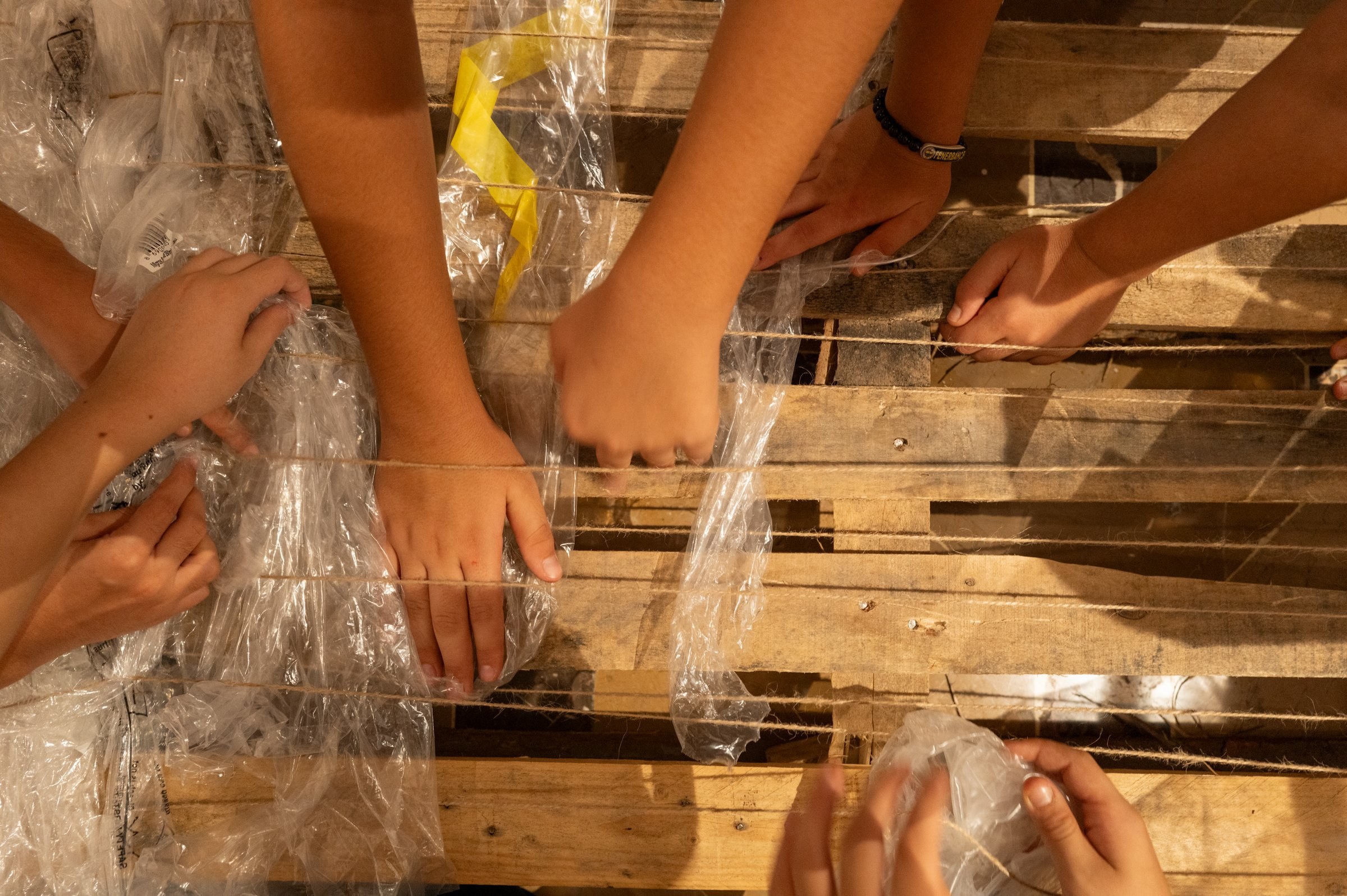
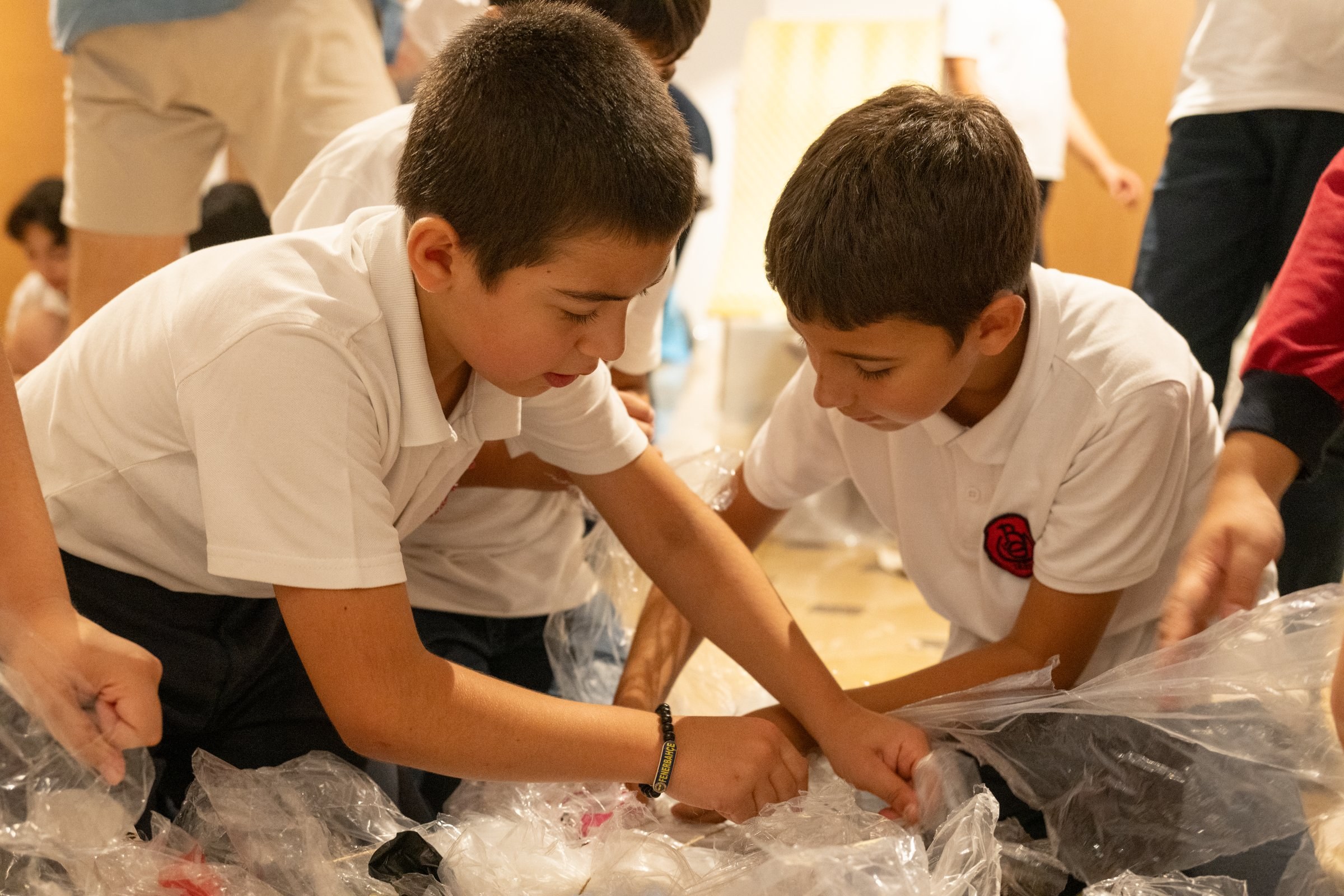
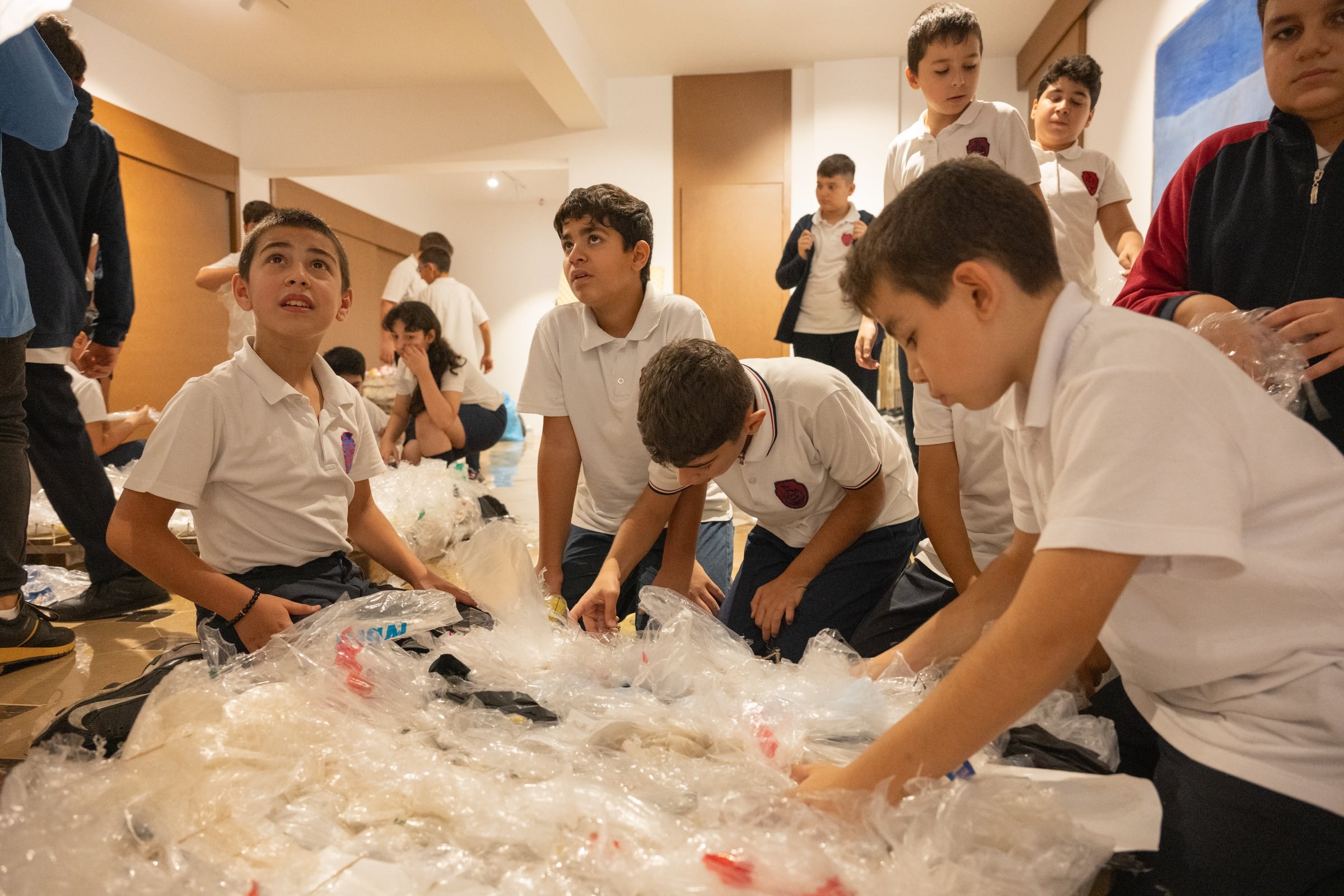
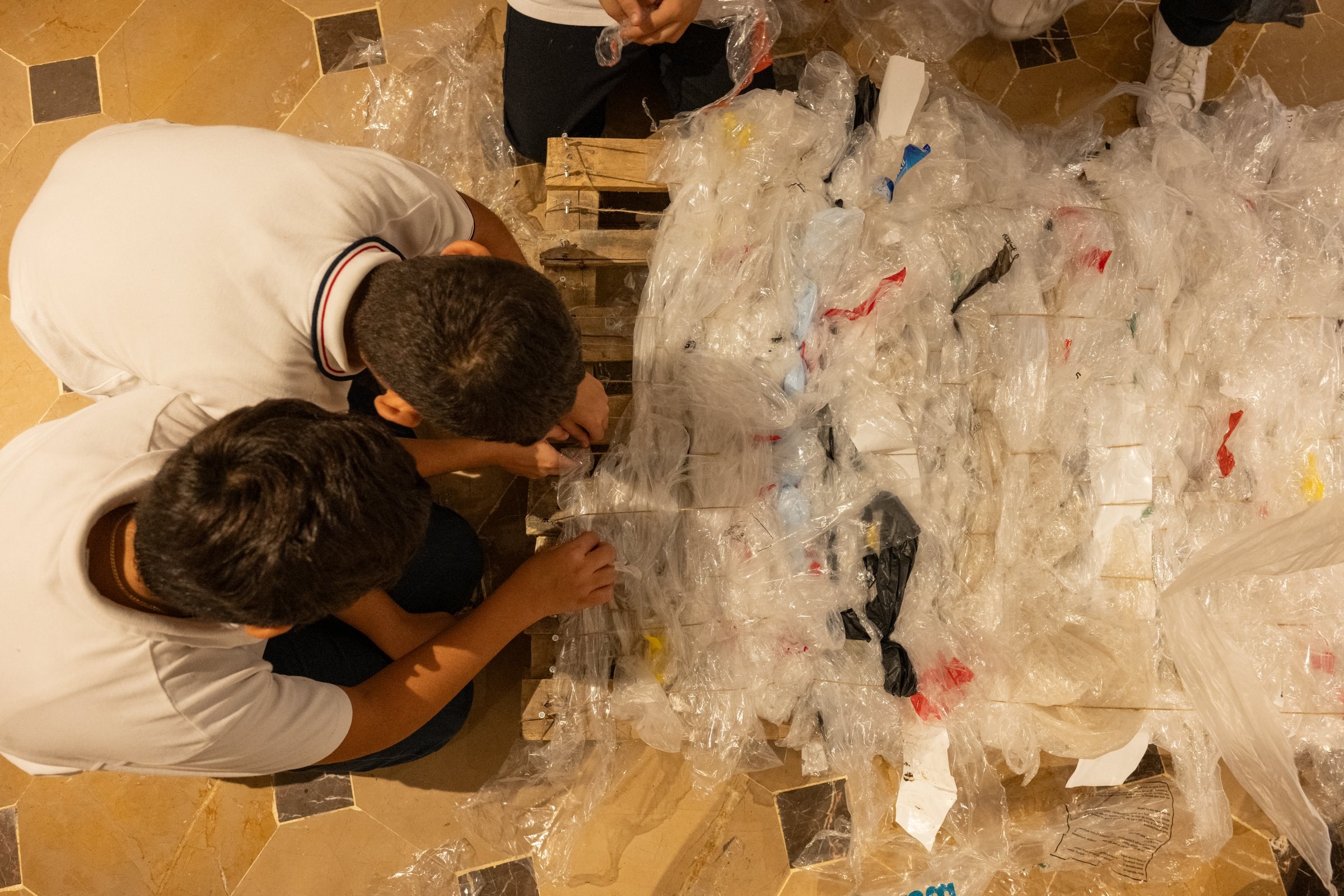
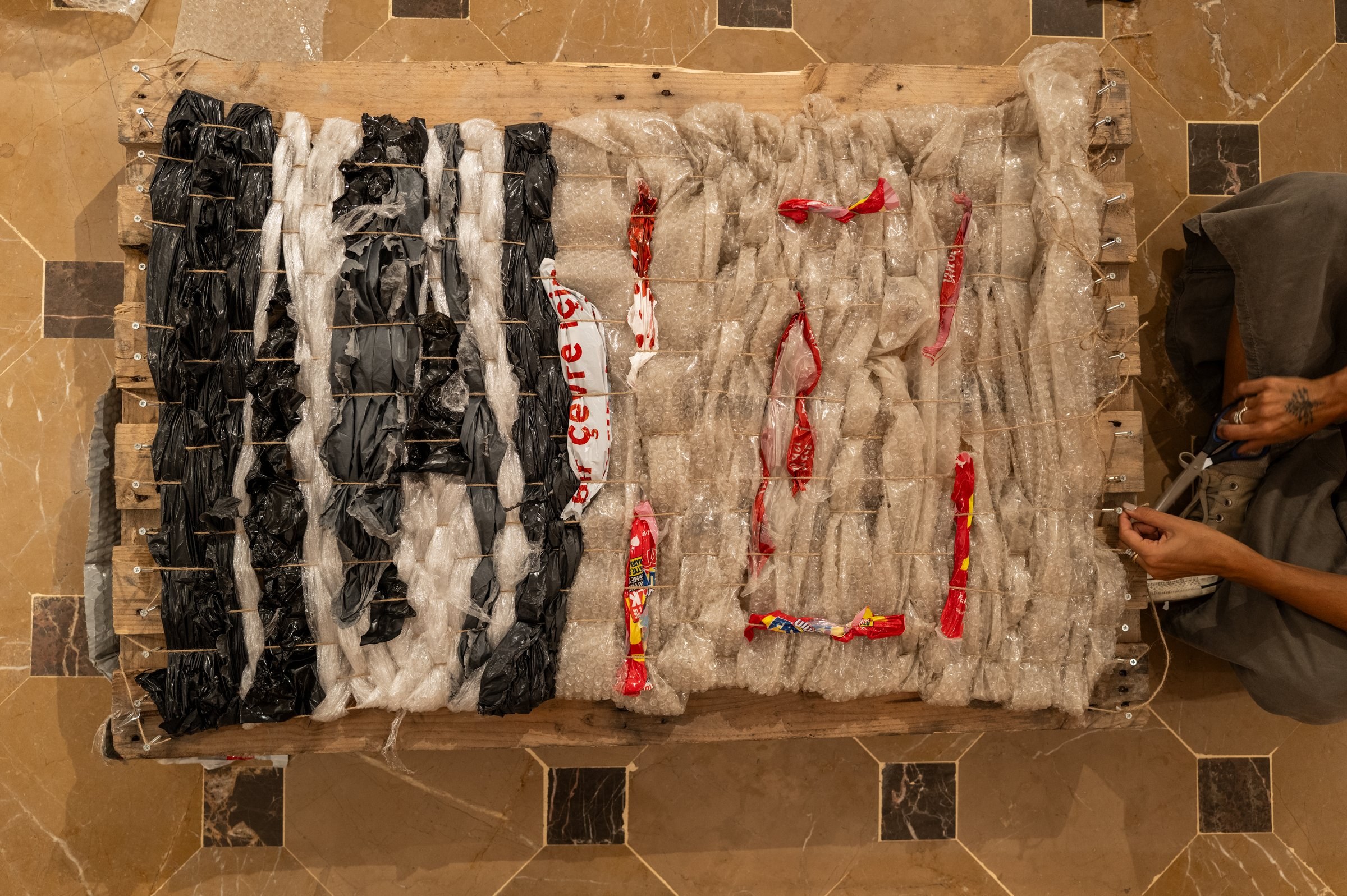
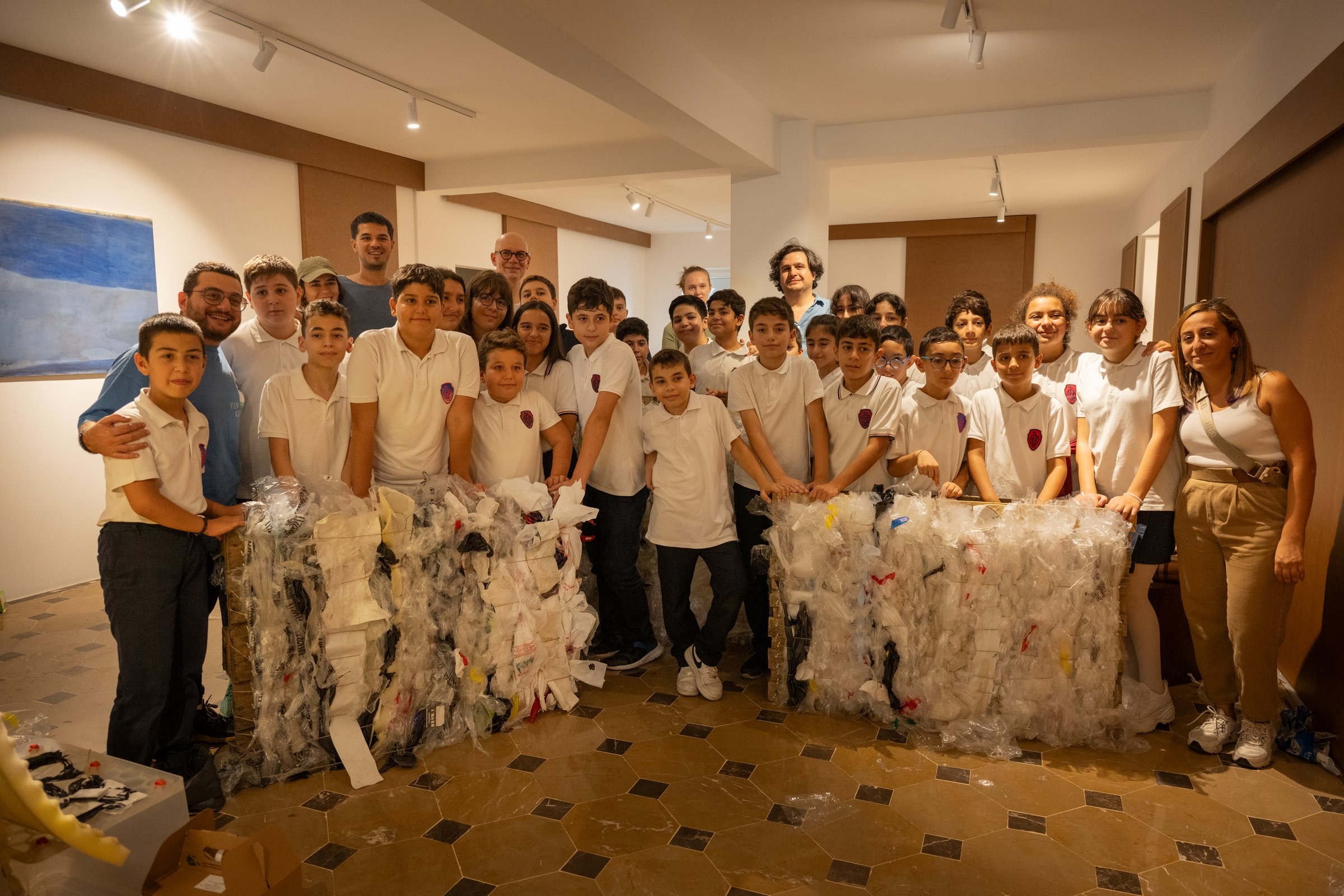
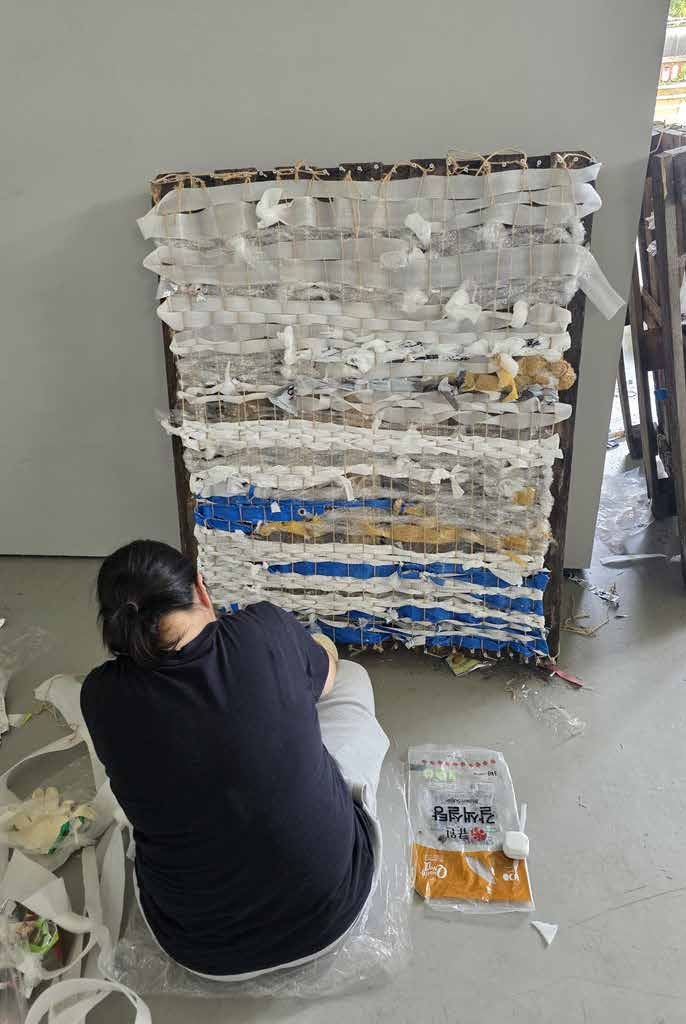
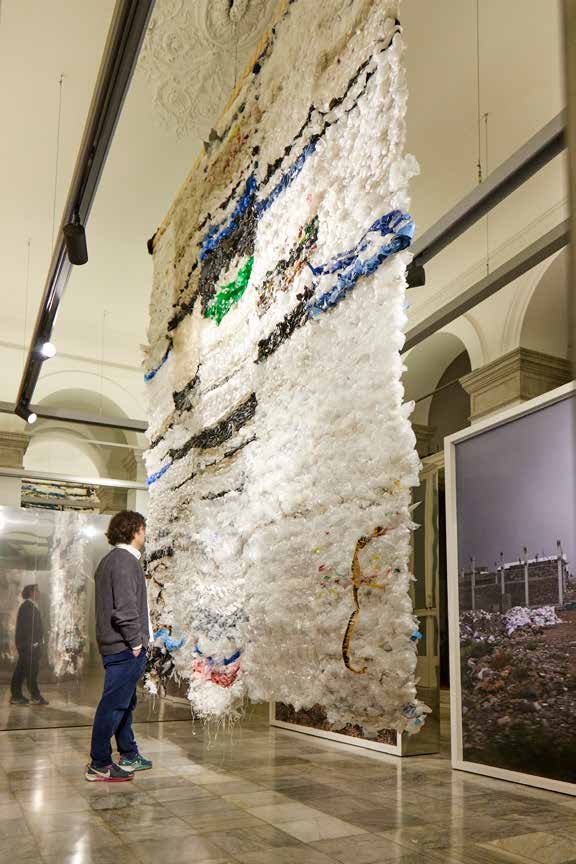
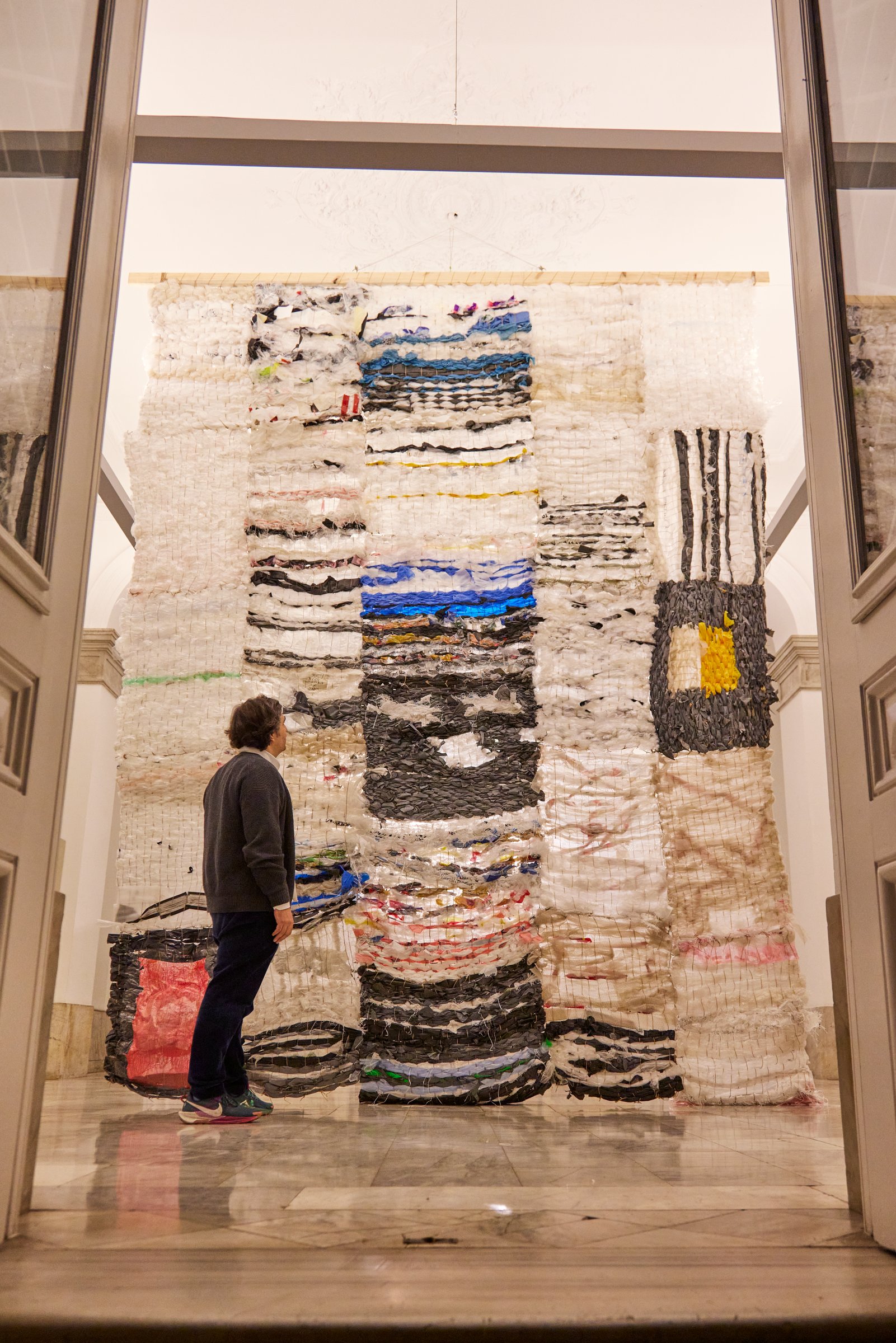
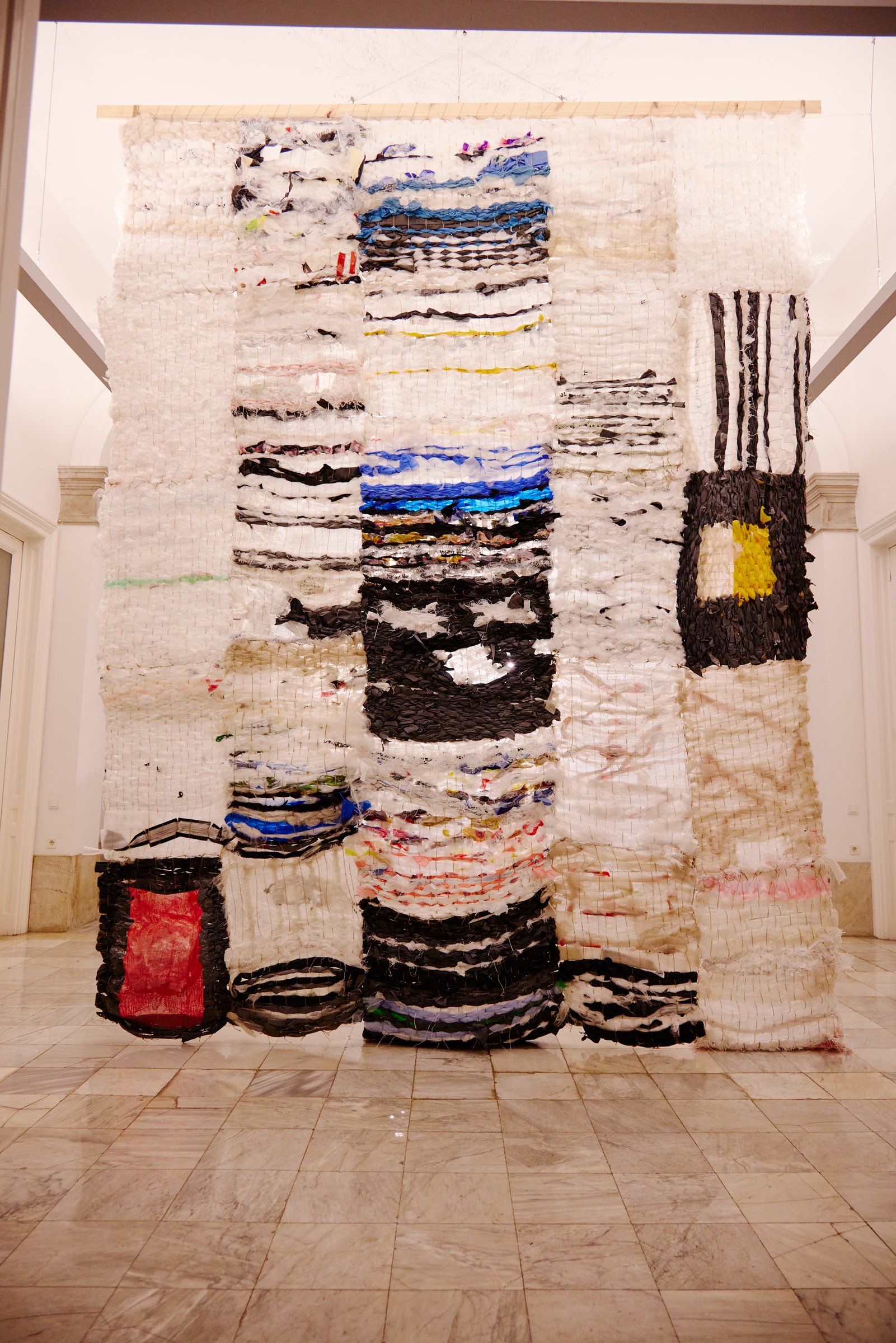
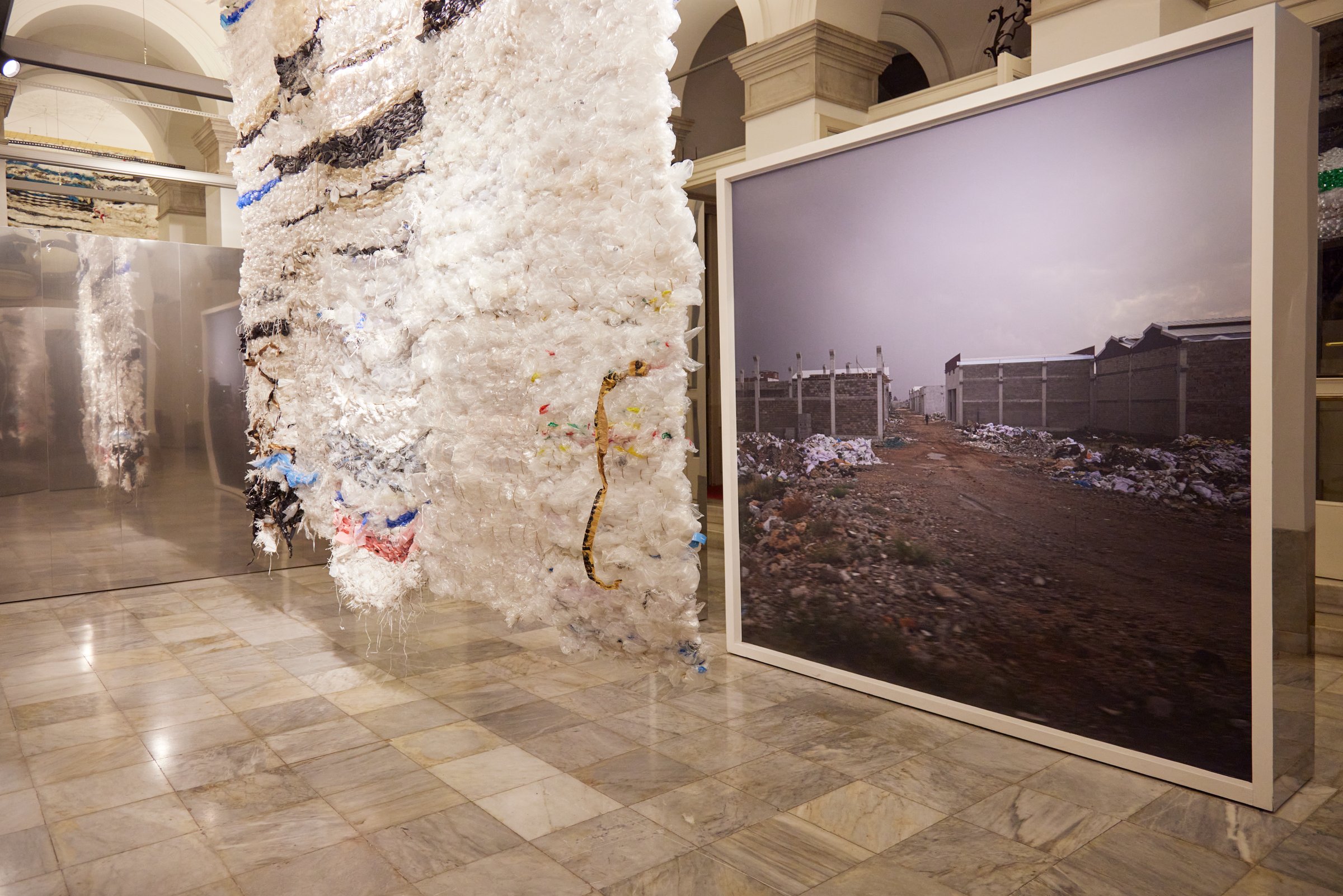
At OG Gallery, Istanbul (September 2024), the documentary material turned participatory: the gallery became a public workshop where visitors, neighbors, and school classes joined the artists in cutting and weaving strips of collected plastic waste into 50 hand-woven carpets (roughly 110 × 150 cm each), later assembled into wall-sized works around 4 × 5 m. At the Austrian Cultural Forum Istanbul (November 2024, with Christina Elsaesser and André Schönherr), the project became “photographic architecture” — large-scale prints (2 × 2 m) from the Adana research mounted as walkable maze panels, subdivided by the woven carpets acting as sculptural floor elements. At Künstlerhaus Wien (March 2025, as part of Imagine Climate Dignity), the Istanbul carpets were recomposed into one expansive suspended wall, meeting the museum context directly.
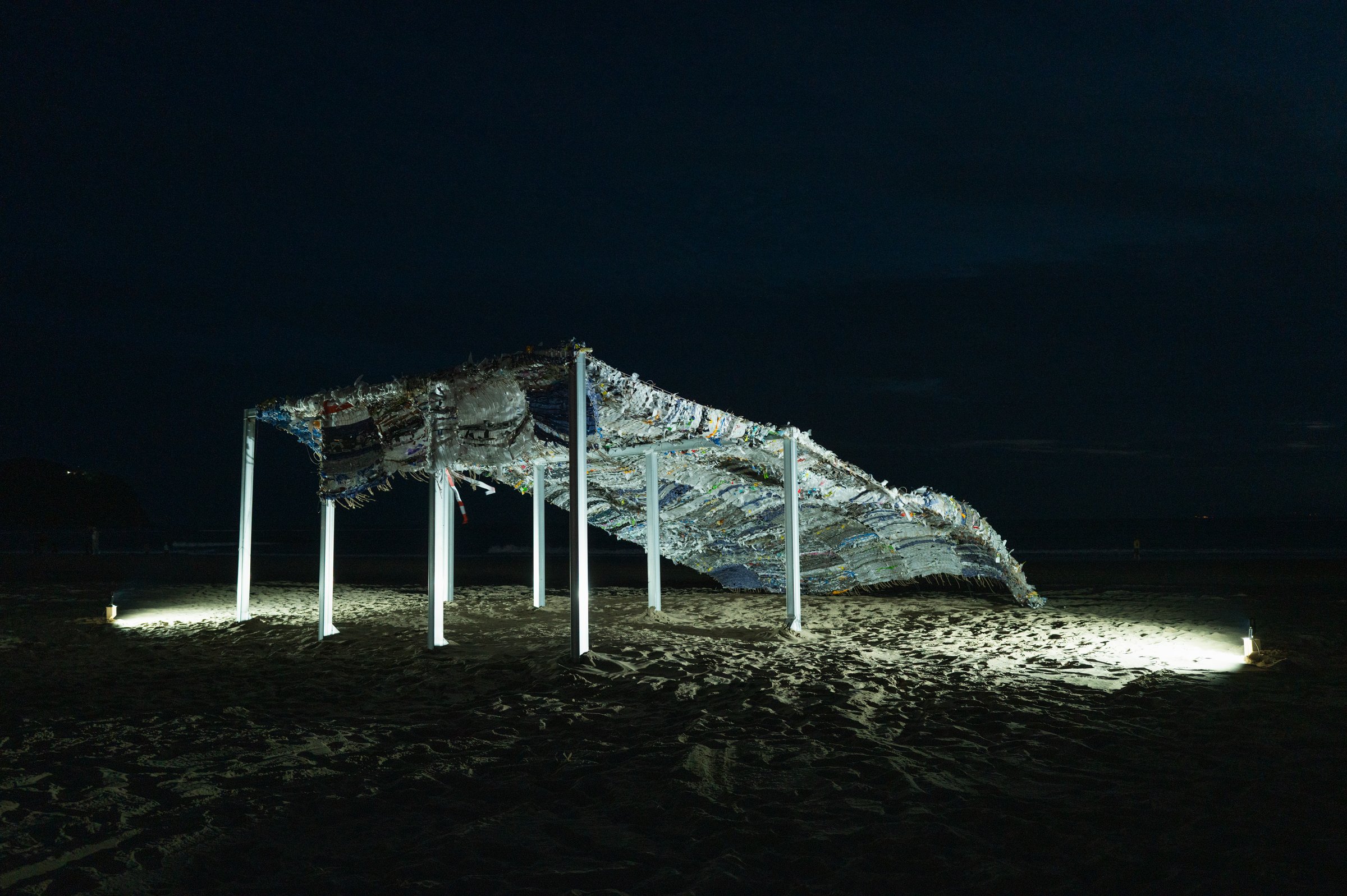
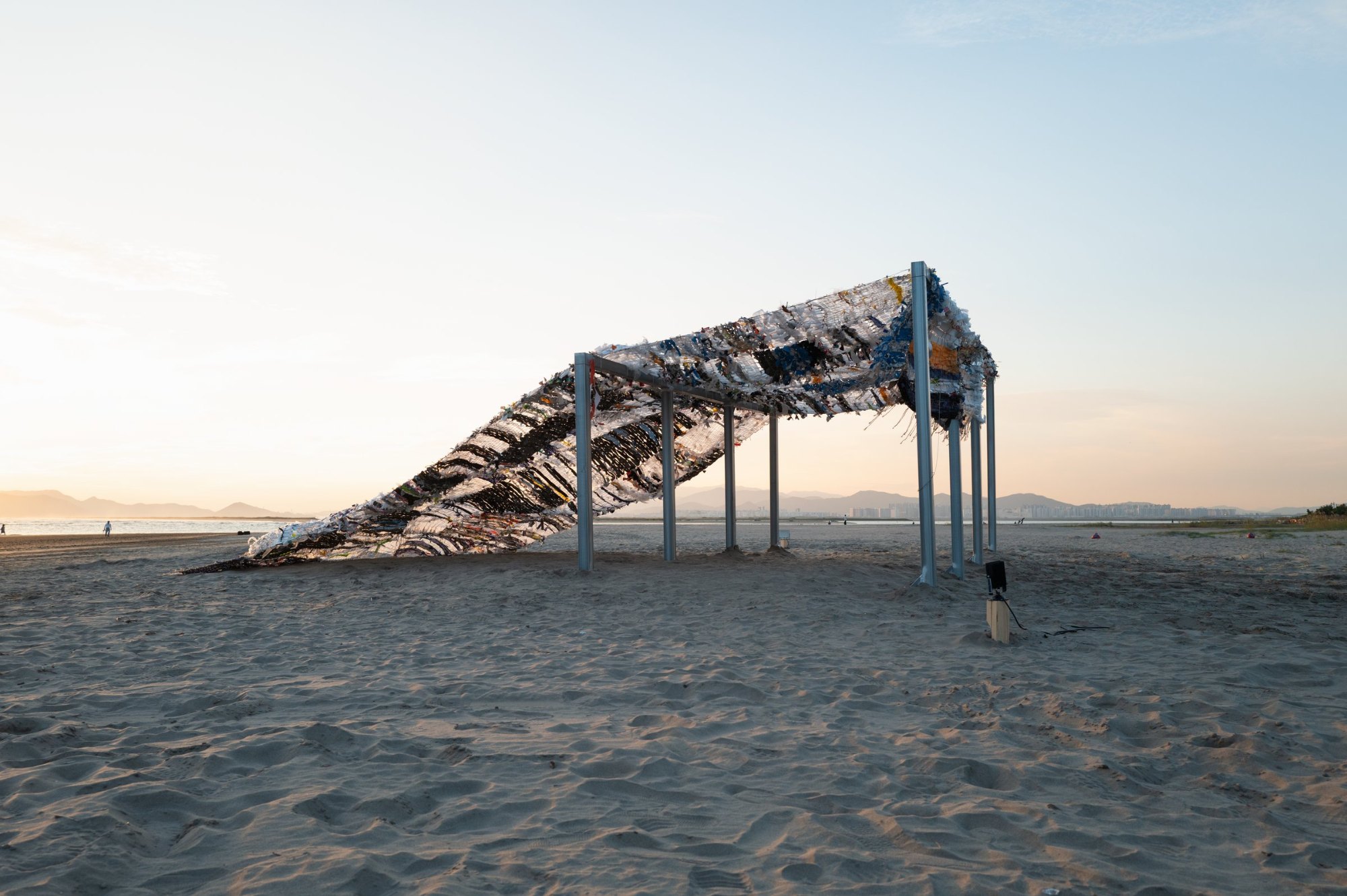
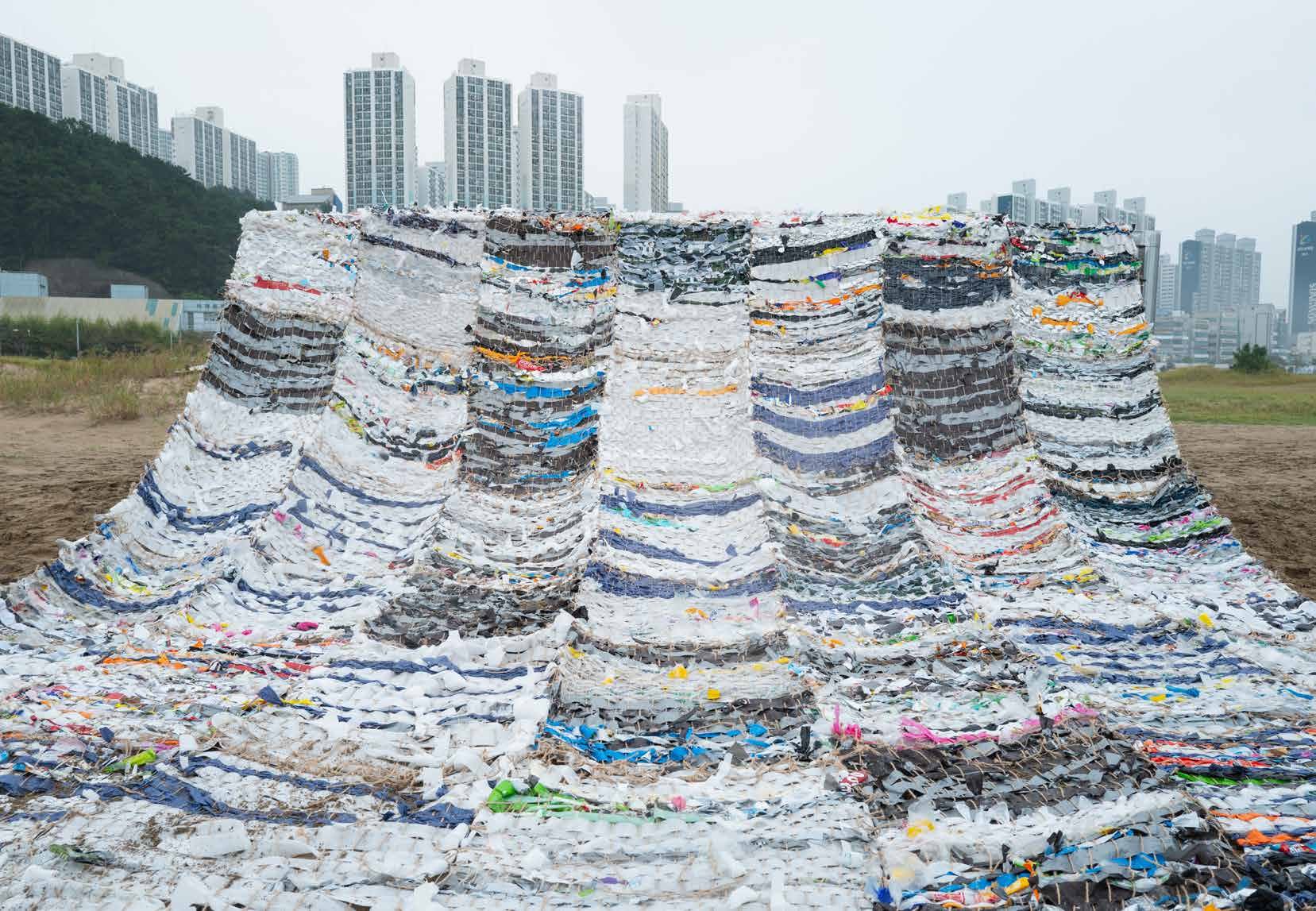
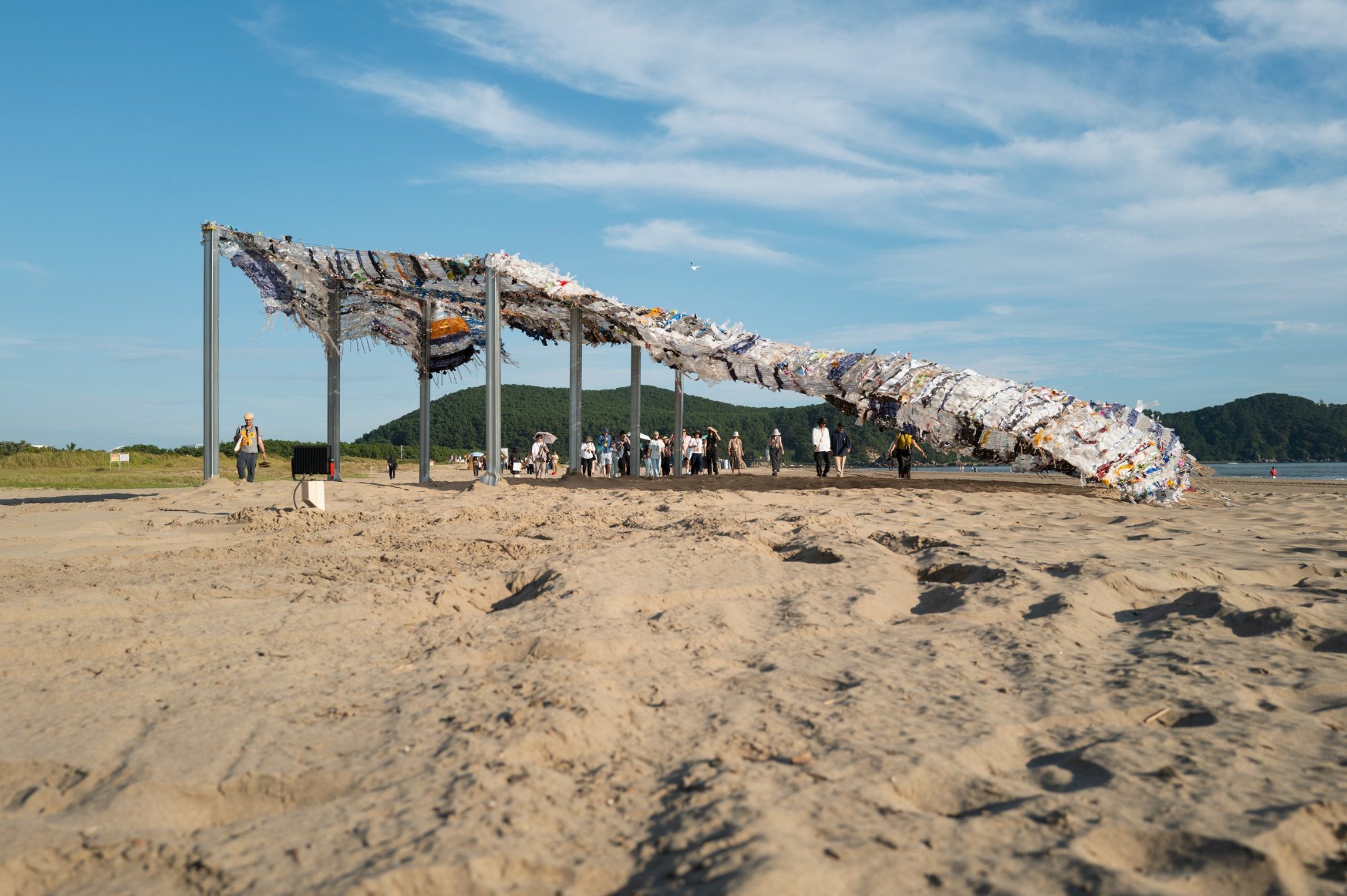
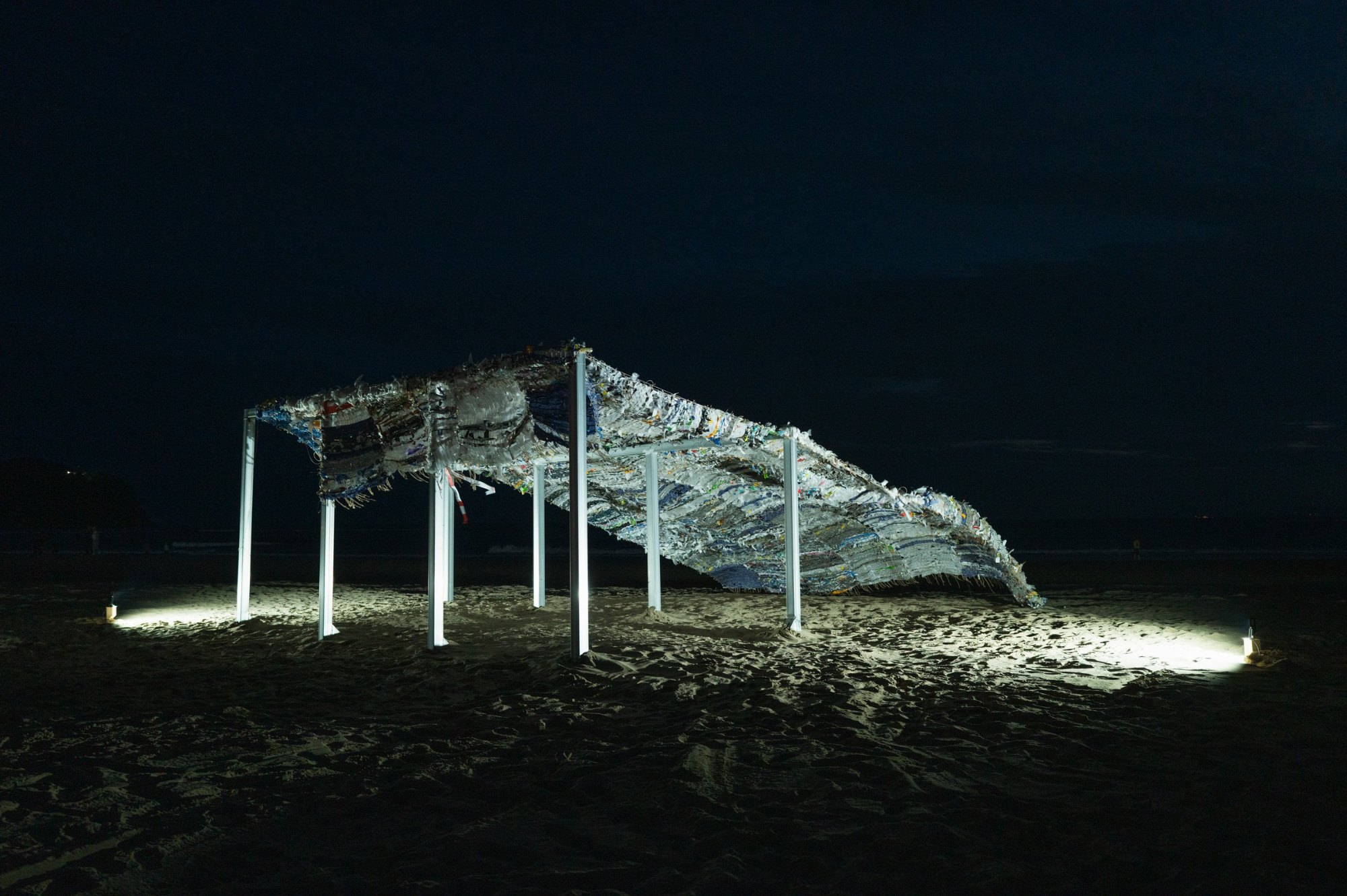
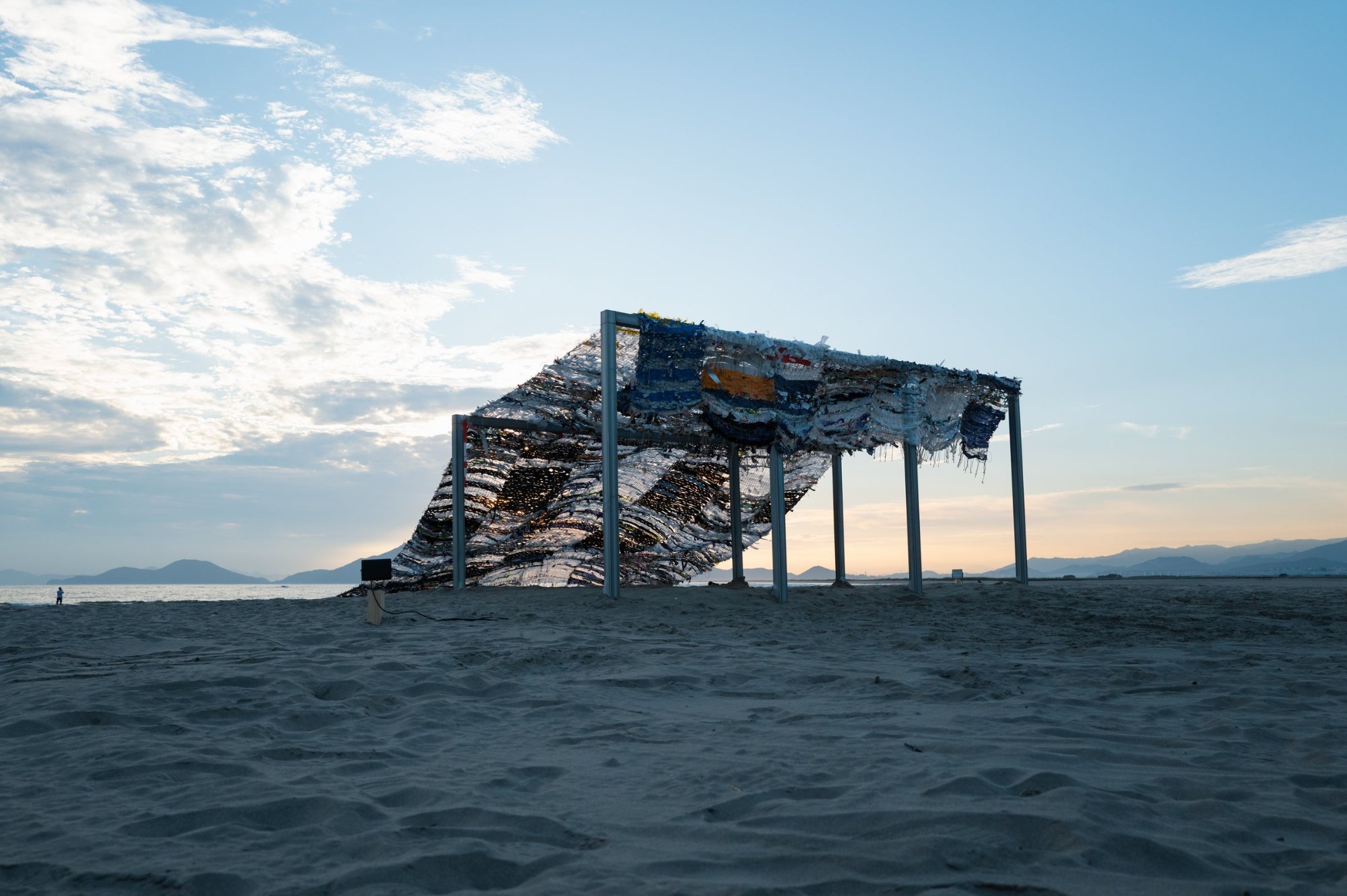
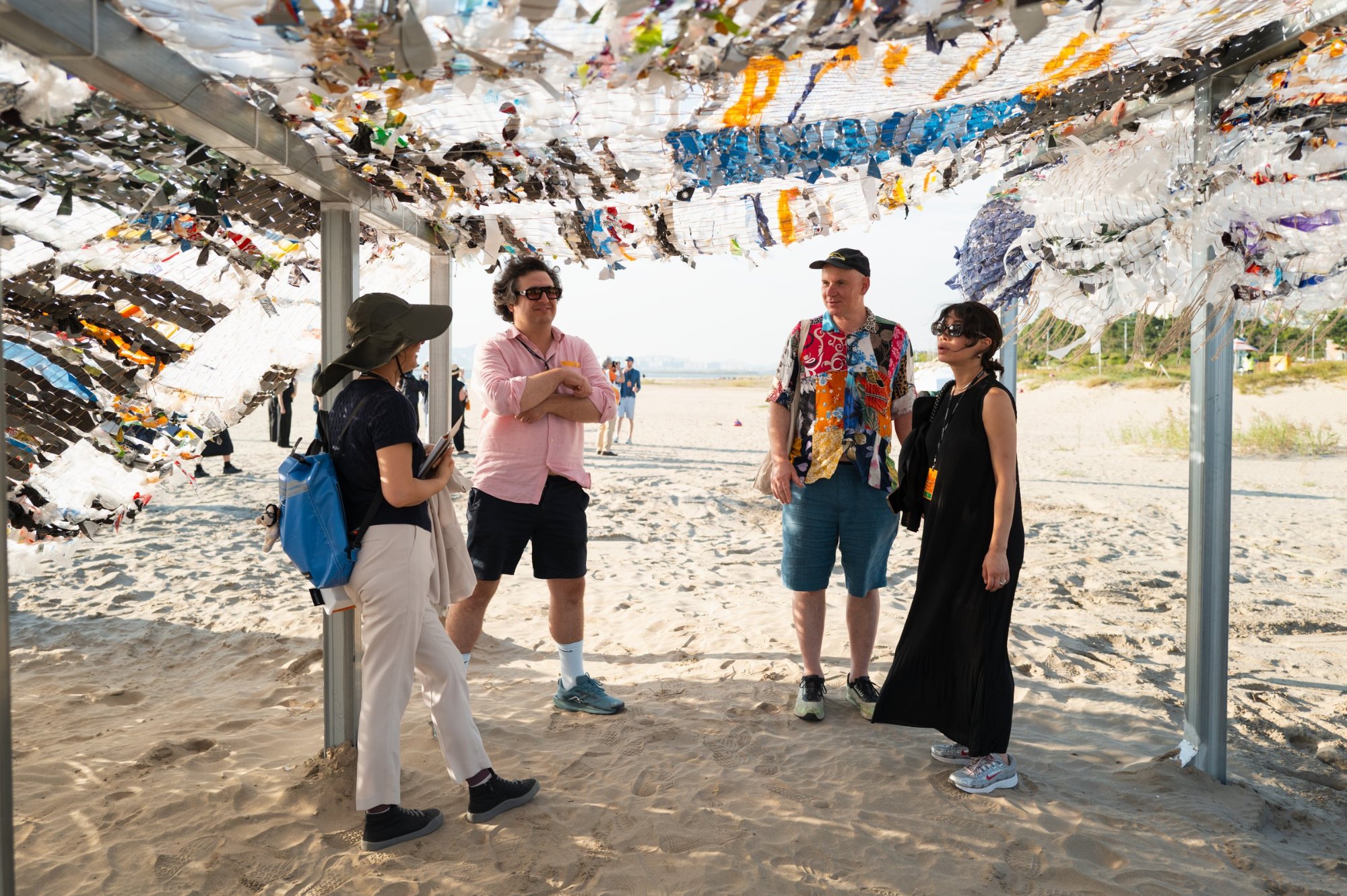
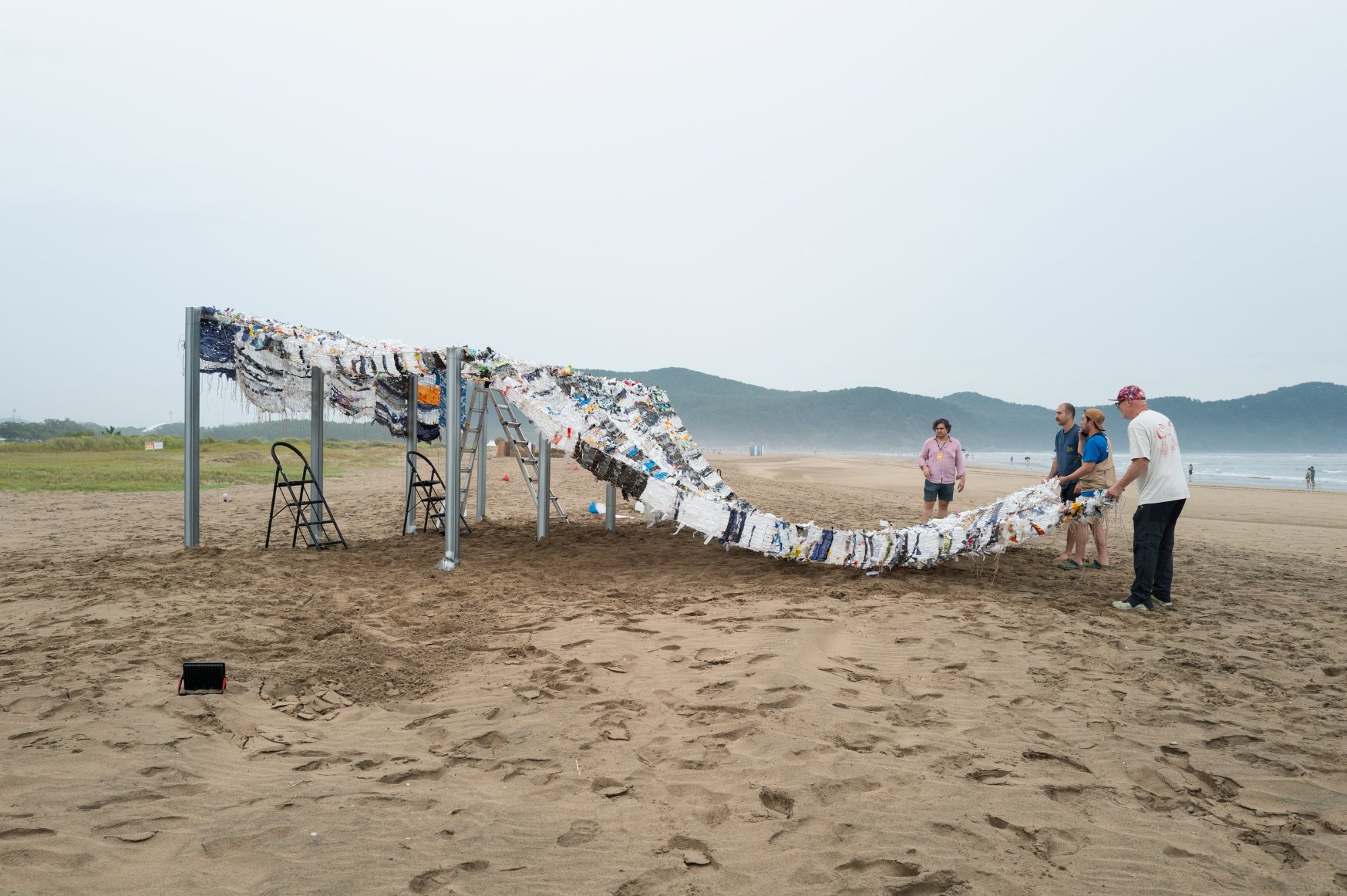
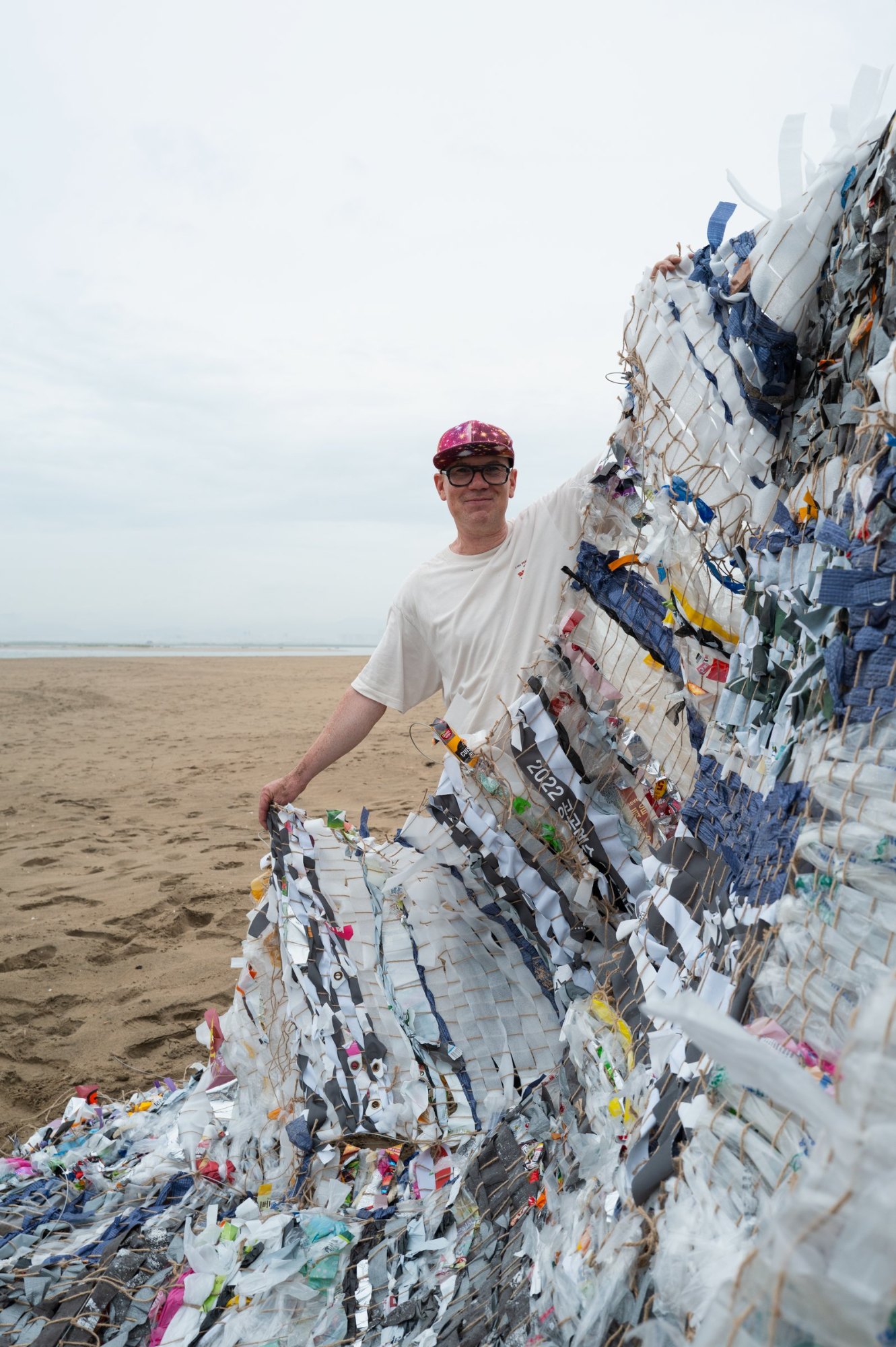
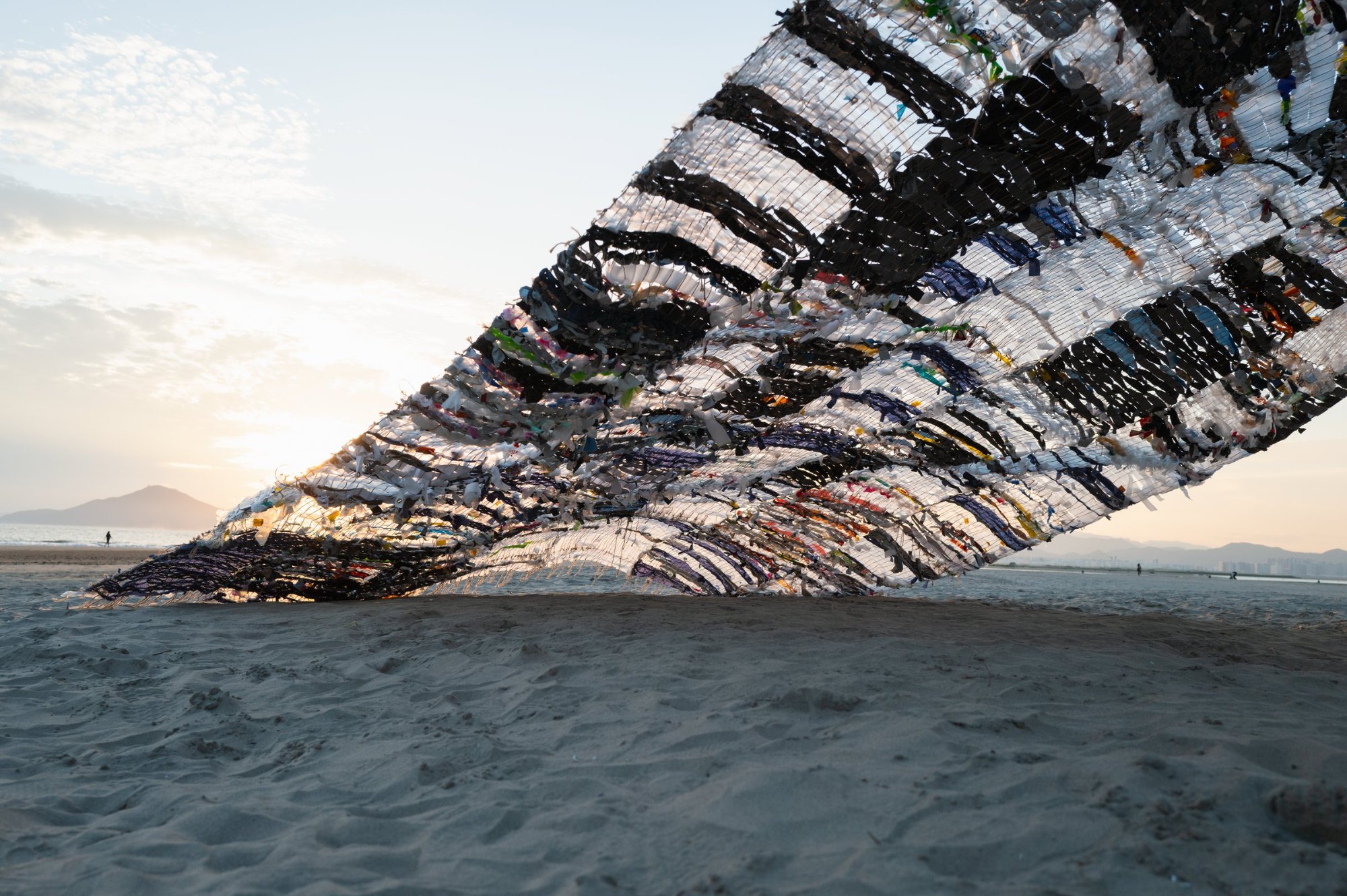
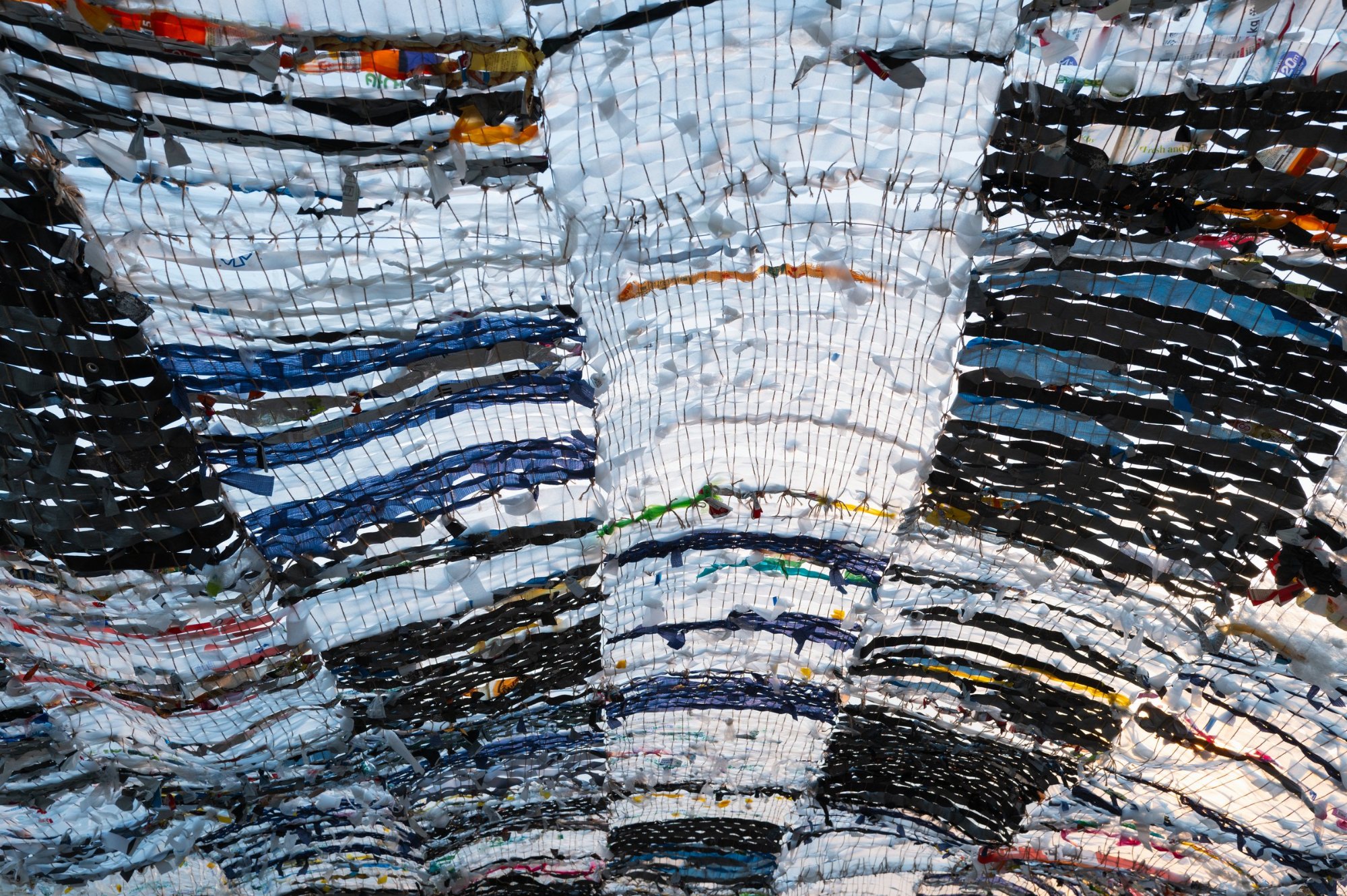
The project’s most recent chapter turns seaward: at the Busan Biennale’s Sea Art Festival 2025 (Undercurrents: Waves Walking on the Water, Dadaepo Beach, October 2025), packaging and beach plastics gathered locally were hand-woven into a monumental carpet approximately 600 × 1200 cm and suspended on two metal structures as a wave-like canopy that visitors walk beneath — a bodily scale mirroring the planetary scale of marine pollution. Across every chapter, the work refuses to treat waste as an endpoint: it insists that discarded material keeps acting on bodies, landscapes, and policy long after disposal, functioning as part testimony, part social sculpture — a shared process exposing the failures of export-driven recycling regimes while inviting audiences to physically step inside an architecture built from the evidence.
Installation views

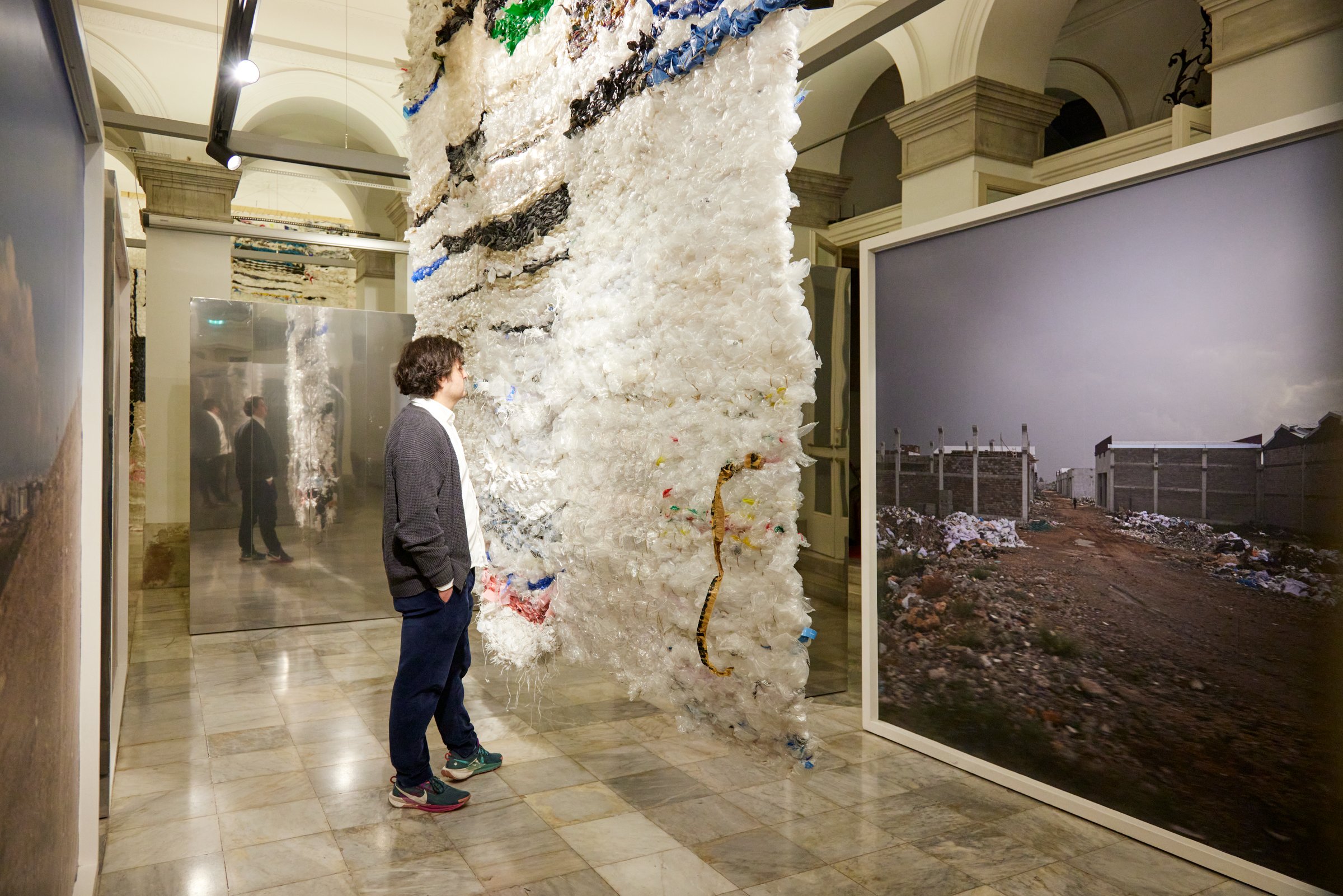
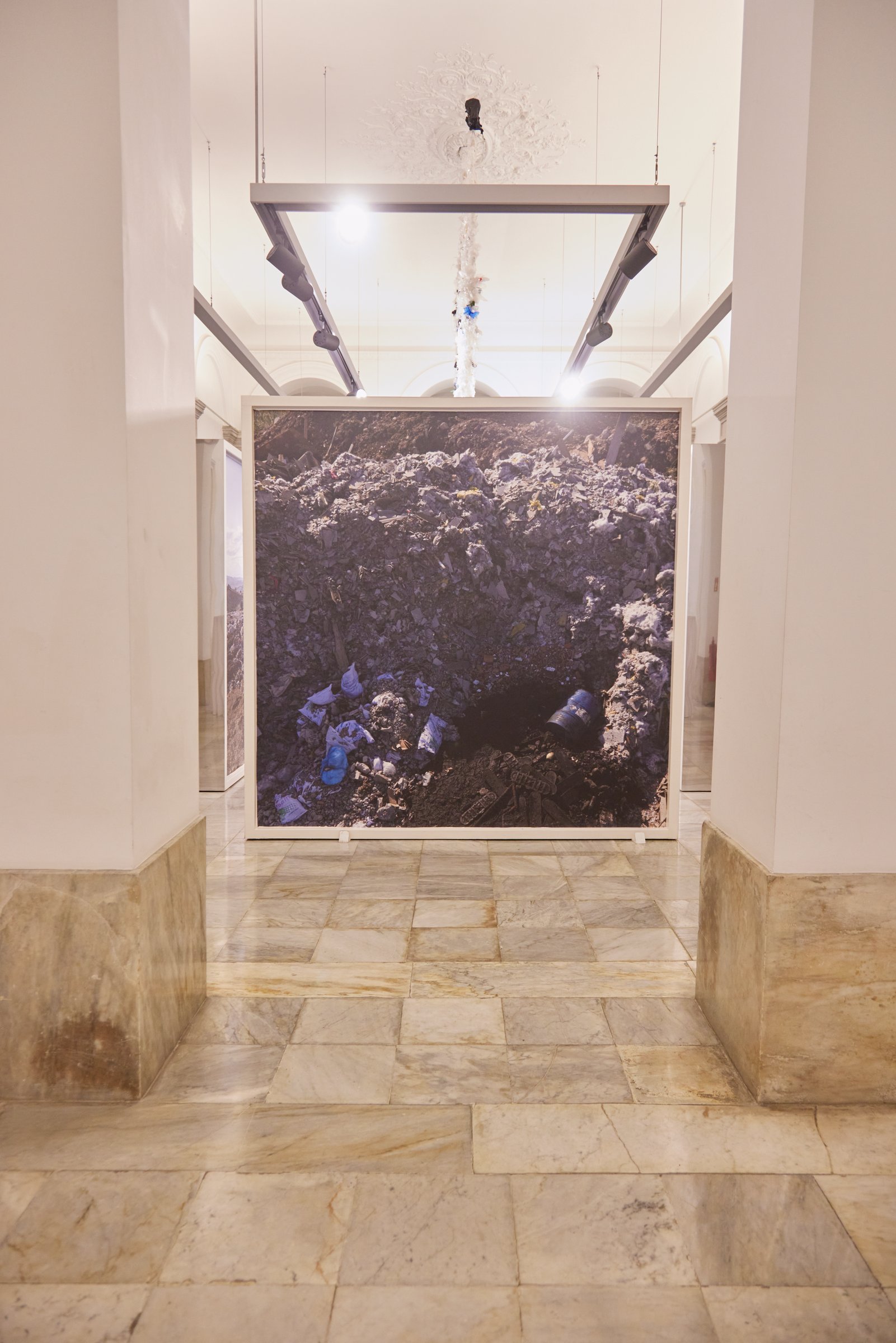
Photographs — Adana 2024
Weaving workshop